Reaktionsgleichung
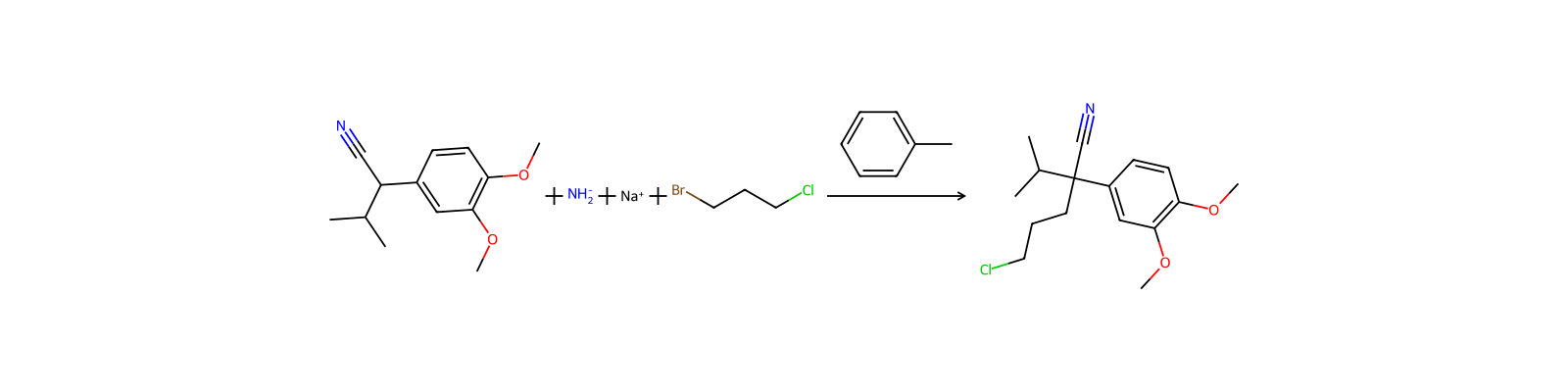
[CH3:1][O:2][C:3]1[CH:4]=[C:5]([CH:11]([CH:14]([CH3:16])[CH3:15])[C:12]#[N:13])[CH:6]=[CH:7][C:8]=1[O:9][CH3:10].[NH2-].[Na+].Br[CH2:20][CH2:21][CH2:22][Cl:23]>C1(C)C=CC=CC=1>[CH3:1][O:2][C:3]1[CH:4]=[C:5]([C:11]([CH:14]([CH3:16])[CH3:15])([CH2:20][CH2:21][CH2:22][Cl:23])[C:12]#[N:13])[CH:6]=[CH:7][C:8]=1[O:9][CH3:10]Komponenten
5
Edukt 3


Produkt 1

Reagenzien, Katalysatoren, Lösungsmittel 1

Versuchsvorschrift
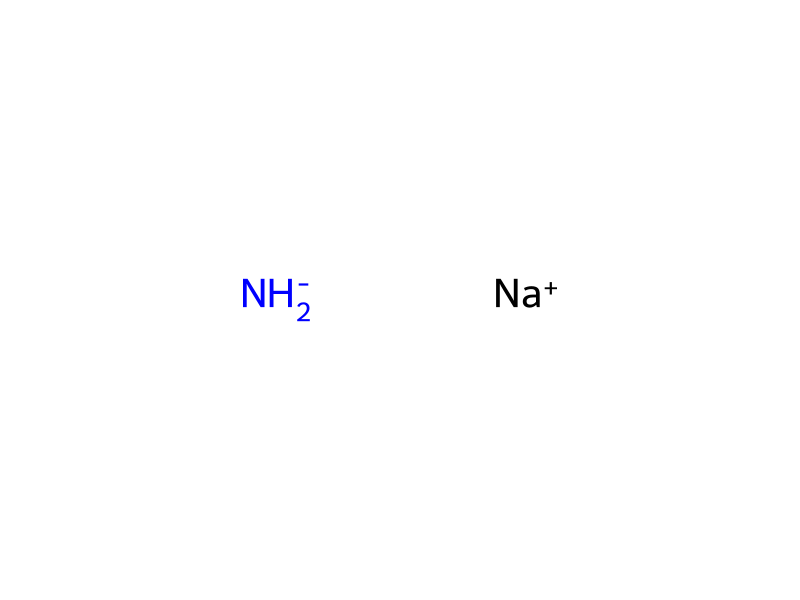
Alternatively, one may prepare compounds of the invention via the procedures of Scheme III. In the first step, a derivative of formula 6a (see Scheme II) is alkylated with a 1,3-dihalopropane using a strong base in a suitable aprotic solvent to produce a derivative of formula 21 (step 1). For example, 2-(3,4-dimethoxyphenyl)-2-isopropylacetonitrile is treated with sodium amide in toluene and 1-bromo-3-chloropropane to produce 2-(3,4-dimethoxyphenyl)-2-isopropyl-2-(3-chloropropyl)acetonitrile (21).
Quellen und Nachweise
- ORD-Eintrag
- ord-b305e1eafa6a49c48d26fa965e340c25
- Quelldatensatz
- uspto-grants-1987_05
- Patentnummer
- US04667038
Verknüpfte Notizen
Wird geladen…