Benzoyl chloride → 6-Chloro-3-methylflavone-8-carboxylic acid
Reaktionsgleichung

C([O-])(=O)[C:2]1[CH:7]=[CH:6][CH:5]=[CH:4][CH:3]=1.[Na+].[Cl:11][C:12]1[CH:20]=[C:16]([C:17]([OH:19])=[O:18])[C:15]([OH:21])=[C:14]([C:22](=[O:25])[CH2:23][CH3:24])[CH:13]=1.[C:26](Cl)(=O)C1C=CC=CC=1.C(=O)([O-])[O-].[Na+].[Na+]>>[Cl:11][C:12]1[CH:13]=[C:14]2[C:15](=[C:16]([C:17]([OH:19])=[O:18])[CH:20]=1)[O:21][C:24]([C:2]1[CH:7]=[CH:6][CH:5]=[CH:4][CH:3]=1)=[C:23]([CH3:26])[C:22]2=[O:25]Komponenten
5


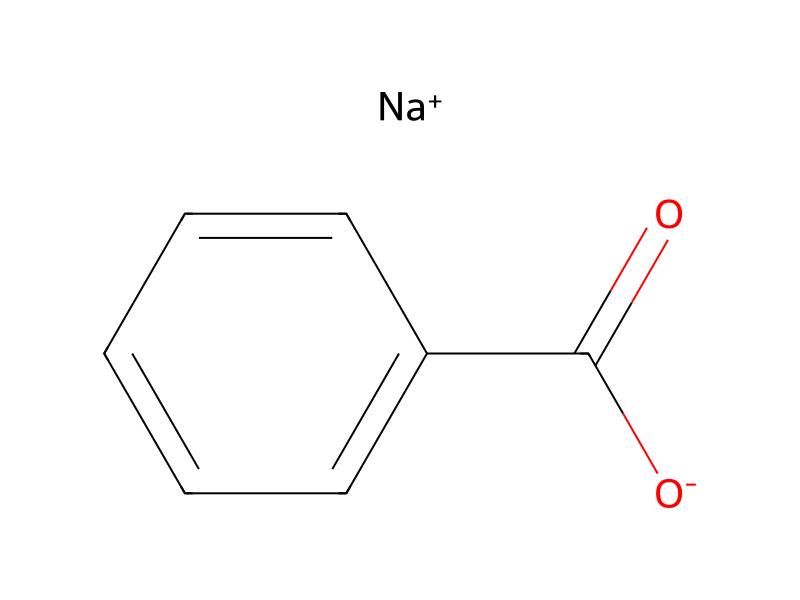


Versuchsvorschrift
A 47.5 g (0.33 mole) quantity of sodium benzoate was added with stirring to a mixture of 22.9 g (0.10 mole) of 5-chloro-3-propionylsalicylic acid and 42.1 g (0.30 mole) of benzoyl chloride. The reaction mixture was heated at 180° to 190° C. in an oil bath for 8 hours and was cooled. Thereto was added a 5% aqueous solution of sodium carbonate to dissolve the reaction mixture therein. The insolubles were filtered off. The solution was acidified with dilute hydrochloric acid and the separated white crystals were filtered off. The crystals were washed with an aqueous solution of alcohol and dried to obtain 28.6 g (90.9%) of white powder which had a melting point of 309° to 312° C. (sublimation). The compound thus obtained was subjected to chemical analysis with the results shown in Table 1 given below.