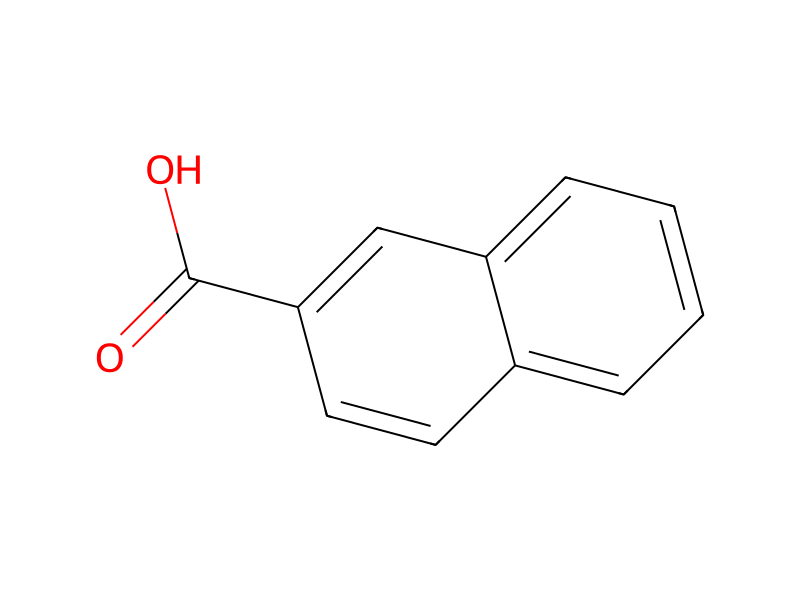
2-Naphthoic acid → (E)-N-cinnamyl-2-naphthalenecarboxamide
Reaktionsgleichung

Cl[C:2]1[CH:3]=[C:4]([CH:17]=[CH:18][CH:19]=1)[C:5]([NH:7][CH2:8]/[CH:9]=[CH:10]/[C:11]1[CH:16]=[CH:15][CH:14]=[CH:13][CH:12]=1)=[O:6].[CH2:20](N)[CH:21]=[CH:22][C:23]1C=CC=CC=1.C1C2C(=CC=CC=2)C=CC=1C(O)=O>>[CH2:8]([NH:7][C:5]([C:4]1[CH:17]=[CH:18][C:19]2[C:2](=[CH:20][CH:21]=[CH:22][CH:23]=2)[CH:3]=1)=[O:6])/[CH:9]=[CH:10]/[C:11]1[CH:16]=[CH:15][CH:14]=[CH:13][CH:12]=1Komponenten
4


Versuchsvorschrift
(E)-N-Cinnamyl-2-naphthalenecarboxamide may be obtained in the following manner: working in a manner similar to that described in Example 21 for the preparation of (E)-3-chloro-N-cinnamylbenzamide, starting with cinnamylamine (5.3 g) and 2-naphthoic acid (7.6 g), and after recrystallization in ethyl acetate, (E)-N-cinnamyl-2-naphthalenecarboxamide (4.3 g) is obtained.
Aufarbeitung
- custom