Reaktionsgleichung

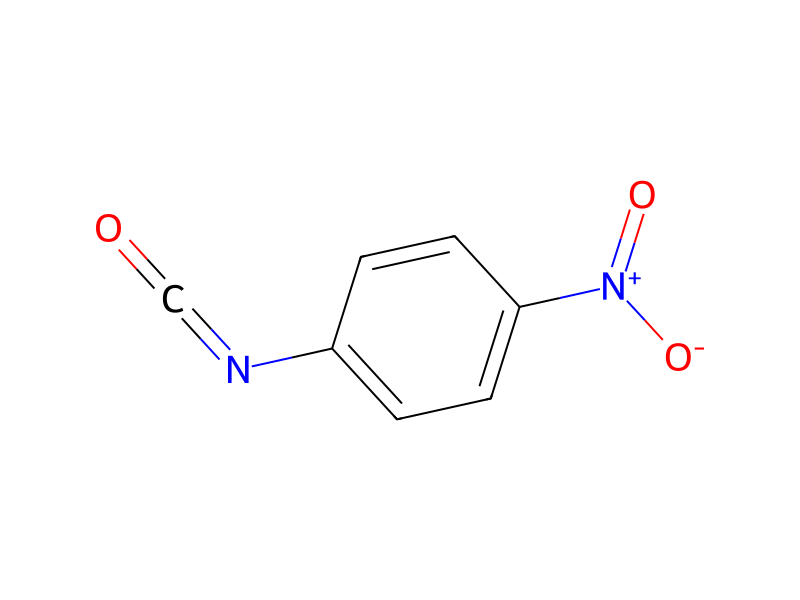
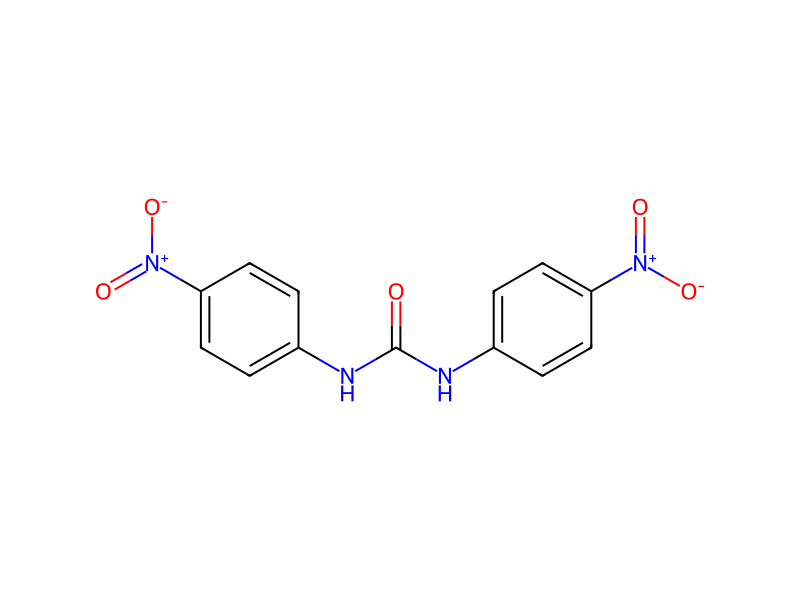
[N+:1]([C:4]1[CH:9]=[CH:8][C:7]([N:10]=[C:11]=[O:12])=[CH:6][CH:5]=1)([O-:3])=[O:2].[N+:13]([C:16]1[CH:22]=[CH:21][C:19]([NH2:20])=[CH:18][CH:17]=1)([O-:15])=[O:14]>CN(C)C=O>[N+:1]([C:4]1[CH:5]=[CH:6][C:7]([NH:10][C:11]([NH:20][C:19]2[CH:21]=[CH:22][C:16]([N+:13]([O-:15])=[O:14])=[CH:17][CH:18]=2)=[O:12])=[CH:8][CH:9]=1)([O-:3])=[O:2]Komponenten
4
Edukt 2

Produkt 1
Reagenzien, Katalysatoren, Lösungsmittel 1

Versuchsvorschrift
1,3-Di-(4-nitrophenyl)urea was prepared by the dropwise addition of a solution of p-nitrophenylisocyanate (16.4 g, 0.1 mole) in dimethyl formamide (150 ml) to a solution of p-nitroaniline (13.8 g, 0.1 mole) in dimethylformamide (130 ml) at 4° C. 1,3-Di-(4-nitrophenyl)urea precipitated slowly as a yellow solid.
Aufarbeitung
- custom1,3-Di-(4-nitrophenyl)urea precipitated slowly as a yellow solid
Quellen und Nachweise
- ORD-Eintrag
- ord-48fb78d541bd4ce0b49cf744de89c6e0
- Quelldatensatz
- uspto-grants-1987_12
- Patentnummer
- US04714838
Verknüpfte Notizen
Wird geladen…