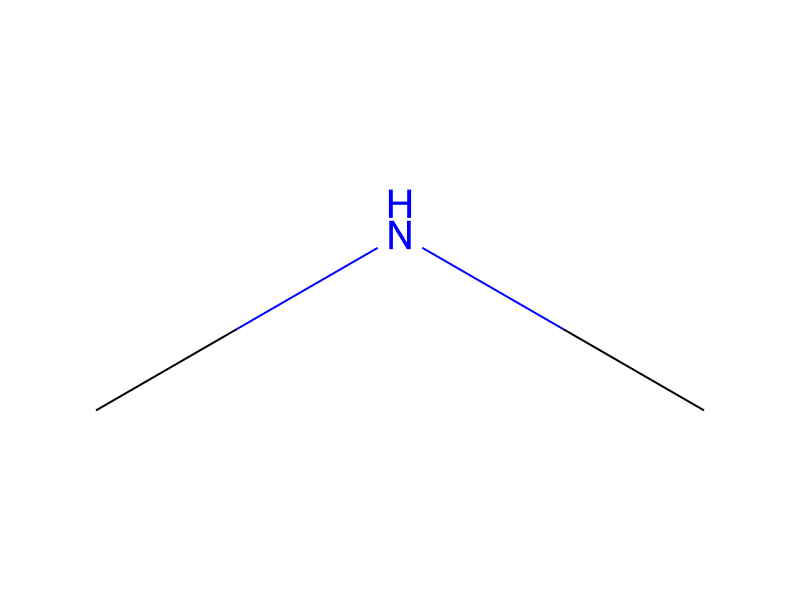
Dimethylamine → Pyridazino(4,3-c)isoquinolin-6-amine, N,N-dimethyl-3-phenyl-
HRID 986750
Reaktionsgleichung

[CH3:1][NH:2][CH3:3].Cl[C:5]1[C:14]2[CH:13]=[CH:12][CH:11]=[CH:10][C:9]=2[C:8]2[N:15]=[N:16][C:17]([C:19]3[CH:24]=[CH:23][CH:22]=[CH:21][CH:20]=3)=[CH:18][C:7]=2[N:6]=1>C(COC)OC>[C:19]1([C:17]2[N:16]=[N:15][C:8]3[C:9]4[CH:10]=[CH:11][CH:12]=[CH:13][C:14]=4[C:5]([N:2]([CH3:3])[CH3:1])=[N:6][C:7]=3[CH:18]=2)[CH:24]=[CH:23][CH:22]=[CH:21][CH:20]=1Komponenten
4
Edukt 2

Produkt 1

Reagenzien, Katalysatoren, Lösungsmittel 1

Versuchsvorschrift
Dimethylamine (6 g), 6-chloro-3-phenyl-pyridazino-[4,3-c]isoquinoline (5.83 g, 0.02 mol) and dimetoxyethane (120 ml) are heated at 120° C. for about 8 hours in a bomb. Then the reaction mixture is concentrated to dryness under reduced pressure, the residue is disaggregated with water (200 ml) and the solid recovered by filtration is dried, yielding 5.8 g of a crude product which is crystallized from acetone to give 3.2 g of the product of the title. M.p. 134°-136° C. A further crop of about 1,7 g is obtained by purifying the residue of the concentration of the mothers liquors by means of a silica gel column chromatography which uses chloroform as the eluent. Overall yield 4,9 g (81,5%).