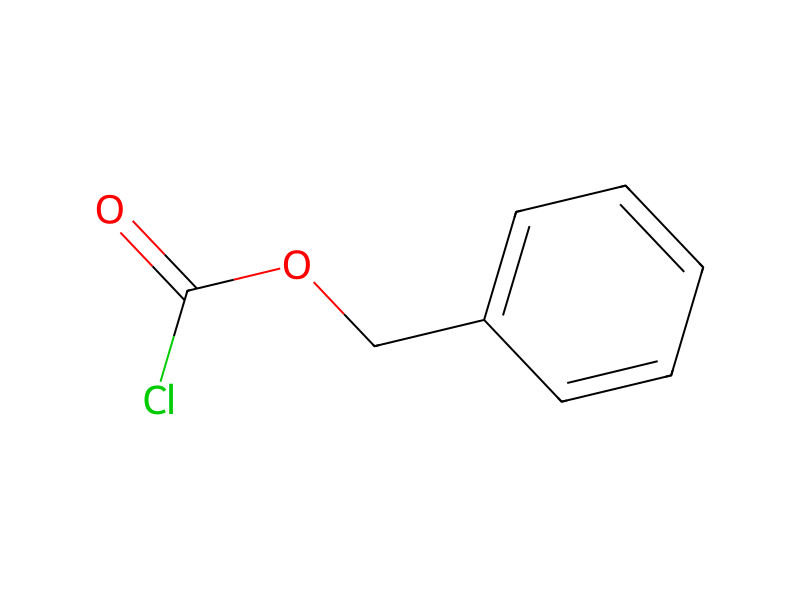
Cl.[CH2:2]([O:4][C:5](=[O:27])[C@@H:6]([O:24][CH2:25][CH3:26])[CH2:7][C:8]1[CH:13]=[CH:12][C:11]([O:14][CH2:15][CH2:16][C:17]2[CH:22]=[CH:21][C:20]([NH2:23])=[CH:19][CH:18]=2)=[CH:10][CH:9]=1)[CH3:3].C(N(CC)CC)C.[CH2:35]([O:42][C:43](Cl)=[O:44])[C:36]1[CH:41]=[CH:40][CH:39]=[CH:38][CH:37]=1>O1CCCC1>[CH2:2]([O:4][C:5](=[O:27])[C@@H:6]([O:24][CH2:25][CH3:26])[CH2:7][C:8]1[CH:13]=[CH:12][C:11]([O:14][CH2:15][CH2:16][C:17]2[CH:18]=[CH:19][C:20]([NH:23][C:43]([O:42][CH2:35][C:36]3[CH:41]=[CH:40][CH:39]=[CH:38][CH:37]=3)=[O:44])=[CH:21][CH:22]=2)=[CH:10][CH:9]=1)[CH3:3]3-{4-[2-(4-Aminophenyl)ethoxy]phenyl}-(S)-2-ethoxypropanoic acid ethyl ester hydro chloride (described in Example 41b) (0.6 g; 1.67 mmole, triethylamine (0.17 g; 1.67 mmole) and benzylchloroformate (0.28 g; 1.67 mmole) were mixed in tetrahydrofuran. The reaction mixture was stirred at room temperature over night and then evaporated. The residue was treated with sodium hydrogencarbonate solution and diethyl ether. The organic phase was dried with magnesium sulfate and evaporated. According to NMR spectra there was starting material left. The residue was therefore dissolved in tetrahydrofuran and triethylamine and benzylchloroformate were added. The reaction mixture was stirred at room temperature then evaporated. Work-up up as described above gave a crude product which was purification with preparativ HPLC (Kromasil C8, 7 μm, 50×250 mm) using acetronitrile (70-100%) in ammonium acetate buffer (pH 7) as mobil phase gave 0.180 g (22% yield) of 3-[4-{2-(4-[Benzyloxycarbonylamino]phenyl)ethoxy}phenyl]-(S)-2-ethoxypropanoic acid ethyl ester.