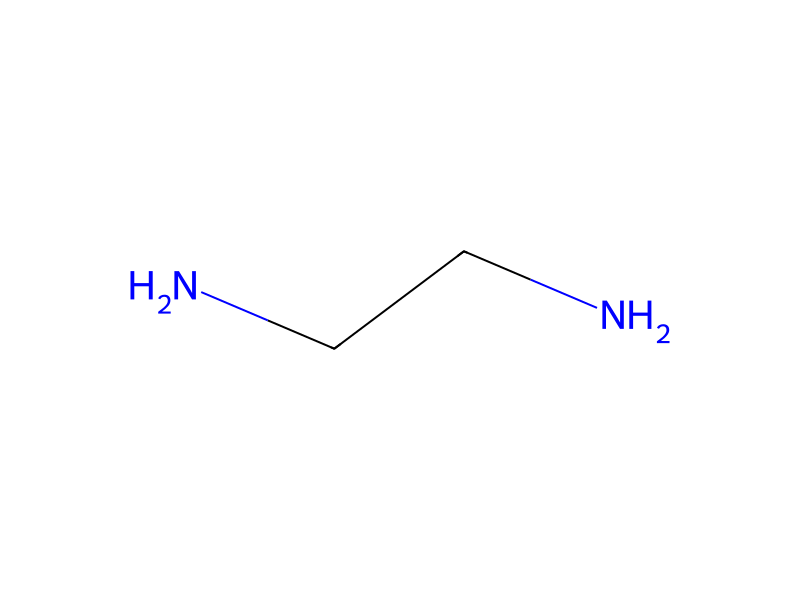
Cl[C:2]1[N:10]=[C:9]2[C:5]([N:6]=[CH:7][N:8]2[CH2:11][CH3:12])=[C:4]([NH:13][C:14]2[CH:19]=[CH:18][CH:17]=[C:16]([Cl:20])[CH:15]=2)[N:3]=1.[CH2:21]([NH2:24])[CH2:22][NH2:23]>C(OCC)(=O)C>[NH2:23][CH2:22][CH2:21][NH:24][C:2]1[N:10]=[C:9]2[C:5]([N:6]=[CH:7][N:8]2[CH2:11][CH3:12])=[C:4]([NH:13][C:14]2[CH:19]=[CH:18][CH:17]=[C:16]([Cl:20])[CH:15]=2)[N:3]=1250 mg (0.81 mmol) of 2-chloro-6-(3-chloro-phenyl-amino)-9-ethyl-9H-purine are dissolved in 5.8 ml (97 mmol) of ethylenediamine and the solution is heated under reflux for 3 hours (oil bath temperature of 150° C.). After cooling to room temperature, the reaction mixture is taken up in ethyl acetate (250 ml) and extracted with water (150 ml). The aqueous phase is extracted twice with ethyl acetate and the combined organic extracts are washed successively with saturated sodium bicarbonate solution, water and saturated sodium chloride solution and dried over magnesium sulfate. After filtration, the filtrate is concentrated under reduced pressure at 35° C. and the residue is dried under an HV. The crude product is recrystallized from diethyl ether. 2-(2-Amino-ethyl-amino)-6-(3-chloro-phenylamino)-9-ethyl-9H-purine is obtained; Rf=0.22 (methylene chloride:methanol:concentrated aqueous ammonium hydroxide solution=900:100:1); FAB-MS: (M+H)+=322; m.p. 79–80° C.