Phosphorus tribromide → HCID 18415115, Verbindung
HRID 991979
Reaktionsgleichung

P(Br)(Br)[Br:2].[Br:5][C:6]1[CH:7]=[C:8]([CH:11]=[C:12]([Br:25])[C:13]=1[O:14][C:15]1[CH:20]=[CH:19][C:18]([OH:21])=[C:17]([CH:22]([CH3:24])[CH3:23])[CH:16]=1)[CH2:9]O>C(Cl)Cl>[Br:5][C:6]1[CH:7]=[C:8]([CH:11]=[C:12]([Br:25])[C:13]=1[O:14][C:15]1[CH:20]=[CH:19][C:18]([OH:21])=[C:17]([CH:22]([CH3:24])[CH3:23])[CH:16]=1)[CH2:9][Br:2]Komponenten
4
Edukt 2
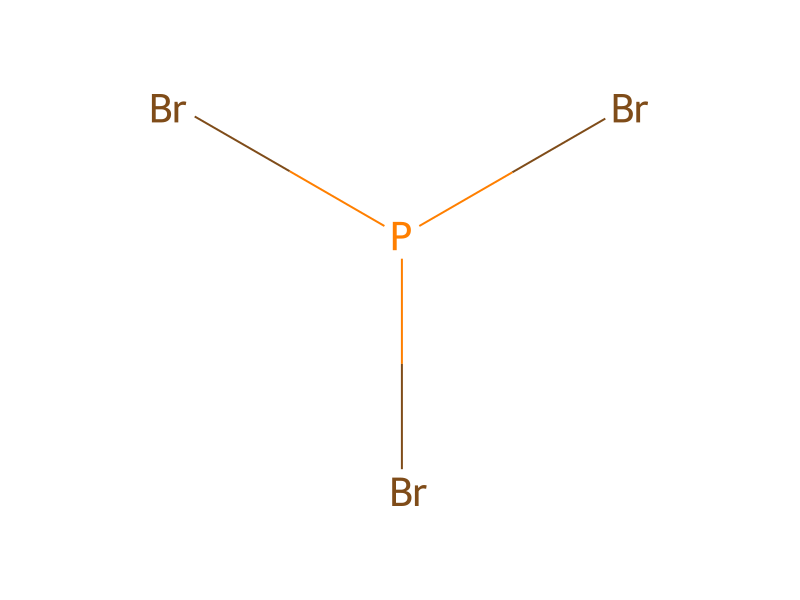

Produkt 1

Reagenzien, Katalysatoren, Lösungsmittel 1

Versuchsvorschrift
A solution of PBr3 (125 mg, 0.463 mmol) in 5 ml of CH2Cl2 was added dropwise, under nitrogen, to a stirred solution of 3,5-dibromo-4-(4-hydroxy-3-isopropylphenoxy)-benzylalcohol (Example 12) (385 mg, 0.925 mmol) in 20 ml CH2Cl2 at 0° C. The reaction mixture was left to stand at room temperature over night and then diluted with CH2Cl2. The organic phase was washed with water, dried over MgSO4 and concentrated. The residue was purified by column chromathography (silica gel, 75:25 petroleum-ether/EtOAc) to give 160 mg (36%) of 3,5-dibromo-4-(4-hydroxy-3-isopropylphenoxy)benzylbromide.