HomeMCPWorkbenchSkills
HomeWorkbenchNotificationsMe
llms.txt · MCP GuidePrivacy Policy · Terms of Service · Supportv1.8.0
  1. Home
  2. /Compound

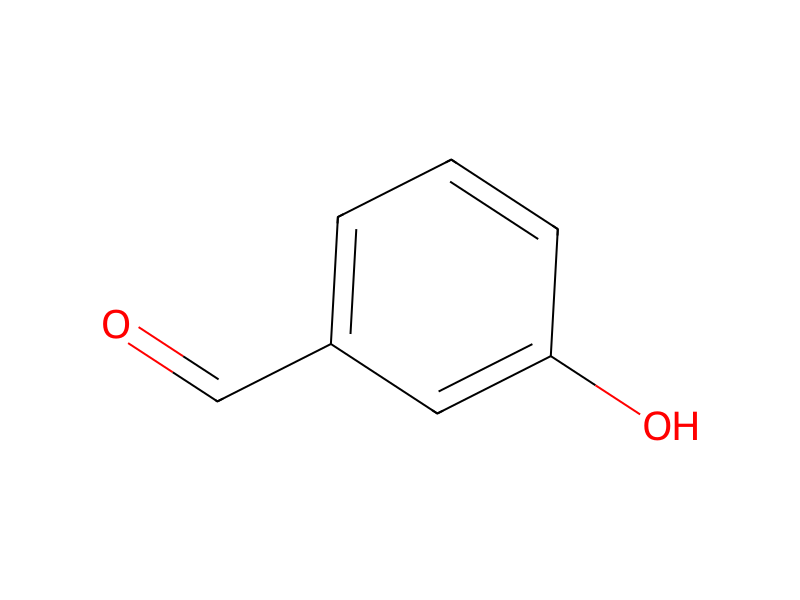
3-Hydroxybenzaldehyde

HCID 101
New noteNew reactionRequest quotes
Print preview

Completing data — refresh the page later to see the latest
Basic informationOverviewNames & identifiersPropertiesSafety & regulationChemistry & industryRelated reactionsCompound notes
Substructure searchFind similar structures

Basic information

CAS
100-83-4
Standard SMILES
O=Cc1cccc(O)c1
InChIKey
IAVREABSGIHHMO-UHFFFAOYSA-N
Molecular formula
C7H6O2
Average molar mass
122.12 g/mol
Monoisotopic mass
122.03677943

Overview

3-hydroxybenzaldehyde is a hydroxybenzaldehyde carrying a hydroxy substituent at position 3.

Names & identifiers

Preferred name
3-Hydroxybenzaldehyde
IUPAC
3-hydroxybenzaldehyde
English name
3-Hydroxybenzaldehyde
Molecular formula
C7H6O2
Molecular weight
122.12

Names & synonyms

3-hydroxybenzaldehyde100-83-4m-Hydroxybenzaldehydem-FormylphenolBenzaldehyde, 3-hydroxy-3-Formylphenolmeta-HydroxybenzaldehydeBenzaldehyde, m-hydroxy-3-oxidanylbenzaldehydeDTXSID7059220NSC-35048Z2819J40E
Show more names
hydroxybenzaldehydeMHB3-hydroxy-benzaldehydRoxatidine Impurity 33-HydroxybenzaL
CHEBI:16207RefChem:94257DTXCID8032461202-892-93-HYDROXY-BENZALDEHYDEMFCD000033683-hydroxy benzaldehydeNSC 3504

Database identifiers

CAS
100-83-4
PubChem CID
101
DTXSID
DTXSID7059220
ChEMBL
CHEMBL243816
ChEBI
CHEBI:16207
UNII
8Z2819J40E
EC Number
202-892-9
Nikkaji
J43.313F

Properties

Computed structural propertiesFilling in

XLogP
1.4
Topological polar surface area
37.3 Ų
Hydrogen bond donors
1
Hydrogen bond acceptors
2
Rotatable bonds
1
Heavy atoms
9
Formal charge
0
Complexity
101

Experimental & physicochemical properties

Chemical Classes · 2 items

Other Classes -> Benzaldehydes

Industrial compound

SpringerMaterials Properties13C nuclear magnetic resonance spectrum
PesticidesInsecticides
LogP1.29
Vapor Pressure0.01 [mmHg]
Physical DescriptionSolid; [Sigma-Aldrich MSDS]
Collision Cross Section118 Ų [M-H]- [CCS Type: DT; Method: single field calibrated with ESI Low Concentration Tuning Mix (Agilent)]

Physicochemical properties

Melting point
100 · 100-103 °C(lit.)
Boiling point
191 °C50 · 191 °C50 mm Hg(lit.)

Safety & regulation

Safety information is for reference only and does not replace the supplier’s Safety Data Sheet (SDS), applicable regulations, or professional assessment.

GHS classification

GHS Classification · 5 items

This chemical does not meet GHS hazard criteria for 1.7% (1 of 60) of reports.

Warning

H315 (90%): Causes skin irritation [Warning Skin corrosion/irritation]

P261, P264, P264+P265, P271, P280, P302+P352, P304+P340, P305+P351+P338, P319, P321, P332+P317, P337+P317, P362+P364, P403+P233, P405, and P501 (click each P-code to see the statement)

Aggregated GHS information provided per 60 reports by companies from 13 notifications to the ECHA C&L Inventory. Each notification may be associated with multiple companies.

Hazard information

Regulatory Information · 3 items

Chemical: Benzaldehyde, 3-hydroxy-

Status: Active Update: 10-05-2016 https://echa.europa.eu/registration-dossier/-/registered-dossier/17191

Benzaldehyde, 3-hydroxy-: Does not have an individual approval but may be used under an appropriate group standard

Hazards SummaryA skin and strong eye irritant; [Sigma-Aldrich MSDS] See p-Hydroxybenzaldehyde and Benzaldehyde.
Hazard Classes and CategoriesSkin Irrit. 2 (90%)

Safety data

F
8-9-23
wgk
3
tsca
TSCA listed
rtecs
CU6450000
hs_code
2912499000
risk_code
36/37/38
Signal word
Warning
Symbol(GHS)
GHS07

Chemistry & industry

Uses & manufacturing

Use ClassificationInsecticides
General Manufacturing InformationBenzaldehyde, 3-hydroxy-: ACTIVE

Applications

UsesIntermediate for dyes, plastics, pharmaceuticals, and bactericides; color reagent for Schiff’s reagent, sensitizing agent in photographic emulsions.

Uses3-Hydroxybenzaldehyde is used as an ionophore, during the development of an highly selective and sensitive PVC membrane sensor, which can be used as a Tb3+ ion selective electrode.

Upstream & downstream products

Upstream raw materials

Stannous chloride dihydrateCalcium carbonateFerrousSodium bisulfite3-Nitrobenzaldehydem-CresolAminoTin(Ⅱ)chloride dihydrate

Downstream products

1-Hydroxy-1-(3-hydroxyphenyl)-2-propanone3-(4-tert-Butylphenoxy)benzaldehyde3-(3-Hydroxyphenyl)propionic acid

Related reactions

732 records
New reaction record
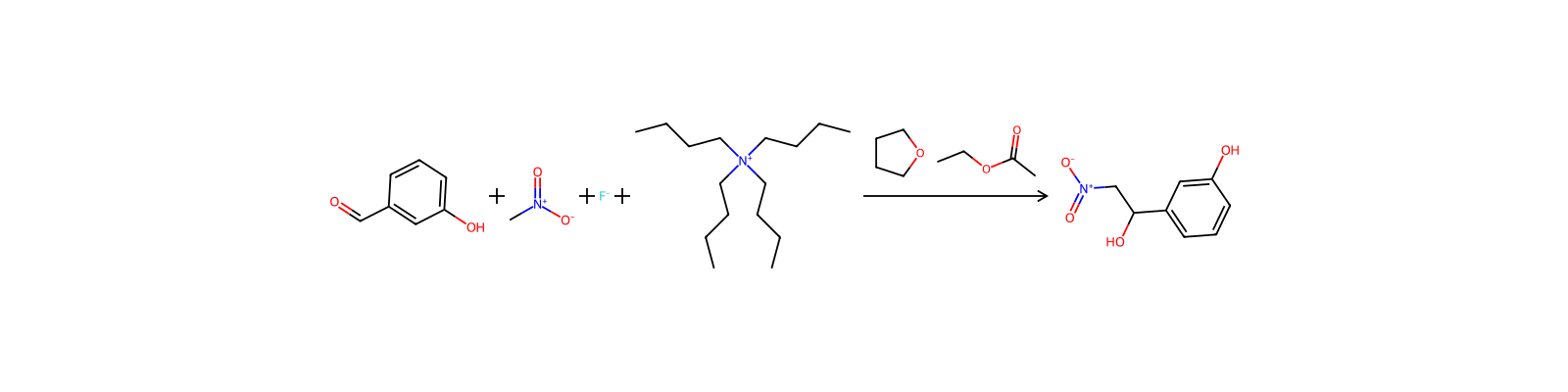
HRID 4648 reaction equation
HRID 4648As reactantuspto-grants-1988_02
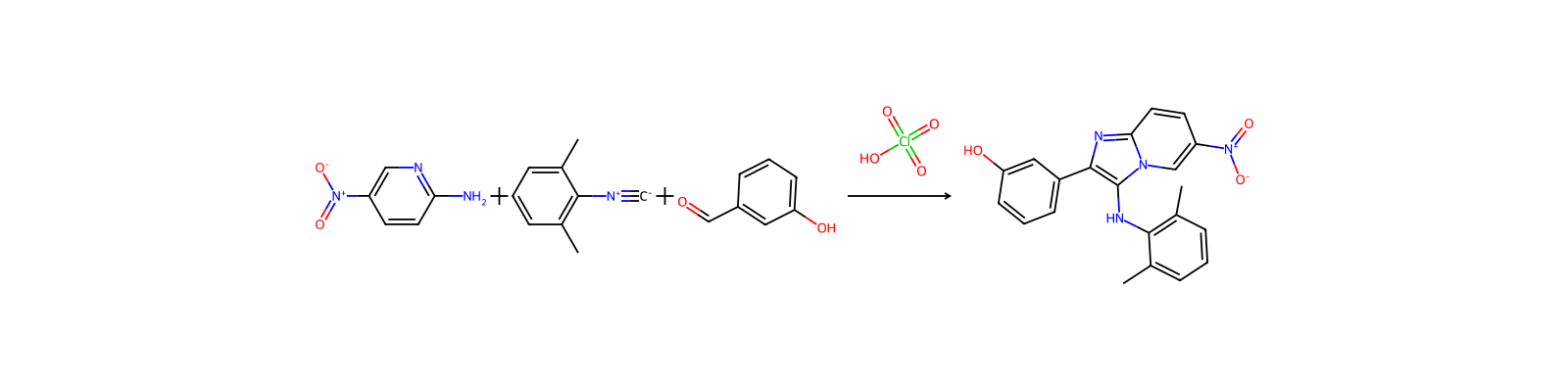
HRID 6494 reaction equation
HRID 6494As reactantuspto-grants-1993_09
HRID 6497 reaction equation
HRID 6497As reactantuspto-grants-1993_09
HRID 17641 reaction equation
HRID 17641As reactantuspto-grants-2010_06
HRID 20344 reaction equation
HRID 20344As reactantuspto-grants-2010_06
HRID 22794 reaction equation
HRID 22794As reactantuspto-grants-2005_02
HRID 22798 reaction equation
HRID 22798As reactantuspto-grants-2005_02
HRID 23655 reaction equation
HRID 23655As reactantuspto-grants-2005_02
Page 1 of 92

Compound notes

Loading…

On this pageBasic informationOverviewNames & identifiersPropertiesSafety & regulationChemistry & industryRelated reactionsCompound notes
More actions
New noteNew reactionRequest quotes
Density
1.1179 · 1.1179
refractive index
1.5286 · 1.5286 (estimate)
Flash point
191 °C/50mm · 191°C/50mm
storage temp.
2 · Inert atmosphere,2-8°C
solubility
Soluble in DMSO and Methanol
form
Crystalline Powder
pka
8.98 · 8.98(at 25℃)
color
faintly yellow to light brown
PH
3 · 3-4 (H2O, 20℃)(saturated solution)
Water Solubility
SOLUBLE
Sensitive
Air Sensitive
BRN
507099 · 507099
Henry's Law Constant
3.9 · 3.9×103 mol/(m3Pa) at 25℃, Gaffney and Senum (1984)
Major Application
food and beveragespersonal carepharmaceutical
InChI
1S/C7H6O2/c8-5-6-2-1-3-7(9)4-6/h1-5,9H
InChIKey
IAVREABSGIHHMO-UHFFFAOYSA-N
SMILES
Oc1cccc(C=O)c1
LogP
1.29 · 1.290
CAS DataBase Reference
100 · 100-83-4(CAS DataBase Reference)
EWG's Food Scores
1 · 1
FDA UNII
8 Z2819J40E · 8Z2819J40E
NIST Chemistry Reference
3 · Benzaldehyde, 3-hydroxy-(100-83-4)
EPA Substance Registry System
3 · Benzaldehyde, 3-hydroxy- (100-83-4)
UNSPSC Code
12352100 · 12352100
NACRES
22 · NA.22
Symbol(GHS)
7 · GHS07
Signal word
Warning
Hazard statements
315 · H315-H319
Precautionary statements
264 · P264-P280-P302+P352-P305+P351+P338-P332+P313-P337+P313
Hazard Codes
Xi
Risk Statements
36 · 36/37/38
Safety Statements
26 · 26-36-24/25
WGK Germany
3 · 3
RTECS
6450000 · CU6450000
F
8 · 8-9-23
TSCA
TSCA listed
HS Code
2912499000 · 2912499000
Storage Class
11 · 11 - Combustible Solids
Hazard Classifications
2 Skin · Eye Irrit. 2Skin Irrit. 2
REACH Registrations
Active
hazard_code
Xi
safety_code
26-36-24/25
Storage Class
11 - Combustible Solids
Hazard statements
H315-H319
REACH Registrations
Active
Hazard Classifications
Eye Irrit. 2Skin Irrit. 2
Precautionary statements
P264-P280-P302+P352-P305+P351+P338-P332+P313-P337+P313
(S)-(-)-7,7'-Bis[di(3,5-dimethylphenyl)phosphino]-2,2',3,3'-tetrahydro-1,1'-spirobiindane
1,1'-Spirobiindane-7,7'-diol
(11aR)-(+)-10,11,12,13-Tetrahydrodiindeno[7,1-de:1',7'-fg][1,3,2]dioxaphosphocin-5-bis(R)-1phenylethyl]amine
3-Benzyloxybenzaldehyde
Benzofuran-2-carboxylic acid
2,3-Dimethoxybenzaldehyde
Metaraminol
(11aR)-(+)-10,11,12,13-Tetrahydrodiindeno[7,1-de:1',7'-fg][1,3,2]dioxaphosphocin-5-phenoxy
(11aR)-(+)-10,11,12,13-Tetrahydrodiindeno[7,1-de:1',7'-fg][1,3,2]dioxaphosphocin-5-dimethylamine
3-Hydroxybenzyl alcohol
(R)-7,7'-Bis(diphenylphosphino)-1,1'-spirobiindane
(S)-1,1'-Spirobiindane-7,7'-diol
2,3-Dihydroxybenzaldehyde
3-Cyanophenol
3-Methoxybenzaldehyde
3-[(ethylamino)methyl]phenol
PATENT BLUE V
dihydrogen bis[(benzyl)[4-[[4-(benzylethylamino)phenyl](5-hydroxy-2,4-disulphonatophenyl)methylene]cyclohexa-2,5-dien-1-ylidene](ethyl)ammonium], calcium salt

Additional notes

DefinitionChEBI: A hydroxybenzaldehyde carrying a hydroxy substituent at position 3.