
Basic information
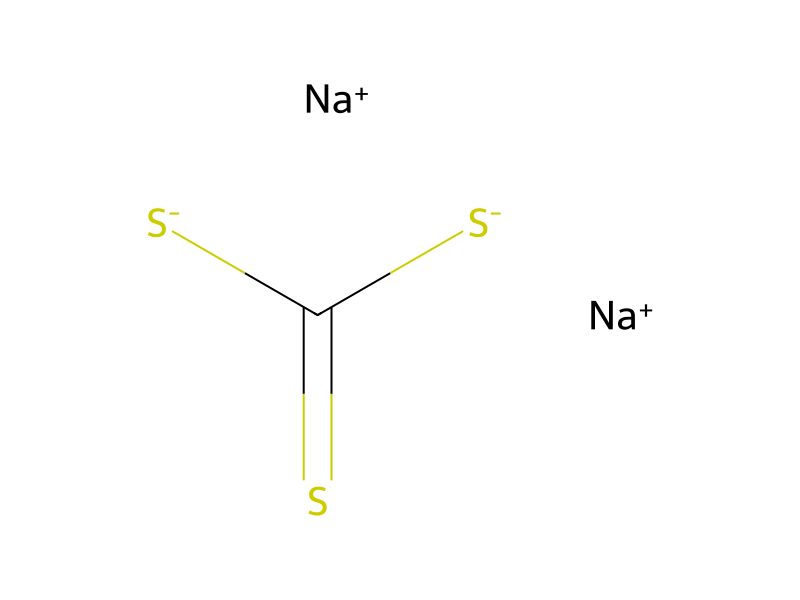
- Standard SMILES
S=C([S-])[S-].[Na+].[Na+]- InChIKey
USAIOOFEIMNEDN-UHFFFAOYSA-L- Molecular formula
- CNa2S3
- Average molar mass
- 154.2 g/mol
- Monoisotopic mass
- 153.89575208
Names & identifiers
- Preferred name
- Sodium Trithiocarbonate
- IUPAC
- disodium;carbonotrithioate
- English name
- sodium trithiocarbonate
- Molecular formula
- CH3NaS3
- Molecular weight
- 134.2
Names & synonyms
Sodium trithiocarbonate534-18-9disodium carbonotrithioateCarbonotrithioic acid, disodium saltSodium sulfocarbonateY01PT1AS4OAQUAMET TTrithiocarbonic acid disodium saltEINECS 208-592-4TRAMFLOC 904DISODIUM THIOCARBONATEDTXSID7060203
Show more names
40%inwaterSodiumthiocarbonatesodium trithiocarbonSodium trithiocarbonate (Na2CS3)Carbonotrithioic acid,sodium saltSodium thiocarbonate, 40% in water
SODIUM TRITHIOCARBONATE [MI]Carbonotrithioic acid, sodium salt (1:2)CARBONOTRITHIOIC ACID SODIUM SALT (1:2)RefChem:887975DTXCID1041421208-592-4Sodium thiocarbonatedisodium;carbonotrithioate
Database identifiers
- CAS
534-18-9- PubChem CID
- 101753
- DTXSID
DTXSID7060203- ChEMBL
CHEMBL471245- UNII
- Y01PT1AS4O
- EC Number
- 208-592-4
- Nikkaji
- J188.377A
Properties
Computed structural properties
- Topological polar surface area
- 34.1 Ų
- Hydrogen bond donors
- 0
- Hydrogen bond acceptors
- 3
- Rotatable bonds
- 0
- Heavy atoms
- 6
- Formal charge
- 0
- Complexity
- 18
Experimental & physicochemical properties
Physical DescriptionCBI; Liquid
Physicochemical properties
- form
- Solution
- color
- Reddish-orange
- InChI
- InChI=1S/CH2S3.Na.H/c2-1(3)4;;/h(H2,2,3,4);;
- InChIKey
- NBHJCIKZOUILCC-UHFFFAOYSA-N
- SMILES
- C(S)(S)=S.[NaH]
- FDA UNII
- 1 PT1AS4O · Y01PT1AS4O
- EPA Substance Registry System
- Carbonotrithioic acid, disodium salt (534-18-9)
- Symbol(GHS)
- 5 · GHS05
- Signal word
- Danger
- Hazard statements
- 314 · H314
- Precautionary statements
- 260 · P260-P264-P280-P301+P330+P331-P303+P361+P353-P363-P304+P340-P310-P321-P305+P351+P338-P405-P501
- RIDADR
- 3262 · 3262
- TSCA
- TSCA listed
- HazardClass
- 8 · 8
- PackingGroup
- II
Safety & regulation
GHS classification
GHS Classification
Danger
H314 (100%): Causes severe skin burns and eye damage [Danger Skin corrosion/irritation]
P260, P264, P280, P301+P330+P331, P302+P361+P354, P304+P340, P305+P354+P338, P316, P321, P363, P405, and P501 (click each P-code to see the statement)
Aggregated GHS information provided per 43 reports by companies from 2 notifications to the ECHA C&L Inventory.;Information may vary between notifications depending on impurities, additives, and other factors. The percentage value in parenthesis indicates the notified classification ratio from companies that provide hazard codes. Only hazard codes with percentage values above 10% are shown. For more detailed information, please visit ECHA C&L website.
Hazard information
Regulatory Information
Carbonotrithioic acid, sodium salt (1:2) is listed on the EPA's Chemical Data Reporting (CDR) system. Manufacturers and importers of Carbonotrithioic acid, sodium salt (1:2) are required to report information about their production and use of this chemical to the EPA under the Toxic Substances Control Act (TSCA). (40 eCFR Part 711)
Carbonotrithioic acid, disodium salt: Does not have an individual approval but may be used as a component in a product covered by a group standard. It is not approved for use as a chemical in its own right.
Hazard Classes and CategoriesSkin Corr. 1B (100%)
Regulatory information
Regulatory Information
Carbonotrithioic acid, sodium salt (1:2) is listed on the EPA's Chemical Data Reporting (CDR) system. Manufacturers and importers of Carbonotrithioic acid, sodium salt (1:2) are required to report information about their production and use of this chemical to the EPA under the Toxic Substances Control Act (TSCA). (40 eCFR Part 711)
Carbonotrithioic acid, disodium salt: Does not have an individual approval but may be used as a component in a product covered by a group standard. It is not approved for use as a chemical in its own right.
Safety data
- tsca
- TSCA listed
- ridadr
- 3262
- Signal word
- Danger
- Symbol(GHS)
- GHS05
- hazard_class
- 8
- packing_group
- II
- Hazard statements
- H314
- Precautionary statements
- P260-P264-P280-P301+P330+P331-P303+P361+P353-P363-P304+P340-P310-P321-P305+P351+P338-P405-P501
Chemistry & industry
Uses & manufacturing
U.S. Production2023: 1,000,000 - <5,000,000 lb;2022: 1,000,000 - <5,000,000 lb;2021: 1,000,000 - <5,000,000 lb;2020: 1,000,000 - <5,000,000 lb
Industry UsesCBI;Intermediate;Solids separation (precipitating) agent, not otherwise specified
General Manufacturing Information
Utilities;All Other Basic Inorganic Chemical Manufacturing;CBI;All Other Basic Organic Chemical Manufacturing
Carbonotrithioic acid, sodium salt (1:2): ACTIVE
Applications
UsesUsually supplied as a 40°Bé solution for destroying insects injurious to plants, especially vines.
Upstream & downstream products
Downstream products
Suppliers50 total
郑州阿尔法化工有限公司+86-18530059196 · [email protected]
湖北永阔科技有限公司027-59223108 15972152991 · [email protected]
湖北万得化工有限公司15377098680 15377098680 · [email protected]
湖北科麦迪化工有限公司18372743325
山东海舟生物工程有限公司130-0567-0367 13006570367 · [email protected]
河南多贝化工有限公司0370-6999054 17550096163 · [email protected]
江苏艾康生物医药研发有限公司025-66061636 19370895928 · [email protected]
Dayang Chem (Hangzhou) Co.,Ltd.+86-0571-88938639 17705817739 · [email protected]
武汉绿景丰华生物科技有限公司19972070065 · [email protected]
济南源茂化工有限公司15665725027 18854103888 · [email protected]
武汉市聚舜化工有限公司027-02783261126 18971318572 · [email protected]
湖北兴琰新材料科技有限公司13129948835 · [email protected]
湖北长耀生物科技有限公司17683887209 17683887209 · [email protected]
广东方信生物科技有限公司0751-2838688 13376594225 · [email protected]
山东多聚化学有限公司0531-88779566 13105315100
湖北广奥生物科技有限公司027-02702759223056 18162699093 · [email protected]
泰安鑫润生物科技有限公司15318133072 15318133072 · [email protected]
湖北成海化工有限公司027-59220433 18327245847 · [email protected]
武汉贝乐叶生物医药科技有限公司15871353653 18086118076 · [email protected]
温州守诚化工科技有限公司15102776735 · [email protected]
Hebei Qige Biological Technology Co. Ltd+86 +8618733132031
武汉普洛夫生物科技有限公司17612776928 · [email protected]
湖北隆信化工实业有限公司15271551270 · [email protected]
陕西缔都医药化工有限公司029-81024372 17792795018 · [email protected]
湖北巨胜科技有限公司027-59599241 18871490274 · [email protected]
长沙晶康新材料科技有限公司0733-0731-85118349 18229890050 · [email protected]
天津荣燊化工有限公司18317763565; 18317763565 · [email protected]
Alfa Chemistry1-516-6625404 · [email protected]
海南瀚海致远生物科技有限公司18171012772 · [email protected]
广东翁江化学试剂有限公司0751-2815987 13927875076 · [email protected]
湖北军瑞生物科技有限公司13971166412 · [email protected]
武汉鑫儒化工有限公司15927387915 15337108568
湖北世腾化工科技有限公司18971850150 19086915685 · [email protected]
广东翁江化学试剂有限公司0751-2886766 13927870850 · [email protected]
湖北川合化工有限公司187-7130-7593 18672969259 · [email protected]
山东博亿生物技术有限公司19025109915 · [email protected]
泰安市江舟生物科技有限公司1385-13854830759 13854830759 · [email protected]
武汉匠信生物科技有限公司19272768272 18007157445 · [email protected]
启源(广东)医药化工有限公司18026564465 · [email protected]
河南沃咖斯生物科技有限公司18537671377 · [email protected]
嘉兴市浙嘉生物科技有限公司0573-85609002 · [email protected]
南通市苏北化工原料有限公司0513-85290972 18762756250 · [email protected]
武汉市承天精细化工有限公司18164098996 · [email protected]
湖北齐飞医药化工有限公司027-59322506 18071128681 · [email protected]
武汉克米克生物医药技术有限公司027-13163388153 13163388153 · [email protected]
河北贞佳新材料有限公司0319-5925599 13315915972
湖北世腾化工科技有限公司19086915685 18971850150 · [email protected]
深圳市森迪生物科技有限公司18126413629 0755-23311925 2355327053 · [email protected]
深圳市森迪生物科技有限公司18124570582 TEL:0755-23574479 2355327139 · [email protected]
武汉魔力生物科技有限公司18872289958、027-52304252、3400508168 · [email protected]
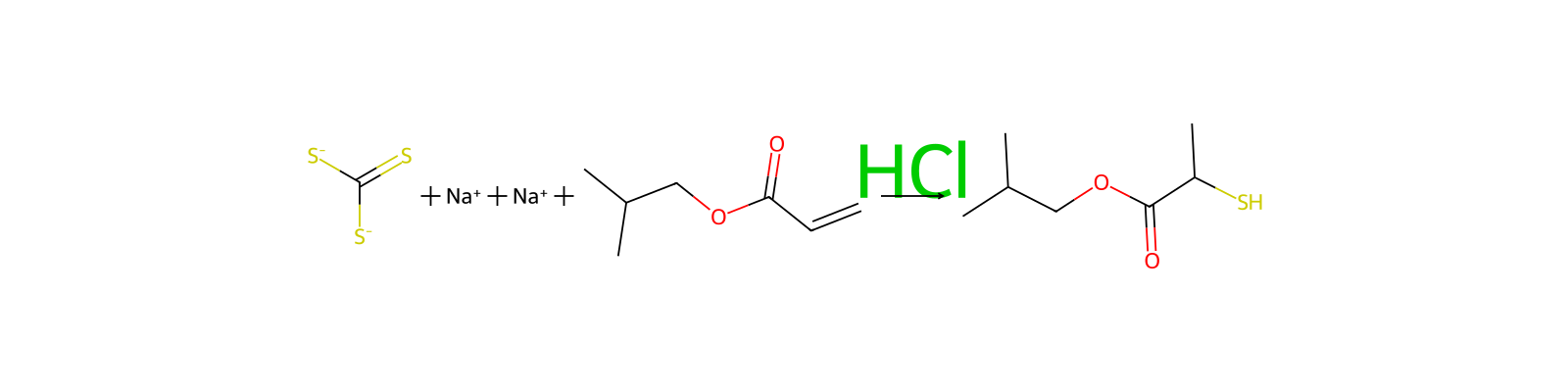
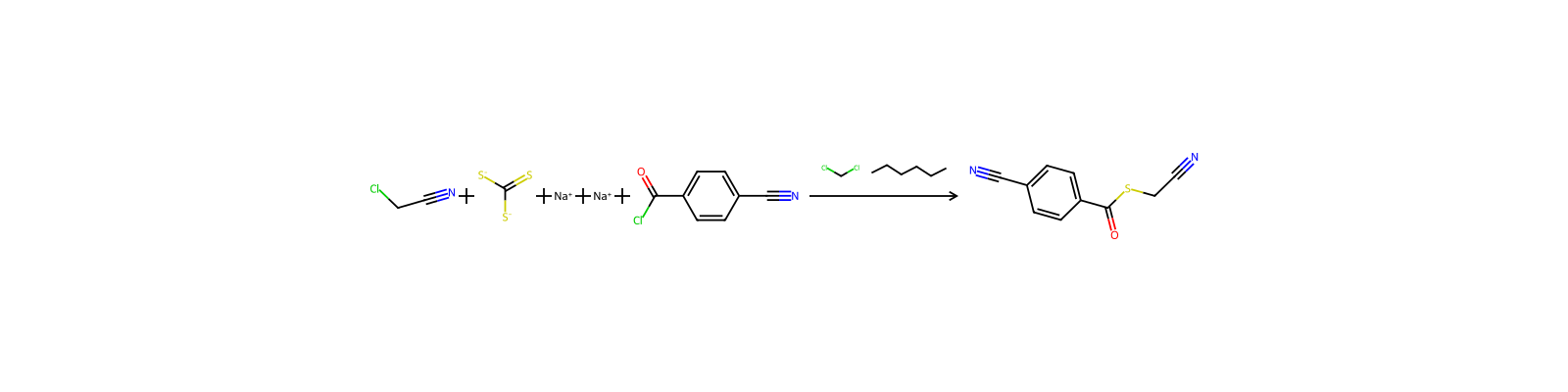
Related reactions
4 records

Linked notes
Loading…