HomeMCPWorkbenchSkills
HomeWorkbenchNotificationsMe
llms.txt · MCP GuidePrivacy Policy · Terms of Service · Supportv1.8.3
  1. Home
  2. /Compound

Diethylammonium chloride

HCID 10197650
New reaction
Print
Basic informationOverviewNames & identifiersPropertiesSafety & regulationChemistry & industryRelated reactionsCompound notes
Substructure searchFind similar structures

Basic information

CAS
660-68-4
Standard SMILES
CCNCC.Cl
InChIKey
HDITUCONWLWUJR-UHFFFAOYSA-N
Molecular formula
C4H11N.ClH
Average molar mass
109.6 g/mol
Monoisotopic mass
109.0658271

Overview

See also: N-Ethylethan(~15~N)amine--hydrogen chloride (1/1) (annotation moved to).

Names & identifiers

Preferred name
Diethylammonium chloride
IUPAC
N-ethylethanamine;hydrochloride
English name
Diethylamine hydrochloride
Molecular formula
C4H12ClN
Molecular weight
109.6

Names & synonyms

Diethylamine hydrochloride660-68-4Diethylammonium chlorideN-Ethylethanamine hydrochlorideEthanamine, N-ethyl-, hydrochlorideDTXSID9044320NSC-30602DTXCID7024320ZE9V3G1135RefChem:133465211-541-9N-ethylethanamine;hydrochloride
Show more names
METHYLTHIONINIUM CHLORIDEDIETHYLAMINE HCLMETHYLENE BLUE SOLUTIONMETHYLTHIONINE CHLORIDECI 52015S NO 1038SWISS BLUECI NO 52015Diethylaminium
diethyl amine HClEt2NH.HClNHEt2.HClDiethylamine-15N hydrochloridediethylamin hydrochlorideEthanamine, N-ethyl-, hydrochloride (1:1)MFCD00012499diethylamine hydrochloric acid

Database identifiers

CAS
660-68-4
PubChem CID
10197650
DTXSID
DTXSID9044320
ChEMBL
CHEMBL3188625
UNII
ZE9V3G1135
EC Number
211-541-9

Properties

Computed structural properties

Topological polar surface area
12 Ų
Hydrogen bond donors
2
Hydrogen bond acceptors
1
Rotatable bonds
2
Heavy atoms
6
Formal charge
0
Complexity
11.1

Experimental & physicochemical properties

Chemical ClassesNitrogen Compounds -> Amines, Aliphatic
Vapor Pressure0.0000645 [mmHg]
Physical Description · 2 items

Liquid

Off-white hygroscopic solid; [Acros Organics MSDS]

Physicochemical properties

Melting point
227 · 227-230 °C(lit.)
Boiling point
320 · 320-330 °C
Density
1 g/mL · 1.0 g/mL at 20 °C
bulk density
1100 kg/m3 · 1100kg/m3
vapor pressure
0.00001 hPa · <0.00001 hPa (20 °C)
refractive index
1.532 · 1.5320 (estimate)
Flash point
320 · 320-330°C
storage temp.
30 °C · Store below +30°C.
solubility
2 O: · H2O: soluble50mg/mL, clear, colorless

Safety & regulation

Safety information is for reference only and does not replace the supplier’s Safety Data Sheet (SDS), applicable regulations, or professional assessment.

GHS classification

GHS Classification · 5 items

This chemical does not meet GHS hazard criteria for 1.5% (1 of 67) of reports.

Danger

H315 (92.5%): Causes skin irritation [Warning Skin corrosion/irritation]

P261, P264, P264+P265, P271, P280, P302+P352, P304+P340, P305+P351+P338, P305+P354+P338, P317, P319, P321, P332+P317, P337+P317, P362+P364, P403+P233, P405, and P501 (click each P-code to see the statement)

Aggregated GHS information provided per 67 reports by companies from 14 notifications to the ECHA C&L Inventory. Each notification may be associated with multiple companies.

Hazard information

Regulatory Information · 4 items

Chemical: Ethanamine, N-ethyl-, hydrochloride

Ethanamine, N-ethyl-, hydrochloride (1:1) is listed on the EPA's Chemical Data Reporting (CDR) system. Manufacturers and importers of Ethanamine, N-ethyl-, hydrochloride (1:1) are required to report information about their production and use of this chemical to the EPA under the Toxic Substances Control Act (TSCA). (40 eCFR Part 711)

REACH registered substance: Diethylammonium chloride (EC: 211-541-9)

Ethanamine, N-ethyl-, hydrochloride: Does not have an individual approval but may be used as a component in a product covered by a group standard. It is not approved for use as a chemical in its own right.

Hazards Summary · 1 item

Causes tremor and respiratory stimulation in intraperitoneal lethal-dose studies of mice; Causes impaired liver function tests and increased urine volume in 26-week intermittent oral studies of rats; [RTECS] An irritant; [Acros Organics MSDS] See Diethylamine.

Hazard Classes and CategoriesSkin Irrit. 2 (92.5%)

Toxicology

Chemistry & industry

Uses & manufacturing

U.S. Production2023: 50,000 - <250,000 lb
Industry UsesIntermediate
General Manufacturing Information · 2 items

Synthetic Dye and Pigment Manufacturing

Ethanamine, N-ethyl-, hydrochloride (1:1): ACTIVE

Applications · 1 item

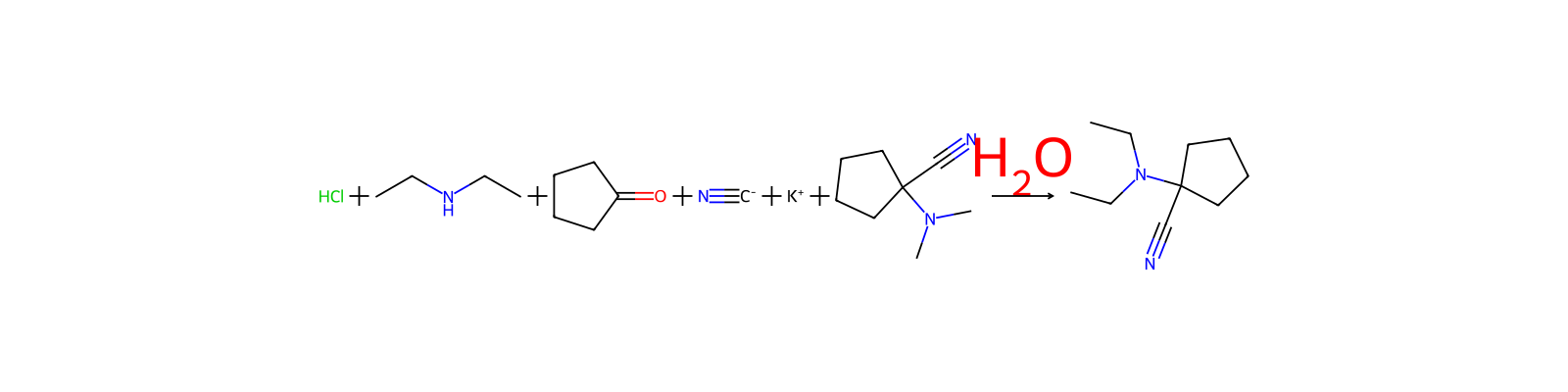
UsesDiethylamine hydrochloride acts as a precursor of atrazine and lysergic acid diethylamide. It is also used as a reactant in the production of dyes and pharmaceutical compounds such as ranitidine. Further, it is used in Mannich reaction with paraformaldehyde. In addition to this, it is employed in the synthesis of diethylaminoethyl (DEAE) cottons by reacting with cotton cellulose in the presence of sodium hydroxide.

Upstream & downstream products

Upstream raw materials

DiethylaminePhosphinous amide, P,P-bis(3,5-dimethylphenyl)-N,N-diethyl-Bis(3,5-dimethylphenyl)chlorophosphinetert-butyl 4-phenylpiperidine-1-carboxylate4-Phenylpiperidine

Downstream products

N-(Carboxymethyl)-N-(phosphonomethyl)-glycine

Related reactions

62 records
New reaction record
HRID 20792 reaction equation
HRID 20792As reactant
HRID 51958 reaction equation
HRID 51958As reactant
HRID 236678 reaction equation
HRID 236678As reactant
HRID 237374 reaction equation
HRID 237374As reactant
HRID 261273 reaction equation
HRID 261273As reactant
HRID 427259 reaction equation
HRID 427259As reactant
HRID 436495 reaction equation
HRID 436495As reactant
HRID 437762 reaction equation
HRID 437762As reactant
PreviousPage 1 of 8

Compound notes

On this pageBasic informationOverviewNames & identifiersPropertiesSafety & regulationChemistry & industryRelated reactionsCompound notes
form
Liquid
color
White to off-white
Specific Gravity
1.0475 · 1.0475 (21℃)
PH
4.5 · 4.5-6.5 (10g/l, H2O, 20℃)
Water Solubility
soluble
Sensitive
Hygroscopic
Merck
14 · 14,3111
BRN
3590084 · 3590084
InChI
1S/C4H11N.ClH/c1-3-5-4-2;/h5H,3-4H2,1-2H3;1H
InChIKey
HDITUCONWLWUJR-UHFFFAOYSA-N
SMILES
Cl.CCNCC
LogP
-1.3 at · -1.3 at 20℃
CAS DataBase Reference
660 · 660-68-4(CAS DataBase Reference)
FDA UNII
9 V3G1135 · ZE9V3G1135
EPA Substance Registry System
Diethylamine hydrochloride (660-68-4)
UNSPSC Code
12352107 · 12352107
NACRES
22 · NA.22
Symbol(GHS)
5 · GHS05,GHS06
Signal word
Danger
Hazard statements
302 · H302+H332-H311-H314-H317-H335
Precautionary statements
260 · P260-P280-P301+P312-P303+P361+P353-P304+P340+P310-P305+P351+P338
target organs
Respiratory system
PPE
95 · dust mask type N95 (US), Eyeshields, Gloves
Hazard Codes
Xn,Xi
Risk Statements
10 · 10-36/37/38
Safety Statements
26 · 26-39-7-24/25-36
RIDADR
1993 · UN 1993 3/PG 3
WGK Germany
3 · 3
RTECS
5740000 · SP5740000
F
21 · 21
TSCA
TSCA listed
HS Code
29211200 · 29211200
Storage Class
6.1 A · 6.1A - Combustible acute toxic Cat. 1 and 2very toxic hazardous materials
Hazard Classifications
3 DermalAcute · Acute Tox. 3 DermalAcute Tox. 4 InhalationAcute Tox. 4 OralEye Dam. 1Skin Corr. 1ASkin Sens. 1STOT SE 3
Toxicity
50 orally · LD50 orally in Rabbit: 9900 mg/kg
REACH Registrations
Active
Adverse EffectsOccupational hepatotoxin - Secondary hepatotoxins: the potential for toxic effect in the occupational setting is based on cases of poisoning by human ingestion or animal experimentation.

Safety data

F
21
PPE
dust mask type N95 (US), Eyeshields, Gloves
wgk
3
tsca
TSCA listed
rtecs
SP5740000
ridadr
UN 1993 3/PG 3
hs_code
29211200
Toxicity
LD50 orally in Rabbit: 9900 mg/kg
risk_code
10-36/37/38
Signal word
Danger
Symbol(GHS)
GHS05,GHS06
hazard_code
Xn,Xi
safety_code
26-39-7-24/25-36
Storage Class
6.1A - Combustible acute toxic Cat. 1 and 2very toxic hazardous materials
target organs
Respiratory system
Hazard statements
H302+H332-H311-H314-H317-H335
REACH Registrations
Active
Hazard Classifications
Acute Tox. 3 DermalAcute Tox. 4 InhalationAcute Tox. 4 OralEye Dam. 1Skin Corr. 1ASkin Sens. 1STOT SE 3
Precautionary statements
P260-P280-P301+P312-P303+P361+P353-P304+P340+P310-P305+P351+P338
N,N-Diethyldecanamide
1-Diethylamino-3-butanone
1,1-Diethylurea
N,N-Diethylcyclohexylamine
Diethyl (trichloromethyl)phosphonate
Oxolamine
Bis(diethylamino)chlorophosphine