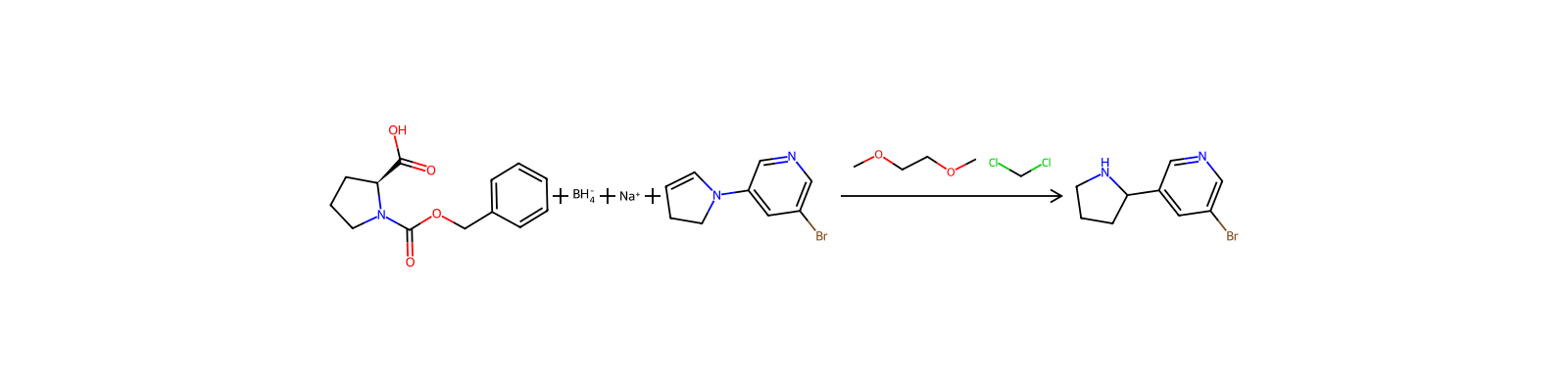
Benzyloxycarbonyl-L-proline
Completing data — refresh the page later to see the latest
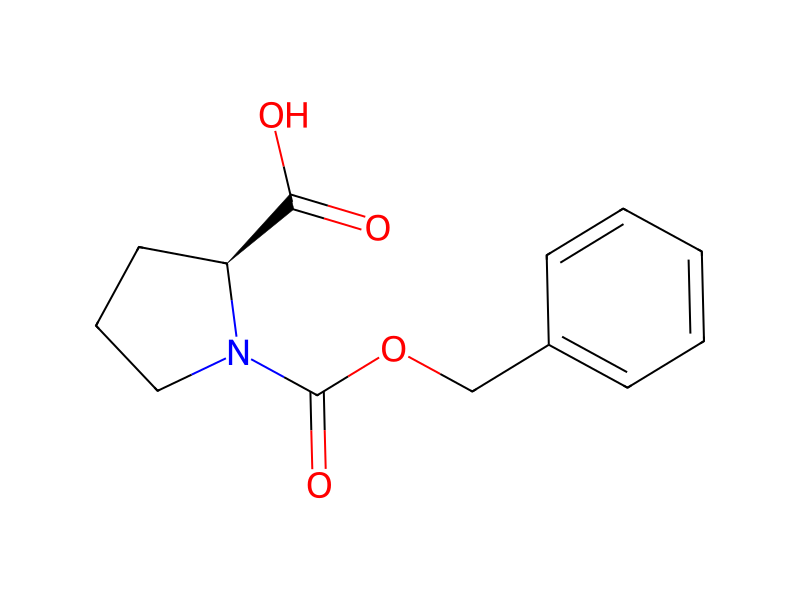
Basic information
- CAS
1148-11-4- Standard SMILES
O=C(O)[C@@H]1CCCN1C(=O)OCc1ccccc1- InChIKey
JXGVXCZADZNAMJ-NSHDSACASA-N- Molecular formula
- C13H15NO4
- Average molar mass
- 249.26 g/mol
- Monoisotopic mass
- 249.10010796
Overview
an inhibitor of prolidase
Names & identifiers
- Preferred name
- Benzyloxycarbonyl-L-proline
- IUPAC
- (2S)-1-phenylmethoxycarbonylpyrrolidine-2-carboxylic acid
- English name
- N-Benzyloxycarbonyl-L-proline
- Molecular formula
- C13H15NO4
- Molecular weight
- 249.26
Names & synonyms
1148-11-4CarbobenzoxyprolineCarbobenzoxy-S-prolineBenzyloxycarbonyl-L-prolineCbz-Procbz-prolineH2BS8M5FPP1,2-Pyrrolidinedicarboxylic acid, 1-(phenylmethyl) ester, (S)-DTXSID40150856RefChem:829273DTXCID3073347Z-Pro-OH
Show more names
CBZ-PRO-OHZ-ProCBZ-L-PROLINECBZ-L-ProZ-L-PRO-OHZ-PROLINECBZ-L-Pro-OH
N-Benzyloxycarbonyl-L-prolineZ-L-ProlineN-CBZ-L-PROLINEN-Carbobenzoxy-L-proline114-11-4BenzyloxycarbonylprolineCarbobenzyloxy-L-prolineMFCD00003170
Database identifiers
- CAS
1148-11-4- PubChem CID
- 101987
- DTXSID
DTXSID40150856- ChEMBL
CHEMBL3276375- UNII
- H2BS8M5FPP
- EC Number
- 214-557-4
- Nikkaji
- J25.953E
Properties
Computed structural propertiesFilling in
- XLogP
- 1.7
- Topological polar surface area
- 66.8 Ų
- Hydrogen bond donors
- 1
- Hydrogen bond acceptors
- 4
- Rotatable bonds
- 4
- Heavy atoms
- 18
- Formal charge
- 0
- Complexity
- 312
Physicochemical properties
- Melting point
- 75 · 75-77 °C
- alpha
- -60 · -60 º (c=2,AcOH)
- Boiling point
- 392.36 °C · 392.36°C (rough estimate)
- Density
- 1.1952 · 1.1952 (rough estimate)
- refractive index
- -40 ° · -40 ° (C=2, EtOH)
- storage temp.
- Sealed in dry,Room Temperature
- solubility
- Solubility in methanol, almost transparency.
- form
- Crystalline Powder or Crystals
- pka
- 3.99 · 3.99±0.20(Predicted)
- color
- White to off-white
- optical activity
- 20 · [α]20/D 42°, c = 2 in ethanol
- BRN
- 88579 · 88579
- Major Application
- peptide synthesis
- InChI
- InChI=1S/C13H15NO4/c15-12(16)11-7-4-8-14(11)13(17)18-9-10-5-2-1-3-6-10/h1-3,5-6,11H,4,7-9H2,(H,15,16)/t11-/m0/s1
- InChIKey
Safety & regulation
Safety information is for reference only and does not replace the supplier’s Safety Data Sheet (SDS), applicable regulations, or professional assessment.
GHS classification
GHS Classification
This chemical does not meet GHS hazard criteria for 37.5% (3 of 8) of reports.
Danger
H315 (37.5%): Causes skin irritation [Warning Skin corrosion/irritation]
P261, P264, P264+P265, P271, P272, P280, P302+P352, P304+P340, P305+P351+P338, P305+P354+P338, P317, P319, P321, P332+P317, P333+P317, P337+P317, P362+P364, P403+P233, P405, and P501 (click each P-code to see the statement)
Aggregated GHS information provided per 8 reports by companies from 6 notifications to the ECHA C&L Inventory. Each notification may be associated with multiple companies.
Hazard information
Hazard Classes and CategoriesSkin Irrit. 2 (37.5%)
Safety data
- PPE
- Eyeshields, Gloves, type N95 (US)
- wgk
- 3
- rtecs
- UY0745000
- hs_code
- 29339900
- risk_code
- 62-36/37/38-20/21/22
- Signal word
- Danger
- Symbol(GHS)
- GHS05
- hazard_code
- Xn
- safety_code
- 22-24/25-36-26
- hazard_class
- IRRITANT
- Storage Class
- 11 - Combustible Solids
- Hazard statements
- H318
- Precautionary statements
- P271-P261-P280
Chemistry & industry
Applications
UsesN-(Benzyloxycarbonyl)-L-proline is a potent in vitro and in vivo inhibitor of prolidase; a specific peptidase that cleaves dipeptides with a C-terminal prolyl and hydroxylprolyl residue. It is also used in the synthesis of N-(L-Prolyl)-β-alanine which is a derivative of the naturally occurring beta amino acid β-Alanine.
Preparation methods
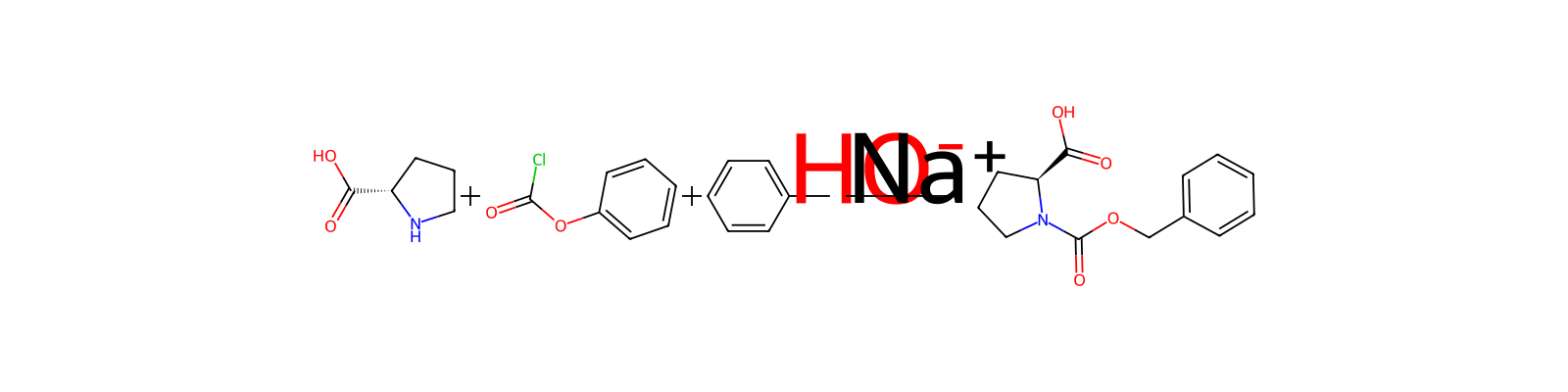
PreparationCaution! All procedures must be carried out in an efficient fume cupboard, wearing latex gloves and chemical-proof safety goggles. ι-Proline (10.0 g, 8.7 mmol) was dissolved in 2 m sodium hydroxide solution (40 mL), and the solution was cooled to ice-water temperature. Z-Cl (20.5 g, 12 mmol) was added portionwise, with vigorous stirring or occasional shaking, over a period of 30 min at 0–5 °C to the solution of l-proline. The ice bath was then removed and stirring or occasional shaking was continued for 30 min while the reaction mixture warmed to room temperature. The mixture was then acidified to Congo red by the gradual addition of concentrated hydrochloric acid, and the oil was extracted into ethyl acetate. The extract was dried over magnesium sulfate, the mixture was filtered, and the filtrate was concentrated in vacuo. The residue was extracted/triturated with warm tetrachloromethane. The washings were decanted and the residue was further purified by recrystallization from ethyl acetate/petroleum ether.
Upstream & downstream products
Downstream products
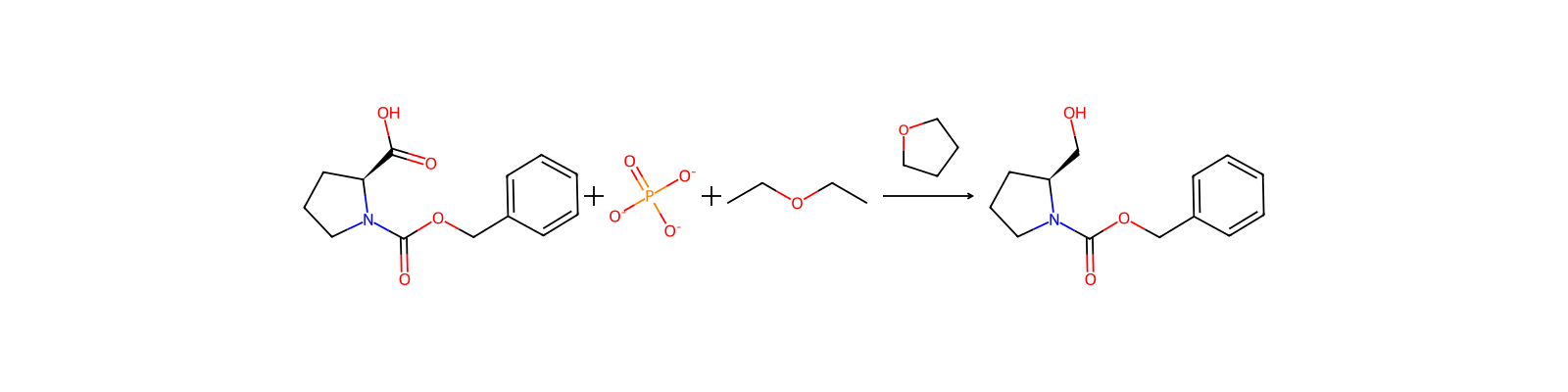
Related reactions
145 records
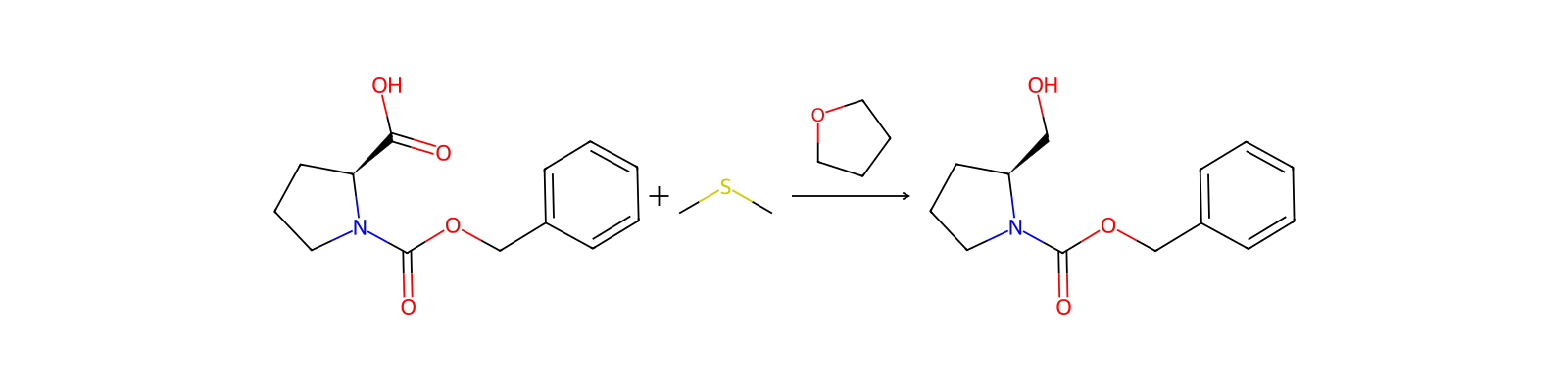
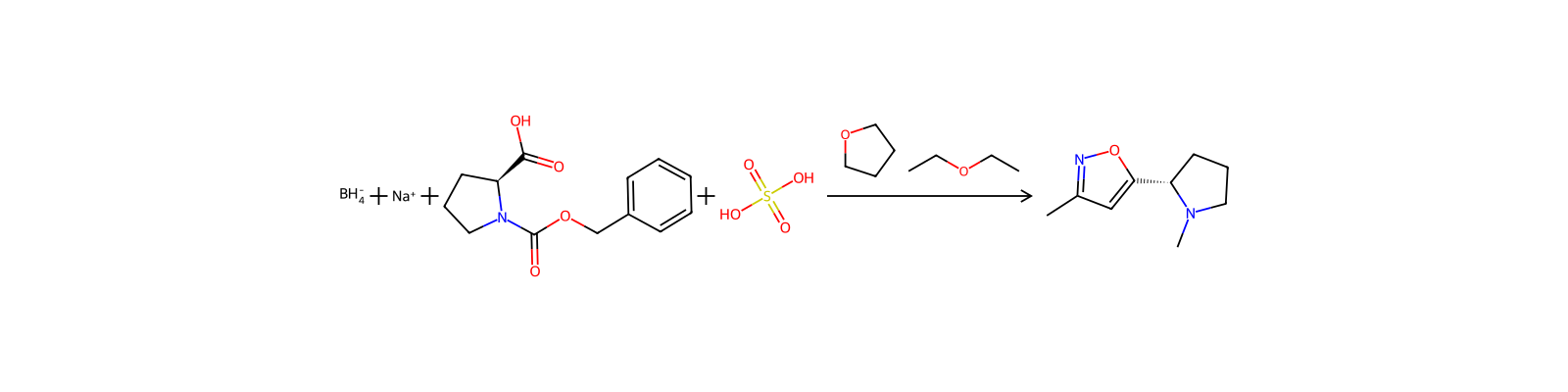

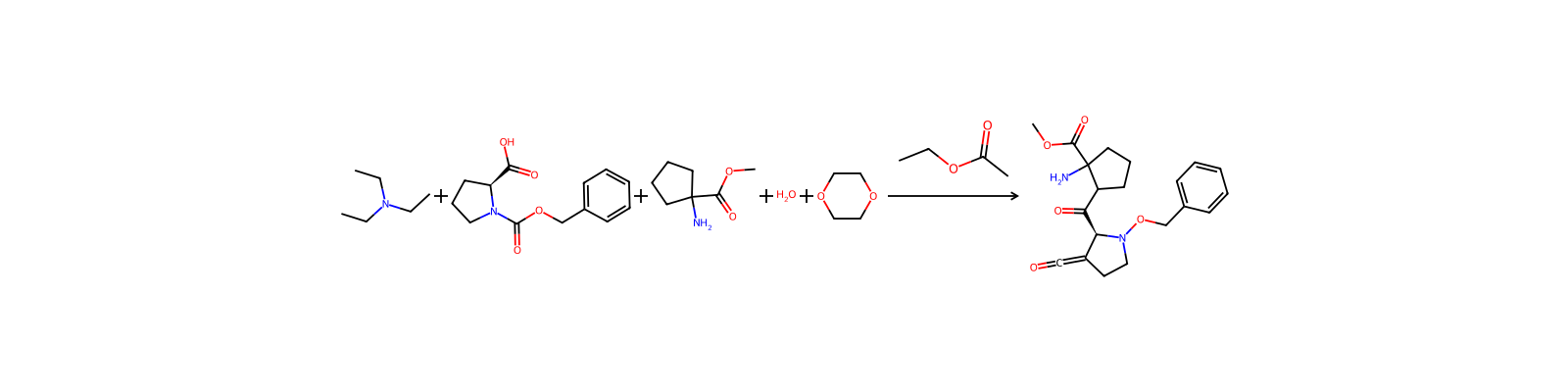
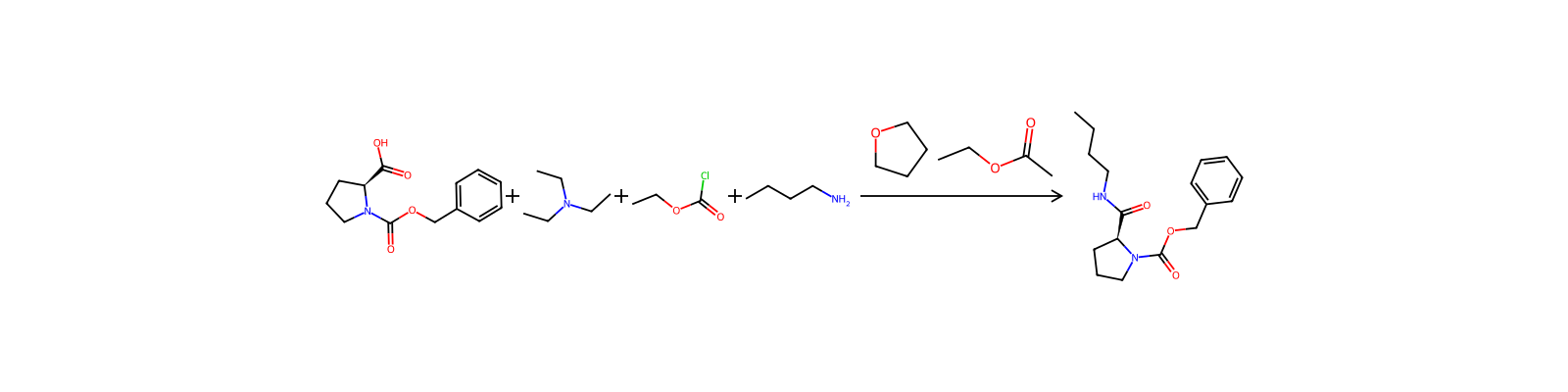
Compound notes
Loading…