
Completing data — usually done within a minute
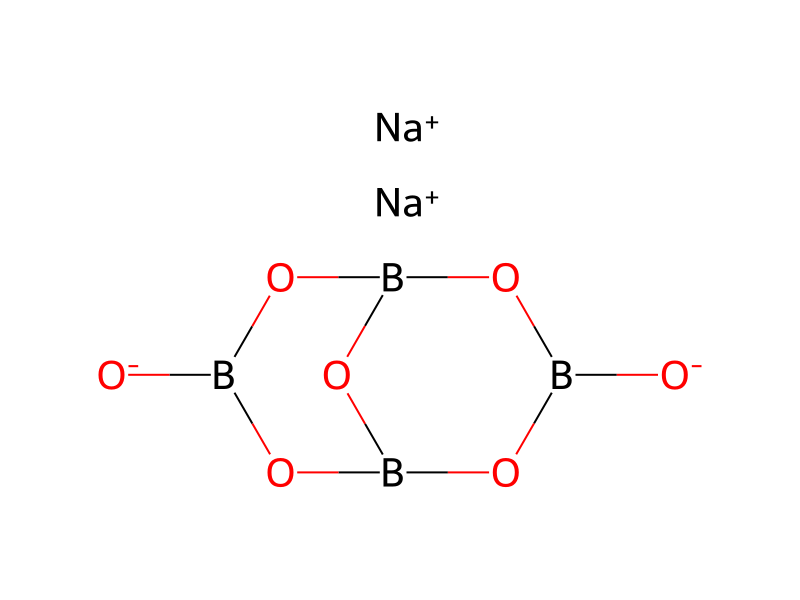
Basic information
- CAS
1310383-93-7- Standard SMILES
[Na+].[Na+].[O-]B1OB2OB([O-])OB(O1)O2- InChIKey
UQGFMSUEHSUPRD-UHFFFAOYSA-N- Molecular formula
- B4Na2O7
- Average molar mass
- 201.2 g/mol
- Monoisotopic mass
- 201.9811625
Overview
See also: Boron sodium oxide (B4Na2O7), hydrate (annotation moved to); Boron sodium oxide (B4Na2O7), hydrate (1:?) (annotation moved to); Tetraboron disodium heptaoxide, hydrate (annotation moved to).
Names & identifiers
- Preferred name
- Sodium Tetraborate
- IUPAC
- disodium;3,7-dioxido-2,4,6,8,9-pentaoxa-1,3,5,7-tetraborabicyclo[3.3.1]nonane
Names & synonyms
1330-43-4Sodium Tetraborate, AnhydrousBorax glassBoron sodium oxide (B4Na2O7)Anhydrous boraxSodium biborateBorax AnhydrousFused boraxBorax, fusedSodium pyroborateDehyborGranubor
Show more names
SprayborSodium borate, anhydrousBorax, dehydratedSodium boron oxideRasorite 658191EN8ZMDBoric acid, disodium saltBoric acid (H2B4O7), disodium salt
Database identifiers
- CAS
1310383-93-7、1330-43-4- PubChem CID
- 10219853
- DTXSID
DTXSID101014358- ChEMBL
CHEMBL1076681- UNII
- 8191EN8ZMD
- EC Number
- 215-540-4
Properties
Computed structural propertiesFilling in
- Topological polar surface area
- 92.3 Ų
- Hydrogen bond donors
- 0
- Hydrogen bond acceptors
- 7
- Rotatable bonds
- 0
- Heavy atoms
- 13
- Formal charge
- 0
- Complexity
- 121
Experimental & physicochemical properties
Chemical ClassesMetals -> Metalloid Compounds (Boron)
CosmeticsBuffering
pHpH = 9.3 at 20 °C (3% solution)
Pesticides
Herbicides, Insecticides, Molluscicides
Active substance -> EU Pesticides database: Not approved
OdorOdorless
Density
2.367
White crystals or powder, odorless; density: 1.73 20 °C/4 °C; loses water of crystallization when heated, with melting between 75 and 320 °C; fuses to a glassy mass at red heat (borax glass); effloresces slightly in warm dry air; soluble in water, glycerol; insoluble in alcohol /Sodium tetraborate decahydrate/
Relative density (water = 1): 2.4
2.37
2.37
Color/Form
Colorless glassy solid; hygroscopic
Light grey, vitreous granules
White to gray powder; becomes opaque on exposure to air
Solubility
Water solubility: 3.1% at 25 °C; 2.5% at 20 °C
Solubility at 25 °C: 16.7% in methanol; 30% in ethylene glycol; 40.6 g/L in formamide
Solubility in water, g/100ml at 20 °C: 2.56
4%
CorrosivitySolutions are not a corrosion hazard to ferrous metals
Boiling Point
1,575 °C (decomposes)
2867 °F (decomposes)
2867 °F (Decomposes)
Decomposition
When heated to decomposition it emits toxic fumes of boron.
1575 °C. This produces toxic fumes including sodium oxide.
Melting Point
Between 171 °C and 175 °C with decomposition
743 °C
742 °C
1366 °F
1366 °F
Safety & regulation
GHS classification
GHS Classification
Danger
H360FD: May damage fertility; May damage the unborn child [Danger Reproductive toxicity]
P203, P280, P318, P405, and P501 (click each P-code to see the statement)
Danger
H319 (53.2%): Causes serious eye irritation [Warning Serious eye damage/eye irritation]
P203, P264+P265, P280, P305+P351+P338, P318, P337+P317, P405, and P501 (click each P-code to see the statement)
Hazard information
Regulatory Information
Chemical: Boron sodium oxide (B4Na2O7)
Regulation (EC) No 257/2010
Boron sodium oxide (B4Na2O7) is listed on the EPA's Chemical Data Reporting (CDR) system. Manufacturers and importers of Boron sodium oxide (B4Na2O7) are required to report information about their production and use of this chemical to the EPA under the Toxic Substances Control Act (TSCA). (40 eCFR Part 711)
2004/129/EC
Status: Active Update: 11-03-2022 https://echa.europa.eu/registration-dossier/-/registered-dossier/15357
Substance: Disodium tetraborate, anhydrous
Other Safety InformationIMAP assessments - Salts of boric acid: Human health tier II assessment
Fire HazardsNot combustible. Gives off irritating or toxic fumes (or gases) in a fire.
Fire PotentialNoncombustible
Hazards Summary
The basis for the TLV for inorganic borate compounds is irritation of the nose and respiratory tract. Studies of workers exposed to sodium borate dusts found no evidence of pulmonary function or reproductive impairment. [ACGIH] Borate dust is moderately irritating to the skin, but it is not absorbed well by intact skin. Inhalation of borate dust can cause nasal irritation, cough, and chest tightness. [EPA Pesticides] In high-dose reproductive studies of animals, boric acid causes testicular damage and fetal loss. [Frazier, p. 252-3]
EC ClassificationR: 60-61; S: 53-45; Symbol: T
Special ReportsUSEPA/OWRS; Quality Criteria for Water 1986 Boron (1986) EPA 440/5-86-001
EPA Safer ChemicalChemical: Boron sodium oxide
FIFRA Requirements
As the federal pesticide law FIFRA directs, EPA is conducting a comprehensive review of older pesticides to consider their health and environmental effects and make decisions about their future use. Under this pesticide reregistration program, EPA examines health and safety data for pesticide active ingredients initially registered before November 1, 1984, and determines whether they are eligible for reregistration. In addition, all pesticides must meet the new safety standard of the Food Quality Protection Act of 1996. Borax is found on List A, which contains most food use pesticides and consists of the 194 chemical cases (or 350 individual active ingredients) for which EPA issued registration standards prior to FIFRA '88. Case No: 0024; Pesticide type: insecticide, fungicide herbicide; Registration Standard Date: 11/01/85; Case Status: RED Approved 9/93; OPP has made a decision that some/all uses of the pesticide are eligible for reregistration, as reflected in a Reregistration Eligibility Decision (RED) document .; Active ingredient (AI): sodium tetraborate anhydrous; Data Call-in (DCI) Date(s): 2/16/94; AI Status: OPP has completed a Reregistration Eligibility Decision (RED) for the case/AI.
Based on the reviews of the generic data for the active ingredients of boric acid and its sodium salts, the Agency has sufficient information on the health effects of boric acid and its sodium salts and their potential for causing adverse effects in fish and wildlife and the environment. Therefore, the Agency concludes that products containing boric acid and its sodium salts for all uses are eligible for reregistration. The Agency has determined that boric acid and its sodium salts, labeled and used as specified in the RED document, will not pose unreasonable risks or adverse effects to humans or the environment.
Sodium tetraborate (when limited to no more than 2% of pesticide formulation) is exempted from the requirement of a tolerance when used as a buffering agent or corrosion inhibitor in accordance with good agricultural practice as inert (or occasionally active) ingredients in pesticide formulations applied to growing crops only.
An exemption from the requirement of a tolerance is established for residues of the pesticidal chemical boric acid and its salts, borax (sodium borate decahydrate), disodium octaborate tetrahydrate, boric oxide (boric anhydride), sodium borate and sodium metaborate, in or on raw agricultural commodities when used as an active ingredient in insecticides, herbicides, or fungicides preharvest or postharvest in accordance with good agricultural practices.
OSHA StandardsVacated 1989 OSHA PEL TWA 10 mg/cu m is still enforced in some states. /Borates, tetra, sodium salts/
Chemical DangersDecomposes at 1575 °C. This produces toxic fumes including sodium oxide.
Flammable LimitsNoncombustible Solid
Safety & protection
Fire FightingIn case of fire in the surroundings, use appropriate extinguishing media.
First Aid Measures
Fresh air, rest.
Rinse and then wash skin with water and soap.
First rinse with plenty of water for several minutes (remove contact lenses if easily possible), then refer for medical attention.
Rinse mouth. Do NOT induce vomiting. Refer immediately for medical attention.
First Aid(General first aid procedures)
Safe StorageDry. Well closed.
Exposure Control and Personal Protection0.75 [mg/m3], inhalable fraction[German Research Foundation (DFG)]
Storage Conditions
Storage temperature: ambient
Preserve in tight containers.
Cleanup MethodsSweep spilled substance into containers. Carefully collect remainder, then remove to safe place. (Extra personal protection: P2 filter respirator for harmful particles). /table/
Disposal Methods
SRP: The most favorable course of action is to use an alternative chemical product with less inherent propensity for occupational exposure or environmental contamination. Recycle any unused portion of the material for its approved use or return it to the manufacturer or supplier. Ultimate disposal of the chemical must consider: the material's impact on air quality; potential migration in soil or water; effects on animal, aquatic, and plant life; and conformance with environmental and public health regulations.
Spillage Disposal
Personal protection: particulate filter respirator adapted to the airborne concentration of the substance. Sweep spilled substance into covered containers. If appropriate, moisten first to prevent dusting. Carefully collect remainder. Then store and dispose of according to local regulations.
Preventive Measures
SRP: The scientific literature for the use of contact lenses in industry is conflicting. The benefit or detrimental effects of wearing contact lenses depend not only upon the substance, but also on factors including the form of the substance, characteristics and duration of the exposure, the uses of other eye protection equipment, and the hygiene of the lenses. However, there may be individual substances whose irritating or corrosive properties are such that the wearing of contact lenses would be harmful to the eye. In those specific cases, contact lenses should not be worn. In any event, the usual eye protection equipment should be worn even when contact lenses are in place.
The worker should wash daily at the end of each work shift.
Workers whose clothing may have become contaminated should change into uncontaminated clothing before leaving the work premises.
SRP: Local exhaust ventilation should be applied wherever there is an incidence of point source emissions or dispersion of regulated contaminants in the work area. Ventilation control of the contaminant as close to its point of generation is both the most economical and safest method to minimize personnel exposure to airborne contaminants.
SRP: Contaminated protective clothing should be segregated in such a manner so that there is no direct personal contact by personnel who handle, dispose, or clean the clothing. Quality assurance to ascertain the completeness of the cleaning procedures should be implemented before the decontaminated protective clothing is returned for reuse by the workers. Contaminated clothing should not be taken home at end of shift, but should remain at employee's place of work for cleaning.
Eye PreventionWear safety spectacles or eye protection in combination with breathing protection.
Inhalation RiskEvaporation at 20 °C is negligible; a harmful concentration of airborne particles can, however, be reached quickly , especially if powdered.
Toxicology
Target OrgansEyes, skin, respiratory system
Ecotoxicity Values
LC50 Chironomus decorus (Midge, fourth instar) 1,376 mg B/L/48 hr /Conditions of bioassay not specified in source examined/
LC50 Daphnia magna (Water flea, neonate) 141 mg B/L/48 hr /Conditions of bioassay not specified in source examined/
LC50 Gambusia affinis (Western mosquitofish) 346 mg/L/24 hr; static /formulated product/
LC50 Gambusia affinis (Western mosquitofish) 236 mg/L/48 hr; static /formulated product/
For more Ecotoxicity Values (Complete) data for SODIUM TETRABORATE (10 total), please visit the HSDB record page.
Environmental FateTerrestrial Fate: Average persistence at recommended rates is one or more years, depending on soil type and rainfall. Less persistent in acid soils and in high rainfall areas.
Adverse Effects
Reproductive Toxin - A chemical that is toxic to the reproductive system, including defects in the progeny and injury to male or female reproductive function. Reproductive toxicity includes developmental effects. See Guidelines for Reproductive Toxicity Risk Assessment.
Exposure Routes
The substance can be absorbed into the body by inhalation of its aerosol and by ingestion.
inhalation, ingestion, skin and/or eye contact
Ecotoxicity Excerpts
/AQUATIC SPECIES/ Acute toxicity evaluations of waterborne sodium tetraborate resulted in 48 hr LC50 values of 141 and 1376 mg boron for neonate Daphnia magna and fourth instar Chironomus decorus, respectively. Chronic sublethal studies demonstrated a significant decrease in C. decorus growth rate at 20 mg B/L. Further studies showed that increasing water hardness (10.6 to 170 mg/L as CaCo3) and sulfate (10.2 to 323.4 mg SO4-2/L) concentrations did not affect boron toxicity to D. magna. These results, in conjunction with a review of the literature, suggest that aquatic macrophytes may be more sensitive to boron than macroinvertebrates...
/AQUATIC SPECIES/ Laboratory studies were undertaken to evaluate the toxicity of waterborne boron to two key freshwater macroinvertebrates and to evaluate the effects of water hardness and sulfate on boron toxicity. Acute toxicity evaluations of waterborne sodium tetraborate resulted in 48 hr LC50 values of 141 and 1376 mg B/L for neonate Daphnia magna and fourth instar Chironomus decorus, respectively. Chronic sublethal studies demonstrated a significant decrease in C. decorus growth rate at 20 mg B/L. Further studies showed that increasing water hardness (10.6 to 170 mg/L as CaCO3) and sulfate (10.2 to 325.4 mg SO4(-2)/L) concentrations did not affect boron toxicity to D. magna.
Signs and Symptoms
Cough. Sore throat. Shortness of breath.
Redness.
Redness. Pain.
Nausea. Vomiting. Abdominal pain. Diarrhoea. Weakness. Drowsiness.
irritation eyes, skin, upper respiratory system; dermatitis; epistaxis (nosebleed); cough, dyspnea (breathing difficulty)
ICSC Environmental DataThe substance is harmful to aquatic organisms.
Medical SurveillanceNo specific considerations are needed for boric acid or borates except for general health and liver and kidney function. /Boric acid and borates/
Soil Adsorption/MobilityAdsorbed by mineral portion of soil. Slowly leached.
Natural Pollution SourcesSODIUM TETRABORATE, Na2B4O7, USUALLY OCCURS AS BORAX, WHICH IS THE DECAHYDRATE MINERAL DEPOSITED BY EVAPORATION OF SALT LAKES IN TERTIARY PERIODS. IT IS ALSO MINED AS MINERALS COLEMANITE ... & KERNITE ...
Human Toxicity Excerpts
/HUMAN EXPOSURE STUDIES/ This study (1) charted chemosensory feel, denoted chemesthesis here, to dusts of calcium oxide (1 to 5 mg/m(3)), sodium tetraborate pentahydrate [sodium borate] (5 to 40 mg/m(3)), and calcium sulfate (10 to 40 mg/m(3)); (2) examined correlates of the chemesthetic sensations; and (3) sought to illuminate the basis for potency. Twelve screened men exercised against a light load while they breathed air in a dome fed with controlled levels of dust for 20 min. Measured parameters included nasal resistance, nasal secretion, minute ventilation, heart rate, blood oxygenation, mucociliary transport time, and chemesthetic magnitude, calibrated to pungency of carbon dioxide. Subjects registered time-dependent feel from exposures principally in the nose, secondarily in the throat, and hardly in the eyes. Calcium oxide had the greatest potency, followed by sodium borate, with calcium sulfate a distant third. Of the physiological parameters, amount of secretion showed the best association with chemesthetic potency. That measure, as well as mucociliary transport time and minute ventilation, went into calculation of mass of dust dissolved into mucus. The calculations indicated that the two alkaline dusts increased in equal molar amounts with time. At equal molar concentrations, they had, to a first approximation, equal chemesthetic magnitude. On the basis of mass concentration in air or dissolved into mucus, calcium oxide and sodium borate differed in potency by a factor just above five, equal to the difference in their molecular weights.
/SIGNS AND SYMPTOMS/ Symptoms of poisoning: Nausea, diarrhea, rashes, CNS depression, and coma.
/SIGNS AND SYMPTOMS/ An intravenous dose of 14-20 g of sodium borate was administered for the purposes of neutron capture therapy to 10 patients, who experienced immediate nausea, vomiting, defecation, and occasionally seizures and respiratory depression.
/SIGNS AND SYMPTOMS/ Inhalation: Cough, shortness of breath, sore throat, nose bleed. /from table/
For more Human Toxicity Excerpts (Complete) data for SODIUM TETRABORATE (11 total), please visit the HSDB record page.
Regulatory information
FIFRA Requirements
As the federal pesticide law FIFRA directs, EPA is conducting a comprehensive review of older pesticides to consider their health and environmental effects and make decisions about their future use. Under this pesticide reregistration program, EPA examines health and safety data for pesticide active ingredients initially registered before November 1, 1984, and determines whether they are eligible for reregistration. In addition, all pesticides must meet the new safety standard of the Food Quality Protection Act of 1996. Borax is found on List A, which contains most food use pesticides and consists of the 194 chemical cases (or 350 individual active ingredients) for which EPA issued registration standards prior to FIFRA '88. Case No: 0024; Pesticide type: insecticide, fungicide herbicide; Registration Standard Date: 11/01/85; Case Status: RED Approved 9/93; OPP has made a decision that some/all uses of the pesticide are eligible for reregistration, as reflected in a Reregistration Eligibility Decision (RED) document .; Active ingredient (AI): sodium tetraborate anhydrous; Data Call-in (DCI) Date(s): 2/16/94; AI Status: OPP has completed a Reregistration Eligibility Decision (RED) for the case/AI.
Based on the reviews of the generic data for the active ingredients of boric acid and its sodium salts, the Agency has sufficient information on the health effects of boric acid and its sodium salts and their potential for causing adverse effects in fish and wildlife and the environment. Therefore, the Agency concludes that products containing boric acid and its sodium salts for all uses are eligible for reregistration. The Agency has determined that boric acid and its sodium salts, labeled and used as specified in the RED document, will not pose unreasonable risks or adverse effects to humans or the environment.
Sodium tetraborate (when limited to no more than 2% of pesticide formulation) is exempted from the requirement of a tolerance when used as a buffering agent or corrosion inhibitor in accordance with good agricultural practice as inert (or occasionally active) ingredients in pesticide formulations applied to growing crops only.
An exemption from the requirement of a tolerance is established for residues of the pesticidal chemical boric acid and its salts, borax (sodium borate decahydrate), disodium octaborate tetrahydrate, boric oxide (boric anhydride), sodium borate and sodium metaborate, in or on raw agricultural commodities when used as an active ingredient in insecticides, herbicides, or fungicides preharvest or postharvest in accordance with good agricultural practices.
State Drinking Water Guidelines
(CA) CALIFORNIA 1000 ug/L /Boron/
(NH) NEW HAMPSHIRE 630 ug/L /Boron/
(ME) MAINE 1,400 ug/L /Boron/
(MN) MINNESOTA 1,000 ug/L /Boron/
(WI) WISCONSIN 960 ug/L /Boron/
Federal Drinking Water GuidelinesEPA 600 ug/L /Boron/
Chemistry & industry
Pharmacology
Protein BindingNo protein binding reported.
PharmacodynamicsBoric acid exhibits minimal bacteriostatic and antifungal activities. Boric acid is likely to mediate antifungal actions at high concentrations over prolonged exposures.
Mechanism of Action
Information regarding the mechanism of action of boric acid in mediating its antibacterial or antifungal actions is limited. Boric acid inhibits biofilm formation and hyphal transformation of _Candida albicans_, which are critical virulence factors. In addition, arrest of fungal growth was observed with the treatment of boric acid.
Biological Half-LifeAccording to human cases of poisoning, the elimination half-life of boric acid ranges from 13 to 24 hours.
Metabolism/MetabolitesNo metabolic pathways reported.
Absorption, Distribution and Excretion
Boric acid is well absorbed from the gastrointestinal tract, open wounds, and serous cavities but displays limited absorption in intact skin. Following intraperitoneal injection in mice, the peak concentration was reached in about 1.0-1.5 hr in the brain whereas the value was 0.5 hr in other tissues.
Regardless the route of administration, boric acid predominantly undergoes rapid renal excretion of >90% of total administered dose as unchanged form. Small amounts are also excreted into sweat, saliva, and feces. Following administration as ointment, urinary excretion of boric acid accounted for only 1% of the administered dose.
Volume of distribution ranges from 0.17 to 0.5 L/kg in humans, where large amounts of boric acid are localized in brain, liver, and kidney.
A case report of acute boric acid poisoning following oral ingestion of 21 g of boric acid presents the total body clearance of 0.99 L/h before hemodialysis.
The pharmacokinetics of boron was studied in rats by administering a 1 mL oral dose of sodium tetraborate solution to several groups of rats (n=20) at eleven different dose levels ranging from 0-0.4 mg/100 g bw as boron. Twenty-four-hour urine samples were collected after boron administration. After 24 hr the average urinary recovery rate for this element was 99.6-7.9. The relationship between boron dose and excretion was linear (r=0.999) with a regression coefficient of 0.954. This result suggests that the oral bioavailability (F) of boron was complete. Another group of rats (n=10) was given a single oral /intubation/ of 2 mL of sodium tetraborate solution containing 0.4 mg of boron/100 g bw. The serum decay of boron was followed and found to be monophasic. The data were interpreted according to a one-compartment open model. The appropriate pharmacokinetic parameters were estimated as follows: absorption half-life, t1/2a=0.608-0.432 hr; elimination half-life, t1/2=4.64-1.19 hr; volume of distribution, Vd=142.0-30.2 mL/100 g bw.; total clearance, Ctot=0.359 - 0.0285 mL/min/100 g bw. The maximum boron concentration in serum after administration (Cmax) was 2.13-0.270 mg/L, and the time needed to reach this maximum concentration (Tmax) was 1.76-0.887 hr. ...Results suggest that orally administered boric acid is rapidly and completely absorbed from the gastrointestinal tract into the blood stream. Boric acid in the intravascular space does not have a strong affinity to serum proteins, and rapidly diffuses to the extravascular space in proportion to blood flow without massive accumulation or binding in tissues. The main route of boron excretion from the body is via glomerular filtration. It may be inferred that there is partial tubular resorption at low plasma levels.
/Ten/ rats (n=10) were given a single oral injection of 2 mL of sodium tetraborate solution containing 0.4 mg of boron/100 g bw. The serum decay of boron was followed and found to be monophasic. The data were interpreted according to a one-compartment open model. The appropriate pharmacokinetic parameters were estimated as follows: absorption half-life, t1/2a=0.608-0.432 hr; elimination half-life, t1/2=4.64-1.19 hr; volume of distribution, Vd=142.0-30.2 mL/100 g bw.; total clearance, Ctot=0.359 - 0.0285 mL/min/100 g bw. The maximum boron concentration in serum after administration (Cmax) was 2.13-0.270 mg/L, and the time needed to reach this maximum concentration (Tmax) was 1.76-0.887 hr. ...Results suggest that orally administered boric acid is rapidly and completely absorbed from the gastrointestinal tract into the blood stream. Boric acid in the intravascular space does not have a strong affinity to serum proteins, and rapidly diffuses to the extravascular space in proportion to blood flow without massive accumulation or binding in tissues. The main route of boron excretion from the body is via glomerular filtration. It may be inferred that there is partial tubular resorption at low plasma levels.
Uses & manufacturing
Uses
Used as tablets or powder to kill larvae in livestock confinements and crawling insects in residences; [EPA Pesticides] Used as a fluxing agent, a buffering agent, a biocide (preservative, antiseptic, insecticide, fungicide, herbicide, algicide, nematicide), a fireproofing agent, a corrosion inhibitor, a tanning agent, and a textile bleaching agent; Used to manufacture glazes, enamels, borosilicate glass, fertilizers, detergents, antifreeze, pharmaceuticals, and cosmetics; [HSDB]
Acid and Alkali Cleaning of Metals [Category: Clean]
For sodium tetraborate (USEPA/OPP Pesticide Code: 011112) ACTIVE products with label matches. /SRP: Registered for use in the U.S. but approved pesticide uses may change periodically and so federal, state and local authorities must be consulted for currently approved uses./
Manufacture of glass, enamels, & other ceramic products
Soldering metals; manufacture of glazes and enamels; tanning; in cleaning compounds; artificially aging wood; ...curing and preserving skins
As preservative either alone or with other antiseptics against wood fungus; fireproofing fabrics & wood
U.S. Production
2023: 250,000,000 - <400,000,000 lb
(1975) 1.82X10+8 G
Consumption PatternsFIBERGLASS INSULATION, 43%; GLASS ADDITIVE, 18%; PORCELAIN ENAMELS AND CERAMIC GLAZES, 15%; ANTIFREEZE, 5%; ALGICIDE, 2%; FLAME RETARDANT, 1%; OTHER USES, 16% (1975)
Consumer UsesAdhesion/cohesion promoter
Industry UsesProcessing aids not otherwise specified
Methods of Manufacturing
Anhydrous borax is produced from its hydrated forms by fusion. Calcining is usually an intermediate step in the procsess.
Processing of sodium borate ores by crushing, heating, mechanical separation, selective crystallization, and finally flotation of borax decahydrate or pentahydrate from the resultant concentrated borax liquor
Disodium tetraborate (borax) containing 5 or 10 molecules of water is produced mainly from sodium-containing borate ores. The mined ore is crushed and ground before dissolution in a hot recycled aqueous solution containing some borax. Insoluble gangue (clay particles) present in the hot slurry is separated off to produce a clear concentrated borax solution. Evaporative cooling of this solution to selected temperatures results in crystallization of the desired products, which are then separated from the residual liquor and dried. /Borax/
Formulations/Preparations
GRADES: Technical (99% sodium tetraborate): standard; fine granular form; glass or fused
Single Active Ingredient Products: Emulsifiable concentrate 0.28%; Granular 100%; Bait/liquid ready to use 5%. Multiple Active Ingredient Products: Soluble concentrate/liquid 11.41% +1 other active ingredient.
Household ProductsInformation on 54 consumer products that contain Sodium tetraborate anhydrous in the following categories is provided:
Use Classification
EPA Safer Chemical Functional Use Classes -> Enzymes and Enzyme Stabilizers
Safer Chemical Classes -> Yellow triangle - The chemical has met Safer Choice Criteria for its functional ingredient-class, but has some hazard profile issues
Food additives
Food Additives -> PRESERVATIVE -> JECFA Functional Classes
Cosmetics -> Buffering
General Manufacturing Information
Utilities
Boron sodium oxide (B4Na2O7): ACTIVE
Borate is the accepted common name for the metal salts of boric acid which comprise the following family of chemicals: sodium tetraborate decahydrate, sodium tetraborate pentahydrate, sodium tetraborate (anhydrous borax), disodium octaborate (anhydrous), disodium octaborate tetrahydrate, and sodium metaborate. /Borates/
Related reactions
1 records
Compound notes
Loading…