

Basic information
- CAS
489-98-5- Standard SMILES
Nc1c([N+](=O)[O-])cc([N+](=O)[O-])cc1[N+](=O)[O-]- InChIKey
IAHOUQOWMXVMEH-UHFFFAOYSA-N- Molecular formula
- C6H4N4O6
- Average molar mass
- 228.12 g/mol
- Monoisotopic mass
- 228.01308386
Overview
2,4,6-trinitroaniline appears as yellow monoclinic crystals. (NTP, 1992)
Names & identifiers
- Preferred name
- 2,4,6-Trinitroaniline
- IUPAC
- 2,4,6-trinitroaniline
- English name
- 2,4,6-Trinitroaniline
- Molecular formula
- C6H4N4O6
- Molecular weight
- 228.12
Names & synonyms
2,4,6-TRINITROANILINEPicramide2,4,6-Trinitrobenzenamine1-Amino-2,4,6-trinitrobenzeneBenzenamine, 1,4,6-trinitro-NSC 4860MATB (EXPLOSIVE)EINECS 207-703-3UN0153Aniline, 2,4,6trinitroBenzenamine, 2,4,6trinitroAI3-28913
Show more names
TNAMATBCLEC3BPicramide, MATBPicramide TNA MATBBenzenamine,2,4,6-trinitro-(2,4,6-trinitrophenyl)amine
DTXSID9074850RefChem:82162Benzenamine, 1,4,6trinitroDTXCID70406532,4,6TRINITROBENZENAMINEAniline, 2,4,6trinitro (8CI)1AMINO2,4,6TRINITROBENZENE2AMINO1,3,5TRINITROBENZENE
Database identifiers
- CAS
489-98-5- PubChem CID
- 10271
- DTXSID
DTXSID9074850- UNII
- ZL7CZQ6FZC
- EC Number
- 207-703-3
- Nikkaji
- J6.040B
Properties
Computed structural properties
- XLogP
- 0.6
- Topological polar surface area
- 163 Ų
- Hydrogen bond donors
- 1
- Hydrogen bond acceptors
- 7
- Rotatable bonds
- 0
- Heavy atoms
- 16
- Formal charge
- 0
- Complexity
- 292
Experimental & physicochemical properties
Chemical ClassesOther Uses -> Explosives
SpringerMaterials PropertiesBoiling point
Density1.762 at 54 °F (NTP, 1992) - Denser than water; will sink
SolubilityInsoluble (NTP, 1992)
Boiling PointExplodes (NTP, 1992)
Melting Point378 to 383 °F (NTP, 1992)
Physical Description
2,4,6-trinitroaniline appears as yellow monoclinic crystals. (NTP, 1992)
Yellow crystals; [CAMEO]
Ionization Efficiency
Positive
1.11
2.7
Agilent XCT
Electrospray ionization
formic acid (5.3nM)
Physicochemical properties
Safety & regulation
Safety information is for reference only and does not replace the supplier’s Safety Data Sheet (SDS), applicable regulations, or professional assessment.
Hazard information
DOT LabelExplosive 1.1D
Fire HazardsFlash point data for this chemical are not available. It is probably combustible. (NTP, 1992)
Health HazardsSYMPTOMS: Symptoms of exposure to this compound may include skin and eye irritation; headache; drowsiness, weakness; cyanosis; and respiratory distress. Chronic exposure may lead to weight loss, anemia, and possible liver damage.
Hazards SummaryAdverse effects include skin irritation, headache, cyanosis, respiratory distress, anemia, and liver damage; [CAMEO]
Reactive GroupNitro, Nitroso, Nitrate, and Nitrite Compounds, Organic
Reactivity AlertsExplosive
Reactivity Profile
Explosive by heat or shock. 2,4,6-TRINITROANILINE is an aromatic nitrate. Aromatic nitrates range from slight to strong oxidizing agents. If mixed with reducing agents, including hydrides, sulfides and nitrides, they may begin a vigorous reaction that culminates in a detonation. The aromatic nitro compounds may explode in the presence of a base such as sodium hydroxide or potassium hydroxide even in the presence of water or organic solvents. The explosive tendencies of aromatic nitro compounds are increased by the presence of multiple nitro groups.
Air and Water ReactionsInsoluble in water.
Safety & protection
Fire FightingFires involving this material can be controlled with a dry chemical, carbon dioxide or Halon extinguisher. (NTP, 1992)
Chemistry & industry
Uses & manufacturing
Uses
Used in explosives; [Hawley]
Forbidden: Transport of Trinitroaniline (Picramide) by cargo aircraft or passenger aircraft/rail; [HMT]
Applications
UsesExplosive compositions.
General DescriptionYellow monoclinic crystals.
Upstream & downstream products
Upstream raw materials
Downstream products
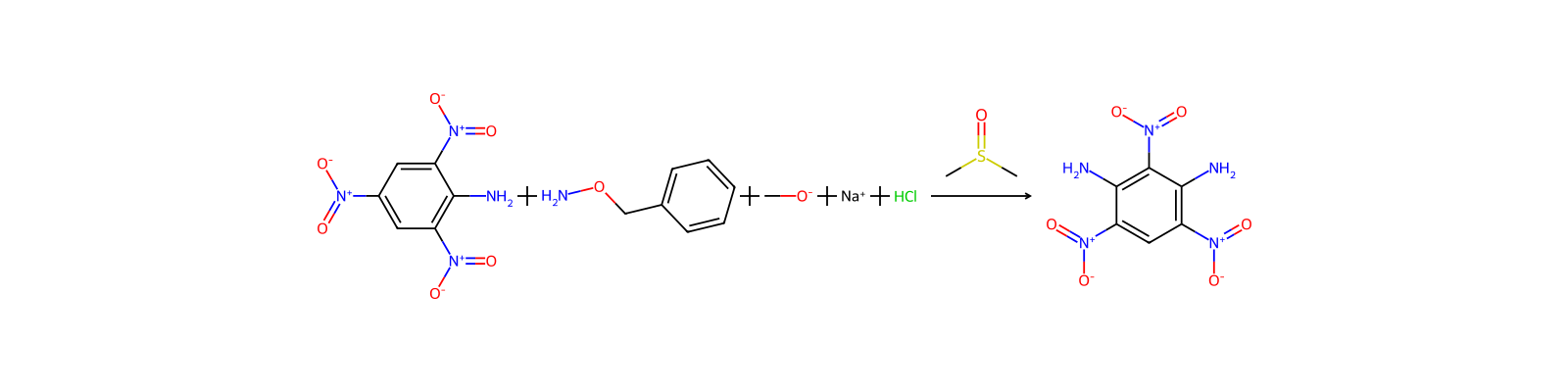
Related reactions
18 records




Compound notes
Loading…