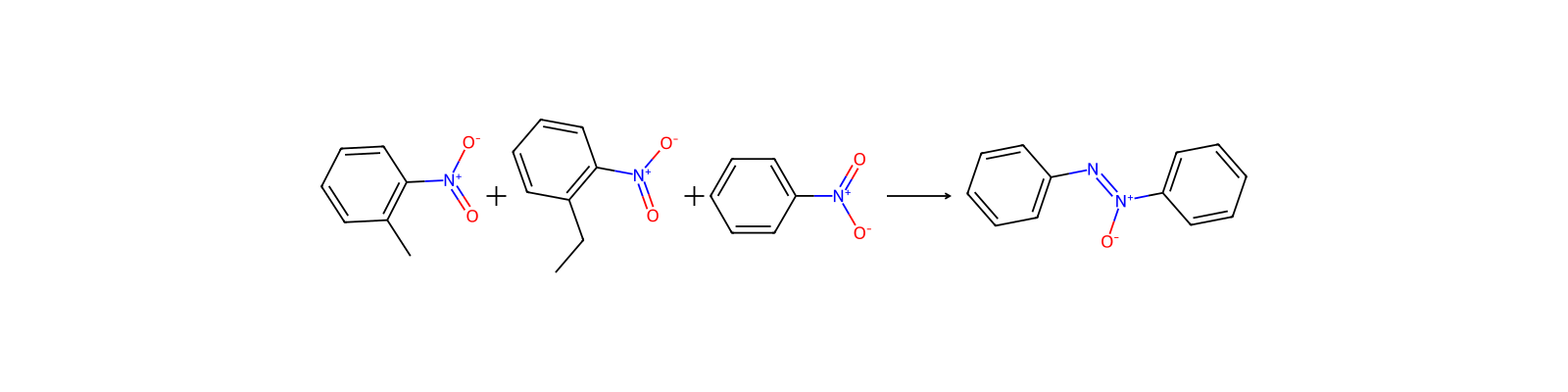
HRID 616560As reactant
Completing data — refresh the page later to see the latest

20972-43-4[O-][N+](=Nc1ccccc1)c1ccccc1GAUZCKBSTZFWCT-UHFFFAOYSA-NAzoxybenzene appears as bright yellow crystals or yellowish-brown solid. (NTP, 1992)
20972-43-4、21650-65-7、495-48-7DTXSID0024555CHEMBL1442921、CHEMBL2356614CHEBI:518651.159 at 79 °F (NTP, 1992) - Denser than water; will sink
1.1590 @ 26 °C/4 °C
less than 1 mg/mL at 68 °F (NTP, 1992)
INSOL IN WATER; SOL IN ALCOHOL & ETHER; 43.5 G DISSOLVE IN 100 G PETROLEUM ETHER @ 15 °C
97 °F (NTP, 1992)
36 °C
Azoxybenzene appears as bright yellow crystals or yellowish-brown solid. (NTP, 1992)
Yellow solid; mp = 36 deg C; [HSDB] Bright yellow or yellowish-brown solid; mp = 36 deg C; [CAMEO] Orange solid; mp = 33-36 deg C; [Alfa Aesar MSDS]
100 PARTS OF ABSOLUTE ALCOHOL SATURATED AT 16 °C CONTAIN 17.5 PARTS (WT/WT) AZOXYBENZENE
EASILY VOLATILE IN SUPER-HEATED STEAM @ 140-150 °C
Safety information is for reference only and does not replace the supplier’s Safety Data Sheet (SDS), applicable regulations, or professional assessment.
Warning
H302: Harmful if swallowed [Warning Acute toxicity, oral]
P261, P264, P270, P271, P301+P317, P304+P340, P317, P330, and P501 (click each P-code to see the statement)
Warning
H302 (100%): Harmful if swallowed [Warning Acute toxicity, oral]
P261, P264, P270, P271, P301+P317, P304+P340, P317, P330, and P501 (click each P-code to see the statement)
External application to rabbit eyes scored 1 on a scale of 1-10 (10 being most severe) for degree of injury after 24 hours; Causes icteric skin, methemoglobinemia, swelling of liver and spleen, and atrophy of testis and epididymis in oral studies of rats and mice; Emergency treatment: Methemoglobinemia; [HSDB] Dust mixtures with air may be explosive; A skin and eye irritant; May cause liver and kidney injury; [CAMEO] Causes decrease in cellular immune response in intraperitoneal toxic-dose studies of rats; Causes other GI and liver changes in oral lethal-dose studies of mice; [RTECS] May cause irritation and methemoglobinemia; [Alfa Aesar MSDS]
AZOXYBENZENE is an azo compound. Azo, diazo, azido compounds can detonate. This applies in particular to organic azides that have been sensitized by the addition of metal salts or strong acids. Toxic gases are formed by mixing materials of this class with acids, aldehydes, amides, carbamates, cyanides, inorganic fluorides, halogenated organics, isocyanates, ketones, metals, nitrides, peroxides, phenols, epoxides, acyl halides, and strong oxidizing or reducing agents. Flammable gases are formed by mixing materials in this group with alkali metals. Explosive combination can occur with strong oxidizing agents, metal salts, peroxides, and sulfides.
Acute Tox. 4 (100%)
Acute toxicity - category 4
Acute Tox. 4 *
EYES: First check the victim for contact lenses and remove if present. Flush victim's eyes with water or normal saline solution for 20 to 30 minutes while simultaneously calling a hospital or poison control center. Do not put any ointments, oils, or medication in the victim's eyes without specific instructions from a physician. IMMEDIATELY transport the victim after flushing eyes to a hospital even if no symptoms (such as redness or irritation) develop.
MATERIALS WHICH ARE TOXIC AS STORED OR WHICH CAN DECOMPOSE INTO TOXIC COMPONENTS...SHOULD BE STORED IN A COOL WELL VENTILATED PLACE, OUT OF DIRECT RAYS OF THE SUN, AWAY FROM AREAS OF HIGH FIRE HAZARD, AND SHOULD BE PERIODICALLY INSPECTED... INCOMPATIBLE MATERIALS SHOULD BE ISOLATED...
SMALL SPILLS AND LEAKAGE: Should a spill occur while you are handling this chemical, FIRST REMOVE ALL SOURCES OF IGNITION, then you should dampen the solid spill material with 60-70% ethanol and transfer the dampened material to a suitable container. Use absorbent paper dampened with 60-70% ethanol to pick up any remaining material. Seal the absorbent paper, and any of your clothes, which may be contaminated, in a vapor-tight plastic bag for eventual disposal. Solvent wash all contaminated surfaces with 60-70% ethanol followed by washing with a soap and water solution. Do not reenter the contaminated area until the Safety Officer (or other responsible person) has verified that the area has been properly cleaned.
RECOMMENDED RESPIRATOR: Where the neat test chemical is weighed and diluted, wear a NIOSH-approved half face respirator equipped with an organic vapor/acid gas cartridge (specific for organic vapors, HCl, acid gas and SO2) with a dust/mist filter. (NTP, 1992)
AZOXYBENZENES MAY RESULT FROM THE CONDENSATION OF TWO MOLECULES OF PHENYLHYDROXYLAMINE, THE CONDENSATION OF PHENYLHYDROXYLAMINE WITH NITROBENZENE... /AZOXYBENZENES/
KINETICS WERE STUDIED OF AZOBENZENE OXIDN BY OZONE IN AQ SOLN SIMULATING WASTEWATERS FROM DYE MFR. THE MAIN OXIDN PRODUCT WAS AZOXYBENZENE AND FORMATION PROCEEDED AS THE FIRST ORDER REACTION IN RESPECT TO OZONE.
RATED 1 ON RABBIT EYES...TESTED EXTERNALLY...AFTER 24 HR. THE MOST SEVERE INJURIES...RATED 10.
WHEN ADMIN ORALLY TO RATS & MICE ICTERIC SKIN, METHEMOGLOBINEMIA, SWELLING OF SPLEEN & LIVER, & ATROPHY OF TESTIS & EPIDIDYMIS WERE OBSERVED.
Used as an intermediate for dyes, an insecticide, and an agent for diagnosis and control of varroa jacobsoni and acarapis woodi on bees; [HSDB]
Farming (Pesticides) [Category: Industry]
INSECTICIDE
CHEM INT FOR DYES-EG, CI DIRECT RED 148 AND OTHER ORGANIC COMPOUNDS
AGENT FOR DIAGNOSIS AND CONTROL OF VARROA JACOBSONI AND ACARAPIS WOODI ON BEES
(1972) No Data
(1975) No Data
(1972) No Data
(1975) No Data
(1972) No Data
(1975) No Data
HEATING NITROBENZENE WITH SODIUM HYDROXIDE IN AN ALCOHOLIC SOLUTION
BY REDUCTION OF NITROBENZENE WITH SODIUM ARSENITE: BIGELOW, PALMER; ORG SYN 11: 16 (1931); COLL VOL II, 57 (1943); ALSO BY TREATMENT OF NITROBENZENE WITH GLUCOSE IN ALKALINE MEDIUM: OPOLONICK; IND ENG CHEM 27: 1045 (1935).
INDUSTRIAL...BY HEATING NITROBENZENE WITH MOLASSES & SODIUM HYDROXIDE IN HIGH FLASH NAPHTHA: GERMAN PATENT 228,722. ALSO...BY CATALYTIC REDUCTION OF NITROBENZENE: BUSCH, SCHULZ; BER 62: 1458 (1929). BY PERACETIC ACID OXIDN OF AZOBENZENE: D'ANS, KNEIP; BER 48: 1145 (1915); CF GREENSPAN, IND ENG CHEM 39: 847 (1947).
DescriptionAzoxybenzene is an obsolete insecticide used to control aphids and other sucking insects. It has a low aqueous solubility and is highly volatile. Little else is known about its environmental fate and behaviour. Ecotoxicology data is scant but it is moderately toxic to fish. Azoxybenzene is moderately toxic to mammals including humans if ingested. It may be a liver and kidney toxicant and is a recognised irritant.
UsesIntermediate in organic synthesis.
UsesFenazox is used in the synthetic preparation of amides via reductive amidation of esters, which is used in the synthesis of bio-active molecules and natural products.
General DescriptionBright yellow crystals or yellowish-brown solid.
DefinitionChEBI: Azoxybenzene is an azoxy compound.