Basic information
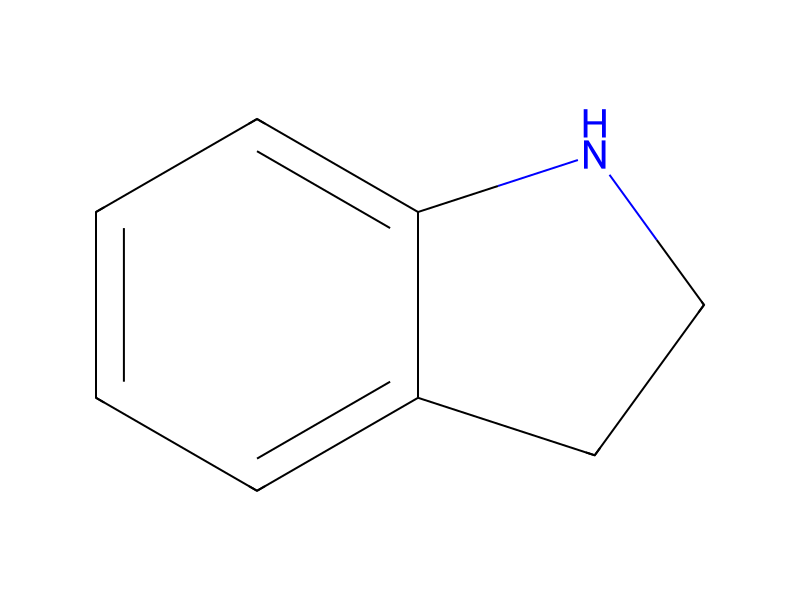
- Standard SMILES
c1ccc2c(c1)CCN2- InChIKey
LPAGFVYQRIESJQ-UHFFFAOYSA-N- Molecular formula
- C8H9N
- Average molar mass
- 119.16 g/mol
- Monoisotopic mass
- 119.07349929
Overview
Indoline is a member of indoles.
Names & identifiers
- Preferred name
- Indoline
- IUPAC
- 2,3-dihydro-1H-indole
- English name
- Indoline
- Molecular formula
- C8H9N
- Molecular weight
- 119.16
Names & synonyms
Indoline496-15-12,3-Dihydro-1H-indole2,3-DIHYDROINDOLE1H-Indole, 2,3-dihydro-6DPT9AB2NKCHEBI:43295DTXSID9052133RefChem:790979DTXCID4030702207-816-81-Azaindan
Show more names
IDNNDOLINE1H-IndolineIndoline>
DihydroindoleAzaindane1H-Indole, dihydro-30922-25-9MFCD00005705aza-indaneindoline-Indoline, 19
Database identifiers
- CAS
496-15-1- PubChem CID
- 10328
- DTXSID
DTXSID9052133- ChEMBL
CHEMBL388803- ChEBI
CHEBI:43295- UNII
- 6DPT9AB2NK
- EC Number
- 207-816-8
- Nikkaji
- J40.156K
Properties
Computed structural properties
- XLogP
- 1.9
- Topological polar surface area
- 12 Ų
- Hydrogen bond donors
- 1
- Hydrogen bond acceptors
- 1
- Rotatable bonds
- 0
- Heavy atoms
- 9
- Formal charge
- 0
- Complexity
- 101
Experimental & physicochemical properties
Chemical Classes
Nitrogen Compounds -> Indoles
Dye
SpringerMaterials Properties15N nuclear magnetic resonance spectrum
Physical DescriptionBrown liquid; [Alfa Aesar MSDS]
Collision Cross Section120.8 Ų [M+H]+ [CCS Type: DT; Buffer gas: N2; Ionization: APCI+; Dataset: TOXCAST; Source Identifier: DTXSID9052133]
Physicochemical properties
- Melting point
- -21 °C · -21 °C
- Boiling point
- 220 · 220-221 °C (lit.)
- Density
- 1.063 g/mL · 1.063 g/mL at 25 °C (lit.)
- refractive index
- 20 · n20/D 1.592(lit.)
- Flash point
- 199 °F · 199 °F
- storage temp.
- Keep in dark place,Sealed in dry,Room Temperature
- solubility
- 5 g/l; · 5g/l; lnsoluble in water, soluble in alcohol and oils. Poorly soluble in Propylene glycol.
- pka
- 5.2 · 5.20±0.20(Predicted)
- form
- liquid (clear)
- color
- clear dark brown
- Odor
- a mild, delicate, but extremely tenacious floral odor
- Water Solubility
- 5 g/L · 5 g/L (20 ºC)
- Sensitive
- Light Sensitive
- BRN
- 111915 · 111915
- InChI
- 1S/C8H9N/c1-2-4-8-7(3-1)5-6-9-8/h1-4,9H,5-6H2
- InChIKey
- LPAGFVYQRIESJQ-UHFFFAOYSA-N
- SMILES
- C1Cc2ccccc2N1
- CAS DataBase Reference
- 496 · 496-15-1(CAS DataBase Reference)
- EWG's Food Scores
- 1 · 1
- FDA UNII
- 6 DPT9AB2NK · 6DPT9AB2NK
- NIST Chemistry Reference
- 1 H-Indole, · 1H-Indole, 2,3-dihydro-(496-15-1)
- EPA Substance Registry System
- 1 H-Indole, · 1H-Indole, 2,3-dihydro- (496-15-1)
- UNSPSC Code
- 12352100 · 12352100
- NACRES
- 22 · NA.22
- Symbol(GHS)
- 7 · GHS07
- Signal word
- Warning
- Hazard statements
- 227 · H227-H302-H315-H319-H335
- Precautionary statements
- 210 e-P261-P280a-P305+P351+P338-P405-P501a · P210e-P261-P280a-P305+P351+P338-P405-P501a
- Hazard Codes
- Xi
- Risk Statements
- 36 · 36/37/38
- Safety Statements
- 23 · 23-24/25-37/39-26
- WGK Germany
- 3 · 3
- RTECS
- 6906300 · NL6906300
- Hazard Note
- Irritant
- TSCA
- TSCA listed
- HS Code
- 29339990 · 29339990
- Storage Class
- 10 · 10 - Combustible liquids
Safety & regulation
GHS classification
GHS Classification
This chemical does not meet GHS hazard criteria for 18.2% (2 of 11) of reports.
Warning
H302 (54.5%): Harmful if swallowed [Warning Acute toxicity, oral]
P261, P264, P264+P265, P270, P271, P280, P301+P317, P302+P352, P304+P340, P305+P351+P338, P319, P321, P330, P332+P317, P337+P317, P362+P364, P403+P233, P405, and P501 (click each P-code to see the statement)
Aggregated GHS information provided per 11 reports by companies from 7 notifications to the ECHA C&L Inventory. Each notification may be associated with multiple companies.
Hazard information
Regulatory Information
Chemical: 1H-Indole, 2,3-dihydro-
1H-Indole, 2,3-dihydro-: Does not have an individual approval but may be used under an appropriate group standard
Hazards SummaryA skin and strong eye irritant; Toxic by ingestion; [Alfa Aesar MSDS] See Indole.
Hazard Classes and CategoriesAcute Tox. 4 (54.5%)
Safety data
- wgk
- 3
- tsca
- TSCA listed
- rtecs
- NL6906300
- hs_code
- 29339990
- risk_code
- 36/37/38
- Signal word
- Warning
- Symbol(GHS)
- GHS07
- hazard_code
- Xi
- hazard_note
- Irritant
- safety_code
- 23-24/25-37/39-26
- Storage Class
- 10 - Combustible liquids
- Hazard statements
- H227-H302-H315-H319-H335
- Precautionary statements
- P210e-P261-P280a-P305+P351+P338-P405-P501a
Chemistry & industry
Uses & manufacturing
General Manufacturing Information1H-Indole, 2,3-dihydro-: ACTIVE
Applications
UsesIndole is used in perfumery and in preparing tryptophan, one of the 20 amino acids commonly found in animal proteins. It has important application in the industry of plant growth. It is used to prepare indoleacetic acid (auxin) and other plant growth substances which help the development of roots in plant. Indole and its derivatives are widely used in making perfumes, dyes, agrochemicals and medicines.
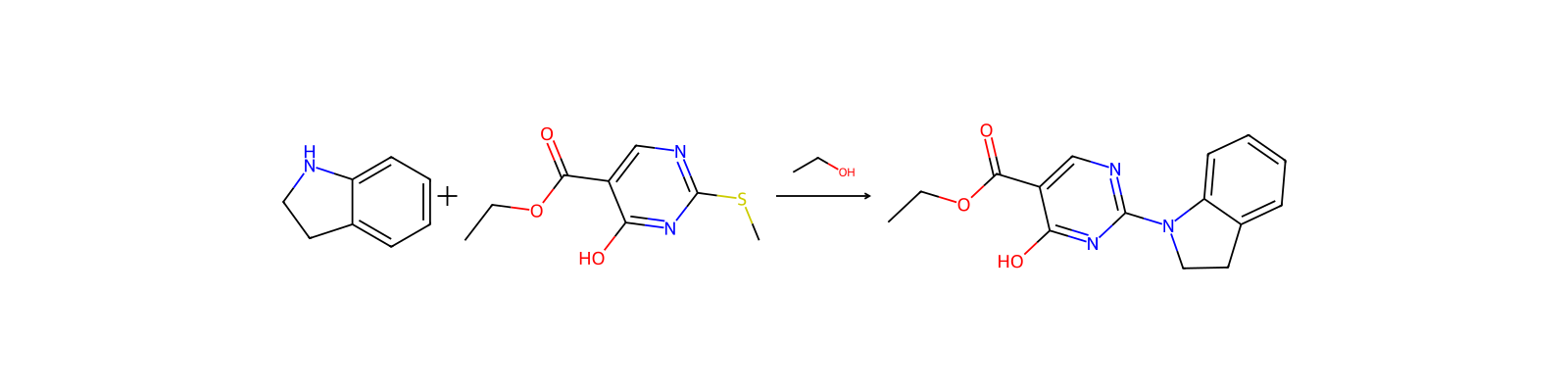
UsesReactant for preparation of:Inhibitors of NOD1-Induced Nuclear Factor-κB ActivationSphingosine-1-phosphate 4(S1P4) receptor antagonistsCytotoxic cell cycle inhibitors2-AminopyridinesPET agent for imaging of protein kinase C (PKC)Sodium-dependent glucose co-transporter 2 (SGLT2) inhibitors for the management of hyperglycemia in diabetesα4β2-Nicotinic acetylcholine receptor-selective partial agonistsmGlu4 positive allosteric modulatorsBacterial biofilm inhibitorsSerotonin 5-HT6 receptor antagonists
UsesAs an indole derivative, Indoline can be used in the preparation of various medicinal compounds such as potential α1-adrenoceptor (α1-AR) antagonists.
Upstream & downstream products
Upstream raw materials
Downstream products
Suppliers50 total
国药集团化学试剂有限公司86-21-63210123 · [email protected]
梯希爱(上海)化成工业发展有限公司021-67121386 · [email protected]
衢州润东化工有限公司0570-8789886 18892685668 · [email protected]
上海阿拉丁生化科技股份有限公司400-6206333 13167063860 · [email protected]
INTATRADE GmbH+49 3493/605464 · [email protected]
T&W GROUP021-61551611 13296011611 · [email protected]
韶远科技(上海)有限公司021-50795510 4000665055 · [email protected]
科瑞迪化学400-821-5857 021-64326257 · [email protected]
上海将来实业股份有限公司400-0066400 13621662912 · [email protected]
上海迈瑞尔生化科技有限公司4006356688 18621169109 · [email protected]
阿法埃莎(中国)化学有限公司400-6106006 · [email protected]
安耐吉化学&3A(安徽泽升科技股份有限公司)400-0056266 · [email protected]
上海瀚鸿科技股份有限公司021-54306202 13764082696 · [email protected]
衢州市鸿通生物科技有限公司0571-64067827 13372408495 · [email protected]
嘉兴市艾森化工有限公司0573-85285100 18627885956 · [email protected]
上海翱跃化工科技有限公司021-021-64367138 15900495324 · [email protected]
孝感深远化工有限公司15527621225; 15527621225 · [email protected]
玛雅试剂+86 (573) 82222445 (0)18006601000 452520369 · [email protected]
四川库利南科技有限公司400-1166-196 18981987031 · [email protected]
天津希恩思生化科技有限公司400 638 7771 · [email protected]
南京维奥化工有限公司Please Send Email 18652950785 · [email protected]
艾科试剂4008-755-333 18080918076 · [email protected]
上海思域化工科技有限公司86-21-34053660 · [email protected]
赛默飞世尔科技(中国)有限公司800-810-5118 · [email protected]
北京伊诺凯科技有限公司400-810-7969 010-59572699 · [email protected]
江苏艾康生物医药研发有限公司025-66113011 13913916777 · [email protected]
上海健超生物科技有限公司150-2103-5486 18017383231 · [email protected]
TCI AMERICA800-4238616 · [email protected]
TOKYO CHEMICAL INDUSTRY CO., LTD.03-36680489 · [email protected]
TCI Europe320-37350700 · [email protected]
上海贤鼎生物科技有限公司4009209199 · [email protected]
深圳康特腾科技有限公司86-0755-86635001 · [email protected]
越林试剂021-62960152 · [email protected]
上海将来实业股份有限公司400-0066400 13621662912 · [email protected]
上海将来实业股份有限公司021-61552785 · [email protected]
HBCChem, Inc.+1-510-219-6317 · [email protected]
日照力德士化工有限公司010-51268198 · [email protected]
美岚实业(上海)有限公司021-58958189 · [email protected]
上海石洋化工有限公司021-56795766 · [email protected]
上海爱蝶实业有限公司021-58957966 18930537195 · [email protected]
成都零六生物科技有限公司400-1166-196 13458535857 · [email protected]
雷丁试剂0510-85629785 18013409632 · [email protected]
上海御略医药科技有限公司021-60345187 13671753212 · [email protected]
杭州杰恒化工有限公司0571-87396432 · [email protected]
上海嵩爰化工科技有限公司010-1234567 18521000990 · [email protected]
上海有朋化工有限公司021-69005955 13701776567 · [email protected]
北京海力扬化学科技有限公司13718199399 · [email protected]
四川海诺威科技有限公司13708085536 13708085536 · [email protected]
上海凯赛化工有限公司021-33516722 13701817765 · [email protected]
上海彤源化工有限公司021-021-69182866 13701855675 · [email protected]
Additional notes
DefinitionChEBI: Indoline is a member of indoles.
Related reactions
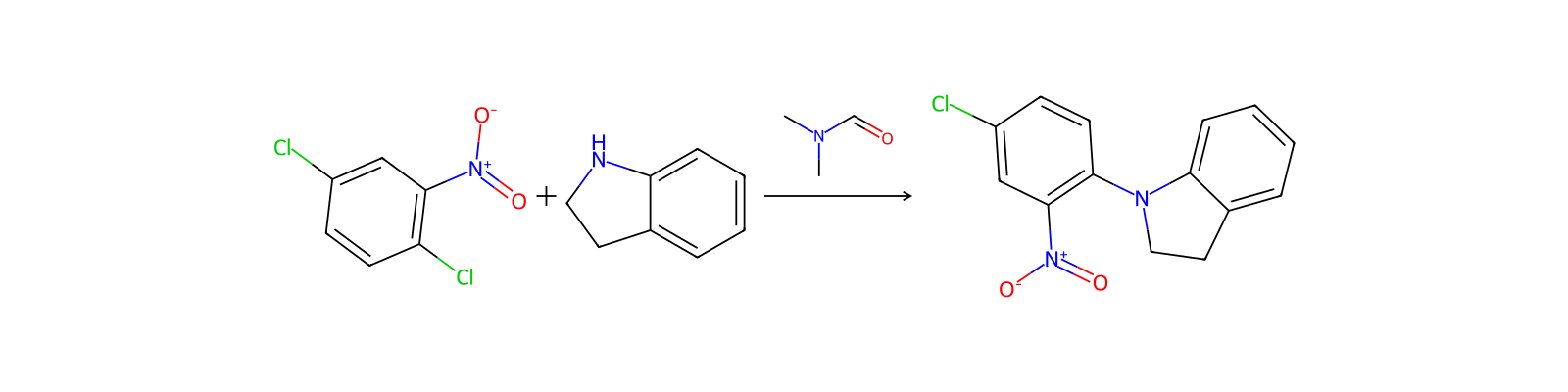
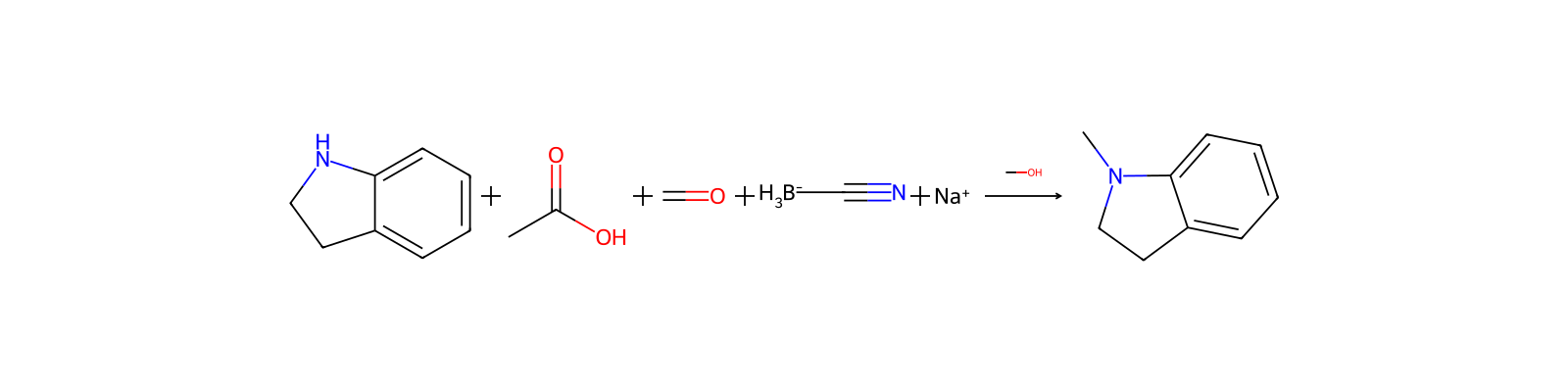
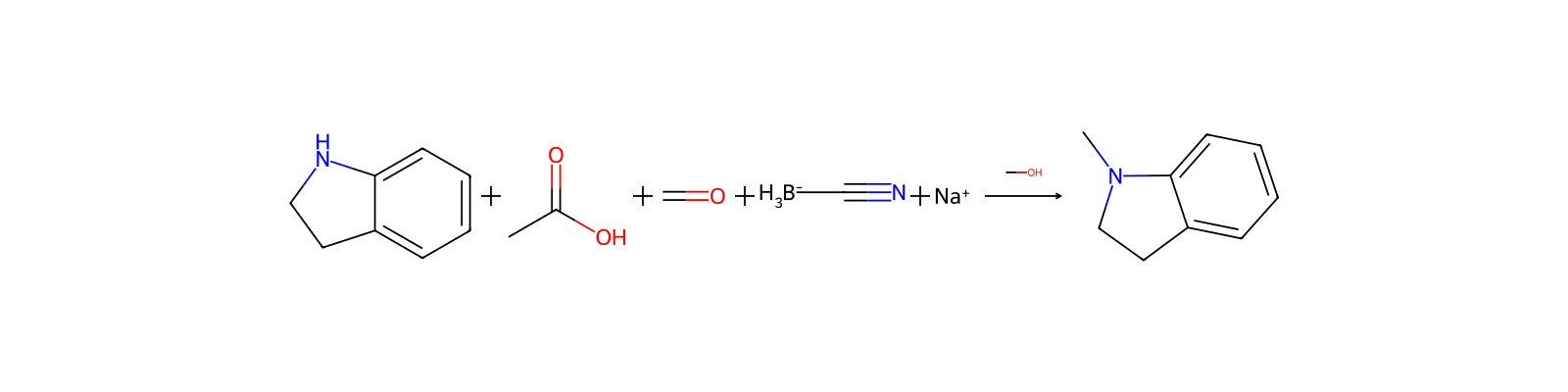
404 records




Linked notes
Loading…