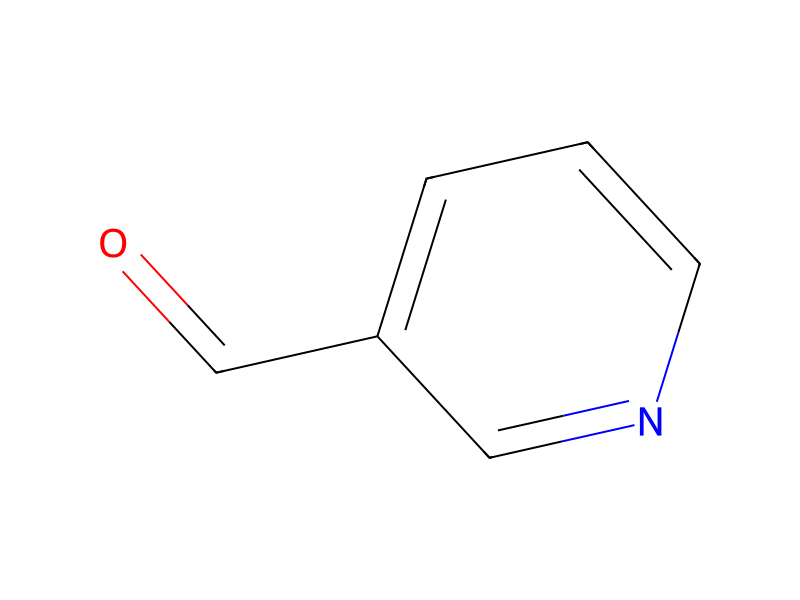
Basic information
- Standard SMILES
O=Cc1cccnc1- InChIKey
QJZUKDFHGGYHMC-UHFFFAOYSA-N- Molecular formula
- C6H5NO
- Average molar mass
- 107.11 g/mol
- Monoisotopic mass
- 107.03711378
Overview
Pyridine-3-carbaldehyde is a pyridinecarbaldehyde that is pyridine substituted by a formyl group at position 3.
Names & identifiers
- Preferred name
- 3-Pyridinecarboxaldehyde
- IUPAC
- pyridine-3-carbaldehyde
- English name
- 3-Pyridinecarboxaldehyde
- Molecular formula
- C6H5NO
- Molecular weight
- 107.11
Names & synonyms
3-PyridinecarboxaldehydeNicotinaldehyde500-22-1Pyridine-3-carbaldehyde3-PyridinaldehydeNicotinic aldehyde3-Pyridylcarboxaldehyde3-FORMYLPYRIDINE3-PyridylaldehydeRowalind840R4IDQ1TNSC-8952
Show more names
3-NicotinaldehydeNicotinaldehyde 98%3-PYRIDINECARBALDEHYDE3-PYRIDINECARBOXYALDEHYDE
DTXSID2022044CHEBI:28345RefChem:95393DTXCID002044207-900-4Pyridine-3-carboxaldehydeNicotinealdehydePyridine-3-aldehyde
Database identifiers
- CAS
500-22-1- PubChem CID
- 10371
- DTXSID
DTXSID2022044- ChEMBL
CHEMBL268493- ChEBI
CHEBI:28345- UNII
- 840R4IDQ1T
- EC Number
- 207-900-4
- Nikkaji
- J28.015A
Properties
Computed structural properties
- XLogP
- 0.3
- Topological polar surface area
- 30 Ų
- Hydrogen bond donors
- 0
- Hydrogen bond acceptors
- 2
- Rotatable bonds
- 1
- Heavy atoms
- 8
- Formal charge
- 0
- Complexity
- 82.6
Experimental & physicochemical properties
Chemical ClassesNitrogen Compounds -> Pyridines
SpringerMaterials PropertiesCoriolis coupling
PesticidesEnvironmental transformation -> Pesticide transformation products (metabolite, successor)
LogP0.29
Vapor Pressure0.56 [mmHg]
Physical DescriptionPale yellow liquid; mp = 8 deg C; [Alfa Aesar MSDS]
Physicochemical properties
- Melting point
- 8 °C · 8°C
- Boiling point
- 78 · 78-81 °C/10 mmHg (lit.)
- Density
- 1.141 g/mL · 1.141 g/mL at 20 °C (lit.)
- vapor pressure
- 0.3 hPa · 0.3 hPa (20 °C)
- refractive index
- 20 · n20/D 1.549(lit.)
- Flash point
- 140 °F · 140 °F
- storage temp.
- 2 · 2-8°C
- solubility
- Chloroform (Sparingly), Methanol (Slightly)
- form
- liquid (clear)
- pka
- 3.43 · 3.43±0.10(Predicted)
- Specific Gravity
- 1.145 · 1.145 (20/4℃)
- color
- clear brown-yellow
- PH
- 5.4 · 5.4 (111g/l, H2O, 20℃)
- Water Solubility
- miscible
- Sensitive
- Air Sensitive
- BRN
- 105343 · 105343
- Henry's Law Constant
- 6.5 · 6.5×101 mol/(m3Pa) at 25℃, Abraham et al. (1994)
- Cosmetics Ingredients Functions
- ANTIMICROBIAL
- InChI
- 1S/C6H5NO/c8-5-6-2-1-3-7-4-6/h1-5H
- InChIKey
- QJZUKDFHGGYHMC-UHFFFAOYSA-N
- SMILES
- [H]C(=O)c1cccnc1
- LogP
- 0.29 · 0.290
- CAS DataBase Reference
- 500 · 500-22-1(CAS DataBase Reference)
- EWG's Food Scores
- 1 · 1
- FDA UNII
- 840 R4IDQ1T · 840R4IDQ1T
- NIST Chemistry Reference
- 3 · 3-Pyridinecarboxaldehyde(500-22-1)
- EPA Substance Registry System
- 3 · 3-Pyridinecarboxaldehyde (500-22-1)
- UNSPSC Code
- 12352114 · 12352114
- NACRES
- 22 · NA.22
- Symbol(GHS)
- 2 · GHS02,GHS07
- Signal word
- Warning
- Hazard statements
- 226 · H226-H302-H315-H317-H335-H412
- Precautionary statements
- 210 · P210-P233-P273-P280-P301+P312-P303+P361+P353
- target organs
- Respiratory system
- PPE
- Eyeshields, Faceshields, Gloves, type ABEK (EN14387) respirator filter
- Hazard Codes
- Xi,C,Xn
- Risk Statements
- 10 · 10-37/38-42/43-41-34-43-22-36/37/38
- Safety Statements
- 26 · 26-39-45-36/37/39-23
- RIDADR
- 1989 · UN 1989 3/PG 3
- WGK Germany
- 3 · 3
- RTECS
- 2980000 · QS2980000
- F
- 8 · 8-10-23
- Hazard Note
- Irritant/Keep Cold/Air Sensitive
- TSCA
- TSCA listed
- HazardClass
- 3.2 · 3.2
- PackingGroup
- III
- HS Code
- 29333999 · 29333999
- Storage Class
- 3 · 3 - Flammable liquids
- Hazard Classifications
- 4 OralAquatic · Acute Tox. 4 OralAquatic Chronic 3Flam. Liq. 3Skin Irrit. 2Skin Sens. 1STOT SE 3
- Toxicity
- 50 orally · LD50 orally in Rabbit: 2355 mg/kg
Safety & regulation
GHS classification
GHS Classification
Danger
H226 (61.3%): Flammable liquid and vapor [Warning Flammable liquids]
P203, P210, P233, P240, P241, P242, P243, P260, P261, P264, P264+P265, P270, P271, P272, P273, P280, P284, P301+P317, P302+P352, P303+P361+P353, P304+P340, P305+P354+P338, P317, P318, P319, P321, P330, P332+P317, P333+P317, P342+P316, P362+P364, P370+P378, P403, P403+P233, P403+P235, P405, and P501 (click each P-code to see the statement)
Aggregated GHS information provided per 75 reports by companies from 8 notifications to the ECHA C&L Inventory. Each notification may be associated with multiple companies.
Hazard information
Regulatory Information
Chemical: 3-Pyridinecarboxaldehyde
3-Pyridinecarbaldehyde: Does not have an individual approval but may be used under an appropriate group standard
Hazards Summary
Causes burns; Inhalation may cause corrosive injuries to upper respiratory tract and lungs; May cause skin sensitization; [Alfa Aesar MSDS] Search for (500-22-1[EC/RN Number]) AND (allergic OR dermatitis OR sensitizer OR sensitization): no results; [PubMed]
Hazard Classes and CategoriesFlam. Liq. 3 (61.3%)
Toxicology
Adverse EffectsDermatotoxin - Skin burns.
Safety data
- F
- 8-10-23
- PPE
- Eyeshields, Faceshields, Gloves, type ABEK (EN14387) respirator filter
- wgk
- 3
- tsca
- TSCA listed
- rtecs
- QS2980000
- ridadr
- UN 1989 3/PG 3
- hs_code
- 29333999
- Toxicity
- LD50 orally in Rabbit: 2355 mg/kg
- risk_code
- 10-37/38-42/43-41-34-43-22-36/37/38
- Signal word
- Warning
- Symbol(GHS)
- GHS02,GHS07
- hazard_code
- Xi,C,Xn
- hazard_note
- Irritant/Keep Cold/Air Sensitive
- safety_code
- 26-39-45-36/37/39-23
- hazard_class
- 3.2
- Storage Class
- 3 - Flammable liquids
- packing_group
- III
- target organs
- Respiratory system
- Hazard statements
- H226-H302-H315-H317-H335-H412
- Hazard Classifications
- Acute Tox. 4 OralAquatic Chronic 3Flam. Liq. 3Skin Irrit. 2Skin Sens. 1STOT SE 3
- Precautionary statements
- P210-P233-P273-P280-P301+P312-P303+P361+P353
Chemistry & industry
Uses & manufacturing
Use ClassificationEnvironmental transformation -> Pesticide transformation products (metabolite, successor)
General Manufacturing Information3-Pyridinecarboxaldehyde: ACTIVE
Applications
DescriptionPyridine-3-carbaldehyde, also known as nicotinaldehyde or 3-Pyridinecarboxaldehyde, belongs to the class of organic compounds known as pyridine carboxaldehydes. These are aromatic compounds containing a pyridine ring which bears a carboxaldehyde group. 3-pyridinecarboxaldehyde is not a naturally occurring metabolite and is only found in those individuals exposed to this compound or its derivatives. Pyridine-3-carbaldehyde, an aldehyde containing a nitrogen atom, reacts faster than benzaldehyde with diethylzinc to afford enantioenriched 3-pyridyl alkanol in a reaction in which the same chiral catalyst, i.e., (1S,2R)-N, N-dibutylnorephedrine, is used.
Uses3-Pyridinecarboxaldehyde is a substituted pyridine with niacin activity. 3-Pyridinecarboxaldehyde is a component of tobacco smoke.
Upstream & downstream products
Upstream raw materials
Downstream products
Suppliers50 total
国药集团化学试剂有限公司86-21-63210123 · [email protected]
梯希爱(上海)化成工业发展有限公司021-67121386 · [email protected]
衢州润东化工有限公司0570-8789886 18892685668 · [email protected]
上海阿拉丁生化科技股份有限公司400-6206333 13167063860 · [email protected]
山东玖玥生物科技有限公司18853316981
爱斯特(成都)生物制药股份有限公司+86-28-85122536 85324413 · [email protected]
北京安司莫森技术有限公司010-82954736 13391601435 · [email protected]
韶远科技(上海)有限公司021-50795510 4000665055 · [email protected]
科瑞迪化学400-821-5857 021-64326257 · [email protected]
南通萧畅医药贸易有限公司0513-82104991 18862997351 · [email protected]
上海迈瑞尔生化科技有限公司4006356688 18621169109 · [email protected]
武汉易泰科技有限公司上海分公司18930552037 · [email protected]
南京药石科技股份有限公司025-86918202 4000255188 · [email protected]
阿法埃莎(中国)化学有限公司400-6106006 · [email protected]
安耐吉化学&3A(安徽泽升科技股份有限公司)400-0056266 · [email protected]
石家庄斯迪亚诺精细化工有限公司0311-89250318 13582355795 · [email protected]
安庆奇创药业有限公司18061456370
上海恩诺生物科技有限公司+86 (21) 6435-5022
上海瀚鸿科技股份有限公司021-54306202 13764082696 · [email protected]
上海柯维化学技术有限公司021-64609169 18901607656 · [email protected]
上海相辉医药科技有限公司13761987713 · [email protected]
上海景颜化工科技有限公司13817811078 · [email protected]
武汉泰易成生化药业有限公司027-88320699 · [email protected]
嘉兴市艾森化工有限公司0573-85285100 18627885956 · [email protected]
Pure Chemistry Scientific Inc.001-857-928-2050 or 1-888-588-9418 · [email protected]
上海隆盛化工有限公司58099637 13585536065 · [email protected]
安徽德信佳生物医药有限公司0531-82375818 15064153060 · [email protected]
孝感深远化工有限公司15527621225; 15527621225 · [email protected]
上海敬康生物医药科技有限公司021-34502253 13391330186 · [email protected]
山东西亚化学有限公司13355009207 13355009207 · [email protected]
玛雅试剂+86 (573) 82222445 (0)18006601000 452520369 · [email protected]
四川库利南科技有限公司400-1166-196 18981987031 · [email protected]
天津希恩思生化科技有限公司400 638 7771 · [email protected]
苏州盖德精细材料有限公司0512-66627360 13914021065 · [email protected]
艾科试剂4008-755-333 18080918076 · [email protected]
上海思域化工科技有限公司86-21-34053660 · [email protected]
苏州思变化学技术有限公司0512-65617459 18915409046 · [email protected]
赛默飞世尔科技(中国)有限公司800-810-5118 · [email protected]
北京伊诺凯科技有限公司400-810-7969 010-59572699 · [email protected]
上海特伯化学科技有限公司+86-21-60341587 · [email protected]
北京清露源科技有限公司+86 (10) 6333-0989 · [email protected]
上海遐瑞医药科技有限公司+86 21 61551611
江苏艾康生物医药研发有限公司025-66113011 13913916777 · [email protected]
TCI AMERICA800-4238616 · [email protected]
TOKYO CHEMICAL INDUSTRY CO., LTD.03-36680489 · [email protected]
TCI Europe320-37350700 · [email protected]
上海贤鼎生物科技有限公司4009209199 · [email protected]
深圳康特腾科技有限公司86-0755-86635001 · [email protected]
上海睿升化工科技有限公司+86-021-50935922
苏州安尼康药物研发有限公司0512-69369885 · [email protected]
Additional notes
DefinitionChEBI: A pyridinecarbaldehyde that is pyridine substituted by a formyl group at position 3.
Related reactions
736 records

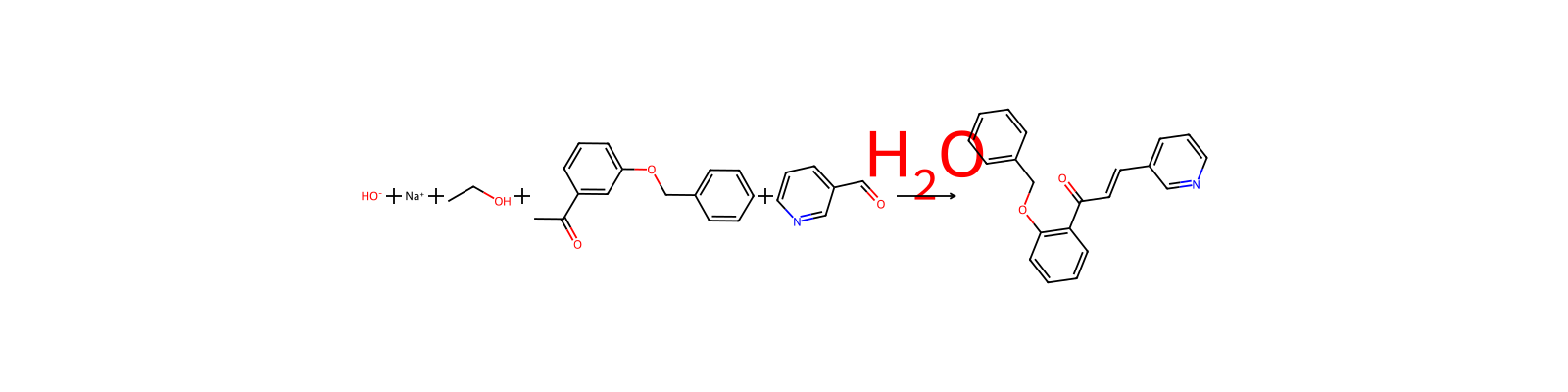
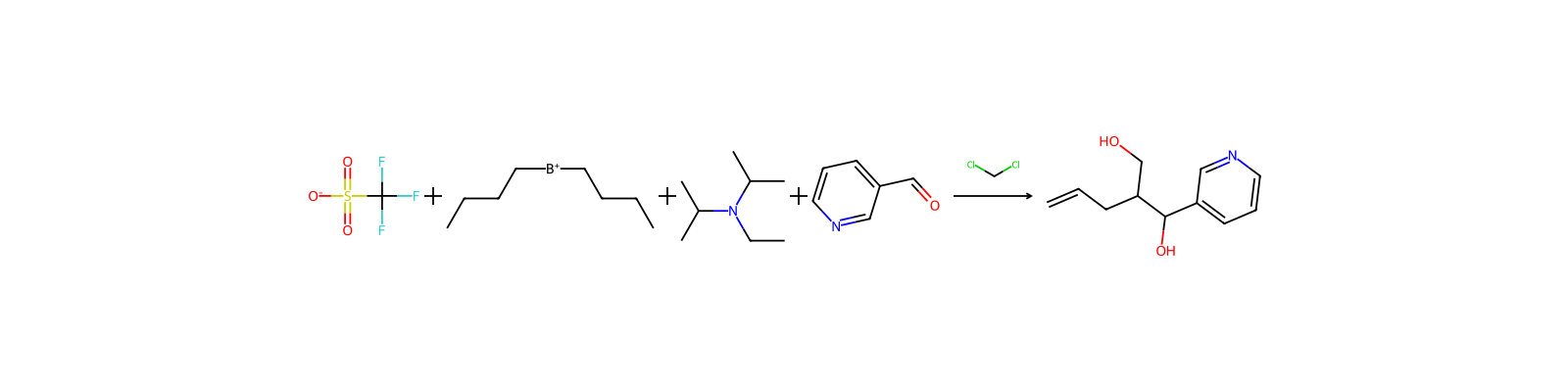

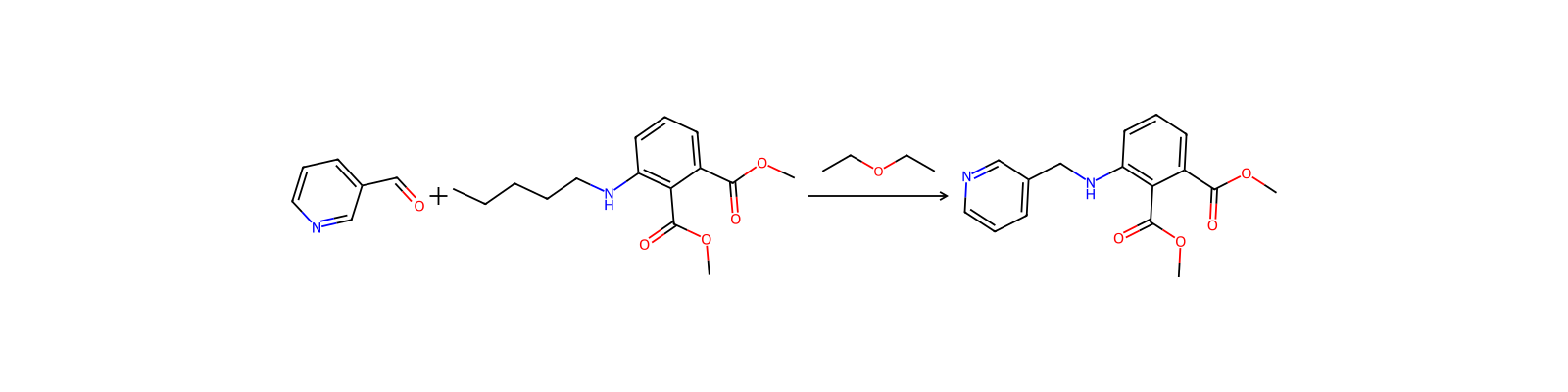
Linked notes
Loading…