
HRID 6822As reactant
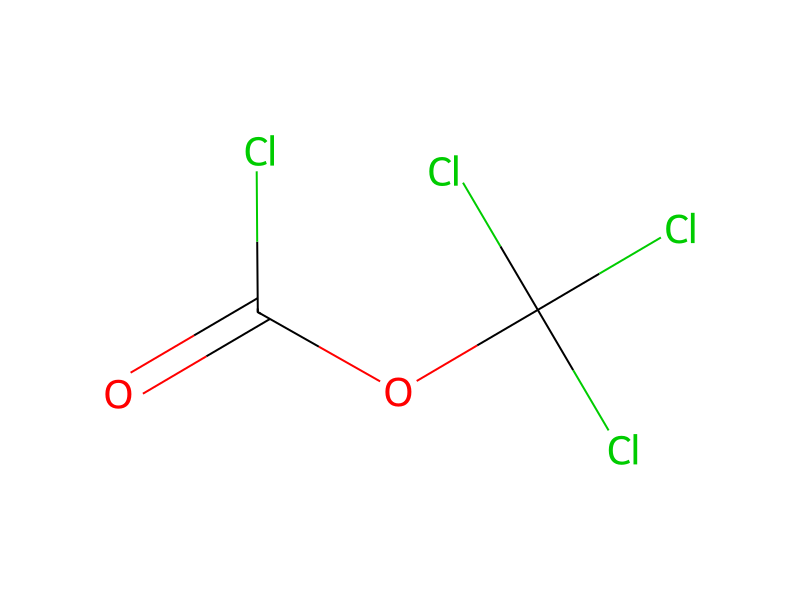
503-38-8O=C(Cl)OC(Cl)(Cl)ClHCUYBXPSSCRKRF-UHFFFAOYSA-NDiphosgene is a moderately persistent synthetic organic compound, formed by chlorination of methyl chloroformate, that is a respiratory irritant and lachrymator. Trichloromethyl Chloroformate has been used as a chemical warfare agent and is characterized as a colorless liquid with an odor that is like newly mown hay. Exposure occurs by inhalation, ingestion, or contact.
503-38-8DTXSID608620651.6525 @ 14 °C
1.6 g/cm³
Relative density of the vapour/air-mixture at 20 °C (air = 1): 1.08
INSOL IN WATER; SOL IN ETHANOL, VERY SOL IN ETHER
SOL IN BENZENE, ALCOHOL, AND ETHER
Solubility in water: reaction
128 °C @ 760 MM HG
Suffocating liquid; Boiling point = 49 °C at 50 mm Hg; Stable at room temp, decomposes to phosgene at approximately 300 °C
at 101.3 kPa: 128 °C
Safety information is for reference only and does not replace the supplier’s Safety Data Sheet (SDS), applicable regulations, or professional assessment.
Danger
H300 (87%): Fatal if swallowed [Danger Acute toxicity, oral]
P260, P264, P270, P271, P280, P284, P301+P316, P301+P330+P331, P302+P361+P354, P304+P340, P305+P354+P338, P316, P320, P321, P330, P363, P403+P233, P405, and P501 (click each P-code to see the statement)
Aggregated GHS information provided per 46 reports by companies from 4 notifications to the ECHA C&L Inventory. Each notification may be associated with multiple companies.
Chemical: Carbonochloridic acid, trichloromethyl ester
Trichloromethyl chloroformate: Does not have an individual approval but may be used under an appropriate group standard
Used as a chemical intermediate and miltary weapon; [CAMEO]
ORGANIC SYNTHESIS; MILITARY POISON GAS
Used in synthesis of isocyanides
Prepared by photochlorination of methyl formate: W Hentschel, J Prakt Chem 36: 209 (1887); F Grignard et al, CR Acad Sci 169: 1074 (1919); eidem, ibid 1143; by photochlorination of methyl chloroformate: A Kling et al, ibid 1046; K Kurita, Y Iwakura, Org Syn 59: 195 (1980).
GRADE: TECHNICAL.
99% purity
Typical specifications of commercial chloroformates: purity, 98%; phosgene, <0.1%, iron, <10 ppm; acidity as HCl, <0.1%; alcohol or phenol, <2% /Chloroformic esters/
Commercial products have concentrations of 97-99 wt% /Chloroformic esters/
Carbonochloridic acid, trichloromethyl ester: ACTIVE
Most chloroformate production is used captively and production figures are not available /Chloroformic esters/
On a laboratory scale, trichloromethyl chloroformate (diphosgene) ... can be used as substitute for phosgene to synthesize isocyanates from amines
DescriptionDiphosgene (DP), trichloromethyl chloroformate, is a clear, colorless liquid with an odor similar to phosgene. It is noncombustible, a strong irritant to the eyes and tissues, and is toxic by inhalation and ingestion. DP has a boiling point of 127°C–128°C (263°F) and a vapor pressure of 4.2 at 68°F (20°C). The liquid density is 1.65, which is heavier than water, and a melting/freezing point of 314°F (157°C). Inhalation LC50 is 3600 mg/m3 for 10 min. Effects of exposure are quite similar to phosgene gas. Its molecular formula is ClCOOCCl3, and the structure and molecular formula are shown in Figure 8.38. The DOT lists diphosgene as a 6.1 poison liquid. The NFPA 704 designation for CG is estimated to be health 4, flammability 0, reactivity 1, and special 0. It has a four-digit UN identification number of 2972.





-57 °C
-57 °C
10 MM HG @ 20 °C
Vapor pressure, kPa at 20 °C: 1.3
If ... THERE IS NO FIRE, go directly to the Table of Initial Isolation and Protective Action Distances /(see table below)/ ... to obtain initial isolation and protective action distances. IF THERE IS A FIRE, or IF A FIRE IS INVOLVED, go directly to the appropriate guide /(see guide(s) below)/ and use the evacuation information shown under PUBLIC SAFETY.
If ... THERE IS NO FIRE, go directly to the Table of Initial Isolation and Protective Action Distances /(see table below)/ ... to obtain initial isolation and protective action distances. IF THERE IS A FIRE, or IF A FIRE IS INVOLVED, go directly to the appropriate guide /(see guide(s) below)/ and use the evacuation information shown under PUBLIC SAFETY.
If ... THERE IS NO FIRE, go directly to the Table of Initial Isolation and Protective Action Distances /(see table below)/ ... to obtain initial isolation and protective action distances. IF THERE IS A FIRE, or IF A FIRE IS INVOLVED, go directly to the appropriate guide /(see guide(s) below)/ and use the evacuation information shown under PUBLIC SAFETY.
If ... THERE IS NO FIRE, go directly to the Table of Initial Isolation and Protective Action Distances /(see table below)/ ... to obtain initial isolation and protective action distances. IF THERE IS A FIRE, or IF A FIRE IS INVOLVED, go directly to the appropriate guide /(see guide(s) below)/ and use the evacuation information shown under PUBLIC SAFETY.
For more DOT Emergency Guidelines (Complete) data for DIPHOSGENE (12 total), please visit the HSDB record page.
Fresh air, rest. Half-upright position. Artificial respiration may be needed. Refer for medical attention.
Rinse and then wash skin with water and soap.
First rinse with plenty of water for several minutes (remove contact lenses if easily possible), then refer for medical attention.
Rinse mouth.
TIH (Toxic Inhalation Hazard) - Term used to describe gases and volatile liquids that are toxic when inhaled. Some are TIH materials themselves, e.g., chlorine, and some release TIH gases when spilled in water, e.g., chlorosilanes. [ERG 2016].
Personal protection: chemical protection suit including self-contained breathing apparatus. Collect leaking and spilled liquid in sealable containers as far as possible. Absorb remaining liquid in sand or inert absorbent. Then store and dispose of according to local regulations.
Burning sensation. Chest tightness. Sore throat. Cough. Laboured breathing. Shortness of breath. Symptoms may be delayed.
Redness.
Watering of the eyes. Redness.
Sore throat.
EYE IRRITATION, IRRITATION OF UPPER RESPIRATORY TRACT, & SURFACE BURNS HAVE BEEN PRINCIPAL FINDINGS IN EXPOSED HUMANS. PULMONARY EDEMA WOULD UNDOUBTEDLY OCCUR WITH HIGHER LEVELS OF EXPOSURE. EYE IRRITATION MAY PERSIST SOME TIME AFTER EXPOSURE CEASES. SKIN SENSITIZATION MAY OCCUR. /CHLOROFORMATES/
INSIDIOUS POISON AS IT IS NOT IRRITATING IMMEDIATELY, EVEN WHEN FATAL CONCN ARE INHALED. MAY CAUSE SEVERE PULMONARY EDEMA (MAY BE QUICKLY FATAL) OR PNEUMONIA. INHALATION OF HIGH CONCN CAUSES CHOKING, CONSTRICTED FEELING IN CHEST, COUGHING, PAINFUL BREATHING, BLOODY SPUTUM. VAPORS STRONGLY IRRITATING TO THE EYES. /PHOSGENE/
HIGHLY TOXIC BY INHALATION & INGESTION. STRONG IRRITANT TO TISSUE.
NO EVIDENCE EXISTS FOR A SYSTEMIC ACTION OF INHALED PHOSGENE, BUT VASOCONSTRICTION OF PULMONARY VASCULATURE HAS BEEN DESCRIBED IN RABBITS. SEQUELAE INCLUDE PULMONARY SCARRING, LOBULAR EMPHYSEMA, SMALL IRREGULAR AREAS OF ATELECTASIS & BRONCHITIS. /PHOSGENE/
SOME POSSIBLE MECHANISMS OF REDUCED ACTIVITY OF LUNG SURFACTANT IN ACUTE PULMONARY EDEMA WERE STUDIED IN ALBINO RATS & RABBITS. MOST OF THE EDEMOGENIC SUBSTANCES DID NOT CHANGE SURFACTANT ACTIVITY WHILE DIPHOSGENE REDUCED IT.
The purpose of this study was to examine the changes of pulmonary hemodynamics, cardiac impedance parameters and the number of pulmonary microembolus, and leukocyte after diphosgene inhalation in rabbits. Fifty-three rabbits were randomized into two sets, one set was used to monitor the pulmonary hemodynamics, the other set was used to determine the cardiac impedance parameters, microemboli and leukocytes were obtained directly from the pulmonary microcirculation by use of the retrograde perfusion method. As compared with control group, lt was found that pulmonary artery pressure rose and pulmonary vascular resistance increased (p < 0.05), but did not correlate with lung water parameters (p > 0.05). At 1, 6 hr after diphosgene inhalation cardiac Impedance parameters did not change (p > 0.05~, as compared with before inhalation. Microemboli (21.8 increased (p< 0.05), as compared with the control group (106/L, 430e pulmonary hemodynamics, but could not effectively reduce the degree of pulmonary edema.
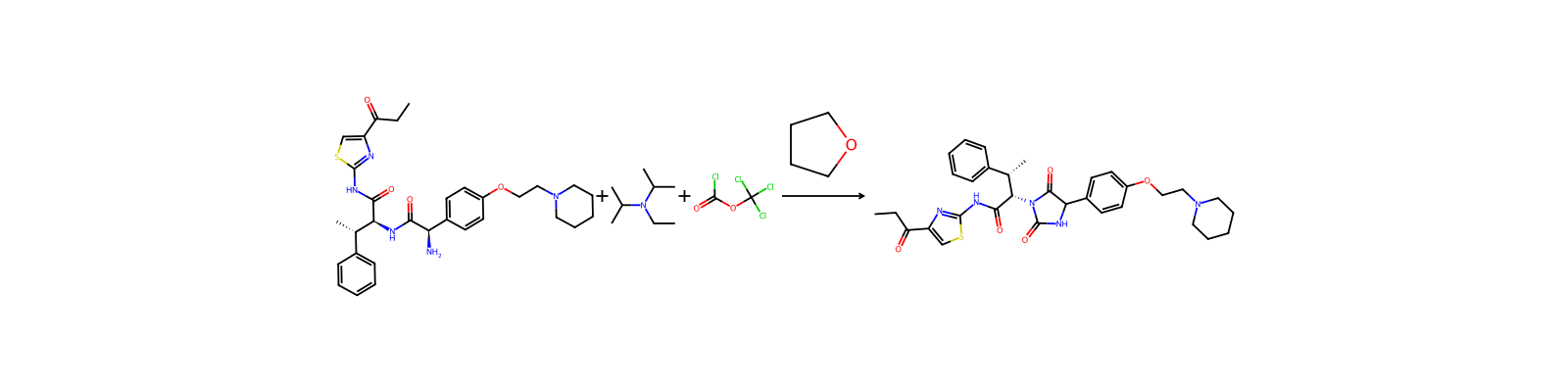
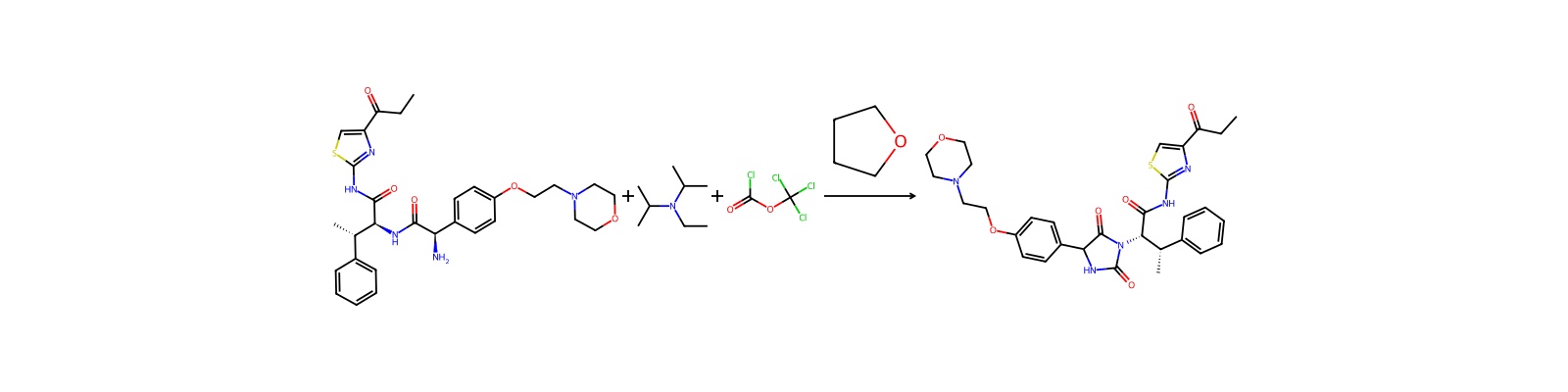
UsesTrichloromethyl chloroformate is used as a reagent in the synthesis of organic compounds. It serves as a source of phosgene used in some laboratory preparations. Also, it is used as a reactant for the synthesis of cyclic carbamimidates, N-alkenyl and cycloalkyl carbamates and prostate-specific membrane antigen-targeted anticancer prodrugs. In addition, it is involved in the preparation of an erythromycin A derivatives and antibody-drug conjugates. It is utilized in the conversion of amines, carboxylic acids, formamides in to isocyanates, acid chlorides and isocyanides respectively.
UsesReactant for preparation of:Cyclic carbamimidates using a monophosphine gold(i) catalystN-Alkenyl and cycloalkyl carbamates as dual acting histamine H3 and H4 receptor ligandsProstate-specific membrane antigen-targeted anticancer prodrugsPotential west nile virus protease inhibitorsAntibody-drug conjugates (ADCs)Erythromycin A derivatives
UsesIn organic synthesis; as war gas.
General DescriptionColorless liquid, odorless to fruity.
Definitiondiphosgene: A colourless liquid,ClCO.O.CCl3, originally used in 1916by Germany in World War I as achemical warfare agent. It is nowused as a reagent in organic synthesis.See also carbonyl chloride.