
Basic information
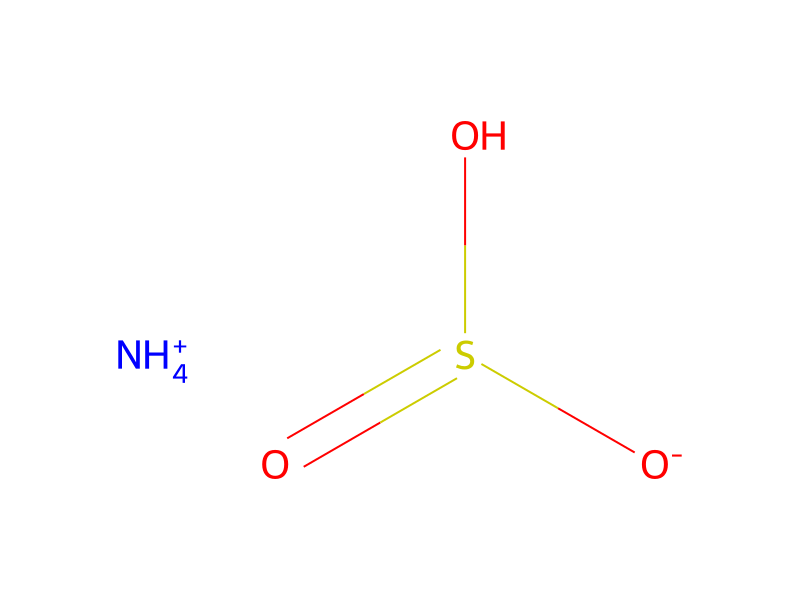
- Standard SMILES
O=S([O-])O.[NH4+]- InChIKey
ZETCGWYACBNPIH-UHFFFAOYSA-N- Molecular formula
- H3N.H2O3S
- Average molar mass
- 99.11 g/mol
- Monoisotopic mass
- 98.99901402
Overview
Ammonium bisulfite is colorless crystals which are soluble in water. It is noncombustible. It is corrosive to aluminum. It is a strong irritant to skin and mucous membranes. It is toxic by skin absorption.
Names & identifiers
- Preferred name
- Ammonium Bisulfite
- IUPAC
- azanium hydrogen sulfite
Names & synonyms
AMMONIUM BISULFITE10192-30-0Ammonium hydrogen sulfiteAmmonium acid sulfiteAmmonium monosulfiteMonoammonium sulfiteAmmonium hydrosulfite8MW949D9GESulfurous acid, monoammonium saltAmmonium sulfite, hydrogenAmmonium bisulfite (NH4HSO3)DTXSID1050462
Show more names
RefChem:112138DTXCID7029459233-469-7azanium;hydrogen sulfiteAmmonium hydrogensulphiteAmmonium Bisulfite - In waterSulfurous acid, ammonium salt (1:1)Ammoniumbisulfit
Database identifiers
- CAS
10192-30-0、10196-04-0- PubChem CID
- 10441651
- DTXSID
DTXSID1050462- UNII
- 8MW949D9GE
- EC Number
- 233-469-7
Properties
Computed structural properties
- Topological polar surface area
- 80.6 Ų
- Hydrogen bond donors
- 2
- Hydrogen bond acceptors
- 4
- Rotatable bonds
- 0
- Heavy atoms
- 5
- Formal charge
- 0
- Complexity
- 24.8
Experimental & physicochemical properties
Chemical Classes
Other Classes -> Sulfites
Corrosives
Cosmetics
Cosmetic ingredients (Ammonium Bisulfite) -> CIR (Cosmetic Ingredient Review)
Preservative
Density
2.03 at 68 °F 1.40 (72% aqueous solution) (USCG, 1999) - Denser than water; will sink
Sp gr: 2.03
Relative density (water = 1): 2.0
Color/Form
Colorless crystals
Colorless to yellow
Solubility
In water: 267 g/100 ml @ 10 °C, 620 G/100 ml @ 60 °C
In water: 71.8 g/100 ml @ 0 deg
Solubility in water, g/100ml at 10 °C: 267 (very good)
CorrosivityA corrosive solid.
Boiling Point
Sublimates at 302.0 °F (USCG, 1999)
at 101.1kPa: 100 °C
Decomposition
When heated to decomp it emits toxic vapors of /ammonia/.
When heated to decomposition it emits very toxic fumes of SO(x) /sulfur oxides/, NO(x) /nitrogen oxides/ and NH(3).
Melting Point-10 °C
Physical Description
Ammonium bisulfite is colorless crystals which are soluble in water. It is noncombustible. It is corrosive to aluminum. It is a strong irritant to skin and mucous membranes. It is toxic by skin absorption.
Ammonium bisulfite is a solution of yellow crystals. It is a strong irritant to skin and mucous membranes. It is toxic by skin absorption. It may be corrosive to metals.
Liquid
Colorless to yellow solid; [ICSC] Sold only in solution; [Merck Index] Available as 44% and 68% solution; [MSDSonline]
COLOURLESS-TO-YELLOW LIQUID OR CRYSTALS WITH CHARACTERISTIC ODOUR.
Other Experimental PropertiesSublimes at 150 °C (in Nitrogen); deliquesces
Safety & regulation
GHS classification
GHS Classification
This chemical does not meet GHS hazard criteria for 3.7% (6 of 162) of reports.
Warning
H315 (38.3%): Causes skin irritation [Warning Skin corrosion/irritation]
P261, P264, P264+P265, P271, P280, P302+P352, P304+P340, P305+P351+P338, P319, P321, P332+P317, P337+P317, P362+P364, P403+P233, P405, and P501 (click each P-code to see the statement)
Aggregated GHS information provided per 162 reports by companies from 11 notifications to the ECHA C&L Inventory. Each notification may be associated with multiple companies.
Danger
Hazard information
Regulatory Information
Chemical: Sulfurous acid, monoammonium salt
Sulfurous acid, ammonium salt (1:1) is listed on the EPA's Chemical Data Reporting (CDR) system. Manufacturers and importers of Sulfurous acid, ammonium salt (1:1) are required to report information about their production and use of this chemical to the EPA under the Toxic Substances Control Act (TSCA). (40 eCFR Part 711)
Status: Active Update: 19-12-2022 https://echa.europa.eu/registration-dossier/-/registered-dossier/14587
Ammonium bisulphite: Does not have an individual approval but may be used under an appropriate group standard
The New Jersey Worker and Community Right to Know Act requires public and private employers to provide information about hazardous substances at their workplaces. (N.J.S.A. 34:5A-1 et. seq.)
Other Safety InformationIMAP assessments - Sulfites: Human health tier II assessment
DOT Label
Corrosive
Corrosive
Fire Hazards
Special Hazards of Combustion Products: None (USCG, 1999)
Excerpt from ERG Guide 154 [Substances - Toxic and/or Corrosive (Non-Combustible)]:
Not combustible. Gives off irritating or toxic fumes (or gases) in a fire. Risk of fire and explosion on contact with acids or oxidants.
Health Hazards
Excerpt from ERG Guide 154 [Substances - Toxic and/or Corrosive (Non-Combustible)]:
Excerpt from ERG Guide 154 [Substances - Toxic and/or Corrosive (Non-Combustible)]:
Hazards Summary
No listed effects of short-term or long-term exposure; [ICSC] Toxic by inhalation, ingestion, and skin absorption; A strong skin and mucous membrane irritant; [CAMEO] A skin, eye, and respiratory tract irritant; Some individuals are sensitive to sulfites; [MSDSonline] See SULFITES.
Reactive Group
Salts, Acidic
Salts, Acidic
EC ClassificationSymbol: Xi; R: 31-36; S: 26-28-39-46
UN ClassificationUN Hazard Class: 8; UN Pack Group: III
Reactivity Alerts
Strong Reducing Agent
Strong Reducing Agent
Reactivity Profile
Inorganic reducing agents, such as AMMONIUM BISULFITE, react with oxidizing agents to generate heat and products that may be flammable, combustible, or otherwise reactive. Their reactions with oxidizing agents may be violent. Sulfites and hydrosulfites (dithionites) can react explosively with strong oxidizing agents. Sulfites generate gaseous sulfur dioxide in contact with oxidizing acids and nonoxidizing acids.
Inorganic reducing agents, such as AMMONIUM BISULFITE, react with oxidizing agents to generate heat and products that may be flammable, combustible, or otherwise reactive. Their reactions with oxidizing agents may be violent. Sulfites and hydrosulfites (dithionites) can react explosively with strong oxidizing agents. Sulfites generate gaseous sulfur dioxide in contact with oxidizing acids and nonoxidizing acids.
Chemical Dangers
Decomposes on contact with acids. This produces toxic fumes including sulfur oxides, nitrogen oxides and ammonia. Reacts violently with oxidants. This generates fire hazard. The substance is a weak acid. Attacks many metals in the presence of water.
Safety & protection
Fire Fighting
Excerpt from ERG Guide 154 [Substances - Toxic and/or Corrosive (Non-Combustible)]:
Excerpt from ERG Guide 154 [Substances - Toxic and/or Corrosive (Non-Combustible)]:
In case of fire in the surroundings, use appropriate extinguishing media.
First Aid Measures
Fresh air, rest. Artificial respiration may be needed. Refer for medical attention.
Rinse skin with plenty of water or shower.
Rinse with plenty of water for several minutes (remove contact lenses if easily possible).
Rinse mouth. Refer for medical attention .
First Aid
Call a physician.
Excerpt from ERG Guide 154 [Substances - Toxic and/or Corrosive (Non-Combustible)]:
Safe StorageSeparated from strong oxidants, acids and food and feedstuffs. Well closed.
Storage ConditionsKEEP WELL CLOSED.
Nonfire Spill Response
Excerpt from ERG Guide 154 [Substances - Toxic and/or Corrosive (Non-Combustible)]:
Excerpt from ERG Guide 154 [Substances - Toxic and/or Corrosive (Non-Combustible)]:
Disposal Methods
SRP: At the time of review, criteria for land treatment or burial (sanitary landfill) disposal practices are subject to significant revision. Prior to implementing land disposal of waste residue (including waste sludge), consult with environmental regulatory agencies for guidance on acceptable disposal practices.
Spillage Disposal
Personal protection: filter respirator for acid gases and vapours adapted to the airborne concentration of the substance. Collect leaking and spilled liquid in covered non-metallic containers as far as possible. Absorb liquid in sand or inert absorbent. Wash away remainder with plenty of water. Then store and dispose of according to local regulations.
Isolation and Evacuation
Excerpt from ERG Guide 154 [Substances - Toxic and/or Corrosive (Non-Combustible)]:
Excerpt from ERG Guide 154 [Substances - Toxic and/or Corrosive (Non-Combustible)]:
Eye PreventionWear safety spectacles.
Fire PreventionNO contact with acids or oxidizing agents. NO contact with incompatible materials: See Chemical Dangers
Inhalation RiskNo indication can be given about the rate at which a harmful concentration of this substance in the air is reached.
Toxicology
Exposure RoutesThe substance can be absorbed into the body by ingestion.
Toxicity SummarySafe in the present practices of use and concentration. Ingredient, concentration, and use information are available in documents discoverable at https://cir-reports.cir-safety.org
Signs and Symptoms
Cough. Shortness of breath. Wheezing.
Redness.
Redness.
Abdominal pain. Nausea. Vomiting.
ICSC Environmental DataThe substance is harmful to aquatic organisms.
Human Toxicity Excerpts
...WITH LARGE DOSES OF...AMMONIUM /SALTS/, THERE ARISES THE POSSIBILITY OF SUFFICIENT ABSORPTION TO PRODUCE DIURESIS & SYSTEMIC AMMONIA POISONING, PARTICULARLY IF MATERIAL IS ADMIN PARENTERALLY. /AMMONIUM SALTS/
... If swallowed they may cause irritation of the stomach by liberating sulfurous acid. /Sulfites/
Antidote and Emergency Treatment
Basic treatment: Establish a patent airway. Suction if necessary. Watch for signs of respiratory insufficiency and assist ventilations if necessary. Administer oxygen by nonrebreather mask at 10 to 15 L/min. Monitor for signs of pulmonary edema and treat if necessary ... . Monitor for shock and treat if necessary ... . For eye contamination, flush eyes immediately with water. Irrigate each eye continuously with normal saline during transport ... . Do not use emetics. For ingestion, rinse mouth and administer 5 mg/kg up to 200 ml of water for dilution if the patent can swallow, has a strong gag reflex, and does not drool ... . Do not attempt to neutralize. /Ammonia and related compounds/
Advanced treatment: Consider orotracheal or nasotracheal intubation for airway control if signs of upper airway obstruction are present or if the patient is unconscious or has severe pulmonary edema. Positive-pressure ventilation techniques with a bag-valve-mask device may be beneficial. Monitor cardiac rhythm and treat arrhythmias if necessary ... . Start an IV with D5W /SRP: "To keep open", minimal flow rate/. Use lactated Ringer's if signs of hypovolemia are present. Watch for signs of fluid overload. Consider drug therapy for pulmonary edema ... . For hypotension with signs of hypovolemia, administer fluid cautiously. Consider vasopressors if patient is hypotensive with a normal fluid volume. Watch for signs of fluid overload ... . Use proparacaine hydrochloride to assist eye irrigation ... . /Ammonium and related compounds/
Basic treatment: Establish a patent airway. Suction if necessary. Watch for signs of respiratory insufficiency and assist ventilations if necessary. Administer oxygen by nonrebreather mask at 10 to 15 L/min. Monitor for pulmonary edema and treat if necessary ... . Anticipate seizures and treat if necessary ... . For eye contamination, flush eyes immediately with water. Irrigate each eye continuously with normal saline during transport ... . Do not use emetics. For ingestion, rinse mouth and administer 5 m1/kg up to 200 ml of water for dilution if the patient can swallow, has a strong gag reflex, and does not drool ... . Administer activated charcoal ... . Cover skin burns with dry sterile dressings after decontamination ... . /Sulfur and related compounds/
Advanced treatment: Consider orotracheal or nasotracheal intubation for airway control in the patient who is unconscious. Early intubation at the first sign of upper airway obstruction may be necessary. Monitor cardiac rhythm and treat arrhythmias if necessary ... . Start an IV with D5W /SRP: "To keep open", minimal flow rate/. Use lactated Ringer's if signs of hypovolemia are present. Watch for signs of fluid overload. Consider drug therapy for pulmonary edema ... . Treat seizures with diazepam (Valium) ... . For hypotension with signs of hypovolemia, administer fluid cautiously. Consider vasopressors for hypotension with a normal fluid volume. Watch for signs of fluid overload ... . Use proparacaine hydrochloride to assist eye irrigation ... . /Sulfur and related compounds/
Regulatory information
CERCLA Reportable Quantities
Persons in charge of vessels or facilities are required to notify the National Response Center (NRC) immediately, when there is a release of this designated hazardous substance, in an amount equal to or greater than its reportable quantity of 5000 lb or 2270 kg. The toll free number of the NRC is (800) 424-8802; In the Washington D.C. metropolitan area (202) 426-2675. The rule for determining when notification is required is stated in 40 CFR 302.4 (section IV. D.3.b).
Clean Water Act Requirements
Ammonium bisulfite is designated as a hazardous substance under section 311(b)(2)(A) of the Federal Water Pollution Control Act and further regulated by the Clean Water Act Amendments of 1977 and 1978. These regulations apply to discharges of this substance. This designation includes any isomers and hydrates, as well as any solutions and mixtures containing this substance.
Chemistry & industry
Uses & manufacturing
Uses
CIR ingredient: Ammonium Bisulfite
Used in preservatives, fertilizers, grain treatments, explosives, paper production, and corrosion control in drilling fluids; [HSDB] Also used in photography, food preservation, and the gold industry (cyanide destruction process); [MSDSonline]
Pulp and Paper Processing [Category: Industry]
SOURCE OF SULFUR IN FLUID FERTILIZERS.
IN LIQ ANTIMICROBIAL TREATMENT FOR STORAGE GRAIN.
Manufacture of industrial explosives & blasting agents.
U.S. Production2023: 400,000,000 - <550,000,000 lb
Consumer UsesReducing agent
Industry UsesSoil amendments (fertilizers)
Methods of ManufacturingConcentrated sulfur dioxide ... is adsorbed in a solution of ammonia to make a concentrated solution of ammonium bisulfite.
Formulations/PreparationsSolutions (45%, 60% and 70%), purified and technical grades.
Use ClassificationCosmetics -> Preservative
General Manufacturing Information
Agriculture, Forestry, Fishing and Hunting
Sulfurous acid, ammonium salt (1:1): ACTIVE
Sold as solution only
Hexavalent chromium removal by ammonium bisulfite in wastewater.
IN PERMANENT HAIR WAVING LOTION.
IN REMOVAL OF NITROGEN OXIDES & SULFUR OXIDES FROM WASTE GAS.
Related reactions
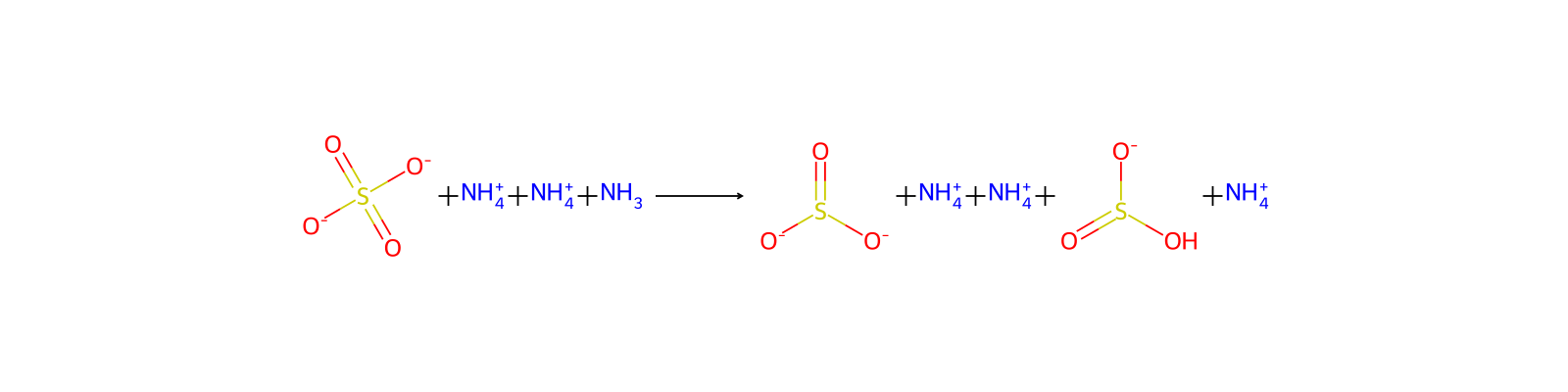
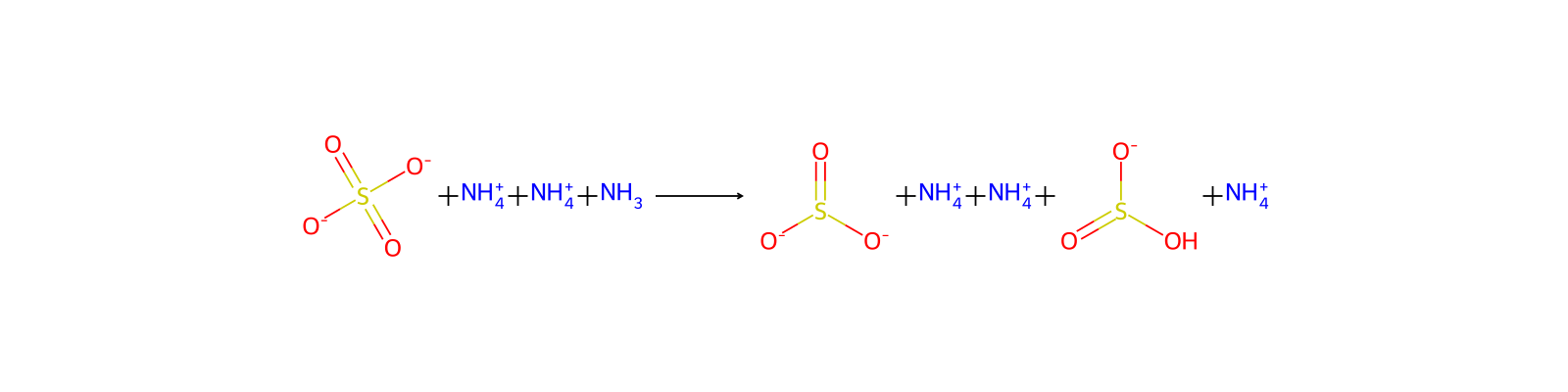
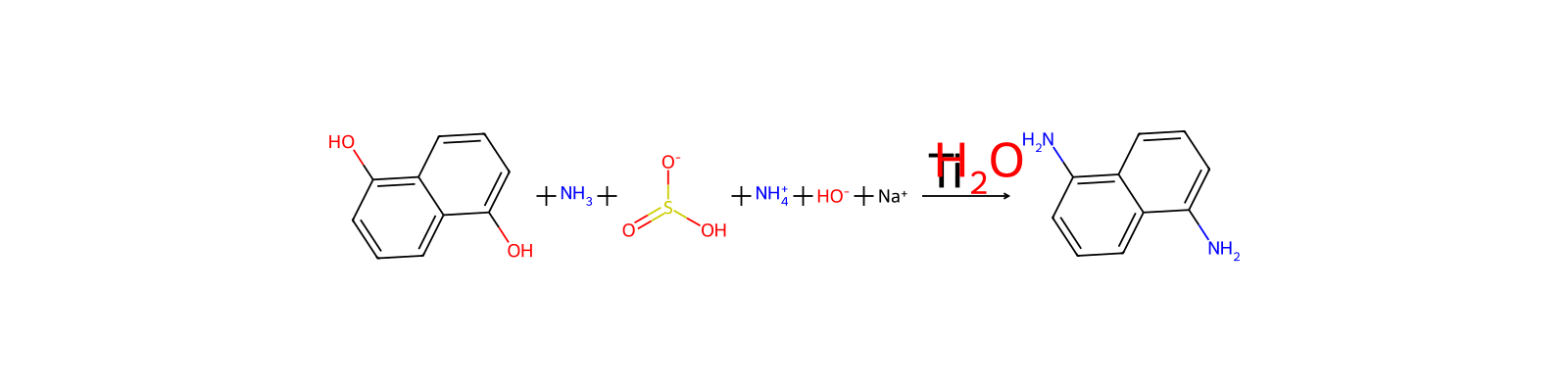
16 records



Linked notes
Loading…