HomeMCPWorkbenchSkills
HomeWorkbenchNotificationsMe
llms.txt · MCP GuidePrivacy Policy · Terms of Service · Supportv1.8.0
  1. Home
  2. /Reaction

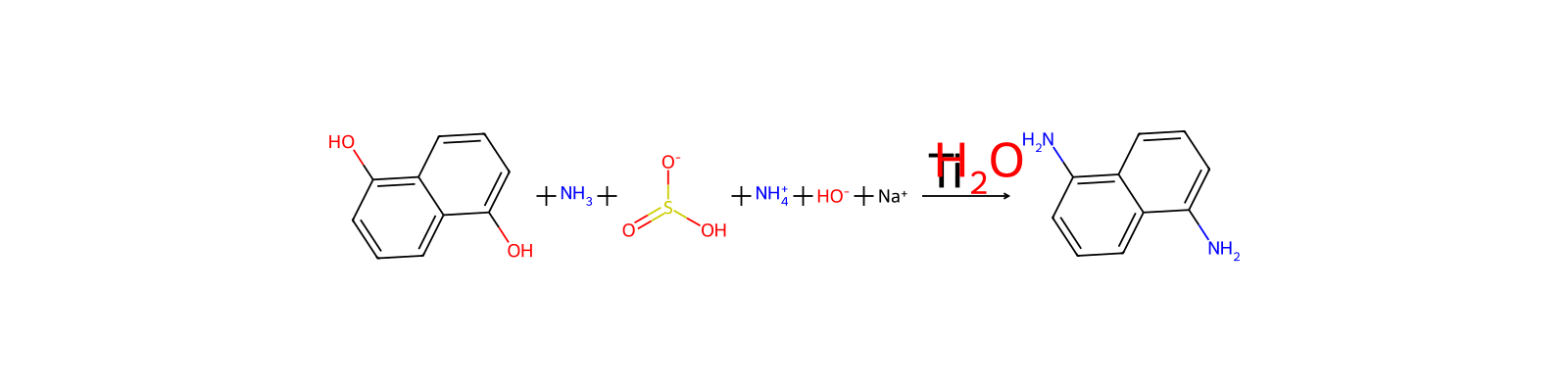
Ammonia → 1,5-Diaminonaphthalene

HRID 1074310
Notes
Print preview

Reaction equation

HRID 1074310 reaction equation
O[C:2]1[C:11]2[C:6](=[C:7](O)[CH:8]=[CH:9][CH:10]=2)[CH:5]=[CH:4][CH:3]=1.[NH3:13].S(=O)(O)[O-].[NH4+:18].[OH-].[Na+]>[Ti].O>[NH2:13][C:2]1[C:11]2[C:6](=[C:7]([NH2:18])[CH:8]=[CH:9][CH:10]=2)[CH:5]=[CH:4][CH:3]=1
ParticipantsConditionsProcedureWorkupSources & evidenceReaction notes

Participants

7

Reactant 4

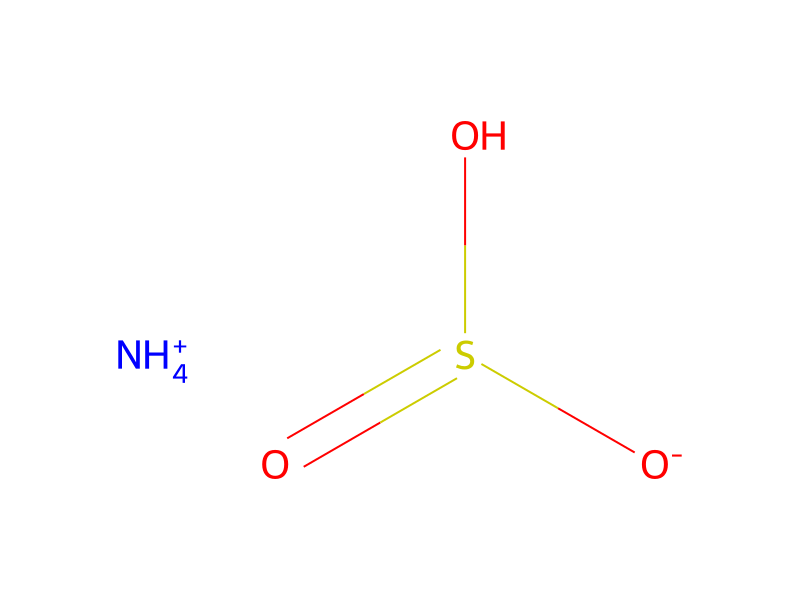
HCID 222AmmoniaHCID 67491,5-DihydroxynaphthaleneHCID 14798Sodium HydroxideHCID 10441651Ammonium Bisulfite

Product 1

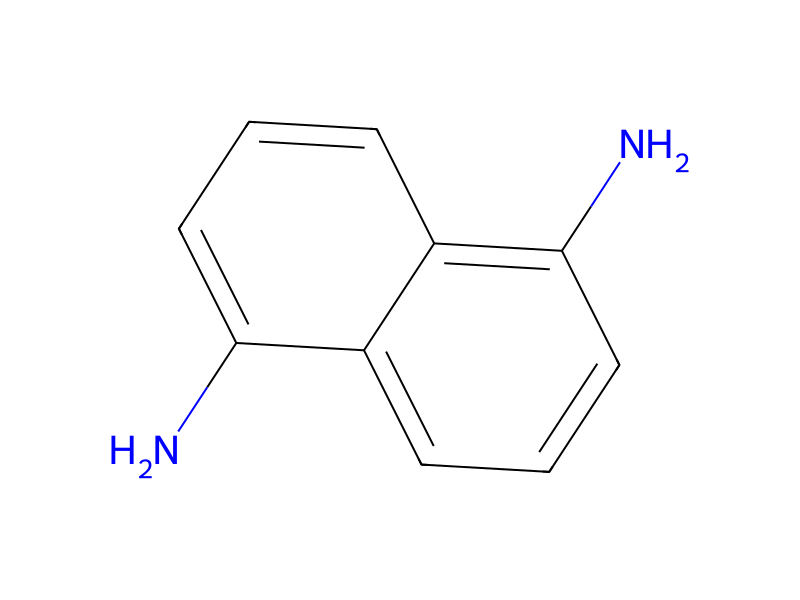
HCID 167201,5-DiaminonaphthaleneYield 173.8%

Reagents, catalysts & solvents 2

HCID 23963TitaniumCatalyst
HCID 962WaterSolvent

Conditions

Temperature
70 °C

Procedure

A mixture of 130 g of 1,5-dihydroxynaphthalene (98.1% strength by weight=0.8 mol), 102 g of ammonia (6.0 mol), 52 ml of ammonium bisulphite solution (490 g of SO2 per liter=0.4 mol) and 449 g of water is heated with stirring to 155° C. in a 1.3 liter titanium autoclave and is stirred at this temperature for 4 hours. 102 g of 50% strength by weight sodium hydroxide solution (1.28 mol of NaOH) are then pumped in with stirring at 155° C. The reaction mixture is cooled to 70° C. and is stirred for a further hour at this temperature. The precipitated 1,5-diaminonaphthalene is then filtered off and washed several times with water at 70° C. Drying in vacuo gives 110 g of 1,5-diaminonaphthalene (=86% of theory, relative to 1,5-dihydroxynaphthalene employed).
Workup

  1. temperatureis heated
  2. stirringwith stirring at 155° C
  3. stirringis stirred for a further hour at this temperature
  4. filtrationThe precipitated 1,5-diaminonaphthalene is then filtered off
  5. washwashed several times with water at 70° C
  6. customDrying in vacuo

Sources & evidence

ORD record
ord-36f844ae152f4328837bb8c8db81d877
Source dataset
uspto-grants-1990_11
DOI
10.6084/m9.figshare.5104873.v1
Patent number
US04973758

Reaction notes

Loading…

On this pageParticipantsConditionsProcedureWorkupSources & evidenceReaction notes