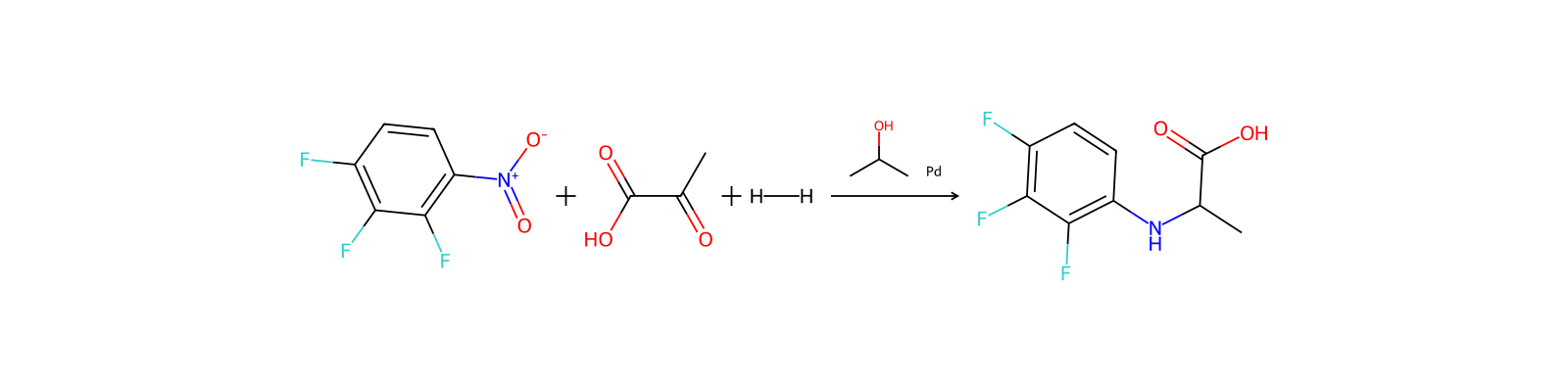
Pyruvic Acid
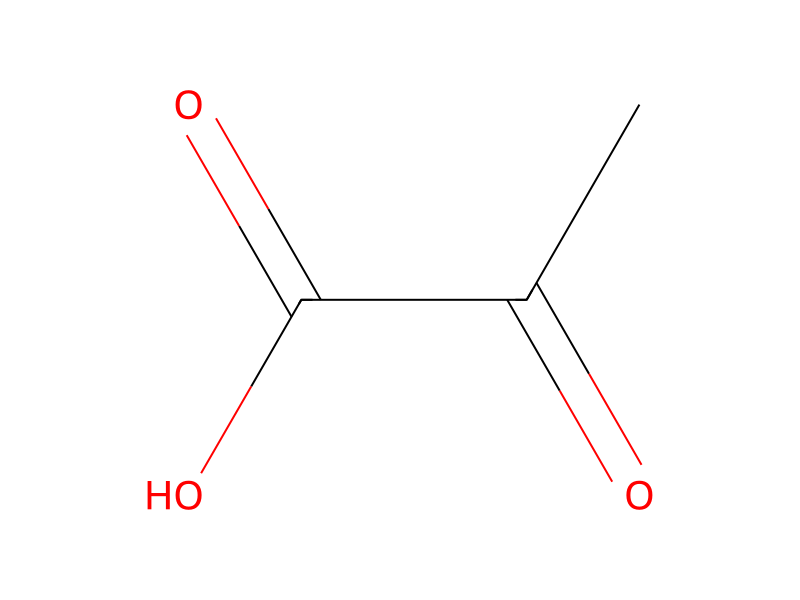
Basic information
- CAS
127-17-3- Standard SMILES
CC(=O)C(=O)O- InChIKey
LCTONWCANYUPML-UHFFFAOYSA-N- Molecular formula
- C3H4O3
- Average molar mass
- 88.06 g/mol
- Monoisotopic mass
- 88.01604399
Overview
Pyruvic acid is a 2-oxo monocarboxylic acid that is the 2-keto derivative of propionic acid. It is a metabolite obtained during glycolysis. It has a role as a cofactor and a fundamental metabolite. It is functionally related to a propionic acid. It is a conjugate acid of a pyruvate.
Names & identifiers
- Preferred name
- Pyruvic Acid
- IUPAC
- 2-oxopropanoic acid
- English name
- Pyruvic acid
- Molecular formula
- C3H4O3
- Molecular weight
- 88.06
Names & synonyms
Pyruvic acid2-Oxopropanoic acid127-17-3acetylformic acidPyroracemic acid2-Oxopropionic acidPropanoic acid, 2-oxo-alpha-ketopropionic acid2-Ketopropionic acid2-Oxopropansaeure2-Oxopropionsaeurealpha-Oxopropionsaeure
Show more names
pyruvicFEMA 29702-oxo-propanoicaciNSC 179Pyruvia AcidACID PYRUVATE
2-oxo-propionic acidacide pyruviquea-Ketopropionic acidCH3COCOOHFEMA No. 2970BrenztraubensaeureDTXSID2021650NSC-179
Database identifiers
- CAS
127-17-3- PubChem CID
- 1060
- DTXSID
DTXSID2021650- ChEMBL
CHEMBL1162144- ChEBI
CHEBI:32816- UNII
- 8558G7RUTR
- EC Number
- 204-824-3
- Nikkaji
- J2.015J
Properties
Computed structural properties
- XLogP
- -0.3
- Topological polar surface area
- 54.4 Ų
- Hydrogen bond donors
- 1
- Hydrogen bond acceptors
- 3
- Rotatable bonds
- 1
- Heavy atoms
- 6
- Formal charge
- 0
- Complexity
- 84
Experimental & physicochemical properties
Chemical ClassesBiological Agents -> Other Biomolecules
DrugsPharmaceuticals -> Listed in ZINC15
LipidsFatty Acyls [FA] -> Fatty Acids and Conjugates [FA01] -> Oxo fatty acids [FA0106]
SpringerMaterials PropertiesCoriolis coupling
FragrancesFragrance Ingredient (Pyruvic acid) -> IFRA transparency List
LogP-0.9
Food AdditivesFLAVORING AGENT OR ADJUVANT -> FDA Substance added to food
Density1.260-1.281
Flavoring AgentsEU Flavoring substances
Solubility
1000.0 mg/mL
miscible with water; soluble in organic solvents, oils
miscible at room temperature (in ethanol)
Safety & regulation
Safety information is for reference only and does not replace the supplier’s Safety Data Sheet (SDS), applicable regulations, or professional assessment.
GHS classification
GHS Classification
Danger
H314 (100%): Causes severe skin burns and eye damage [Danger Skin corrosion/irritation]
P260, P264, P264+P265, P280, P301+P330+P331, P302+P361+P354, P304+P340, P305+P354+P338, P316, P317, P321, P363, P405, and P501 (click each P-code to see the statement)
Aggregated GHS information provided per 1823 reports by companies from 11 notifications to the ECHA C&L Inventory. Each notification may be associated with multiple companies.
Hazard information
Regulatory Information
Chemical: Propanoic acid, 2-oxo-
Commission Regulation (EC) No 1565/2000 (Repealed by Com. Implementing Reg. (EU) No 872/2012)
REACH registered substance: Pyruvic acid (EC: 204-824-3)
Pyruvic acid: Does not have an individual approval but may be used under an appropriate group standard
Other Safety InformationEvaluation - Chemicals that are unlikely to require further regulation to manage risks to environment
Hazards Summary
Causes degenerative changes to brain in acute cerebral studies of rats; [RTECS] Polymerizes and decomposes on standing unless pure and stored in airtight container; [Merck Index] Safe when used as a flavoring agent in food; [JECFA] Causes burns; Inhalation may cause corrosive injuries to upper respiratory tract and lungs; [Sigma-Aldrich MSDS]
Hazard Classes and CategoriesSkin Corr. 1B (100%)
Toxicology
Adverse EffectsDermatotoxin - Skin burns.
Chemistry & industry
Pharmacology
Pharmacodynamics
Pyruvic acid or pyruvate is a key intermediate in the glycolytic and pyruvate dehydrogenase pathways, which are involved in biological energy production. Pyruvate is widely found in living organisms. It is not an essential nutrient since it can be synthesized in the cells of the body. Certain fruits and vegetables are rich in pyruvate. For example, an average-size red apple contains approximately 450 milligrams. Dark beer and red wine are also rich sources of pyruvate. Recent research suggests that pyruvate in high concentrations may have a role in cardiovascular therapy, as an inotropic agent. Supplements of this dietary substance may also have bariatric and ergogenic applications.
Mechanism of Action
Pyruvate serves as a biological fuel by being converted to acetyl coenzyme A, which enters the tricarboxylic acid or Krebs cycle where it is metabolized to produce ATP aerobically. Energy can also be obtained anaerobically from pyruvate via its conversion to lactate. Pyruvate injections or perfusions increase contractile function of hearts when metabolizing glucose or fatty acids. This inotropic effect is striking in hearts stunned by ischemia/reperfusion. The inotropic effect of pyruvate requires intracoronary infusion. Among possible mechanisms for this effect are increased generation of ATP and an increase in ATP phosphorylation potential. Another is activation of pyruvate dehydrogenase, promoting its own oxidation by inhibiting pyruvate dehydrogenase kinase. Pyruvate dehydrogenase is inactivated in ischemia myocardium. Yet another is reduction of cytosolic inorganic phosphate concentration. Pyruvate, as an antioxidant, is known to scavenge such reactive oxygen species as hydrogen peroxide and lipid peroxides. Indirectly, supraphysiological levels of pyruvate may increase cellular reduced glutathione.
Metabolism/Metabolites
In the liver, pyruvate is metabolized via several pathways.
In the liver, pyruvate is metabolized via several pathways.
Absorption, Distribution and ExcretionPyruvate is absorbed from the gastrointestinal tract from whence it is transported to the liver via the portal circulation.
Related reactions
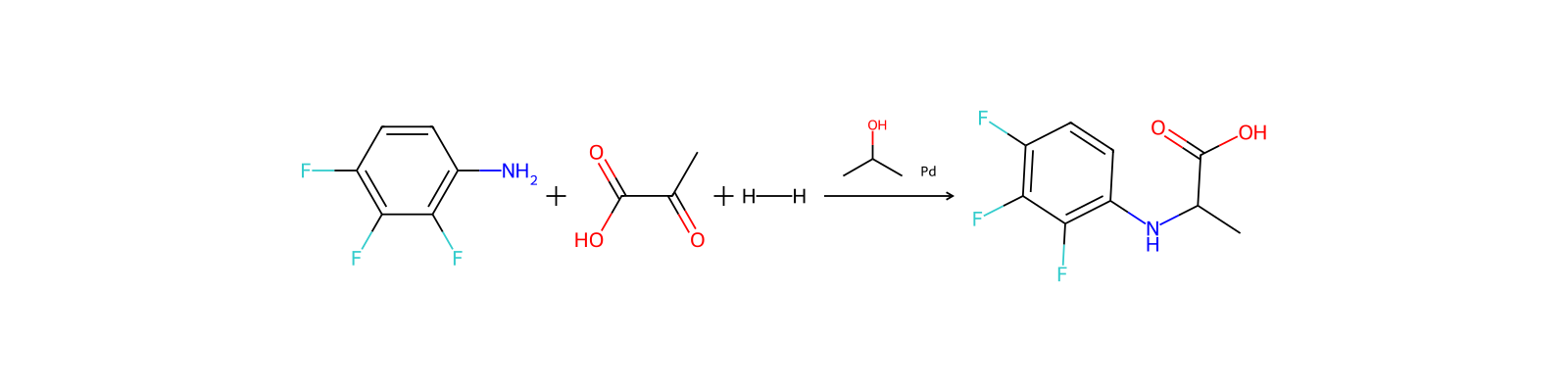
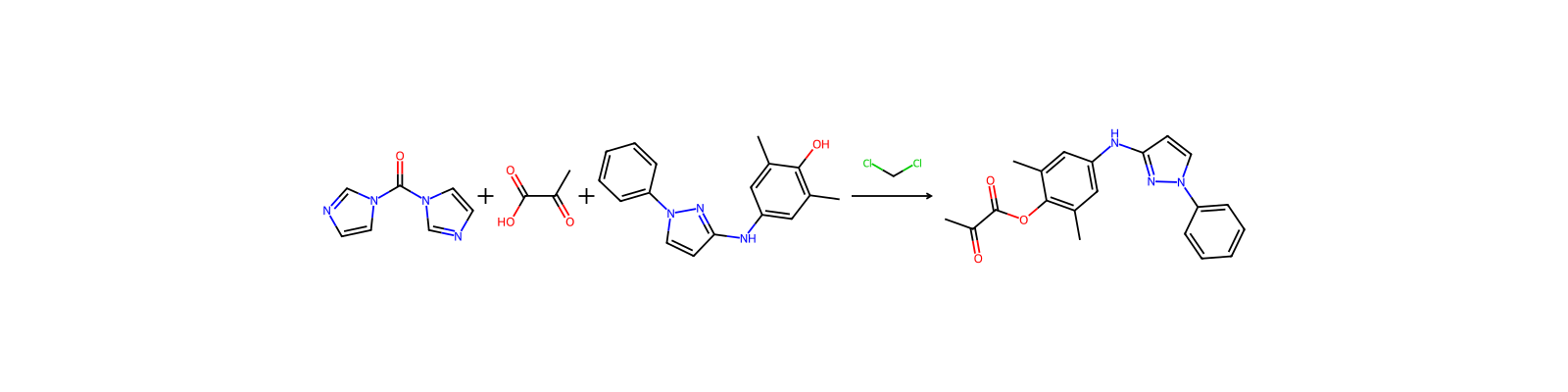
267 records





Compound notes
Loading…