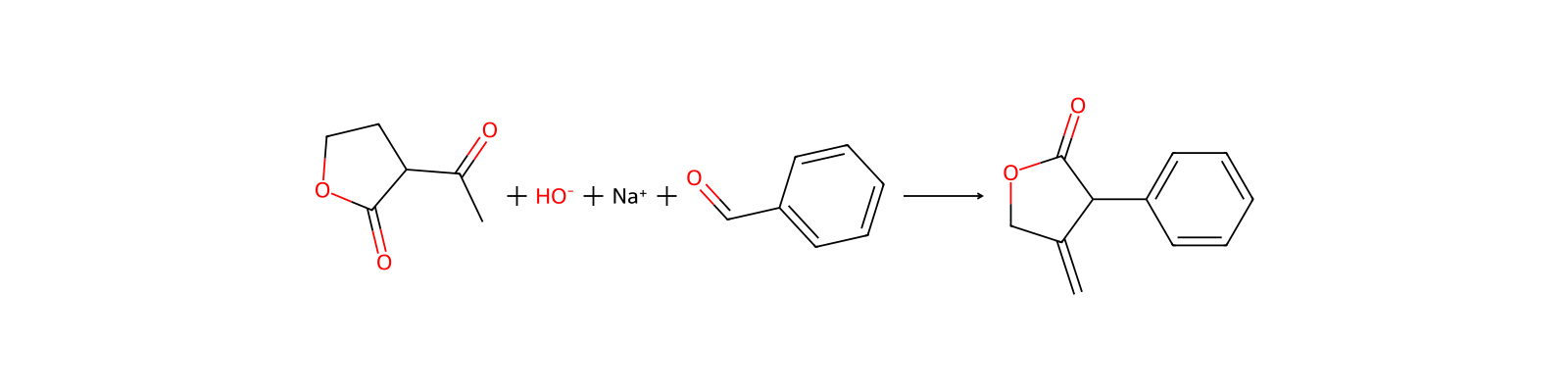
2-Acetylbutyrolactone
Completing data — refresh the page later to see the latest
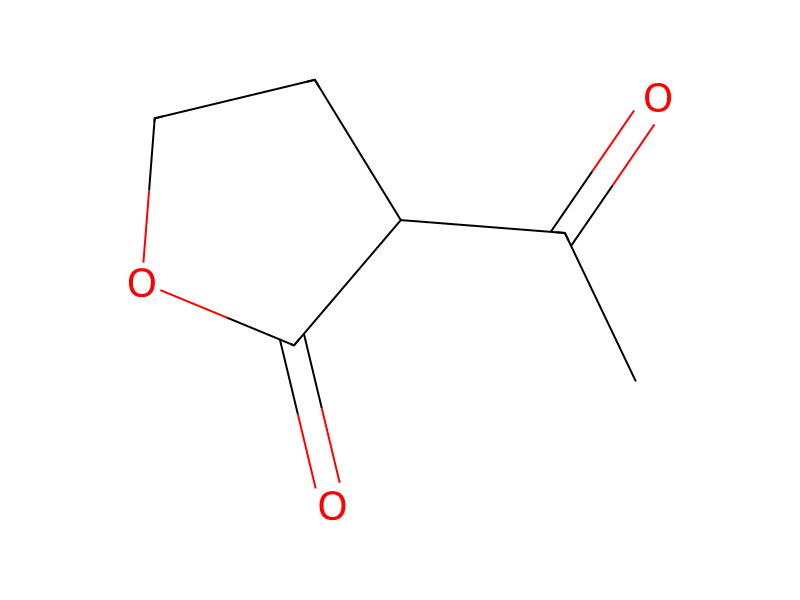
Basic information
- CAS
517-23-7- Standard SMILES
CC(=O)C1CCOC1=O- InChIKey
OMQHDIHZSDEIFH-UHFFFAOYSA-N- Molecular formula
- C6H8O3
- Average molar mass
- 128.13 g/mol
- Monoisotopic mass
- 128.04734412
Overview
3-Acetyldihydro-2(3H)-furanone is a gamma-lactone.
Names & identifiers
- Preferred name
- 2-Acetylbutyrolactone
- IUPAC
- 3-acetyloxolan-2-one
- English name
- 2-Acetylbutyrolactone
- Molecular formula
- C6H8O3
- Molecular weight
- 128.13
Names & synonyms
2-Acetylbutyrolactone517-23-7ALPHA-ACETYLBUTYROLACTONE2(3H)-Furanone, 3-acetyldihydro-2-Oxo-3-acetyltetrahydrofuranDihydro-3-acetyl-2(3H)-furanonealpha-AcetobutyrolactoneI3D73T5K0QNSC-2019RefChem:5553584,5-dihydro-3-acetylfuran-2(3H)-one208-235-2
Show more names
ABLα-Acetyl-γ-butyrolactoneACETYLBUTYROLACTONEα-Acetylbutyrolactonea-Acetyl-y-Butyrolactone
3-acetyldihydrofuran-2(3H)-one3-acetyloxolan-2-one3-Acetyldihydro-2(3H)-furanonealpha-Acetyl-gamma-butyrolactone2-Acetylbutanolide2-Acetyl-gamma-butyrolactone3-acetyltetrahydrofuran-2-one3-Acetyltetrahydro-2-furanone
Database identifiers
- CAS
517-23-7- PubChem CID
- 10601
- DTXSID
DTXSID6044436- ChEMBL
CHEMBL3187921- ChEBI
CHEBI:179633- UNII
- I3D73T5K0Q
- EC Number
- 208-235-2
- Nikkaji
- J6.575G
Properties
Computed structural propertiesFilling in
- XLogP
- 0.1
- Topological polar surface area
- 43.4 Ų
- Hydrogen bond donors
- 0
- Hydrogen bond acceptors
- 3
- Rotatable bonds
- 1
- Heavy atoms
- 9
- Formal charge
- 0
- Complexity
- 150
Experimental & physicochemical properties
Chemical ClassesOther Classes -> Lactones
LipidsFatty Acyls [FA] -> Fatty esters [FA07] -> Lactones [FA0704]
Physical Description
Liquid
Liquid with an ester-like odor; [Merck Index] Clear colorless to pale yellow liquid; [Acros Organics MSDS]
Physicochemical properties
- Melting point
- 25 °C · <25 °C
- Boiling point
- 107 · 107-108 °C5 mm Hg(lit.)
- Density
- 1.19 g/mL · 1.19 g/mL at 25 °C(lit.)
- vapor pressure
- 0.131 Pa · 0.131Pa at 20℃
- refractive index
- 20 · n20/D 1.459(lit.)
- Flash point
- 230 °F · >230 °F
- storage temp.
- Keep in dark place,Sealed in dry,Room Temperature
- solubility
- 200 g/l · 200g/l
Safety & regulation
Safety information is for reference only and does not replace the supplier’s Safety Data Sheet (SDS), applicable regulations, or professional assessment.
GHS classification
GHS Classification
This chemical does not meet GHS hazard criteria for 0.5% (1 of 202) of reports.
Warning
H315 (97.5%): Causes skin irritation [Warning Skin corrosion/irritation]
P261, P264, P264+P265, P271, P280, P302+P352, P304+P340, P305+P351+P338, P319, P321, P332+P317, P337+P317, P362+P364, P403+P233, P405, and P501 (click each P-code to see the statement)
Aggregated GHS information provided per 202 reports by companies from 15 notifications to the ECHA C&L Inventory. Each notification may be associated with multiple companies.
Hazard information
Regulatory Information
Chemical: 2(3H)-Furanone, 3-acetyldihydro-
2(3H)-Furanone, 3-acetyldihydro- is listed on the EPA's Chemical Data Reporting (CDR) system. Manufacturers and importers of 2(3H)-Furanone, 3-acetyldihydro- are required to report information about their production and use of this chemical to the EPA under the Toxic Substances Control Act (TSCA). (40 eCFR Part 711)
Status: Active Update: 26-11-2021 https://echa.europa.eu/registration-dossier/-/registered-dossier/25715
2-Acetyl-gamma-butyrolactone: Does not have an individual approval but may be used under an appropriate group standard
Hazards SummaryA skin and mucous membrane irritant; [Merck Index] A skin and strong eye irritant; [ECHA REACH Registrations] An irritant; [Acros Organics MSDS] See beta-Butyrolactone and Butyrolactone.
Hazard Classes and CategoriesSkin Irrit. 2 (97.5%)
Safety data
- PPE
- Eyeshields, Gloves, type ABEK (EN14387) respirator filter
- wgk
- 1
Chemistry & industry
Uses & manufacturing
UsesUsed to make 3,4-disubstituted pyridines and 5-(beta-hydroxethyl)-4-methylthiazole; [Merck Index] Used as an intermediate; [ECHA REACH Registrations]
U.S. Production2023: 5,000,000 - <10,000,000 lb
Industry UsesIntermediate
General Manufacturing Information
Pesticide, Fertilizer, and Other Agricultural Chemical Manufacturing
2(3H)-Furanone, 3-acetyldihydro-: ACTIVE
Applications
DescriptionIt is an important intermediate involved in the synthesis of chemical and pharmaceutical products such as vitamin B, 3,4-substituted pyridine, 5-(2-Hydroxyethyl)-4-methylthiazole. In presence of 2-acetylbutyrolactone, reaction of tert-butyl isocyanide with dialkyl acetylenedicarboxylates leads to the formation of dialkyl (E)-2-{(tert-butylamino)[2-oxo-4,5-dihydro-3(2H)-furanylidene]methyl}-2-butenedioates.1 Moreover, reaction of 2-acetylbutyrolactone with thiosemicarbazide and 3-(2-bromo-acetyl)-chromen-2-one in anhydrous ethanol produced 3-{2-[5-hydroxyl-4-(2-hydroxyl-ethyl)-3-methyl-pyrazol-1-yl]-thiazol-4-yl}-chromen-2-one in good yields.2 In addition, 2-acetylbutyrolactone can also function as the raw material for synthesizing pilocarpine that is a leading therapeutic agent for the treatment of narrow and wide angle glaucoma.3 Besides, this chemical can also act as a fluorogenic reagent in the quantitative spectrofluorometric determination of primary amines, which has been demonstrated to be equally accurate and precise as the officially or other reported methods.4
UsesAn intermediate in the synthesis of 2,4-disubstituted pyridines. A fluorogenic reagent for the spectrofluorimetric determination of primary amines.
UsesIn synthesis of 3,4-disubstituted pyridines; of 5-(b-hydroxethyl)-4-methylthiazole.
Upstream & downstream products
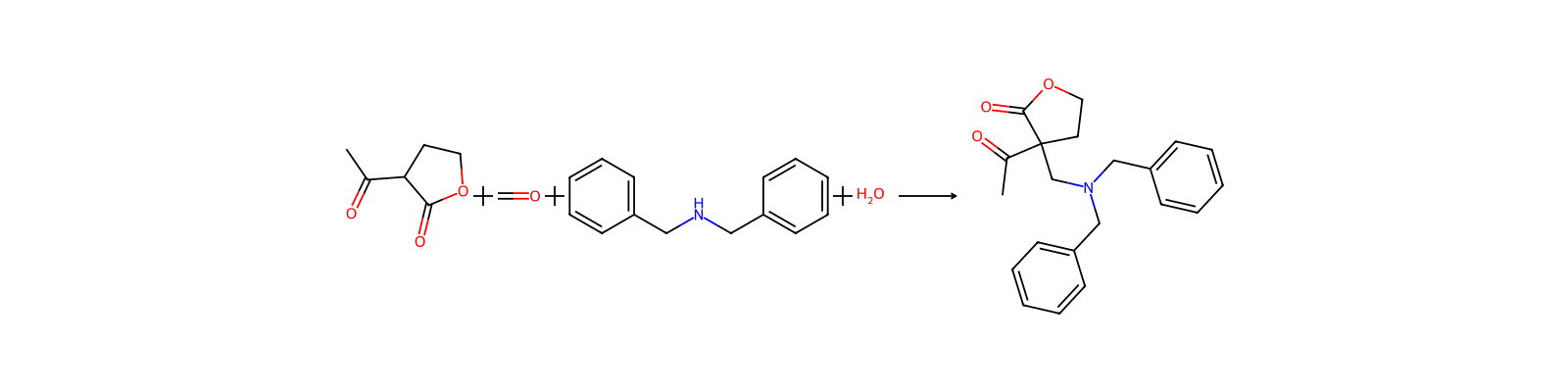
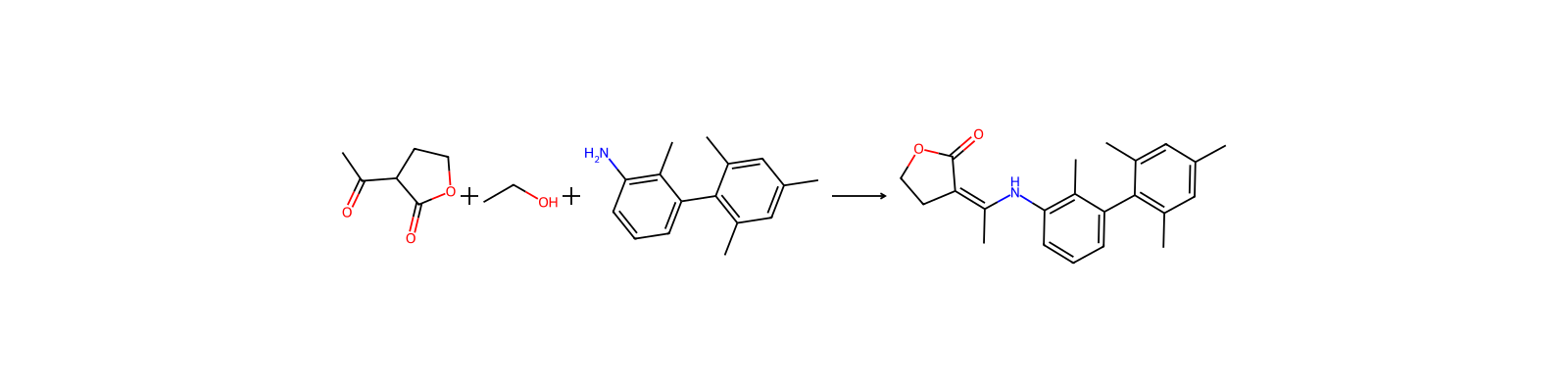
Related reactions
100 records




Compound notes
Loading…