

Basic information
- CAS
521-18-6- Standard SMILES
C[C@]12CCC(=O)C[C@@H]1CC[C@@H]1[C@@H]2CC[C@]2(C)[C@@H](O)CC[C@@H]12- InChIKey
NVKAWKQGWWIWPM-ABEVXSGRSA-N- Molecular formula
- C19H30O2
- Average molar mass
- 290.4 g/mol
- Monoisotopic mass
- 290.2245802
Overview
17beta-hydroxy-5alpha-androstan-3-one is a 17beta-hydroxy steroid that is testosterone in which the 4,5 double bond has been reduced to a single bond with alpha-configuration at position 5. It has a role as an androgen, a mouse metabolite, a human metabolite and a Daphnia magna metabolite. It is a 3-oxo-5alpha-steroid, a 17beta-hydroxy steroid and a 17beta-hydroxyandrostan-3-one. It derives from a hydride of a 5alpha-androstane.
Names & identifiers
- Preferred name
- Dihydrotestosterone
- IUPAC
- (5S,8R,9S,10S,13S,14S,17S)-17-hydroxy-10,13-dimethyl-1,2,4,5,6,7,8,9,11,12,14,15,16,17-tetradecahydrocyclopenta[a]phenanthren-3-one
- English name
- Stanolone
- Molecular formula
- C19H30O2
- Molecular weight
- 290.45
Names & synonyms
STANOLONEAndrostanolonedihydrotestosterone521-18-6AnabolexAndractimAndroloneNeodrol4-DihydrotestosteroneAnaboleenProteinaStanaprol
Show more names
DHT5α-Dihydrotestosterone5α-DHT5α-androstan-17β-ol-3-oneStanolon
Protona5alpha-DihydrotestosteroneCristerona MB17beta-Hydroxy-5alpha-androstan-3-oneAndrostanolona5alpha-Androstan-17beta-ol-3-one5-alpha-DihydrotestosteroneTestosterone, dihydro-
Database identifiers
- CAS
521-18-6- PubChem CID
- 10635
- DTXSID
DTXSID9022364- ChEMBL
CHEMBL27769- ChEBI
CHEBI:16330- UNII
- 08J2K08A3Y
- EC Number
- 208-307-3
- Nikkaji
- J39.503J
Properties
Computed structural properties
- XLogP
- 3.7
- Topological polar surface area
- 37.3 Ų
- Hydrogen bond donors
- 1
- Hydrogen bond acceptors
- 2
- Rotatable bonds
- 0
- Heavy atoms
- 21
- Formal charge
- 0
- Complexity
- 458
Experimental & physicochemical properties
Chemical ClassesHormone
Drugs
DEA NFLIS-Drug Category -> Steroids
DEA Schedule III Controlled Substance -> Anabolic steroids
Pharmaceuticals -> Synthetic Cannabinoids or Psychoactive Compounds
LipidsLipids -> Sterol Lipids [ST] -> Steroids [ST02] -> C19 steroids (androgens) and derivatives [ST0202]
SpringerMaterials PropertiesChemical shift
LogP3.55
Human DrugsPharmaceuticals
Endocrine DisruptorsPotential endocrine disrupting compound
Melting Point181 °C
Physical DescriptionSolid
Collision Cross Section177.31 Ų [M+H]+
Physicochemical properties
- Melting point
- 178 · 178-183 °C
- alpha
- 27 · 27 º
- Boiling point
- 372.52 °C · 372.52°C (rough estimate)
- Density
- 1.032 · 1.0320 (rough estimate)
- refractive index
- 1.4709 · 1.4709 (estimate)
- Flash point
- 9 ℃ · 9℃
- storage temp.
- 2 · 2-8°C
- solubility
- 1 mg/ml; · Acetonitrile: 1 mg/ml; Ethanol: 1 mg/ml; Methanol: 1 mg/ml
- pka
- 15.08 · 15.08±0.60(Predicted)
- form
- powder
- biological source
- synthetic
- optical activity
- 20 · [α]20/D +33±1°, c =1% in ethanol
- Water Solubility
- 344.3 g/L · 344.3g/L(temperature not stated)
- Merck
- 13 · 13,8872
- BRN
- 2056371 · 2056371
- Major Application
- forensics and toxicologypharmaceutical (small molecule)
- InChI
- 1S/C19H30O2/c1-18-9-7-13(20)11-12(18)3-4-14-15-5-6-17(21)19(15,2)10-8-16(14)18/h12,14-17,21H,3-11H2,1-2H3/t12-,14-,15-,16-,17-,18-,19-/m0/s1
- InChIKey
- NVKAWKQGWWIWPM-ABEVXSGRSA-N
- SMILES
- [H][C@@]12CC[C@@]3([H])[C@]4([H])CC[C@H](O)[C@@]4(C)CC[C@]3([H])[C@@]1(C)CCC(=O)C2
- CAS DataBase Reference
- 521 · 521-18-6(CAS DataBase Reference)
- NCI Dictionary of Cancer Terms
- androstanolone; DHT; dihydrotestosterone
- FDA UNII
- 8 J2K08A3Y · 08J2K08A3Y
- NCI Drug Dictionary
- dihydrotestosterone
- ATC code
- 14 AA01,G03BB02 · A14AA01,G03BB02
- NIST Chemistry Reference
- Stanolone(521-18-6)
- EPA Substance Registry System
- -3 · Androstan-3-one, 17-hydroxy-, (5.alpha.,17.beta.)- (521-18-6)
- UNSPSC Code
- 51111800 · 51111800
- NACRES
- 77 · NA.77
- Symbol(GHS)
- 7 · GHS07,GHS08,GHS09
- Signal word
- Danger
- Hazard statements
- 302 · H302-H351-H360FD-H410
- Precautionary statements
- 202 · P202-P264-P270-P273-P301+P312-P308+P313
- PPE
- 3 · Eyeshields, Gloves, type P3 (EN 143) respirator cartridges
- Hazard Codes
- Xn,T,F
- Risk Statements
- 61 · 61-40-39/23/24/25-23/24/25-11
- Safety Statements
- 53 · 53-36/37/39-45-36/37-16
- RIDADR
- 1230 · UN1230 - class 3 - PG 2 - Methanol, solution
- WGK Germany
- 3 · 3
- RTECS
- 8052000 · BV8052000
- Storage Class
- 6.1 C · 6.1C - Combustible acute toxic Cat.3toxic compounds or compounds which causing chronic effects
- Hazard Classifications
- 4 OralAquatic · Acute Tox. 4 OralAquatic Acute 1Aquatic Chronic 1Carc. 2Repr. 1A
- REACH Registrations
- Inactive
Safety & regulation
GHS classification
GHS Classification
Danger
H351 (98.3%): Suspected of causing cancer [Warning Carcinogenicity]
P203, P280, P318, P405, and P501 (click each P-code to see the statement)
Aggregated GHS information provided per 60 reports by companies from 6 notifications to the ECHA C&L Inventory. Each notification may be associated with multiple companies.
Hazard information
Regulatory Information
DEA schedule III controlled substance
Status: Cease Manufacture Update: 31-10-2012 https://echa.europa.eu/registration-dossier/-/registered-dossier/12136
Hazard Classes and CategoriesCarc. 2 (98.3%)
Toxicology
Exposure RoutesBioavailability is very low (0-2%) following oral administration.
Carcinogen ClassificationNo indication of carcinogenicity to humans (not listed by IARC).
Drug Induced Liver Injury
Drug-Induced Liver Injury Severity and Toxicity (DILIst)
ANDROSTANOLONE
DILI Positive
DOI:10.1016/j.drudis.2019.09.022
USGS Health-Based Screening Levels for Evaluating Water-Quality
Dihydrotestosterone
Hormone
Smith, C.D. and Nowell, L.H., 2024. Health-Based Screening Levels for evaluating water-quality data (3rd ed.). DOI:10.5066/F71C1TWP
Safety data
- PPE
- Eyeshields, Gloves, type P3 (EN 143) respirator cartridges
- wgk
- 3
- rtecs
- BV8052000
- ridadr
- UN1230 - class 3 - PG 2 - Methanol, solution
- risk_code
- 61-40-39/23/24/25-23/24/25-11
- Signal word
- Danger
- Symbol(GHS)
- GHS07,GHS08,GHS09
- hazard_code
- Xn,T,F
- safety_code
- 53-36/37/39-45-36/37-16
- Storage Class
- 6.1C - Combustible acute toxic Cat.3toxic compounds or compounds which causing chronic effects
- Hazard statements
- H302-H351-H360FD-H410
- REACH Registrations
- Inactive
- Hazard Classifications
- Acute Tox. 4 OralAquatic Acute 1Aquatic Chronic 1Carc. 2Repr. 1A
- Precautionary statements
- P202-P264-P270-P273-P301+P312-P308+P313
Chemistry & industry
Pharmacology
ATC Code
A - Alimentary tract and metabolism
G - Genito urinary system and sex hormones
QA - Alimentary tract and metabolism
QG - Genito urinary system and sex hormones
MeSH Pharmacological Classification
Compounds that interact with ANDROGEN RECEPTORS in target tissues to bring about the effects similar to those of TESTOSTERONE. Depending on the target tissues, androgenic effects can be on SEX DIFFERENTIATION; male reproductive organs, SPERMATOGENESIS; secondary male SEX CHARACTERISTICS; LIBIDO; development of muscle mass, strength, and power.
Absorption, Distribution and ExcretionBioavailability is very low (0-2%) following oral administration.
Tissue LocationsAdipose Tissue
Cellular LocationsCytoplasm
Metabolite PathwaysAndrogen and Estrogen Metabolism
Uses & manufacturing
UsesDihydrotestosterone is an endogenously produced metabolite found in the human body. It is used in metabolic reactions, catabolic reactions or waste generation.
Use ClassificationPharmaceuticals
Applications
DescriptionStanolone is well known as dihydrotestosterone (DHT), which is an endogenous androgen sex steroid and hormone. It is an agonist of the androgen receptor (AR). It plays important physiological role in sexual differentiation, maturation of the penis and scrotum, hair, sebum production and development and maintenance of the prostate gland and seminal vesicles. It is mainly used for the treatment of male hypogonadism, androgen deficiency of severe illness, androgen deficiency of ageing and microphallus in infancy.
UsesStanolone is a potent androgenic metabolite of testosterone that It is Controlled substance. It was created for the treatment of muscle wasting disease, and osteoporosis. It is a powerful anabolic steroid, which is similar to the body's naturally produced Dihydrotestosterone. Dihydrotestosterone (DHT) is generated by a 5-alpha reduction of testosterone. Unlike testosterone, DHT cannot be aromatized to estradiol therefore DHT is considered a pure androgenic steroid.
General DescriptionDihydrotestosterone (Item No. 15874) is an analytical reference standard categorized as an anabolic androgenic steroid. Anabolic steroids, including dihydrotestosterone, have been used to enhance physical performance in athletes. Dihydrotestosterone is regulated as a Schedule III compound in the United States. This product is intended for research and forensic applications.
Upstream & downstream products
Upstream raw materials
Downstream products
Suppliers100 total
Shanghai Biolang Biotechnology Co., Ltd.+86-15970428662 +86-13397199602 · [email protected]
Hong Kong Tiansheng New Material Trading Co., Ltd+8617320695765 · [email protected]
INTATRADE GmbH+49 3493/605464 · [email protected]
Hebei shuoxi biotechnology co. LTD+8613081092107
河北展药生物科技有限公司15369953316 +8615369953316 · [email protected]
T&W GROUP021-61551611 13296011611 · [email protected]
上海科骊科生物技术有限公司021-34975789 18721102763
长沙畋阳生物科技有限公司19558384994 19558384994
广州隽唐科技有限公司020-36607679 13502246435 · [email protected]
陕西林奈生物化工有限公司15327269642 · [email protected]
Syntechem Co.,Ltd[email protected]
太原市瑞和丰科贸有限公司+86 351 7031519 · [email protected]
安耐吉化学&3A(安徽泽升科技股份有限公司)400-0056266 · [email protected]
河北缤享新材料科技有限公司+8618633865755 · [email protected]
西安泽邦生物科技有限公司[email protected]
成都普思生物科技股份有限公司028-85370565-229 18080489829 · [email protected]
MedBio脉铂医药021-69568360 18916172912 · [email protected]
上海浦洛凯医药科技有限公司17269768198 · [email protected]
Pure Chemistry Scientific Inc.001-857-928-2050 or 1-888-588-9418 · [email protected]
上海泰坦科技股份有限公司400-6009262 15618770481 · [email protected]
医恩医疗系统研发(上海)有限公司021-58958002 18930822973 · [email protected]
Zhejiang J&C Biological Technology Co.,Limited+1-2135480471 · [email protected]
杭州东帆化学有限公司86-0571-85151182
云南西力生物技术股份有限公司0871-65217109 · [email protected]
Hebei shenghao import and export trade co. LTD+8618431136903
山东西亚化学有限公司13355009207 13355009207 · [email protected]
Nanjing Shizhou Biotechnology Co., Ltd+86-15850508050 · [email protected]
武汉盈邦医药有限公司+86-13296627870; +86-13971566811 · [email protected]
HONG KONG IPURE BIOLOGY CO.,LIMITED86 18062405514 18062405514 · [email protected]
四川库利南科技有限公司400-1166-196 18981987031 · [email protected]
斯芬克司药物研发(天津)股份有限公司022-66211289-843 13672102692 · [email protected]
Hebei Qige Biological Technology Co. Ltd+86 +8618733132031
斯百全化学(上海)有限公司021-021-021-67601398-809-809-809 15221380277 · [email protected]
Wuhan NCE Biomedical Co.,Ltd.4000-027-021 |24 +86-13986109188 | +86-15623472865 | +81-08033611988
TOKYO CHEMICAL INDUSTRY CO., LTD.03-36680489 · [email protected]
TCI Europe320-37350700 · [email protected]
成都思天德生物科技有限公司028-83243028 19136088901 · [email protected]
深圳振强药物研发有限公司0755-66853366 13670046396 · [email protected]
上海诺宝化工有限公司+86(0)21 60484900
Hubei Datong Bio-Chemical Technology Co.,Ltd027-87666700 · [email protected]
Clearsynth Labs Limited+91-22-26355700 · [email protected]
苏州亚科科技股份有限公司0512-87182055 13451648594 · [email protected]
上海倍卓生物科技有限公司021-61119791,13386096464 · [email protected]
上海喀露蓝科技有限公司18149758185 18149758185 · [email protected]
湖北鑫源顺医药化工有限公司13971561712, 13995564702, 027-50664929 · [email protected]
上海将来实业股份有限公司400-0066400 13621662912 · [email protected]
上海将来实业股份有限公司021-61552785 · [email protected]
HBCChem, Inc.+1-510-219-6317 · [email protected]
天津普西唐生物医药科技有限公司010-60605840 · [email protected]
池州凯隆进出口贸易有限公司[email protected]
Additional notes
DefinitionChEBI: Stanolone is a 17beta-hydroxy steroid that is testosterone in which the 4,5 double bond has been reduced to a single bond with alpha-configuration at position 5. It has a role as an androgen, a human metabolite, a Daphnia magna metabolite and a mouse metabolite. It is a 17beta-hydroxy steroid, a 17beta-hydroxyandrostan-3-one and a 3-oxo-5alpha-steroid. It derives from a hydride of a 5alpha-androstane.
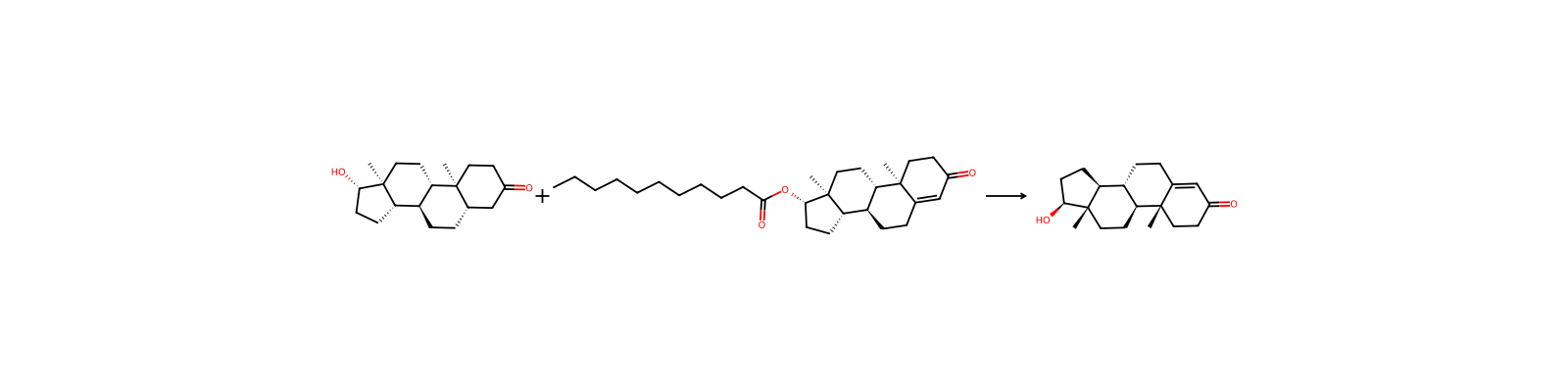
Related reactions
11 records




Compound notes
Loading…