

Basic information
- Standard SMILES
NC1CCN(CCc2ccccc2)CC1- InChIKey
BCEKLYJIVXGPLQ-UHFFFAOYSA-N- Molecular formula
- C13H20N2
- Average molar mass
- 204.31 g/mol
- Monoisotopic mass
- 204.16264865
Names & identifiers
- Preferred name
- 1-(2-Phenylethyl)piperidin-4-amine
- IUPAC
- 1-(2-phenylethyl)piperidin-4-amine
- English name
- 1-Phenethyl-piperidin-4-ylamine
- Molecular formula
- C13H20N2
- Molecular weight
- 204.31
Names & synonyms
1-(2-phenylethyl)piperidin-4-amineRefChem:422620675-996-91-phenethylpiperidin-4-amine51448-56-74-Amino-1-N-phenylethylpiperidine4-amino-1-phenethylpiperidine1-Phenethyl-piperidin-4-ylamineMFCD03411613CHEMBL4234301-(2-PHENYLETHYL)-4-PIPERIDINAMINE4-piperidinamine, 1-(2-phenylethyl)-, dihydrochloride
Show more names
N-phenylethyl-4-aminopiperidineN-(PHENETHYL)-4-AMINO-PIPERIDINE1-(2-Phenethyl)-4-Amino Piperidine
1-(2-PHENYLETHYL)PIPERIDIN-4-AMINE DIHYDROCHLORIDEn-(2-phenethyl)-4-aminopiperidinen-(2-phenethyl)-4-amino piperidine(phenethyl)-4-aminopiperidin1-phenethyl-4-aminopiperidine-(phenethyl)-4-aminopiperidinSCHEMBL18034842-phenylethyl-4-aminopiperidine
Database identifiers
- CAS
1209-04-7、51448-56-7- PubChem CID
- 10728788
- DTXSID
DTXSID70444078- ChEMBL
CHEMBL423430- EC Number
- 180-911-9、675-996-9
Properties
Computed structural properties
- XLogP
- 1.8
- Topological polar surface area
- 29.3 Ų
- Hydrogen bond donors
- 1
- Hydrogen bond acceptors
- 2
- Rotatable bonds
- 3
- Heavy atoms
- 15
- Formal charge
- 0
- Complexity
- 167
Physicochemical properties
- Boiling point
- 142 ℃ · 142℃ (0.10 Torr)
- Density
- 1.004 · 1.004±0.06 g/cm3(Predicted)
- pka
- 10.48 · 10.48±0.20(Predicted)
- form
- solid
- InChI
- 1S/C13H20N2/c14-13-7-10-15(11-8-13)9-6-12-4-2-1-3-5-12/h1-5,13H,6-11,14H2
- InChIKey
- BCEKLYJIVXGPLQ-UHFFFAOYSA-N
- SMILES
- NC1CCN(CC1)CCc2ccccc2
- CAS DataBase Reference
- 51448 · 51448-56-7(CAS DataBase Reference)
- UNSPSC Code
- 12352200 · 12352200
- NACRES
- 21 · NA.21
- Symbol(GHS)
- 7 · GHS07
- Signal word
- Warning
- Hazard statements
- 227 · H227
- Precautionary statements
- 501 · P501-P210-P280-P370+P378-P403+P235
- Hazard Codes
- T
- Risk Statements
- 25 · 25
- Safety Statements
- 45 · 45
- WGK Germany
- 3 · WGK 3
- Storage Class
- 6.1 C · 6.1C - Combustible acute toxic Cat.3toxic compounds or compounds which causing chronic effects
- Hazard Classifications
- 3 Oral · Acute Tox. 3 Oral
Safety & regulation
GHS classification
GHS Classification
Danger
H301 (25%): Toxic if swallowed [Danger Acute toxicity, oral];H302 (50%): Harmful if swallowed [Warning Acute toxicity, oral];H314 (75%): Causes severe skin burns and eye damage [Danger Skin corrosion/irritation];H335 (50%): May cause respiratory irritation [Warning Specific target organ toxicity, single exposure; Respiratory tract irritation]
P260, P261, P264, P270, P271, P280, P301+P316, P301+P317, P301+P330+P331, P302+P361+P354, P304+P340, P305+P354+P338, P316, P319, P321, P330, P363, P403+P233, P405, and P501 (click each P-code to see the statement)
Aggregated GHS information provided per 4 reports by companies from 4 notifications to the ECHA C&L Inventory. Each notification may be associated with multiple companies.;Information may vary between notifications depending on impurities, additives, and other factors. The percentage value in parenthesis indicates the notified classification ratio from companies that provide hazard codes. Only hazard codes with percentage values above 10% are shown. For more detailed information, please visit ECHA C&L website.
Hazard information
Hazard Classes and Categories
Acute Tox. 3 (25%);Acute Tox. 4 (50%);Skin Corr. 1B (75%);STOT SE 3 (50%)
Acute Tox. 4 (100%);Skin Irrit. 2 (100%);Eye Irrit. 2A (100%);STOT SE 3 (100%)
Safety data
- wgk
- WGK 3
- risk_code
- 25
- Signal word
- Warning
- Symbol(GHS)
- GHS07
- hazard_code
- T
- safety_code
- 45
- Storage Class
- 6.1C - Combustible acute toxic Cat.3toxic compounds or compounds which causing chronic effects
- Hazard statements
- H227
- Hazard Classifications
- Acute Tox. 3 Oral
- Precautionary statements
- P501-P210-P280-P370+P378-P403+P235
Chemistry & industry
Suppliers25 total
Career Henan Chemica Co+86-0371-86658258 +86-13203830695 · [email protected]
江苏艾康生物医药研发有限公司025-025-66113011 15955137747 · [email protected]
Aladdin Scientific[email protected]
武汉凯威斯科技有限公司86-027-67849912 · [email protected]
重庆张邦医药科技有限责任公司028-84252981 18583719936 · [email protected]
砌块化学科技(上海)有限公司021-20432219 13918097649 · [email protected]
上海贺康生物技术有限公司17721021104 18939837085 · [email protected]
上海寰川实业有限公司021-61478794 · [email protected]
上海嵩爰化工科技有限公司010-1234567 18521000990 · [email protected]
上海孚一生物科技有限公司+86 (21) 61124340
AN PharmaTech Co Ltd86(21)68097365 · [email protected]
上海阿拉丁生化科技股份有限公司6206333 13167063860 · [email protected]
武汉凯威斯科技有限公司027-67849912 · [email protected]
青岛海力诺化工有限公司[email protected]
南京凯姆铂医药科技有限公司025-66162170
上海相辉医药科技有限公司[email protected]
厦门盈融达化工有限公司+86-0592-6210733 · [email protected]
Chembon Pharmaceutical Co., Ltd.+86-28-8425-2981
南京克罗托鲁宁医药科技有限公司13382066392
武汉凯威斯科技有限公司027-67849912 · [email protected]
重庆卡兰医药有限公司[email protected]
北京百灵威科技有限公司18210857532 18210857532 · [email protected]
DAYANG CHEM (HANGZHOU) CO.,LTD+86-88938639 +86-17705817739 · [email protected]
ShenZhen H&D Pharmaceutical Technology Co., LTD+86-18627948422 · [email protected]
北京新研汇医药研发有限公司13969155946 · [email protected]
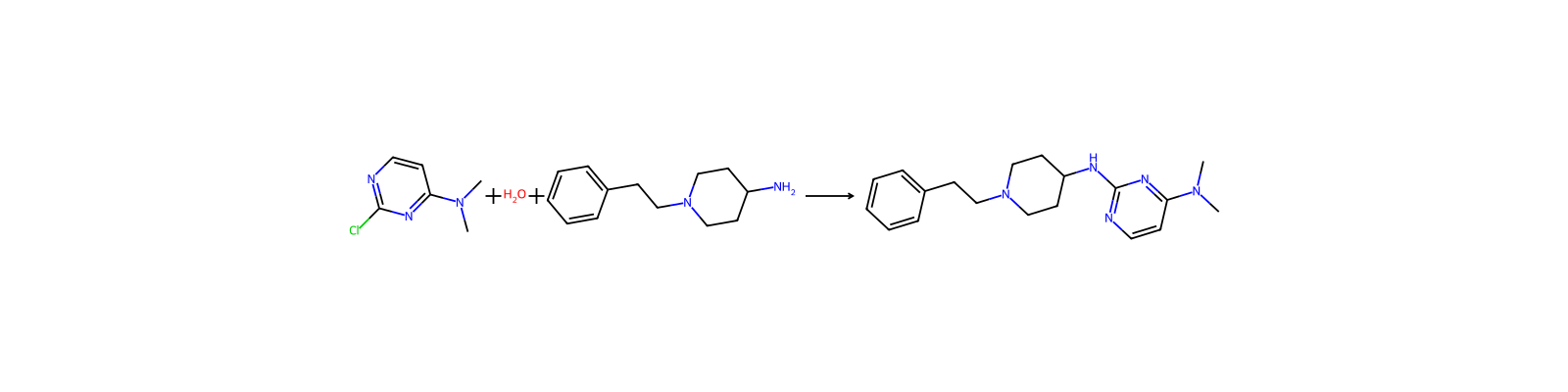
Related reactions
14 records




Linked notes
Loading…