
Basic information
- CAS
79-33-4- Standard SMILES
C[C@H](O)C(=O)O- InChIKey
JVTAAEKCZFNVCJ-REOHCLBHSA-N- Molecular formula
- C3H6O3
- Average molar mass
- 90.08 g/mol
- Monoisotopic mass
- 90.03169405
Overview
(S)-lactic acid is an optically active form of lactic acid having (S)-configuration. It has a role as an Escherichia coli metabolite and a human metabolite. It is a (2S)-2-hydroxy monocarboxylic acid and a 2-hydroxypropanoic acid. It is a conjugate acid of a (S)-lactate. It is an enantiomer of a (R)-lactic acid.
Names & identifiers
- Preferred name
- L-Lactic Acid
- IUPAC
- (2S)-2-hydroxypropanoic acid
- English name
- L(+)-Lactic acid
- Molecular formula
- C3H6O3
- Molecular weight
- 90.08
Names & synonyms
L-Lactic acid79-33-4L-(+)-Lactic acid(S)-Lactic acid(S)-2-Hydroxypropanoic acid(2S)-2-hydroxypropanoic acidSarcolactic acid(S)-2-Hydroxypropionic acid(+)-Lactic acidParalactic acid(S)-(+)-Lactic acidLactic acid, L-
Show more names
2-HYDROXYPROPIONIC ACIDLACTIC ACIph90EspiritinHiPure 90PURAC(R) 50
TisulacPropanoic acid, 2-hydroxy-, (2S)-Sarcolacticum acidumL-(+)-alpha-Hydroxypropionic acidF9S9FFU82NCHEBI:422DTXSID6034689Lactisan Winter
Database identifiers
- CAS
79-33-4- PubChem CID
- 107689
- DTXSID
DTXSID6034689- ChEMBL
CHEMBL330546- ChEBI
CHEBI:422- UNII
- F9S9FFU82N
- EC Number
- 201-196-2
- Nikkaji
- J9.134K
Properties
Computed structural properties
- XLogP
- -0.7
- Topological polar surface area
- 57.5 Ų
- Hydrogen bond donors
- 2
- Hydrogen bond acceptors
- 3
- Rotatable bonds
- 1
- Heavy atoms
- 6
- Formal charge
- 0
- Complexity
- 59.1
Experimental & physicochemical properties
Chemical ClassesOther Classes -> Organic Acids
DrugsPharmaceuticals -> Listed in ZINC15
SpringerMaterials PropertiesCorrosion
FragrancesFragrance Ingredient (L-Lactic acid (2-hydroxy propionic acid)) -> IFRA transparency List
Melting Point16.8 °C
Physical Description
Liquid
Solid; [Merck Index] Hygroscopic solid; [Sigma-Aldrich MSDS]
Liquid
Dissociation Constants3.861
Physicochemical properties
- Melting point
- 52 · 52-54°C
- alpha
- -13.5 · -13.5 º (c=2.5, 1.5N NaOH)
- Boiling point
- 125 °C · 125 °C
Safety & regulation
GHS classification
GHS Classification
Danger
H314: Causes severe skin burns and eye damage [Danger Skin corrosion/irritation]
P260, P264, P264+P265, P280, P301+P330+P331, P302+P361+P354, P304+P340, P305+P354+P338, P316, P317, P321, P363, P405, and P501 (click each P-code to see the statement)
This chemical does not meet GHS hazard criteria for < 0.1% (1 of 1219) of reports.
Danger
H314 (36.1%): Causes severe skin burns and eye damage [Danger Skin corrosion/irritation]
Hazard information
Regulatory Information
Chemical: Propanoic acid, 2-hydroxy-, (S)-
Propanoic acid, 2-hydroxy-, (2S)- is listed on the EPA's Chemical Data Reporting (CDR) system. Manufacturers and importers of Propanoic acid, 2-hydroxy-, (2S)- are required to report information about their production and use of this chemical to the EPA under the Toxic Substances Control Act (TSCA). (40 eCFR Part 711)
Status: Active Update: 03-01-2023 https://echa.europa.eu/registration-dossier/-/registered-dossier/14252
(S)-2-Hydroxypropanoic acid: Does not have an individual approval but may be used under an appropriate group standard
Other Safety InformationEvaluation - Lactic acid isomers
Hazards Summary
Corrosive to rabbit skin, mildly irritating to guinea pig skin, and not irritating to pig skin; Not sensitizing in a study of guinea pigs; A 13-week oral study of rats produced a NOAEL of 500 mg/kg/day (highest tested dose); Studies on reproductive and developmental toxicity not considered necessary because lactic acid is a product of human intermediary metabolism; [EPA ChAMP: Interim Hazard Characterization] An irritant that may cause serious eye injury; [Sigma-Aldrich MSDS]
EPA Safer ChemicalChemical: L-Lactic acid
Hazard Classes and Categories
Chemistry & industry
Pharmacology
Tissue LocationsAll Tissues
Cellular LocationsCytoplasm
Metabolite PathwaysFructose-1,6-diphosphatase deficiency
Uses & manufacturing
Uses
Occurs naturally in mammals--concentration increases in serum and muscle following exercise; [Merck Index] Used in the agricultural, chemical, leather processing, pharmaceuticals, and cosmetics industries; Used as an electroplating agent, food/feed additive, pH regulator, cleaning/washing agent, disinfectant, and tanning agent; [IUCLID] Used to flavor animal feeds; [ExPub: EFSA - FEEDAP] Used as a solvent and intermediate in chemical production, as a pH regulator in fabric finishing, and in paints, coatings, soaps, and cleaning products; [EPA ChAMP: Hazard Characterization] Used to make large scale and fine chemicals, pulp-paper-paper products, food products, and plastic products, in mining, health services, agriculture-forestry-fishing, and building and construction work; [ExPub: ECHA REACH Registrations] Permitted for use as an inert ingredient in non-food pesticide products; [EPA]
Electroplating [Category: Plate]
This is an endogenously produced metabolite found in the human body. It is used in metabolic reactions, catabolic reactions or waste generation.
U.S. Production2023: 1,000,000 - <2,500,000 lb
Consumer UsesProcessing aids not otherwise specified
Industry UsesCleaning agent
Household ProductsInformation on 84 consumer products that contain Propanoic acid, 2-hydroxy-, (2S)- in the following categories is provided:
Use Classification
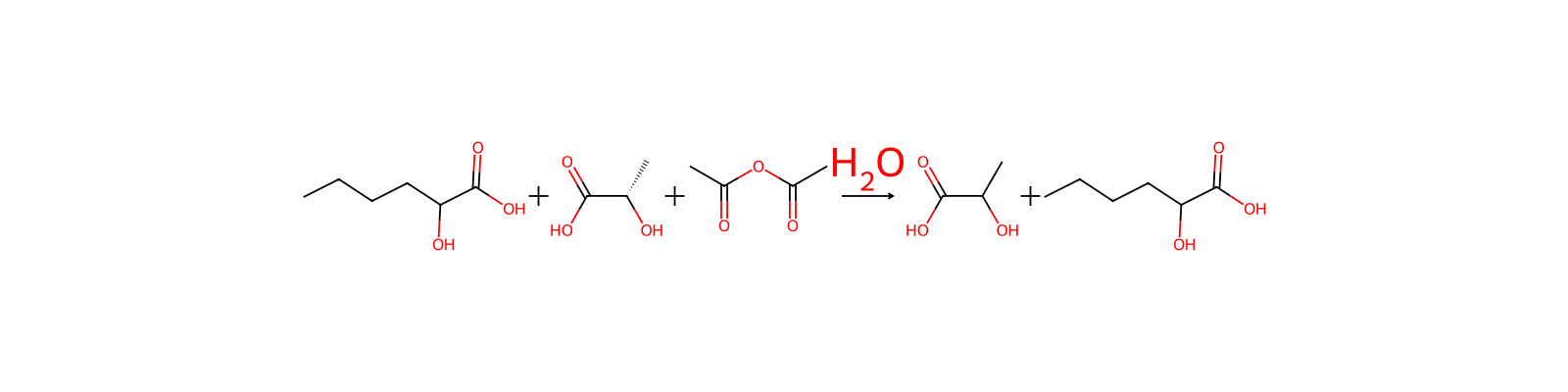
Related reactions
177 records


Compound notes
Loading…