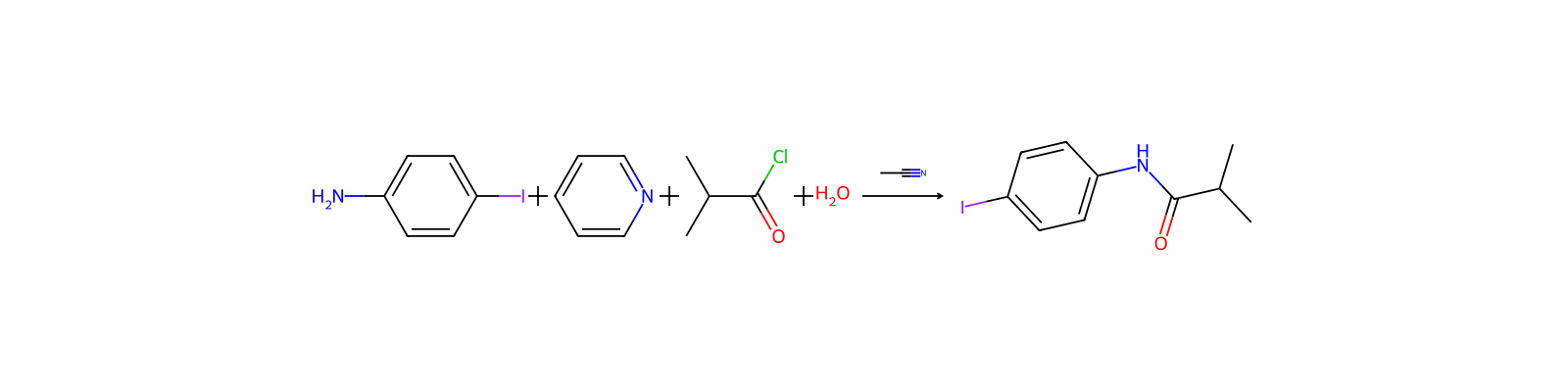
HRID 3667As reactant

540-37-4Nc1ccc(I)cc1VLVCDUSVTXIWGW-UHFFFAOYSA-Nreagent
540-37-4DTXSID9060239CHEMBL41790Safety information is for reference only and does not replace the supplier’s Safety Data Sheet (SDS), applicable regulations, or professional assessment.
Warning
H302 (98.4%): Harmful if swallowed [Warning Acute toxicity, oral]
P261, P264, P264+P265, P270, P271, P280, P301+P317, P302+P352, P304+P340, P305+P351+P338, P317, P319, P321, P330, P332+P317, P337+P317, P362+P364, P403+P233, P405, and P501 (click each P-code to see the statement)
Aggregated GHS information provided per 63 reports by companies from 11 notifications to the ECHA C&L Inventory. Each notification may be associated with multiple companies.
Chemical: Benzenamine, 4-iodo-
4-Iodoaniline: Does not have an individual approval but may be used under an appropriate group standard
Causes degenerative spinal cord changes, structural changes in peripheral nerve or sheath, dyspnea, cyanosis, and weight loss in acute oral studies of rats; [RTECS] A skin and strong eye irritant; May induce methemoglobinemia; Harmful by inhalation; Toxic by ingestion and skin absorption; [Alfa Aesar MSDS]
Usessuzuki reaction
Uses4-dehydroanilinium ion, a stable distonic isomer of ionized aniline, by collision-activated dissociation of protonated 4-iodoaniline. Palladium-catalyzed carbonylation of 4-iodoaniline gave the corresponding four- armed star polybenzamides. 4-Iodoaniline is a iodine substituted aniline that is widely used as chemical intermediates in the manufacturing of dyes and drugs. 4-Iodoaniline was used to prepare phenyl functionalized graphene oxide (I-Ph-GO).
Uses4-Iodoaniline is a iodine substituted aniline that is widely used as chemical intermediates in the manufacturing of pesticides, dyes and drugs. 4-Iodoaniline was shown to be a more potent nephrotoxica nt in vitro than other anilines.
General Description4-Iodoaniline is the most potent methaemoglobin former.
Preparation4-Iodoaniline is obtained by the reaction of aniline and iodine in the presence of sodium bicarbonate. Add aniline and sodium bicarbonate to water and slowly add crushed iodine in stages with vigorous stirring. If the reaction solution is yellow, add a little sodium bisulfite to make it discolor, then filter and get the crude product. Then the product is recrystallized by ethanol to obtain 4-Iodoaniline.


