HomeMCPWorkbenchSkills
HomeWorkbenchNotificationsMe
llms.txt · MCP GuidePrivacy Policy · Terms of Service · Supportv1.8.0
  1. Home
  2. /Compound

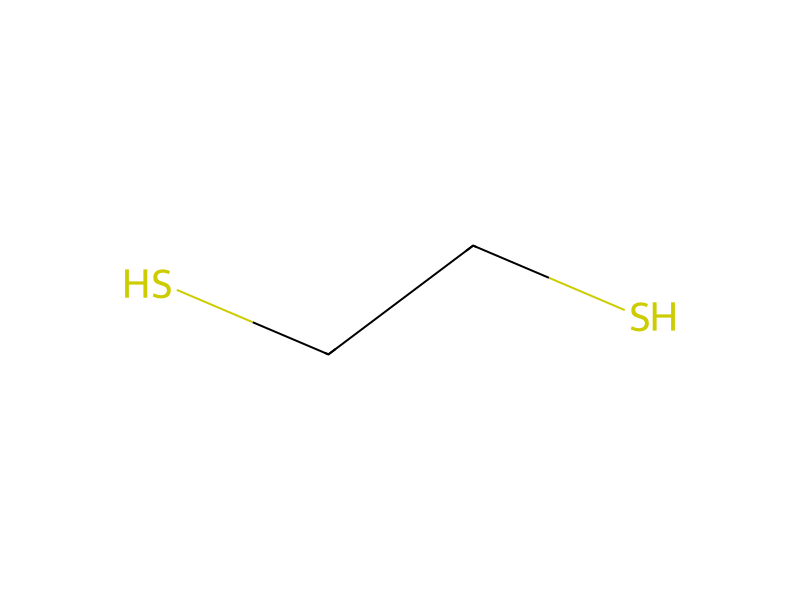
1,2-Ethanedithiol

HCID 10902
New noteNew reactionRequest quotes
Print preview
Basic informationOverviewNames & identifiersPropertiesSafety & regulationChemistry & industryRelated reactionsCompound notes
Substructure searchFind similar structures

Basic information

CAS
540-63-6
Standard SMILES
SCCS
InChIKey
VYMPLPIFKRHAAC-UHFFFAOYSA-N
Molecular formula
C2H6S2
Average molar mass
94.2 g/mol
Monoisotopic mass
93.99109219

Overview

RN given refers to 1,2-isomer; RN in Chemline for cpd without locants for thiol groups: 26914-70-9

Names & identifiers

Preferred name
1,2-Ethanedithiol
IUPAC
ethane-1,2-dithiol
English name
1,2-Ethanedithiol
Molecular formula
C2H6S2
Molecular weight
94.2

Names & synonyms

1,2-ETHANEDITHIOL540-63-6Ethane-1,2-dithiol1,2-DimercaptoethaneDithioglycolEthylene mercaptanEthylenedithiolEthylene dithioglycolEthylene dimercaptanEthylenedimercaptanDithioethyleneglycolS-Ethylene dimercaptan
Show more names
EDTETHANEDITHIOLFEMA 3484EDT(L)L k Vadehra1,2-dithioethanedimercaptoethane
Ethylene glycol, dithio-1,2-Dithiol ethaneEthyl hydropersulfideFEMA No. 3484Dithioethylene glycol92T634FLARNSC-60481DTXSID9052187

Database identifiers

CAS
540-63-6
PubChem CID
10902
DTXSID
DTXSID9052187
UNII
92T634FLAR
EC Number
208-752-3
Nikkaji
J4.507A

Properties

Computed structural properties

XLogP
0.8
Topological polar surface area
2 Ų
Hydrogen bond donors
2
Hydrogen bond acceptors
2
Rotatable bonds
1
Heavy atoms
4
Formal charge
0
Complexity
6

Experimental & physicochemical properties

Chemical ClassesOther Classes -> Thiols
SpringerMaterials PropertiesCoriolis coupling
Food AdditivesFLAVORING AGENT OR ADJUVANT -> FDA Substance added to food
Density · 3 items

1.123 at 23.5 °C

1.123-1.124 (d20/4)

1.124 @25 °C

Flavoring AgentsEU Flavoring substances
Color/FormLiquid
Solubility · 5 items

Freely soluble in alkalies

Soluble in ethanol, ether, acetone, and benzene; slightly soluble in alkali.

Soluble in oxygenated solvents

insoluble in water; miscible in fat

(in ethanol)

Boiling Point · 4 items

146 °C at 760 mm Hg

144.00 to 146.00 °C. @ 760.00 mm Hg

146 °C; 46-47 °C (6 mm Hg)

146 °C @760 [mm Hg]

Decomposition

Safety & regulation

Safety information is for reference only and does not replace the supplier’s Safety Data Sheet (SDS), applicable regulations, or professional assessment.

GHS classification

GHS Classification · 4 items

Danger

H226 (94.8%): Flammable liquid and vapor [Warning Flammable liquids]

P210, P233, P240, P241, P242, P243, P260, P262, P264, P264+P265, P270, P271, P280, P284, P301+P316, P301+P317, P302+P352, P303+P361+P353, P304+P340, P305+P351+P338, P316, P317, P320, P321, P330, P337+P317, P361+P364, P362+P364, P370+P378, P403+P233, P403+P235, P405, and P501 (click each P-code to see the statement)

Aggregated GHS information provided per 308 reports by companies from 9 notifications to the ECHA C&L Inventory. Each notification may be associated with multiple companies.

Hazard information

Regulatory Information · 2 items

Chemical: 1,2-Ethanedithiol

Dithioethylene glycol: Does not have an individual approval but may be used under an appropriate group standard

Hazards SummaryVapors of ethanedithiol may cause severe headache and nausea. [Merck Index] An eye, nose, and throat irritant; Inhalation can cause CNS depression; [CHEMINFO] An irritant; [MSDSonline] See THIOLS.
Hazard Classes and CategoriesFlam. Liq. 3 (94.8%)

Safety & protection

Disposal Methods · 1 item

SRP: The most favorable course of action is to use an alternative chemical product with less inherent propensity for occupational exposure or environmental contamination. Recycle any unused portion of the material for its approved use or return it to the manufacturer or supplier. Ultimate disposal of the chemical must consider: the material's impact on air quality; potential migration in soil or water; effects on animal, aquatic, and plant life; and conformance with environmental and public health regulations.

Chemistry & industry

Pharmacology

Metabolism/Metabolites · 2 items

Urinary metabolites could result from methylation, S-oxidation of one S atom to yield a polar sulfonate, and the formation of mixed disulfides of low relative molecular mass such as cysteine, an endogenous thiol. /Dithiols/

Simple aliphatic and aromatic thiols undergo S-methylation in mammals to produce the corresponding methyl thioether or sulfide. Methylation is catalysed by thiopurine methyltransferase in the cytoplasm and thiol methyltransferase in microsomes, and both reactions require S-adenosyl-l-methionine as a methyl group donor. Thiopurine methyltransferase is present in human liver, kidney, and erythrocytes; preferential substrates for this enzyme include aromatic and heterocyclic thiols. S-Methylation of aliphatic thiols is catalysed by microsomal thiol methyltransferase, and the resulting methyl thioether (sulfide) metabolite would undergo S-oxidation to give the methyl sulfoxide and methyl sulfone analogues as urinary products. Thiols may react with glutathione and other endogenous thiol substances to form mixed disulfides. Both microsomal and cytoplasmic thioltransferasess have been reported to catalyse the formation of mixed disulfides. The resulting mixed disulfides can undergo reduction back to thiols, oxidative desulfuration, or oxidation to a sulfonic acid via the intermediate thiosulfinate and sulfinic acids. The principal form in the circulation would probably be a mixed disulfide formed with albumin. /Simple thiols/

Cellular LocationsCytoplasm

Uses & manufacturing

Uses · 2 items

Used as a metal-complexing agent; [Hawley]

Metal-complexing agent. Reverse inhibition by alpha-keto aldehydes on mitosis in E. coli.

Methods of ManufacturingPrepared by reacting ethanol, thiourea and ethylene dibromide and subsequent alkaline hydrolysis of the ethylenediisothiuronium bromide.
Use Classification · 6 items

Flavouring Agent -> FLAVOURING_AGENT -> JECFA Functional Classes

Related reactions

180 records
New reaction record
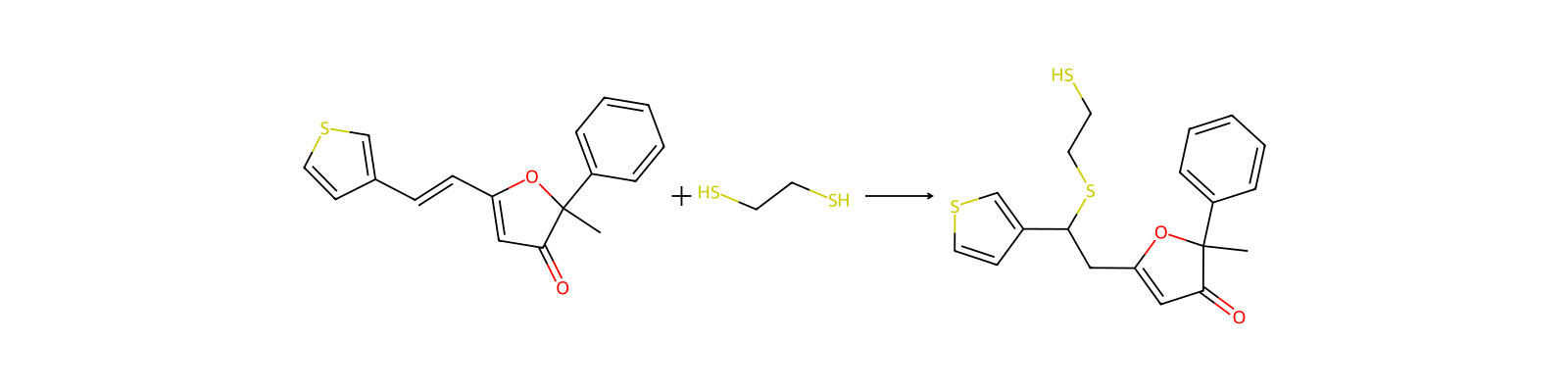
HRID 5720 reaction equation
HRID 5720As reactantuspto-grants-1993_09
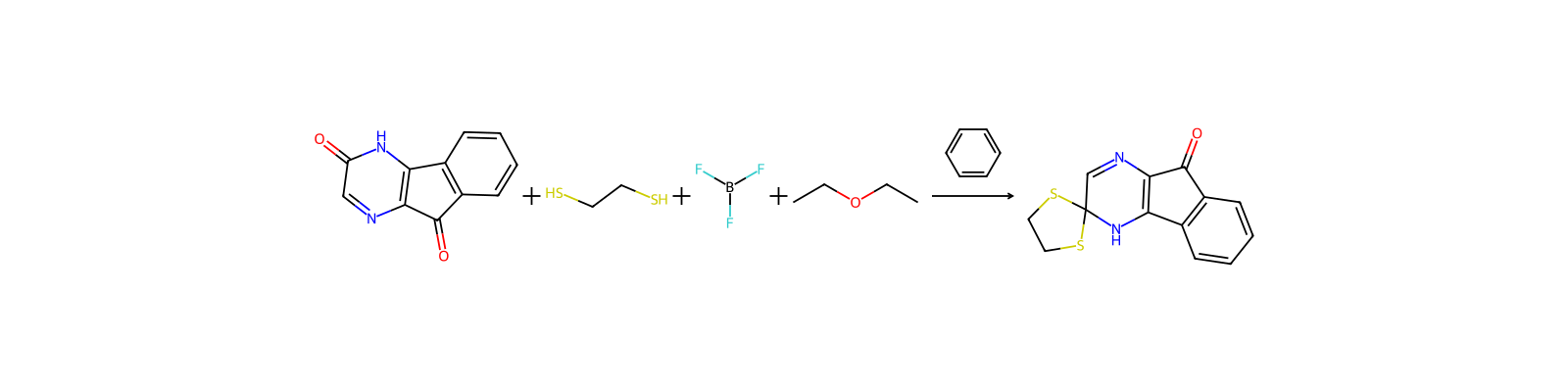
HRID 15189 reaction equation
HRID 15189As reactantuspto-grants-2010_06
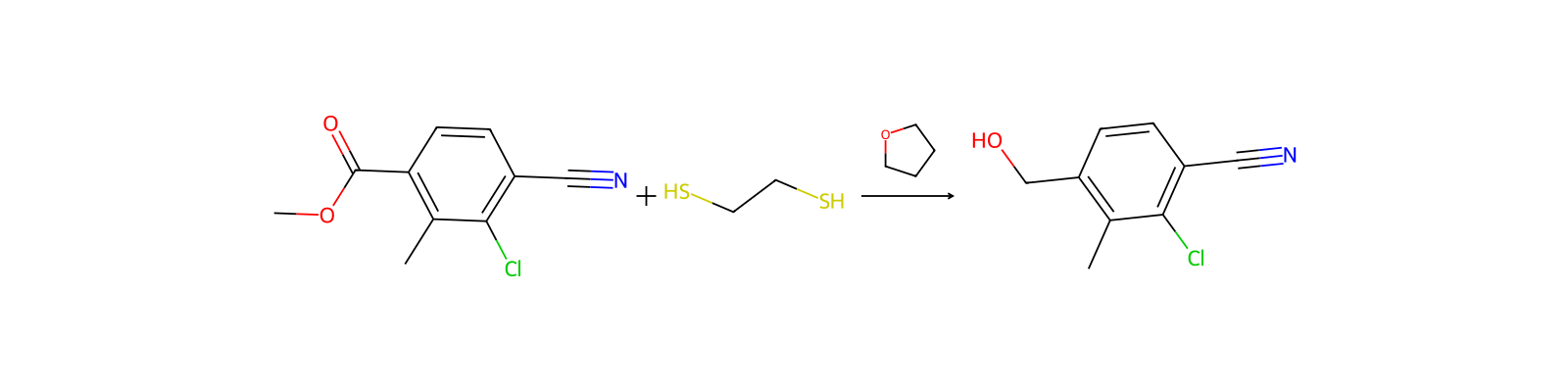
HRID 37268 reaction equation
HRID 37268As reactantuspto-grants-1995_05
HRID 50024 reaction equation
HRID 50024As reactantuspto-grants-2004_03
HRID 96084 reaction equation
HRID 96084As reactantTraining data from https://doi.org/10.1039/C8SC04228D (2/10)
HRID 97252 reaction equation
HRID 97252As reactantTraining data from https://doi.org/10.1039/C8SC04228D (2/10)
HRID 126366 reaction equation
HRID 126366As reactantTraining data from https://doi.org/10.1039/C8SC04228D (2/10)
HRID 129453 reaction equation
HRID 129453As reactantuspto-grants-1995_11
Page 1 of 23

Compound notes

Loading…

On this pageBasic informationOverviewNames & identifiersPropertiesSafety & regulationChemistry & industryRelated reactionsCompound notes
More actions
New noteNew reactionRequest quotes
When heated to decomposition it emits very toxic fumes of /sulfur oxides/.
Melting Point · 2 items

-41.2 °C

-41.2 °C

Odor Threshold · 2 items

Odor Threshold Low: 0.03 [ppm]

Its odor is very faint at 31 ppb and easily noticeable at 5.6 ppm.

Vapor Pressure · 3 items

5.61 [mmHg]

5.61 mm Hg at 25 °C /Extrapolated/

5.68 [mm Hg] @25 °C

Physicochemical properties

Melting point
-41 °C · -41 °C (lit.)
Boiling point
144 · 144-146 °C (lit.)
Density
1.123 g/mL · 1.123 g/mL at 25 °C (lit.)
vapor density
1 · >1 (vs air)
vapor pressure
4.8 mm · 4.8 mm Hg ( 20 °C)
refractive index
20 · n20/D 1.558(lit.)
FEMA
3484 · 3484 | 1,2-ETHANEDITHIOL
FLAVIS Number
12.066 · 12.066 | Ethane-1,2-dithiol
Flash point
122 °F · 122 °F
storage temp.
30 °C · Store below +30°C.
form
Liquid
pka
1 · pK1:8.96;pK2:10.54 (25°C)
color
Clear slightly colored
Odor
0.01 % · at 0.01 % in propylene glycol. sulfury meaty
Odor Type
sulfurous
Water Solubility
insoluble
Sensitive
Air Sensitive
Merck
14 · 14,3725
JECFA Number
532 · 532
BRN
505946 · 505946
Henry's Law Constant
8.2 · 8.2×10-2 mol/(m3Pa) at 25℃, HSDB (2015)
Stability
Stable. Flammable. Incompatible with oxidizing agents, bases, reducing agents, alkali metals.
InChI
1S/C2H6S2/c3-1-2-4/h3-4H,1-2H2
InChIKey
VYMPLPIFKRHAAC-UHFFFAOYSA-N
SMILES
SCCS
LogP
1.31 · 1.31
Substances Added to Food (formerly EAFUS)
1 · 1,2-ETHANEDITHIOL
CAS DataBase Reference
540 · 540-63-6(CAS DataBase Reference)
EWG's Food Scores
1 · 1
FDA UNII
92 T634FLAR · 92T634FLAR
NIST Chemistry Reference
1 · 1,2-Ethanedithiol(540-63-6)
EPA Substance Registry System
1 · 1,2-Ethanedithiol (540-63-6)
UNSPSC Code
12352105 · 12352105
NACRES
22 · NA.22
Symbol(GHS)
2 · GHS02,GHS06
Signal word
Danger
Hazard statements
226 · H226-H301-H310+H330
Precautionary statements
210 · P210-P262-P280-P301+P310+P330-P302+P352+P310-P304+P340+P310
PPE
Eyeshields, Faceshields, Gloves, type ABEK (EN14387) respirator filter
Hazard Codes
T,Xn,F
Risk Statements
10 · 10-23/24/25-23/25-21-36-23-21/22-36/37/38-20/21/22
Safety Statements
36 · 36/37/39-45-26-16-36/37-36-7/9
RIDADR
3071 · UN 3071 6.1/PG 2
WGK Germany
3 · 3
RTECS
3325000 · KI3325000
F
10 · 10-13-23
TSCA
TSCA listed
HazardClass
3 · 3
PackingGroup
III
HS Code
29309070 · 29309070
Storage Class
3 · 3 - Flammable liquids
Hazard Classifications
2 DermalAcute · Acute Tox. 2 DermalAcute Tox. 2 InhalationAcute Tox. 3 OralFlam. Liq. 3
Hazardous Substances Data
540 · 540-63-6(Hazardous Substances Data)
Toxicity
50 orally · LD50 orally in Rabbit: 120 mg/kg LD50 dermal Rabbit 197 mg/kg
Limited Quantities
100 ml · 100ml (liquid) or 0.5 Kg (solid)
Excepted Quantities
Max Inner Pack (1g or 1ml) and Max Outer Pack (500g or 500ml)
Protective Action Criteria (PAC) · 3 items

0.36 [mg/m3]

4.0 [mg/m3]

24 [mg/m3]

Toxicology

Environmental Fate · 3 items

TERRESTRIAL FATE: Based on a classification scheme(1), an estimated Koc value of 44(SRC), determined from a structure estimation method(2), indicates that 1,2-ethanedithiol is expected to have very high mobility in soil(SRC). Volatilization of 1,2-ethanedithiol from moist soil surfaces is expected to be an important fate process(SRC) given an estimated Henry's Law constant of 1.2X10⁻⁴ atm-cu m/mole(SRC), using a fragment constant estimation method(3). 1,2-Ethanedithiol is expected to volatilize from dry soil surfaces(SRC) based upon an extrapolated vapor pressure of 5.61 mm Hg(4). Biodegradation data were not available(SRC, 2005).

AQUATIC FATE: Based on a classification scheme(1), an estimated Koc value of 44(SRC), determined from a structure estimation method(2), indicates that 1,2-ethanedithiol is not expected to adsorb to suspended solids and sediment(SRC). Volatilization from water surfaces is expected(3) based upon an estimated Henry's Law constant of 1.2X10⁻⁴ atm-cu m/mole(SRC), developed using a fragment constant estimation method(4). Using this Henry's Law constant and an estimation method(3), volatilization half-lives for a model river and model lake are 3 days and 17 days, respectively(SRC). According to a classification scheme(5), an estimated BCF of 2(SRC), from an estimated log Kow of 1.2(6) and a regression-derived equation(7), suggests the potential for bioconcentration in aquatic organisms is low(SRC). Biodegradation data were not available(SRC, 2005).

ATMOSPHERIC FATE: According to a model of gas/particle partitioning of semivolatile organic compounds in the atmosphere(1), 1,2-ethanedithiol, which has an extrapolated vapor pressure of 5.61 mm Hg at 25 °C(2), is expected to exist solely as a vapor in the ambient atmosphere. Vapor-phase 1,2-ethanedithiol is degraded in the atmosphere by reaction with photochemically-produced hydroxyl radicals(SRC); the half-life for this reaction in air is estimated to be 5 hours(SRC), calculated from its rate constant of 8.3X10⁻¹¹ cu cm/molecule-sec at 25 °C(SRC) that was derived using a structure estimation method(3). 1,2-Ethanedithiol does not contain chromophores that absorb at wavelengths >290 nm and therefore is not expected to be susceptible to direct photolysis by sunlight(SRC).

Adverse EffectsOther Poison - Chemical Asphyxiant
Ecotoxicity Excerpts · 1 item

/AQUATIC SPECIES/ Static aquatic assays were conducted for 24 hr on three species of fish. No mortality or change in equilibrium resulted from 5 ppm in Northern squawfish, and 10 ppm caused the death of Coho salmon, steelhead trout, and Northern squawfish in 2 to 14 hr (high alkalinity and hardness). In different water conditions (low alkalinity and hardness), mortality was observed in Northern squawfish at 10 ppm in 7 to 19 hr.

Soil Adsorption/Mobility · 1 item

Using a structure estimation method based on molecular connectivity indices(1), the Koc of 1,2-ethanedithiol can be estimated to be 44(SRC). According to a classification scheme(2), this estimated Koc value suggests that 1,2-ethanedithiol is expected to have very high mobility in soil.

TSCA Test Submissions · 3 items

The ability of 1,2-ethanedithiol to induce specific locus mutations at the TK locus in cultured L5178Y mouse lymphoma cells (Mouse Lymphoma Mutagenicity Assay) was evaluated in the presence and absence of Aroclor-induced rat liver S9 metabolic activation. Based on preliminary toxicity determinations, nonactivated cultures were treated with concentrations ranging from 13ug/mL to 150ug/mL, producing a range of 32.5 - 0.9% total survival. S9 activated cultures treated with concentrations ranging from 0.07ug/mL to 1ug/mL produced a range of 48.9 - 3% total survival. Nonactivated cultures exhibited a dose-related increase in the mutant frequency relative to the solvent control (DMSO). No increase in forward mutations was observed in the presence of metabolic activation.

The mutagenicity of 1,2-ethanedithiol was evaluated in Salmonella tester strains TA98, TA100, TA1535, TA1537 and TA1538 (Ames Test), both in the presence and absence of added metabolic activation by Aroclor-induced rat liver S9 fraction. Based on preliminary toxicity determinations, 1,2-ethanedithiol, diluted in DMSO, was tested at concentrations up to 5,000ug/plate using the plate incorporation technique. 1,2-Ethanedithiol did not cause a positive response in any tester strain with or without metabolic activation.

The ability of 1,2-ethanedithiol to induce Sister Chromatid Exchange (SCE) in Chinese hamster ovary (CHO) cells was evaluated both in the presence and absence of Aroclor-induced rat liver S9 metabolic activation. Based on preliminary toxicity tests, 1,2-ethanedithiol diluted with DMSO, was tested at concentrations of 0, 0.5, 1.6, 5.0, 16 or 50 ug/mL. In nonactivated cultures, concentrations of 16 and 50 ug/mL (p < 0.0001) and in activated cultures, concentrations of 1.6 and 5.0 ug/mL (p = 0.004), 16 ug/mL (p = 0.002), and 50 ug/mL (p < 0.0001) induced statistically significant increases in the frequency of SCE relative to controls.

Human Toxicity Excerpts · 2 items

/SIGNS AND SYMPTOMS/ Vapors of ethanedithiol may cause severe headache and nausea.

/CASE REPORTS/ ... A 22-year-old female chemistry student who developed widespread erythema multiforme-like lesions after local contact with 1,2-ethanedithiol. Many target lesions were observed bilaterally on her hands, forearms, arms, and on her forehead. One such lesion was histologically compatible with erythema multiforme. The patient had a positive patch test to 1,2-ethanedithiol, whereas none of 30 healthy subjects showed a positive reaction. However, eight of the 30 controls (26.7%) developed irritant reactions to 1,2-ethanedithiol.

Artificial Pollution Sources1,2-Ethanedithiol's production and use as a metal complexing agent(1) may result in its release to the environment through various waste streams(SRC).
Environmental Bioconcentration · 1 item

An estimated BCF of 2 was calculated for 1,2-ethanedithiol(SRC), using an estimated log Kow of 1.21(1) and a regression-derived equation(2). According to a classification scheme(3), this BCF suggests the potential for bioconcentration in aquatic organisms is low(SRC).

Volatilization from Water/Soil · 1 item

The Henry's Law constant for 1,2-ethanedithiol is estimated as 1.2X10⁻⁴ atm-cu m/mole(SRC) using a fragment constant estimation method(1). This Henry's Law constant indicates that 1,2-ethanedithiol is expected to volatilize from water surfaces(2). Based on this Henry's Law constant, the volatilization half-life from a model river (1 m deep, flowing 1 m/sec, wind velocity of 3 m/sec)(2) is estimated as 2 days(SRC). The volatilization half-life from a model lake (1 m deep, flowing 0.05 m/sec, wind velocity of 0.5 m/sec)(2) is estimated as 17 days(SRC). 1,2-Ethanedithiol is expected to volatilize from dry soil surfaces(SRC) based upon a vapor pressure of 5.61 mm Hg(3).

Non-Human Toxicity Excerpts · 5 items

/LABORATORY ANIMALS: Acute Exposure/ In general /in rats/, toxicological signs noted after oral dosing included decreased activity, depression, ataxia, labored respiration, loss of righting reflex, tremors, and convulsions.

/LABORATORY ANIMALS: Acute Exposure/ Toxicological signs /in rabbits dermally exposed/ included depression, weakness, labored respiration, tremors, erythema, edema, and sloughing of the skin at the application site.

/LABORATORY ANIMALS: Acute Exposure/ A /sensory/ irritation study of mice found depressions in the respiratory rates at 87 ppm (1 minute intervals).

/LABORATORY ANIMALS: Acute Exposure/ ...Clinical signs /in mice exposed by inhalation/ included lack of muscular coordination, lacrimation, ataxia, labored respiration, and progressive cyanosis.

For more Non-Human Toxicity Excerpts (Complete) data for 1,2-ETHANEDITHIOL (7 total), please visit the HSDB record page.

Environmental Abiotic Degradation · 1 item

The rate constant for the vapor-phase reaction of 1,2-ethanedithiol with photochemically-produced hydroxyl radicals has been estimated as 8.3X10⁻¹¹ cu cm/molecule-sec at 25 °C(SRC) using a structure estimation method(1). This corresponds to an atmospheric half-life of about 5 hours at an atmospheric concentration of 5X10+5 hydroxyl radicals per cu cm(1). 1,2-Ethanedithiol is not expected to undergo hydrolysis in the environment due to the lack of hydrolyzable functional groups(2). 1,2-Ethanedithiol does not contain chromophores that absorb at wavelengths >290 nm and therefore is not expected to be susceptible to direct photolysis by sunlight(SRC).

Probable Routes of Human ExposureOccupational exposure to 1,2-ethanedithiol may occur through inhalation and dermal contact with this compound at workplaces where 1,2-ethanedithiol is produced or used. (SRC)

Safety data

F
10-13-23
PPE
Eyeshields, Faceshields, Gloves, type ABEK (EN14387) respirator filter
wgk
3
tsca
TSCA listed
rtecs
KI3325000
ridadr
UN 3071 6.1/PG 2
hs_code
29309070
Toxicity
LD50 orally in Rabbit: 120 mg/kg LD50 dermal Rabbit 197 mg/kg
risk_code
10-23/24/25-23/25-21-36-23-21/22-36/37/38-20/21/22
Signal word
Danger
Symbol(GHS)
GHS02,GHS06
hazard_code
T,Xn,F
safety_code
36/37/39-45-26-16-36/37-36-7/9
hazard_class
3
Storage Class
3 - Flammable liquids
packing_group
III
Hazard statements
H226-H301-H310+H330
Limited Quantities
100ml (liquid) or 0.5 Kg (solid)
Excepted Quantities
Max Inner Pack (1g or 1ml) and Max Outer Pack (500g or 500ml)
Hazard Classifications
Acute Tox. 2 DermalAcute Tox. 2 InhalationAcute Tox. 3 OralFlam. Liq. 3
Precautionary statements
P210-P262-P280-P301+P310+P330-P302+P352+P310-P304+P340+P310
Hazardous Substances Data
540-63-6(Hazardous Substances Data)

Flavoring Agents -> JECFA Flavorings Index

Flavouring Agent -> FLAVOURING_AGENT -> JECFA Functional Classes

Flavouring Agent -> FLAVOURING_AGENT -> JECFA Functional Classes

Flavouring Agent -> FLAVOURING_AGENT -> JECFA Functional Classes

Flavouring Agent -> FLAVOURING_AGENT -> JECFA Functional Classes

General Manufacturing Information · 2 items

1,2-Ethanedithiol: ACTIVE

Thiols can be prepared by a variety of methods. The most-utilized of these synthetic methods for tertiary and secondary thiols is acid-catalyzed synthesis; for normal and secondary thiols, the most-utilized methods are free-radical-initiated, alcohol substitution, or halide substitution; for mercaptoalcohols, the most-utilized method is oxirane addition; and for mercaptoacids and mercaptonitriles, the most-utilized methods are Michael-type additions. /Thiols/

Applications · 5 items

Description1,2-Ethanedithiol (EDT) is a colorless liquid with a characteristic odor that resembles that of rotten cabbage. It is widely used as a building block in organic synthesis, and it is also an effective ligand for metal ions. 1,2-ethanedithiol if applied as a flavoring agent and it is available in a variety of animal foods, in cooked beef and chicken.

OccurrenceReported found in beef (boiled, cooked) and chicken (cooked)

Uses1,2-Ethanedithiol is used as a reagent in organic synthesis to convert carbonyl compounds to thioacetals (1,3-dithiolanes). It replaces the toxic reagent arsenic tirchloride, which is involved in the synthesis of membrane-permeant fluorogenic biarsenicals from precursor dyes fluorescein and resorufin. It acts bidendate ligand to form complexes with metal ions.

UsesMetal-complexing agent. Reverses the inhibition by α-keto aldehydes on mitosis in E. coli.

General Description1,2-Ethanedithiol (1,2-Dimercaptoethane, Dithioglycol, Ethylene mercaptan) is an organo sulfur compound. It affords monomeric, dimeric and polymeric complexes on reaction with Pt(PPh3)4, Pd(PPh3)4 and Ni(PPh3)4. It has been synthesized by refluxing 1,2-dichloroethane with thiourea in ethanol.

Preparation methods · 2 items

Preparation1,2-ethanedithiol can be synthesized by reacting an alkali metal hydrosulfide with an alkylene halide. However, this method does not yield a good amount of EDT due to the formation of by-products such as polymeric materials. The formation of these by-products could be reduced by conducting the reaction in an autoclave where the pressure is regulated to H 8. EDT can also be prepared through the decomposition of thiourea and the isothiuronium salt of ethylene bromide. This method yields slightly higher dithiol yields as indicated in the general formula where n is equal to or more than 3, for instance, 1,4-butanedithiol and 1,3-propanedithiol. However, this method also imposes significant constraints in the preparation of lower members of the dithiol series, such as 1,2-ethanedithiol. An additional method for the preparation of the compound entails the reaction between ethylene sulfide and H 8 in methanol, which yields approximately 49% of 1,2-ethanedithiol. However, this method also yields products with a relatively high molecular weight, which account for about 20% of the total products. There is a wide range of other methods that have been suggested for the synthesis of 1,2-ethanedithiol but they have been disqualified based on certain justifications. The process highlighted below entails three major steps: 1) the generation of ethylene sulfide, 2) reaction of ethylene sulfide with hydrosulfide and 3) the liberation of 1,2-ethanedithiol through acid treatment. Z-mercaptoethy-lcarbonate is added to an alkaline solution in the portions highlighted above over a 30-minute period, the pH of the alkaline solution should be above 6.8, where the base is indicated with the general formula MOH, where M indicates an alkali-metal hydroxides such as potassium, lithium or sodium. The contents should also include 1-2 moles of the reacting ammonium hydrosulfide per mole of the alkyl 2-mercaptoethylcarbonate. Stir the reaction contents while maintaining the temperature at -100 C while adding the alkyl portions. The solution can be saturated with hydrogen sulfide by passing the gas through the reaction contents for about 2 hours. The contents should be stirred for a period of 10-20 hours or more while maintaining the temperature at 15300 C. The solution is cooled and reacted with an acid such as phosphoric, sulfuric or hydrochloric acids, and 1,2-ethanedithiol is separated from the mixture through conventional means such as extraction using a volatile solvent such as benzene or chloroform, or by distillation. This step is followed by the evaporation of the contents to remove the solvent. A combination of both processes could be more effective, where the dried product is taken through fractional distillation. This method involving ammonium hydrosulfide and ethyl Z-mercaptoethyl carbonate is highly preferred for the preparation of 1,2-ethanedithiol.

PreparationPrepared by reacting ethanol, thiourea and ethylene dibromide and subsequent alkaline hydrolysis of the ethylenediisothiuronium bromide

Upstream & downstream products

Upstream raw materials

Chloropicrin & ethylene dibromideBromideThiourea

Downstream products

Ethyl 1,3-dithiolane-2-carboxylateDesogestrelSpirapril4,5,6,7-Tetrahydro-2-methylfuro[2,3-c]pyridineEstr-4-en-3-one, 17-hydroxy-, cyclic 1,2-ethanediyl mercaptole, (11b)-5,8-Dithiaspiro[3.4]octaneBenzaldehyde ethane-1,2-diyl dithioacetal