HomeMCPWorkbenchSkills
HomeWorkbenchNotificationsMe
llms.txt · MCP GuidePrivacy Policy · Terms of Service · Supportv1.8.3
  1. Home
  2. /Compound

Tert-Butyl nitrite

HCID 10906
New reaction
Print
Basic informationNames & identifiersPropertiesSafety & regulationChemistry & industryRelated reactionsCompound notes
Substructure searchFind similar structures

Basic information

CAS
540-80-7
Standard SMILES
CC(C)(C)ON=O
InChIKey
IOGXOCVLYRDXLW-UHFFFAOYSA-N
Molecular formula
C4H9NO2
Average molar mass
103.12 g/mol
Monoisotopic mass
103.06332853

Names & identifiers

Preferred name
Tert-Butyl nitrite
IUPAC
tert-butyl nitrite
English name
tert-Butyl nitrite
Molecular formula
C4H9NO2
Molecular weight
103.12

Names & synonyms

tert-Butyl nitrite540-80-71,1-Dimethylethyl nitriteNitrous acid, 1,1-dimethylethyl esterNitrous Acid tert-Butyl Esteralpha,alpha-Dimethylethyl nitriteNITROUS ACID, t-BUTYL ESTERCCRIS 2098EINECS 208-757-0(CH3)3CONOUNII-4780H7U8LUBRN 1209339
Show more names
tBuoNoT-BUTYL NITRITEt-BuNO2t-butyl esterTertiary butyl nitritetert-Butyl nitrite 90%2-methyl-2-nitritopropane2-Methyl-2-nitrosooxy-propaneert-buty nitritet-Buthyl nitrite
IOGXOCVLYRDXLW-UHFFFAOYSA-4780H7U8LU.alpha.,.alpha.-Dimethylethyl nitriteNitrous acid 1,1-dimethyl ethyl ester4-01-00-01622 (Beilstein Handbook Reference)TERT-BUTYL NITRITE [MI]DTXSID10202316NITROUS ACID, TERT-BUTYL ESTER

Database identifiers

CAS
540-80-7
PubChem CID
10906
DTXSID
DTXSID10202316
UNII
4780H7U8LU
EC Number
208-757-0
Nikkaji
J6.388F

Properties

Computed structural properties

XLogP
1
Topological polar surface area
38.7 Ų
Hydrogen bond donors
0
Hydrogen bond acceptors
3
Rotatable bonds
1
Heavy atoms
7
Formal charge
0
Complexity
64.6

Experimental & physicochemical properties

Chemical ClassesNitrogen Compounds -> Nitrates and Nitrites
Physical DescriptionYellow liquid with an agreeable odor; [Merck Index] Sweet odor; [Alfa Aesar MSDS]

Physicochemical properties

Boiling point
61 · 61-63 °C(lit.)
Density
0.867 g/mL · 0.867 g/mL at 25 °C(lit.)
vapor pressure
13.466 kPa · 13.466kPa at 25℃
refractive index
20 · n20/D 1.368(lit.)
Flash point
10 °F · −10 °F
storage temp.
2 · 2-8°C
solubility
alcohol: very soluble(lit.)
form
Liquid
color
Clear yellow
Water Solubility
slightly soluble
Merck
14 · 14,1583

Safety & regulation

Safety information is for reference only and does not replace the supplier’s Safety Data Sheet (SDS), applicable regulations, or professional assessment.

GHS classification

GHS Classification · 6 items

Danger

H225: Highly Flammable liquid and vapor [Danger Flammable liquids]

P210, P233, P240, P241, P242, P243, P261, P264, P270, P271, P280, P301+P317, P303+P361+P353, P304+P340, P317, P330, P370+P378, P403+P235, and P501 (click each P-code to see the statement)

Danger

H225 (100%): Highly Flammable liquid and vapor [Danger Flammable liquids]

P210, P233, P240, P241, P242, P243, P261, P264, P270, P271, P280, P301+P317, P303+P361+P353, P304+P340, P317, P330, P370+P378, P403+P235, and P501 (click each P-code to see the statement)

Hazard information

Regulatory Information · 2 items

REACH registered substance: tert-butyl nitrite (EC: 208-757-0)

t-Butyl nitrite: Does not have an individual approval but may be used under an appropriate group standard

Hazards Summary · 1 item

Causes cyanosis in inhalation lethal-concentration studies of mice; Causes methemoglobinemia in oral lethal-dose studies of mice; [RTECS] A mild skin and eye irritant; May induce methemoglobinemia; Harmful by ingestion and inhalation; [Alfa Aesar MSDS] See n-Butyl nitrite and Isobutyl nitrite.

Hazard Classes and Categories · 4 items

Flam. Liq. 2 (100%)

Flammable liquid - category 2

Flammable liquids - Category 2

Flam. Liq. 2

Toxicology

Adverse EffectsMethemoglobinemia - The presence of increased methemoglobin in the blood; the compound is classified as secondary toxic effect

Chemistry & industry

Uses & manufacturing

UsesUsed as a jet propellant; [Merck Index]
Applications · 3 items

Usestert-Butyl nitrite is employed as a reagent for diazotization and nitrosation of alcohols, thiols, amines and cycloalkanes. It plays an important role in photocatalyzed conversion of aryl and heteroarylamines to selenides. It finds application in the preparation of aryl azides from aryl amines. It is also useful for radical multifunctionalization reactions of aliphatic alkenes and source of nitric oxide.

UsesJet propellant.

General Descriptiontert-Butyl nitrite (TBN) is an efficient NO source. TBN participates in photocatalyzed conversion of aryl- and heteroarylamines to selenides. It also participates in radical multifunctionalization reactions of aliphatic alkenes.

Upstream & downstream products

Upstream raw materials

Silver nitrate2-Chloro-2-methylpropaneNitrogen TetroxideNitric oxideBenzyln-butylethertert-butoxytert-Butyl nitrate2-Methyl-2-nitropropanetert-Butanoltert-Butyl hydroperoxide3,3-dimethylbutanal

Related reactions

1,323 records
New reaction record
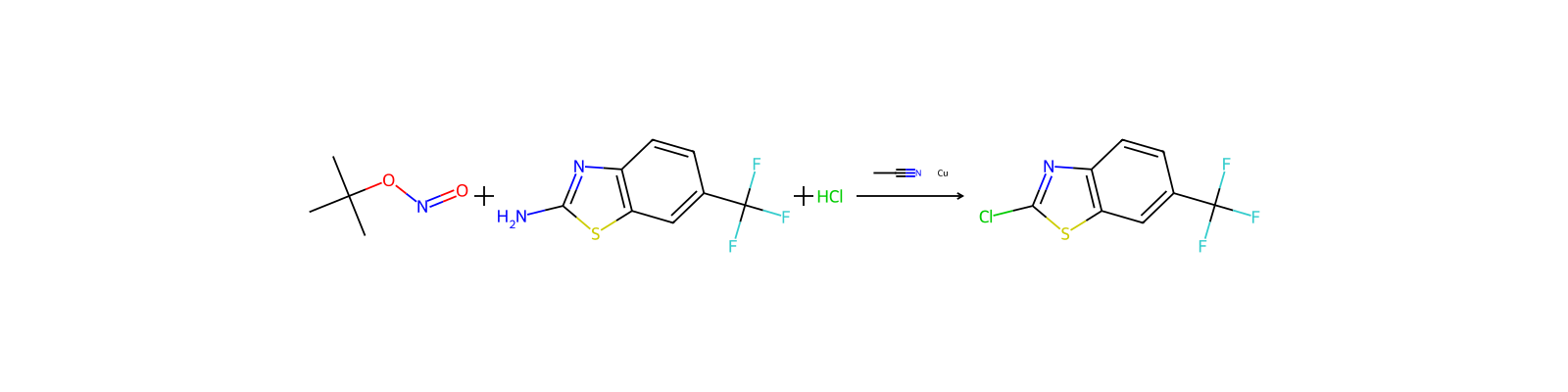
HRID 6967 reaction equation
HRID 6967As reactant
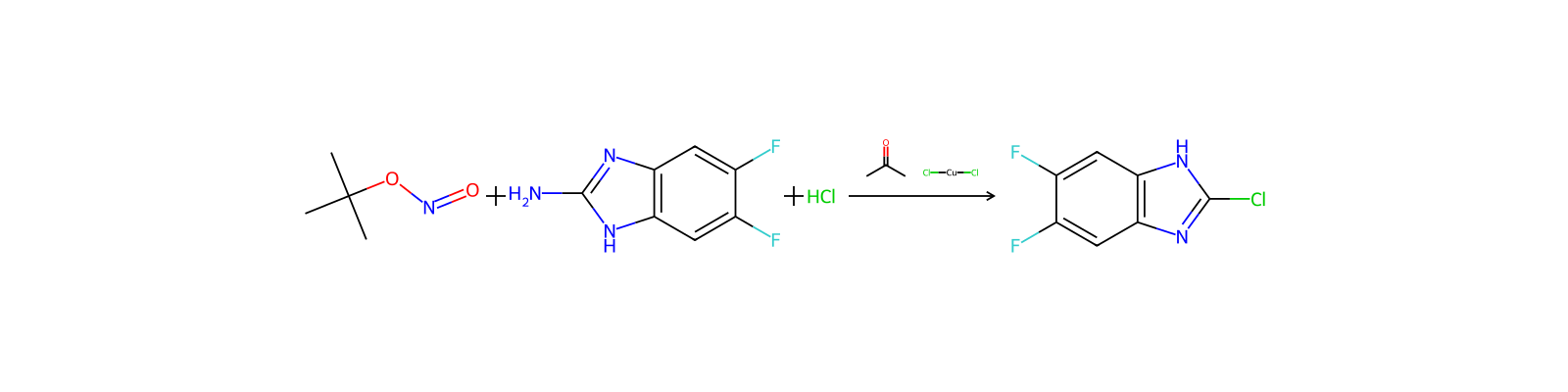
HRID 9262 reaction equation
HRID 9262As reactant
HRID 9565 reaction equation
HRID 9565As reactant
HRID 9581 reaction equation
HRID 9581As reactant
HRID 12823 reaction equation
HRID 12823As reactant
HRID 12827 reaction equation
HRID 12827As reactant
HRID 12879 reaction equation
HRID 12879As reactant
HRID 12902 reaction equation
HRID 12902As reactant
PreviousPage 1 of 166

Compound notes

On this pageBasic informationNames & identifiersPropertiesSafety & regulationChemistry & industryRelated reactionsCompound notes
BRN
1209339 · 1209339
Henry's Law Constant
7.9 · 7.9×10-3 mol/(m3Pa) at 25℃, Hilal et al. (2008)
InChI
1S/C4H9NO2/c1-4(2,3)7-5-6/h1-3H3
InChIKey
IOGXOCVLYRDXLW-UHFFFAOYSA-N
SMILES
CC(C)(C)ON=O
LogP
2.24 at · 2.24 at 20℃
CAS DataBase Reference
540 · 540-80-7(CAS DataBase Reference)
EWG's Food Scores
1 · 1
FDA UNII
4780 H7U8LU · 4780H7U8LU
NIST Chemistry Reference
3 · (CH3)3CONO(540-80-7)
Comptox DTXSID
10202316 · DTXSID10202316
UNSPSC Code
12352100 · 12352100
NACRES
22 · NA.22
Symbol(GHS)
2 · GHS02,GHS07
Signal word
Danger
Hazard statements
225 · H225-H302+H332
Precautionary statements
210 · P210-P233-P240-P241-P301+P312-P304+P340+P312
PPE
Eyeshields, Faceshields, Gloves
Hazard Codes
F,Xn
Risk Statements
11 · 11-20/22
Safety Statements
16 · 16-24-46
RIDADR
2351 · UN 2351 3/PG 2
WGK Germany
1 · 1
RTECS
802000 · RA0802000
F
8 · 8
HazardClass
3 · 3
PackingGroup
II
HS Code
2920900090 · 2920900090
Storage Class
3 · 3 - Flammable liquids
Hazard Classifications
4 InhalationAcute · Acute Tox. 4 InhalationAcute Tox. 4 OralFlam. Liq. 2
REACH Registrations
Active
Limited Quantities
1 L · 1.0 L (0.3 gallon) (liquid)
Excepted Quantities
Max Inner Pack (30g or 30ml) and Max Outer Pack (500g or 500ml)
Toxicity Data
LC50 (mouse) = 10,852 ppm/1hr

Safety data

F
8
PPE
Eyeshields, Faceshields, Gloves
wgk
1
rtecs
RA0802000
ridadr
UN 2351 3/PG 2
hs_code
2920900090
risk_code
11-20/22
Signal word
Danger
Symbol(GHS)
GHS02,GHS07
hazard_code
F,Xn
safety_code
16-24-46
hazard_class
3
Storage Class
3 - Flammable liquids
packing_group
II
Hazard statements
H225-H302+H332
Limited Quantities
1.0 L (0.3 gallon) (liquid)
Excepted Quantities
Max Inner Pack (30g or 30ml) and Max Outer Pack (500g or 500ml)
REACH Registrations
Active
Hazard Classifications
Acute Tox. 4 InhalationAcute Tox. 4 OralFlam. Liq. 2
Precautionary statements
P210-P233-P240-P241-P301+P312-P304+P340+P312
2-Bromo-2-methylpropane

Downstream products

8-Quinolineboronic acid2-Bromo-5-hydroxypyridine radical ion(1+)2-Chloro-5-cyano-3-methylpyridineGoserelin2-Chloro-5-iodo-3-methylpyridine4,7-Dihydro-4-oxo-3H-pyrrolo[2,3-d][1,2,3]triazine-5-carboxamide2-Bromo-5-fomylthiazole2,6-Dibromoanthraquinone3,5-Diiodobenzoic acid4-Chloro-2-nitrophenoltert-butyl 2-bromo-6,7-dihydrothiazolo[5,4-c]pyridine-5(4H)-carboxylateS-Nitrosoglutathione