

Basic information
- Standard SMILES
NNc1cccnc1- InChIKey
RCIGDGBXEMECGY-UHFFFAOYSA-N- Molecular formula
- C5H7N3
- Average molar mass
- 109.13 g/mol
- Monoisotopic mass
- 109.06399724
Names & identifiers
- Preferred name
- 3-Hydrazinopyridine
- IUPAC
- pyridin-3-ylhydrazine
- English name
- 3-HYDRAZINOPYRIDINE Dihydrochloride
- Molecular formula
- C5H7N3
- Molecular weight
- 109.13
Names & synonyms
42166-50-73-HYDRAZINOPYRIDINEDTXSID101347614RefChem:502226DTXCID30871588685-758-63-HYDRAZINYLPYRIDINEPyridin-3-ylhydrazinePYRIDIN-3-YL-HYDRAZINEMFCD077863063-PYRIDYLHYDRAZINEPYRIDINE, 3-HYDRAZINO-, DIHYDROCHLORIDE
Show more names
pyridine, 3-hydrazino-Pyridine,3-hydrazinyl-3-Hydrazino-pyridine HCl3-PYRIDYLHYDRAZINE DIHYDROCHLORIDE3-HYDRAZINOPYRIDINE Dihydrochloride
3-hydrazino-pyridinepyridine-3-yl-hydrazineSCHEMBL1013700SCHEMBL2652417RCIGDGBXEMECGY-UHFFFAOYSA-NALBB-013724STL426801AKOS000112994
Database identifiers
- CAS
42166-50-7- PubChem CID
- 10909519
- DTXSID
DTXSID101347614- EC Number
- 685-758-6
- Nikkaji
- J1.642.700D
Properties
Computed structural properties
- XLogP
- 0.1
- Topological polar surface area
- 50.9 Ų
- Hydrogen bond donors
- 2
- Hydrogen bond acceptors
- 3
- Rotatable bonds
- 1
- Heavy atoms
- 8
- Formal charge
- 0
- Complexity
- 64
Physicochemical properties
- Melting point
- 53 · 53-55 °C
- Boiling point
- 286.4 · 286.4±13.0 °C(Predicted)
- Density
- 1.222 · 1.222
- storage temp.
- 2 · under inert gas (nitrogen or Argon) at 2–8 °C
- pka
- 5.27 · 5.27±0.11(Predicted)
- Symbol(GHS)
- 7 · GHS07
- Signal word
- Warning
- Hazard statements
- 302 · H302-H315-H319-H335
- Precautionary statements
- 261 · P261-P305+P351+P338
- HazardClass
- IRRITANT
Safety & regulation
GHS classification
GHS Classification
Danger
H302 (100%): Harmful if swallowed [Warning Acute toxicity, oral];H315 (100%): Causes skin irritation [Warning Skin corrosion/irritation];H318 (100%): Causes serious eye damage [Danger Serious eye damage/eye irritation];H335 (100%): May cause respiratory irritation [Warning Specific target organ toxicity, single exposure; Respiratory tract irritation]
P261, P264, P264+P265, P270, P271, P280, P301+P317, P302+P352, P304+P340, P305+P354+P338, P317, P319, P321, P330, P332+P317, P362+P364, P403+P233, P405, and P501 (click each P-code to see the statement)
Aggregated GHS information provided per 38 reports by companies from 1 notifications to the ECHA C&L Inventory. Each notification may be associated with multiple companies.;Information may vary between notifications depending on impurities, additives, and other factors. The percentage value in parenthesis indicates the notified classification ratio from companies that provide hazard codes. Only hazard codes with percentage values above 10% are shown. For more detailed information, please visit ECHA C&L website.
Hazard information
Hazard Classes and CategoriesAcute Tox. 4 (100%);Skin Irrit. 2 (100%);Eye Dam. 1 (100%);STOT SE 3 (100%)
Safety data
- Signal word
- Warning
- Symbol(GHS)
- GHS07
- hazard_class
- IRRITANT
- Hazard statements
- H302-H315-H319-H335
- Precautionary statements
- P261-P305+P351+P338
Chemistry & industry
Upstream & downstream products
Upstream raw materials
Suppliers50 total
湖北万得化工有限公司15377098680 15377098680 · [email protected]
Career Henan Chemica Co+86-0371-86658258 +86-13203830695 · [email protected]
武汉英诺医药科技有限公司+86-027-59232304 15387063101 · [email protected]
上海麦克林生化科技股份有限公司021-50706066 15221275939 · [email protected]
杭州摩库生物医药科技有限公司+86-057181025280; +8617767106207 · [email protected]
Suzhou ARTK Medchem Co., Ltd.+86-18168183658 · [email protected]
湖北科乐精细化工有限公司027-59101668 19945030958 · [email protected]
Dayang Chem (Hangzhou) Co.,Ltd.+86-0571-88938639 17705817739 · [email protected]
西安瑞成医药科技有限责任公司18291828687 · [email protected]
Hangzhou Sage Chemical Co., Ltd.+86057186818502 13588463833 · [email protected]
欧利希(湖北)医药科技有限公司17316404525 17316404525 · [email protected]
韶远科技(上海)有限公司021-50795510 4000665055 · [email protected]
Shangchem Co., Ltd.+86-21-68182121
上海相辉医药科技有限公司13761987713 · [email protected]
上海纳谦化学科技有限公司13598610367 0373-7129549 · [email protected]
上海遐瑞医药科技有限公司+86 21 61551611
江苏艾康生物医药研发有限公司025-66113011 13913916777 · [email protected]
PT CHEM GROUP LIMITED+86-85511178; +86-85511178 · [email protected]
Labnetwork lnc.+86-27-50766799 +86-18062016861 · [email protected]
上海鑫圭生物科技有限公司15121041756 · [email protected]
上海永叶生物科技有限公司86-021-61559134 15921386130 · [email protected]
厦门康奥克科技有限公司0086-592-7270133 612 · [email protected]
普善实业(陕西)有限公司029-81310890 18165209495 · [email protected]
江苏倍达医药科技有限公司0512-63009836 18994340901 · [email protected]
诺尔凯立科技有限公司86-(0)21-31261262 373522135 · [email protected]
HANGZHOU LEAP CHEM CO., LTD.+86-571-87711850 +86-15355479329 · [email protected]
北京建强伟业科技有限公司(FUSION弗珍试剂品牌)0531-88924771 15614660963 · [email protected]
武汉多普乐生物医药有限公司+86-02787215551 19945035818 · [email protected]
南京药石科技股份有限公司4000255188 · [email protected]
上海百韧生物科技有限公司13564638271 · [email protected]
上海思言生物科技有限公司021-50908862,442785678,326799392 18721037013 · [email protected]
Guangzhou Yuheng Pharmaceutical Technology Co., Ltd+8613580539051 · [email protected]
上海源叶生物科技有限公司13636370518 · [email protected]
武汉沃格达生物科技有限公司15071299552 · [email protected]
南京博米尔生物科技有限公司025-83453382-8005 · [email protected]
上海康曼生物科技有限公司18800375331 · [email protected]
南京麦瑞米生物技术有限公司025-87782433 18021532344 · [email protected]
河南威梯希化工科技有限公司0371-53370800 18037197114 · [email protected]
陕西缔都医药化工有限公司029-81154043 17391733319 · [email protected]
杭州洁汉化工有限公司+86-571-86217390; +8618058761490 · [email protected]
上海智乾生物科技有限公司[email protected]
爱诗伦生物科技(上海)有限公司021-50676523 18019098996 · [email protected]
Huadong Medicine (Xi'an)Bodyguard Pharmaceutical Co.,Ltd.+86-029-86185165 +86-18629664246 · [email protected]
沈阳莫德医药科技有限公司024-23982345 · [email protected]
ANHUI WITOP BIOTECH CO., LTD+8618071025641 · [email protected]
杭州陶瑞生物科技有限公司QQ1259737804 15268198094 · [email protected]
Wuhan Topule Biopharmaceutical Co., Ltd+86-18327326525 · [email protected]
Alchem Pharmtech,Inc.8485655694 · [email protected]
南京康满林化工实业有限公司025-83697070 13770331960 · [email protected]
清远均成高新材料有限公司18316607267
Related reactions
20 records


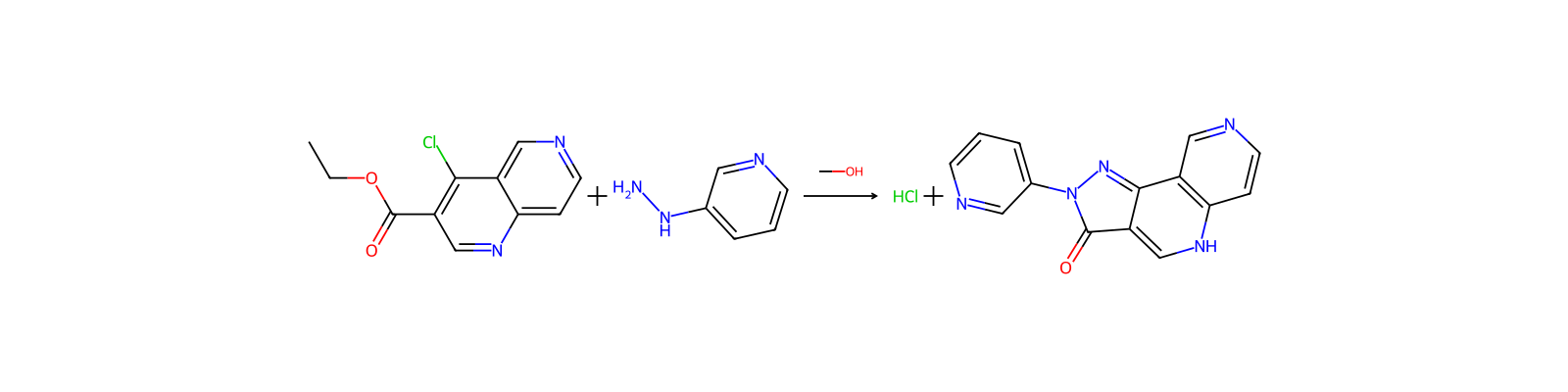


Linked notes
Loading…