HomeMCPWorkbenchSkills
HomeWorkbenchNotificationsMe
llms.txt · MCP GuidePrivacy Policy · Terms of Service · Supportv1.8.0
  1. Home
  2. /Compound

2-Heptanol

HCID 10976
New noteNew reactionRequest quotes
Print preview

Completing data — refresh the page later to see the latest
Basic informationOverviewNames & identifiersPropertiesSafety & regulationChemistry & industryRelated reactionsCompound notes
Substructure searchFind similar structures

Basic information

CAS
52390-72-4
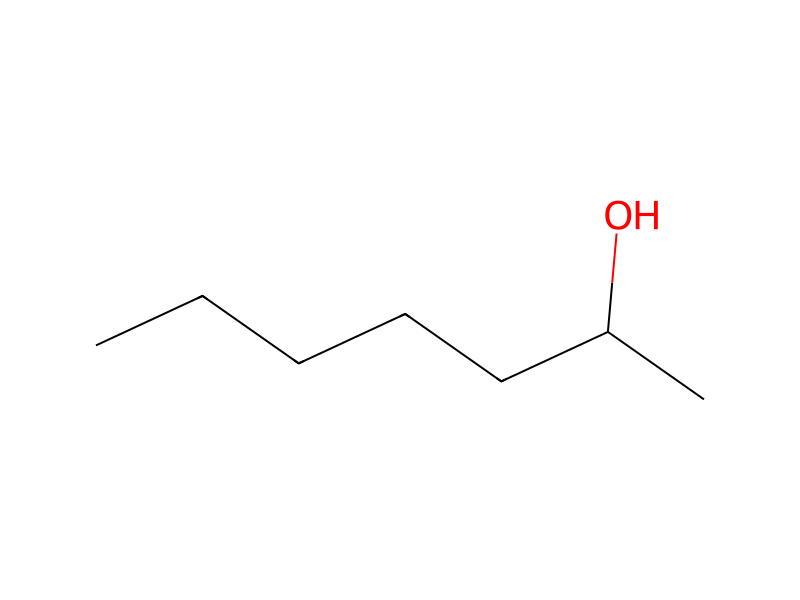
Standard SMILES
CCCCCC(C)O
InChIKey
CETWDUZRCINIHU-UHFFFAOYSA-N
Molecular formula
C7H16O
Average molar mass
116.2 g/mol
Monoisotopic mass
116.12011513

Overview

2-heptanol appears as a clear colorless alcohol with a mild alcohol odor. Insoluble in water. Floats on water. Soluble in most organic liquids. Moderately toxic. Used as a solvent for various resins and as a flotation agent for ore processing.

Names & identifiers

Preferred name
2-Heptanol
IUPAC
heptan-2-ol
English name
2-Heptanol
Molecular formula
C7H16O
Molecular weight
116.20134

Names & synonyms

2-HEPTANOLHeptan-2-ol543-49-7s-Heptyl alcohol2-Heptyl alcohol2-HydroxyheptaneAmyl methyl carbinol1-MethylhexanolMethyl amyl carbinolHeptanol-2Heptyl alcohol, sec-2-Heptanol (natural)
Show more names
FEMA No. 3288NSC 2220DTXSID1047158EINECS 208-844-3E12FIG07JKBRN 1719088AI3-11263NSC-2220

Database identifiers

CAS
52390-72-4、543-49-7
PubChem CID
10976
DTXSID
DTXSID1047158
ChEMBL
CHEMBL449522
ChEBI
CHEBI:88815
UNII
E12FIG07JK
EC Number
208-844-3
Nikkaji
J6.402E

Properties

Computed structural propertiesFilling in

XLogP
2.3
Topological polar surface area
20.2 Ų
Hydrogen bond donors
1
Hydrogen bond acceptors
1
Rotatable bonds
4
Heavy atoms
8
Formal charge
0
Complexity
43.7

Experimental & physicochemical properties

LipidsFatty Acyls [FA] -> Fatty alcohols [FA05]
SolventsSolvents -> Alcohols (<C12)
FragrancesFragrance Ingredient (2-Heptanol) -> IFRA transparency List
Food AdditivesFLAVORING AGENT OR ADJUVANT -> FDA Substance added to food
Density · 2 items

Relative density (water = 1): 0.82

0.817-0.819 (20 °C)

Flavoring AgentsEU Flavoring substances
Solubility · 3 items

Solubility in water, g/100ml: 0.35

soluble in alcohol and ether; slightly soluble in water

(in ethanol)

Flash Point · 2 items

160 °F (NFPA, 2010)

71 °C c.c.

Boiling Point · 2 items

158-160 °C

157-161 °C

Safety & regulation

Safety information is for reference only and does not replace the supplier’s Safety Data Sheet (SDS), applicable regulations, or professional assessment.

GHS classification

GHS Classification · 5 items

This chemical does not meet GHS hazard criteria for 0.1% (2 of 1799) of reports.

Warning

H226 (96.6%): Flammable liquid and vapor [Warning Flammable liquids]

P210, P233, P240, P241, P242, P243, P264, P264+P265, P280, P302+P352, P303+P361+P353, P305+P351+P338, P317, P321, P332+P317, P337+P317, P362+P364, P370+P378, P403+P235, and P501 (click each P-code to see the statement)

Aggregated GHS information provided per 1799 reports by companies from 10 notifications to the ECHA C&L Inventory. Each notification may be associated with multiple companies.

Hazard information

Regulatory Information · 4 items

Chemical: 2-Heptanol

2-Heptanol is listed on the EPA's Chemical Data Reporting (CDR) system. Manufacturers and importers of 2-Heptanol are required to report information about their production and use of this chemical to the EPA under the Toxic Substances Control Act (TSCA). (40 eCFR Part 711)

Status: Active Update: 04-05-2021 https://echa.europa.eu/registration-dossier/-/registered-dossier/23153

2-Heptanol: Does not have an individual approval but may be used under an appropriate group standard

Other Safety InformationEvaluation - Chemicals that are unlikely to require further regulation to manage risks to environment
DOT LabelCombustible Liquid
Fire Hazards · 2 items

Excerpt from ERG Guide 128 [Flammable Liquids (Water-Immiscible)]:

Combustible. Above 71 °C explosive vapour/air mixtures may be formed.

Health HazardsExcerpt from ERG Guide 128 [Flammable Liquids (Water-Immiscible)]:

Chemistry & industry

Pharmacology

Cellular LocationsCytoplasm

Uses & manufacturing

Uses · 2 items

Found in oil of cloves; [Merck Index] Used as solvent for resins and a frothing agent for ore flotation; [Hawley]

Plastic Composites Manufacturing [Category: Industry]

U.S. Production2023: 75,000 - <500,000 lb
Industry UsesNot Known or Reasonably Ascertainable
Use Classification · 3 items

Fragrance Ingredients

Flavouring Agent -> FLAVOURING_AGENT -> JECFA Functional Classes

Flavoring Agents -> JECFA Flavorings Index

General Manufacturing Information · 2 items

All Other Basic Organic Chemical Manufacturing

2-Heptanol: ACTIVE

Related reactions

9 records
New reaction record
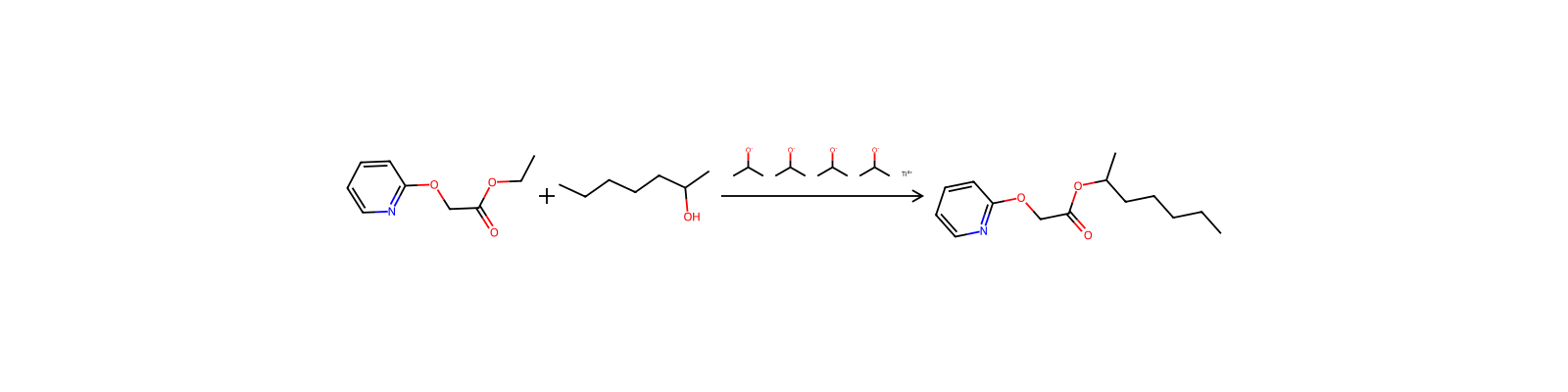
HRID 61340 reaction equation
HRID 61340As reactantuspto-grants-2016_09
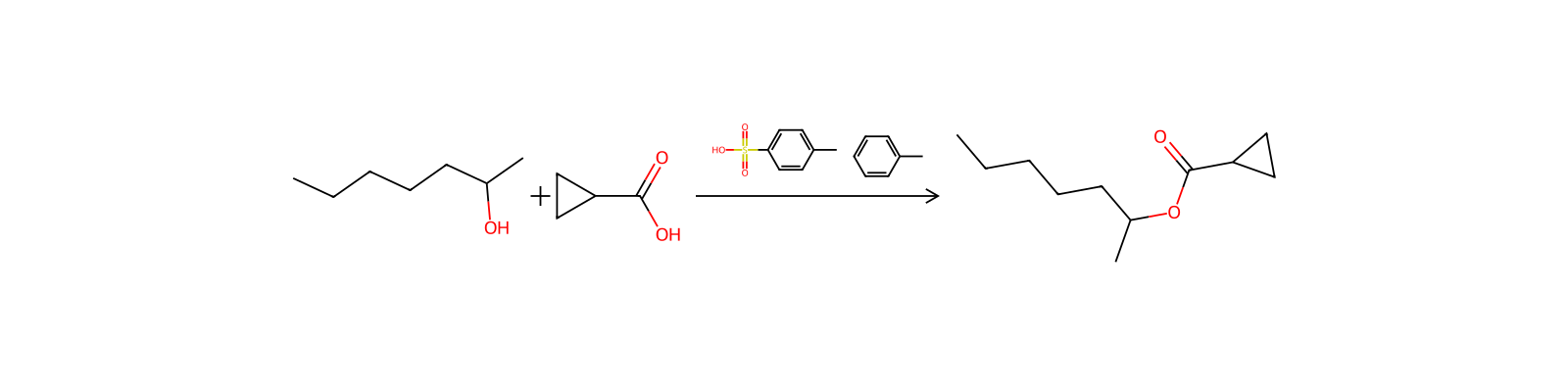
HRID 721352 reaction equation
HRID 721352As reactantuspto-grants-2006_11
HRID 721353 reaction equation
HRID 721353As reactantuspto-grants-2006_11
HRID 1155207 reaction equation
HRID 1155207As productuspto-grants-1981_11
HRID 1604135 reaction equation
HRID 1604135As reactantuspto-grants-1999_11
HRID 1604136 reaction equation
HRID 1604136As reactantuspto-grants-1999_11
HRID 1856406 reaction equation
HRID 1856406As productuspto-grants-1980_08
HRID 1939877 reaction equation
HRID 1939877As reactantuspto-grants-1997_12
Page 1 of 2

Compound notes

Loading…

On this pageBasic informationOverviewNames & identifiersPropertiesSafety & regulationChemistry & industryRelated reactionsCompound notes
More actions
New noteNew reactionRequest quotes
Vapor Density
Relative vapor density (air = 1): 4
Vapor Pressure · 2 items

1.23 [mmHg]

Vapor pressure, kPa at 20 °C: 0.133

Refractive Index1.421-1.422

Physicochemical properties

Symbol(GHS)
2 · GHS02,GHS07
Signal word
Warning
Hazard statements
226 · H226-H312-H319
Precautionary statements
210 · P210-P280-P302+P352+P312-P305+P351+P338
Hazards Summary · 1 item

A severe eye irritant; A respiratory tract and mild skin irritant; Can be absorbed through skin; Defats the skin; [ICSC] Based on animal studies, a severe eye irritant that may cause permanent damage; Inhalation of high concentrations may cause CNS depression; [CHEMINFO] An eye irritant; [eChemPortal: ERMA] An irritant; Can be absorbed through skin; [MSDSonline]

Reactive GroupAlcohols and Polyols
Reactivity Profile · 1 item

2-HEPTANOL is an alcohol. Flammable and/or toxic gases are generated by the combination of alcohols with alkali metals, nitrides, and strong reducing agents. They react with oxoacids and carboxylic acids to form esters plus water. Oxidizing agents convert them to aldehydes or ketones. Alcohols exhibit both weak acid and weak base behavior. They may initiate the polymerization of isocyanates and epoxides.

Chemical DangersReacts with strong oxidants.
Air and Water ReactionsFlammable. Insoluble in water.
Hazard Classes and CategoriesFlam. Liq. 3 (96.6%)

Safety & protection

Fire Fighting · 2 items

Excerpt from ERG Guide 128 [Flammable Liquids (Water-Immiscible)]:

Use alcohol-resistant foam, dry powder, carbon dioxide. In case of fire: keep drums, etc., cool by spraying with water.

First Aid Measures · 4 items

Fresh air, rest.

Rinse and then wash skin with water and soap.

First rinse with plenty of water for several minutes (remove contact lenses if easily possible), then refer for medical attention.

Rinse mouth. Do NOT induce vomiting. Give one or two glasses of water to drink.

First AidExcerpt from ERG Guide 128 [Flammable Liquids (Water-Immiscible)]:
Safe StorageSeparated from strong oxidants.
Nonfire Spill ResponseExcerpt from ERG Guide 128 [Flammable Liquids (Water-Immiscible)]:
Spillage Disposal · 1 item

Personal protection: filter respirator for organic gases and vapours adapted to the airborne concentration of the substance. Collect leaking and spilled liquid in covered containers as far as possible. Absorb remaining liquid in sand or inert absorbent. Then store and dispose of according to local regulations.

Isolation and EvacuationExcerpt from ERG Guide 128 [Flammable Liquids (Water-Immiscible)]:
Eye PreventionWear safety goggles.
Fire PreventionNO open flames. Above 71 °C use a closed system and ventilation.
Inhalation RiskNo indication can be given about the rate at which a harmful concentration of this substance in the air is reached on evaporation at 20 °C.
Skin PreventionProtective gloves.
Ingestion PreventionDo not eat, drink, or smoke during work.

Toxicology

Adverse EffectsNeurotoxin - Acute solvent syndrome
Exposure RoutesThe substance can be absorbed into the body by inhalation, through the skin and by ingestion.
Signs and Symptoms · 4 items

Cough. Sore throat.

Dry skin.

Redness. Pain.

Burning sensation.

Safety data

Signal word
Warning
Symbol(GHS)
GHS02,GHS07
Hazard statements
H226-H312-H319
Precautionary statements
P210-P280-P302+P352+P312-P305+P351+P338