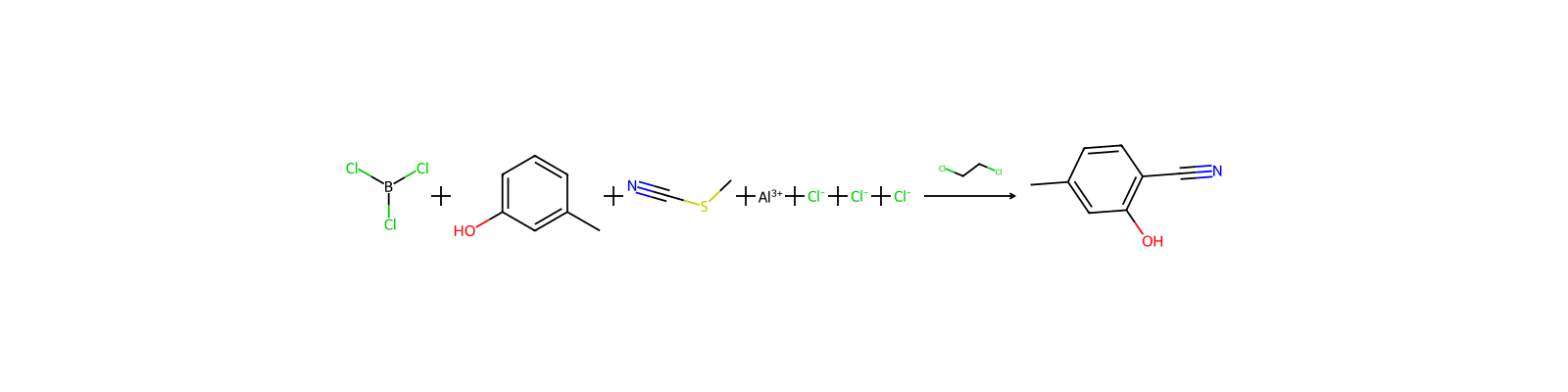

Basic information
- CAS
556-64-9- Standard SMILES
CSC#N- InChIKey
VYHVQEYOFIYNJP-UHFFFAOYSA-N- Molecular formula
- C2H3NS
- Average molar mass
- 73.12 g/mol
- Monoisotopic mass
- 72.9986201
Overview
Methyl thiocyanate is a colorless liquid and an odor of onions. Used as an agricultural insecticide, a fumigant and as a research chemical. No evidence of commercial production in the U.S. (EPA, 1998)
Names & identifiers
- Preferred name
- Methyl thiocyanate
- IUPAC
- methyl thiocyanate
- English name
- Methyl thiocyanate
- Molecular formula
- C2H3NS
- Molecular weight
- 73.12
Names & synonyms
METHYL THIOCYANATE556-64-9Methyl sulfocyanateMethylrhodanidThiocyanic acid, methyl esterMethyl rhodanateMethylthiokyanatMethane, thiocyanato-CH3SCNMeSCN(methylsulfanyl)carbonitrile55I23VY6IE
Show more names
methylrhodanateThiocyanomethaneMETHYL RHODANIDEMethylsalfocyanateMethylethiocyanatemethylsulfocyanate
NSC-9368DTXSID5060304CHEBI:61112RefChem:158037DTXCID2041915209-134-6thiocyanatomethaneThiocyanic Acid Methyl Ester
Database identifiers
- CAS
556-64-9- PubChem CID
- 11168
- DTXSID
DTXSID5060304- ChEBI
CHEBI:61112- UNII
- 55I23VY6IE
- EC Number
- 209-134-6
- Nikkaji
- J3.296D
Properties
Computed structural properties
- XLogP
- 0.9
- Topological polar surface area
- 49.1 Ų
- Hydrogen bond donors
- 0
- Hydrogen bond acceptors
- 2
- Rotatable bonds
- 0
- Heavy atoms
- 4
- Formal charge
- 0
- Complexity
- 41.2
Experimental & physicochemical properties
Chemical ClassesFlammable agents - 2nd degree
SpringerMaterials PropertiesCoriolis coupling
PesticidesPesticides -> Other Insecticides
OdorONION ODOR
Density
1.068 at 77 °F (EPA, 1998) - Denser than water; will sink
1.068 g/cu cm at 25 °C
1.068 @25 °C
Color/FormCOLORLESS LIQUID
Solubility
VERY SLIGHTLY SOL IN WATER; MISCIBLE WITH ALC, ETHER
Soluble in carbon tetrachloride.
Boiling Point
266 to 271 °F at 760 mmHg (EPA, 1998)
130-133 °C
DecompositionWhen heated to decomposition it emits very toxic fumes of NOx and SOx.
Melting Point
-60 °F (EPA, 1998)
-51 °C
-51 °C
Vapor Pressure
10 mmHg at 70.88 °F (EPA, 1998)
12.1 [mmHg]
12.1 mm Hg at 25 °C
Refractive Index
INDEX OF REFRACTION: 1.4669 @ 25 °C/D
INDEX OF REFRACTION: 1.4697 @ 20 °C/D
Physicochemical properties
- Melting point
- -5 °C · -5 °C
- Boiling point
- 131 °C · 131 °C
- Density
- 1.08 · 1.08
- refractive index
- 1.467 · 1.467-1.469
- Flash point
- 38 °C · 38 °C
- storage temp.
- Poison room
- Water Solubility
- Practically insoluble in water
- solubility
- Chloroform (Soluble), Methanol (Slightly)
- form
- Liquid
- color
- Clear colorless to light yellow
- Odor
- 0.01 %inpropylene · at 0.01%inpropylene glycol. sulfury onion
- Sensitive
- Moisture Sensitive
- Merck
- 14 · 14,6127
- Henry's Law Constant
- 2.2 · 2.2×10-1 mol/(m3Pa) at 25℃, HSDB (2015)
- Dielectric constant
- 4.3 · 4.3(19℃)
- InChI
- 1S/C2H3NS/c1-4-2-3/h1H3
- InChIKey
- VYHVQEYOFIYNJP-UHFFFAOYSA-N
- SMILES
- CSC#N
- LogP
- 0.502 · 0.502 (est)
- CAS DataBase Reference
- 556 · 556-64-9(CAS DataBase Reference)
- FDA UNII
- 55 I23VY6IE · 55I23VY6IE
- NIST Chemistry Reference
- Thiocyanic acid, methyl ester(556-64-9)
- EPA Substance Registry System
- Methyl thiocyanate (556-64-9)
- UNSPSC Code
- 12352100 · 12352100
- NACRES
- 22 · NA.22
- Symbol(GHS)
- 2 · GHS02,GHS05,GHS06
- Signal word
- Danger
- Hazard statements
- 301 · H301-H315-H318-H226
- Precautionary statements
- 501 · P501-P270-P240-P210-P233-P243-P241-P242-P264-P280-P370+P378-P362+P364-P303+P361+P353-P332+P313-P301+P310+P330-P305+P351+P338+P310-P403+P235-P405
- target organs
- Respiratory system
- Hazard Codes
- T
- Risk Statements
- 23 · 23/24/25-10-36/37
- Safety Statements
- 28 A-27-26-16-45-36/37/39 · 28A-27-26-16-45-36/37/39
- RIDADR
- 1992 · UN1992
- WGK Germany
- 3 · 3
- RTECS
- 1575000 · XL1575000
- TSCA
- TSCA listed
- HazardClass
- 3 · 3
- PackingGroup
- III
- HS Code
- 29309099 · 29309099
- Storage Class
- 3 · 3 - Flammable liquids
- Hazard Classifications
- 3 DermalAcute · Acute Tox. 3 DermalAcute Tox. 3 InhalationAcute Tox. 3 OralEye Irrit. 2Flam. Liq. 3STOT SE 3
- Hazardous Substances Data
- 556 · 556-64-9(Hazardous Substances Data)
- Toxicity
- 50 i.p · LD50 i.p. in mice: 315 nmoles/g (Ohkawa)
- Limited Quantities
- 100 ml · 100ml (liquid) or 0.5 Kg (solid)
- Excepted Quantities
- Max Inner Pack (1g or 1ml) and Max Outer Pack (500g or 500ml)
Safety & regulation
GHS classification
GHS Classification
Danger
H226 (98%): Flammable liquid and vapor [Warning Flammable liquids]
P210, P233, P240, P241, P242, P243, P260, P261, P262, P264, P264+P265, P270, P271, P280, P284, P301+P316, P302+P352, P303+P361+P353, P304+P340, P305+P351+P338, P316, P319, P320, P321, P330, P332+P317, P337+P317, P361+P364, P362+P364, P370+P378, P403+P233, P403+P235, P405, and P501 (click each P-code to see the statement)
Aggregated GHS information provided per 49 reports by companies from 7 notifications to the ECHA C&L Inventory. Each notification may be associated with multiple companies.
Hazard information
Regulatory Information
Chemical: Thiocyanic acid, methyl ester
Methyl thiocyanate: Does not have an individual approval but may be used under an appropriate group standard
The New Jersey Worker and Community Right to Know Act requires public and private employers to provide information about hazardous substances at their workplaces. (N.J.S.A. 34:5A-1 et. seq.)
DOT LabelPoison Flammable Liquid
Fire Hazards
When heated to decomposition, it emits very toxic fumes of oxides of nitrogen and sulfur. (Non-Specific -- Thiocyanates) Incompatible with nitric acid. Violent reactions have occurred when mixed with chlorates, nitrates, nitric acid, organic peroxides, peroxides, potassium chlorate, and sodium chlorate. This material is volatile. (EPA, 1998)
Health HazardsThis material is highly toxic if ingested. It is a rapidly acting poison. (EPA, 1998)
Hazards Summary
Releases cyanide after absorption into the body; Onset of symptoms may be delayed; [HSDB] Causes somnolence and convulsions in lethal dose studies of animals; [RTECS] A fast acting poison; [CAMEO] An irritant and lachrymator; Toxic by ingestion, inhalation, or skin absorption; May cause burns after skin contact and lung edema after inhalation; [Aldrich MSDS]
Reactive GroupIsocyanates and Isothiocyanates
Reactivity Profile
METHYL THIOCYANATE is a moderately toxic liquid, flammable. Violent, possibly explosive oxidation reaction when mixed with chlorates, nitrates, nitric acid, organic or inorganic peroxides, perchlorates. On contact with mineral acids or acid fumes deadly toxic hydrogen cyanide gas is produced. When heated to decomposition or on contact with mineral acids it emits highly toxic fumes of nitriles, oxides of sulfur and nitrogen [Lewis, 3rd ed., 1993, p. 879, 1234].
Air and Water ReactionsVery slightly soluble in water [Merck].
CERCLA Reportable Quantities
Releases of CERCLA hazardous substances are subject to the release reporting requirement of CERCLA section 103, codified at 40 CFR part 302, in addition to the requirements of 40 CFR part 355. Methyl thiocyanate is an extremely hazardous substance (EHS) subject to reporting requirements when stored in amounts in excess of its threshold planning quantity (TPQ) of 10,000 lbs.
Hazard Classes and Categories
Flam. Liq. 3 (98%)
Flammable agents - 2nd degree, Reactive agents - 1st degree
DHS Chemicals of Interest (COI)
Methyl thiocyanate
1
20000
Toxic chemical that can be released at a facility.
Skin, Eye, and Respiratory Irritations... irritant to skin & eyes. ... /Aliphatic thiocyanates/
Safety & protection
Fire Fighting
(Non-Specific -- Pesticide, Liquid, n.o.s.) Keep unnecessary people away; isolate hazard area and deny entry. Stay upwind; keep out of low areas. Ventilate closed spaces before entering them. Wear positive pressure breathing apparatus and special protective clothing. Remove and isolate contaminated clothing at the site. If water pollution occurs, notify appropriate authorities.
First AidNote: Methyl thiocyanate is very readily absorbed through the skin.
Nonfire Spill Response
Avoid inhalation and skin contact. (Non-Specific -- Pesticide, Liquid, n.o.s.) Do not touch spilled material; stop leak if you can do so without risk. Use water spray to reduce vapors. For small spills, absorb with sand or other noncombustible absorbent material and place into containers for later disposal. For large spills, dike far ahead of spill for later disposal. (EPA, 1998)
Disposal Methods
SRP: At the time of review, criteria for land treatment or burial (sanitary landfill) disposal practices are subject to significant revision. Prior to implementing land disposal of waste residue (including waste sludge), consult with environmental regulatory agencies for guidance on acceptable disposal practices.
Isolation and EvacuationExcerpt from ERG Guide 131 [Flammable Liquids - Toxic]:
Protective Action Criteria (PAC)
0.18 [mg/m3]
2.0 [mg/m3]
12 [mg/m3]
Personal Protective Equipment (PPE)
For emergency situations, wear a positive pressure, pressure-demand, full facepiece self-contained breathing apparatus (SCBA) or pressure- demand supplied air respirator with escape SCBA and a fully-encapsulating, chemical resistant suit. (EPA, 1998)
Acute Exposure Guideline Levels (AEGLs)The compound is currently at the Holding Status AEGLs which have been reviewed by the NAC/AEGL Committee and are on hold due to insufficient data to develop AEGL values.
AEGLs NotesAEGLs Status: Holding
Toxicology
Treatment
Antidotes to cyanide poisoning include hydroxocobalamin and sodium nitrite, which release the cyanide from the cytochrome system, and rhodanase, which is an enzyme occurring naturally in mammals that combines serum cyanide with thiosulfate, producing comparatively harmless thiocyanate. Oxygen therapy can also be administered. (L97)
Health Effects
Exposure to high levels of cyanide for a short time harms the brain and heart and can even cause coma, seizures, apnea, cardiac arrest and death. Chronic inhalation of cyanide causes breathing difficulties, chest pain, vomiting, blood changes, headaches, and enlargement of the thyroid gland. Skin contact with cyanide salts can irritate and produce sores. (L96, L97)
Environmental Fate
TERRESTRIAL FATE: Based on a recommended classification scheme(1), an estimated Koc value of 8.3(SRC), determined from a structure estimation method(2), indicates that methyl thiocyanate is expected to have very high mobility in soil(SRC). Volatilization of methyl thiocyanate from moist soil surfaces is expected (SRC) based upon an estimated Henry's Law constant of 4.4X10⁻⁵ atm-cu m/mole(SRC), using a fragment constant estimation method(3). The potential for volatilization of methyl thiocyanate from dry soil surfaces is expected to exist(SRC) based on a measured vapor pressure of 12 mm Hg(4). Based upon a group contribution method for predicting the probability and rate of aerobic biodegradation(5), methyl thiocyanate has been estimated to biodegrade fast with primary biodegradation occurring over a period of days to weeks(SRC).
AQUATIC FATE: Based on a recommended classification scheme(1), an estimated Koc value of 8.3(SRC), determined from a structure estimation method(2), indicates that methyl thiocyanate is not expected to adsorb to suspended solids and sediment in water(SRC). Methyl thiocyanate is expected to volatilize from water surfaces(3,SRC) based on an estimated Henry's Law constant of 4.4X10⁻⁵ atm-cu m/mole(SRC), developed using a fragment constant estimation method(4). Estimated volatilization half-lives for a model river and model lake are 20 hours and 8.6 days, respectively(3,SRC). According to a classification scheme(5), an estimated BCF value of 2.1(3,SRC), from an estimated log Kow(6,SRC), suggests that bioconcentration in aquatic organisms is low(SRC). Based upon a group contribution method for predicting the probability and rate of aerobic biodegradation(7), methyl thiocyanate has been estimated to be highly biodegraded with ultimate biodegradation occurring over a period of weeks(SRC).
ATMOSPHERIC FATE: According to a model of gas/particle partitioning of semivolatile organic compounds in the atmosphere(1), methyl thiocyanate, which has an measured vapor pressure of 12 mm Hg at 25 °C(2,SRC), is expected to exist solely as a vapor in the ambient atmosphere. Vapor-phase methyl thiocyanate is degraded in the atmosphere by reaction with photochemically-produced hydroxyl radicals(SRC); the half-life for this reaction in air is estimated to be about 15 days(3,SRC).
Adverse EffectsOther Poison - Chemical Asphyxiant
Exposure RoutesOral (L96) ; inhalation (L96) ; dermal (L96)
Toxicity Summary
Organic nitriles decompose into cyanide ions both in vivo and in vitro. Consequently the primary mechanism of toxicity for organic nitriles is their production of toxic cyanide ions or hydrogen cyanide. Cyanide is an inhibitor of cytochrome c oxidase in the fourth complex of the electron transport chain (found in the membrane of the mitochondria of eukaryotic cells). It complexes with the ferric iron atom in this enzyme. The binding of cyanide to this cytochrome prevents transport of electrons from cytochrome c oxidase to oxygen. As a result, the electron transport chain is disrupted and the cell can no longer aerobically produce ATP for energy. Tissues that mainly depend on aerobic respiration, such as the central nervous system and the heart, are particularly affected. Cyanide is also known produce some of its toxic effects by binding to catalase, glutathione peroxidase, methemoglobin, hydroxocobalamin, phosphatase, tyrosinase, ascorbic acid oxidase, xanthine oxidase, succinic dehydrogenase, and Cu/Zn superoxide dismutase. Cyanide binds to the ferric ion of methemoglobin to form inactive cyanmethemoglobin. (L97)
Signs and SymptomsCyanide poisoning is identified by rapid, deep breathing and shortness of breath, general weakness, giddiness, headaches, vertigo, confusion, convulsions/seizures and eventually loss of consciousness. (L96, L97)
Soil Adsorption/Mobility
Using a structure estimation method based on molecular connectivity indices(1), the Koc for methyl thiocyanate can be estimated to be about 8.3(SRC). According to a recommended classification scheme(2), this estimated Koc value suggests that methyl thiocyanate is expected to have very high mobility in soil(SRC).
Natural Pollution SourcesMethyl thiocyanate is of anthropogenic origin, and is not known to be produced by natural sources. (SRC)
Human Toxicity Excerpts
SYMPTOMATOLOGY (LARGELY INFERRED FROM ANIMAL TESTS): 1. INGESTION OF CONCN SOLN MAY LEAD TO VOMITING BECAUSE OF MUCOSAL IRRITATION. ... 5. MASSIVE SKIN CONTAMINATION WITH ORGANIC THIOCYANATE SOLN MAY PRODUCE SYSTEMIC POISONING...&...LOCAL IRRITATION & DERMATITIS. /ALIPHATIC THIOCYANATES/
SYMPTOMATOLOGY (LARGELY INFERRED FROM ANIMAL TESTS): 6. IN NONFATAL CASES EVIDENCE OF INJURIES TO THE LIVER & KIDNEYS MAY APPEAR. /ALIPHATIC THIOCYANATES/
...METHYL.../THIOCYANATE IS/ RAPIDLY ACTING /POISON/...OF HIGH POTENCY...
THE SIGNS AND SYMPTOMS OF KEROSENE POISONING ARE OFTEN DOMINANT AFTER EXPOSURES TO DILUTE SOLN OF THIOCYANATE INSECTICIDES. /ALIPHATIC THIOCYANATES/
Artificial Pollution SourcesMethyl thiocyanate's production and use as a chemical and pharmaceutical intermediate(1) may result in its release to the environment(SRC).
Environmental BiodegradationBased upon a group contribution method for predicting the probability and rate of aerobic biodegradation(1), methyl thiocyanate has been estimated to biodegrade fast with primary biodegradation occurring over a period of days to weeks(SRC).
Regulatory information
CERCLA Reportable Quantities
Releases of CERCLA hazardous substances are subject to the release reporting requirement of CERCLA section 103, codified at 40 CFR part 302, in addition to the requirements of 40 CFR part 355. Methyl thiocyanate is an extremely hazardous substance (EHS) subject to reporting requirements when stored in amounts in excess of its threshold planning quantity (TPQ) of 10,000 lbs.
DHS Chemicals of Interest (COI)
Methyl thiocyanate
1
20000
Toxic chemical that can be released at a facility.
Safety data
- wgk
- 3
- tsca
- TSCA listed
- rtecs
- XL1575000
- ridadr
- UN1992
- hs_code
- 29309099
- Toxicity
- LD50 i.p. in mice: 315 nmoles/g (Ohkawa)
- risk_code
- 23/24/25-10-36/37
- Signal word
- Danger
- Symbol(GHS)
- GHS02,GHS05,GHS06
- hazard_code
- T
- safety_code
- 28A-27-26-16-45-36/37/39
- hazard_class
- 3
- Storage Class
- 3 - Flammable liquids
- packing_group
- III
- target organs
- Respiratory system
- Hazard statements
- H301-H315-H318-H226
- Limited Quantities
- 100ml (liquid) or 0.5 Kg (solid)
- Excepted Quantities
- Max Inner Pack (1g or 1ml) and Max Outer Pack (500g or 500ml)
- Hazard Classifications
- Acute Tox. 3 DermalAcute Tox. 3 InhalationAcute Tox. 3 OralEye Irrit. 2Flam. Liq. 3STOT SE 3
- Precautionary statements
- P501-P270-P240-P210-P233-P243-P241-P242-P264-P280-P370+P378-P362+P364-P303+P361+P353-P332+P313-P301+P310+P330-P305+P351+P338+P310-P403+P235-P405
- Hazardous Substances Data
- 556-64-9(Hazardous Substances Data)
Chemistry & industry
Pharmacology
Metabolism/Metabolites
ENZYMES IN THE LIVER AND PERHAPS OTHER ORGANS ARE KNOWN TO LIBERATE CYANIDE ION FROM METHYL...THIOCYANATE... GLUTATHIONE S-TRANSFERASE CATALYZES THE ATTACK OF REDUCED GLUTATHIONE @ THIOCYANATE SULFUR, RESULTING IN LIBERATION OF HYDROGEN CYANIDE, OXIDIZED GLUTATHIONE & THE MERCAPTAN MOIETY OF THE ORGANOTHIOCYANATE.
METHYL THIOCYANATE UP TO 5 MMOL REDUCED THE HYDROGEN ION SECRETION OF BULLFROG, RANA CATESBEIANA, GASTRIC MUCOSA WITHOUT EXHIBITING ANY APPRECIABLE INHIBITORY EFFECT ON MICROSOMAL ATPASE ACTIVITY. NO CONVERSION OF METHYL THIOCYANATE TO THIOCYANATE ION, A POTENT INHIBITOR OF GASTRIC ACID SECRETION, WAS DEMONSTRATED IN THE GASTRIC MUCOSA.
Organic nitriles are converted into cyanide ions through the action of cytochrome P450 enzymes in the liver. Cyanide is rapidly absorbed and distributed throughout the body. Cyanide is mainly metabolized into thiocyanate by either rhodanese or 3-mercaptopyruvate sulfur transferase. Cyanide metabolites are excreted in the urine. (L96)
Uses & manufacturing
Uses
Used as an agricultural insecticide, fumigant, pharmaceutical intermediate, and research chemical; [HSDB]
Farming (Pesticides) [Category: Industry]
AGRICULTURAL INSECTICIDE
FUMIGANT
RESEARCH CHEMICAL
Chemical and pharmaceutical intermediate.
U.S. Exports
(1979) No Data
(1981) No Data
U.S. Imports
(1979) No Data
(1981) No Data
U.S. Production
(1979) NO EVIDENCE OF COMMERCIAL PRODN IN U.S.
(1981) NO EVIDENCE OF COMMERCIAL PRODN IN U.S.
Methods of Manufacturing...FROM DIMETHYL SULFATE AND AQ BARIUM THIOCYANATE.
Formulations/Preparations99% Colorless liquid grade
General Manufacturing InformationThiocyanic acid, methyl ester: ACTIVE
Applications
DescriptionMethyl thiocyanate is a colorless liquid withan onion-like odor. Molecular weight = 73.12; Boilingpoint= 130-133℃; Freezing/Melting point= - 51℃.Very slightly soluble in water.
UsesMethyl thiocyanate is a reagent that is used in the synthesis of WAK 4103 (W498200), which is a metabolite of Imidacloprid (I274990), a neonicotinoid; the active ingredient in certain neuro-active insecticides. Reports show that when exposed to neonicotinid pesticides honeybees have probelms returnign home after foraging and bumblebee colonies grow poorly and produce fewer queens.Nauen, R., et. al.: Pestic. Sci., 55, 265 (1999); Chauzat, M., et al.: Env. Entomol., 38, 514 (2009); Patial, A., et al.: Env. Ecol., 27, 320 (2009); Fernandez-Bayo, J., et al.: J. Agric., Food Chem., 57, 5435 (2009); Tomizawa, M., et al.: J. Med. Chem., 52, 3735 (2009); Chem. and Eng. News 90: 10 (2012)
General DescriptionColorless liquid and an odor of onions. Used as an agricultural insecticide, a fumigant and as a research chemical. No evidence of commercial production in the U.S.
Upstream & downstream products
Upstream raw materials
Downstream products
Suppliers54 total
梯希爱(上海)化成工业发展有限公司021-67121386 · [email protected]
上海阿拉丁生化科技股份有限公司400-6206333 13167063860 · [email protected]
宁波君龙新材料有限公司0574 88552216 19032109277 · [email protected]
上海仲因实业有限公司2537653158 16621191650 · [email protected]
Syntechem Co.,Ltd[email protected]
上海迈瑞尔生化科技有限公司4006356688 18621169109 · [email protected]
江苏普乐司生物科技有限公司0513-66017706 18551496367 · [email protected]
阿法埃莎(中国)化学有限公司400-6106006 · [email protected]
安耐吉化学&3A(安徽泽升科技股份有限公司)400-0056266 · [email protected]
梯希爱(上海)化工贸易有限公司021-61109150 · [email protected]
上海柯维化学技术有限公司021-64609169 18901607656 · [email protected]
江苏艾康生物医药研发有限公司025-5885952 15955137747 · [email protected]
上海业立嘉实业有限公司13564383169 · [email protected]
广东大小化工有限公司1866-171603 18666171603 · [email protected]
玛雅试剂+86 (573) 82222445 (0)18006601000 452520369 · [email protected]
赛默飞世尔科技(中国)有限公司800-810-5118 · [email protected]
北京伊诺凯科技有限公司400-810-7969 010-59572699 · [email protected]
TOKYO CHEMICAL INDUSTRY CO., LTD.03-36680489 · [email protected]
北京京土恒盛化工科技有限公司00-13911456598 13911456598 · [email protected]
上海麦克林生化科技股份有限公司15221275939 15221275939 · [email protected]
南兴化工(江苏)有限公司0512-66387035 18662433356 · [email protected]
HANGZHOU LEAP CHEM CO., LTD.+86-571-87711850 +86-15355479329 · [email protected]
广东翁江化学试剂有限公司0751-2886766 13927870850 · [email protected]
艾吉析科技(上海)有限公司17721401538;17717235263 17721401538 · [email protected]
启源(广东)医药化工有限公司18026564465 · [email protected]
上海源叶生物科技有限公司13636370518 · [email protected]
山东西亚化学有限公司4009903999 13395398332 · [email protected]
成都华纯科技有限公司400-1166-196 15982826727 · [email protected]
广州市金华大化学试剂有限公司020-84383047 · [email protected]
上海贤鼎生物科技有限公司021-021-52271985 17721149837 · [email protected]
上海炎泽化工有限公司19901447308 19962611955 · [email protected]
盼得(上海)国际贸易有限公司80159919 18662931292 · [email protected]
毕升化学(上海)有限公司19852830193 19852830193 · [email protected]
厦门盈融达化工有限公司+86-0592-6210733 · [email protected]
career henan chemical co+86-0371-86658258 · [email protected]
艾览(上海)化工科技有限公司400-668-9898 · [email protected]
上海吉至生化科技有限公司021-4009004166/18616739031 18616739031 · [email protected]
上海化鑫微医药科技有限公司18019176997 18019176997 · [email protected]
TCI Chemicals (India) Pvt. Ltd.[email protected]
Aladdin Scientific[email protected]
XIAMEN AMITY INDUSTRY AND TRADE CO., LTD.+8618950047208 · [email protected]
广东元丰化学试剂有限公司0751-2829979 13318584237 · [email protected]
武汉吉鑫益邦生物科技有限公司59768661 13297943853 · [email protected]
上海宝杨宝欣生物科技有限公司021-56698539 19921169802 · [email protected]
上海安谱实验科技股份有限公司18502138905 · [email protected]
山东天铭生物科技发展有限责任公司400-9019001 400-901-9001
重庆卡兰医药有限公司[email protected]
DAYANG CHEM (HANGZHOU) CO.,LTD+86-88938639 +86-17705817739 · [email protected]
陕西缔都医药化工有限公司+86-29-87569266 +86-17392581500 · [email protected]
上海珅桔化工有限公司13167128868 13248068001 · [email protected]
Additional notes
DefinitionChEBI: Methyl thiocyanate is a member of the class of thiocyanates, being the methyl ester of thiocyanic acid.
Related reactions
41 records


Compound notes
Loading…