
Basic information
- Standard SMILES
C=CCOCC=C- InChIKey
ATVJXMYDOSMEPO-UHFFFAOYSA-N- Molecular formula
- C6H10O
- Average molar mass
- 98.14 g/mol
- Monoisotopic mass
- 98.07316494
Overview
Diallyl ether appears as a liquid with an odor of radishes. Less dense than water. May be toxic by ingestion, skin absorption, and inhalation, and may irritate skin and eyes. Vapors heavier than air. Used to make other chemicals.
Names & identifiers
- Preferred name
- Diallyl ether
- IUPAC
- 3-prop-2-enoxyprop-1-ene
- English name
- Allyl ether
- Molecular formula
- C6H10O
- Molecular weight
- 98.14
Names & synonyms
ALLYL ETHERDiallyl etherAllyletherEther, diallyl1-Propene, 3,3'-oxybis-Ether, propenylUNII-GI3WXY29NQGI3WXY29NQNSC 7619EINECS 209-174-4BRN 1736015AI3-02894
Show more names
Allylic EtherAllylethersether,diallylpropenyletherether,propenylAllyl ether 98%Allyl ether,99%
Allyl ether (8CI)NSC-7619ALLYL ETHER [MI]4-01-00-02086 (Beilstein Handbook Reference)3,3'-oxybis(prop-1-ene)(CH2=CHCH2)2ODTXSID8060321UN 2360
Database identifiers
- CAS
557-40-4- PubChem CID
- 11194
- DTXSID
DTXSID8060321- UNII
- GI3WXY29NQ
- EC Number
- 209-174-4
- Nikkaji
- J6.485H
Properties
Computed structural properties
- XLogP
- 1.4
- Topological polar surface area
- 9.2 Ų
- Hydrogen bond donors
- 0
- Hydrogen bond acceptors
- 1
- Rotatable bonds
- 4
- Heavy atoms
- 7
- Formal charge
- 0
- Complexity
- 49.2
Experimental & physicochemical properties
Chemical ClassesFlammable agents - 3rd degree
SpringerMaterials PropertiesDensity
LogP0.7 (calculated)
DensityRelative density (water = 1): 0.8
SolubilitySolubility in water: none
Flash Point
20 °F (NFPA, 2010)
-6 °C
Boiling Point94 °C
Melting Point-6 °C
Vapor DensityRelative vapor density (air = 1): 3.4
Vapor PressureVapor pressure, kPa at 20 °C: 5.79
Physical Description
Diallyl ether appears as a liquid with an odor of radishes. Less dense than water. May be toxic by ingestion, skin absorption, and inhalation, and may irritate skin and eyes. Vapors heavier than air. Used to make other chemicals.
COLOURLESS LIQUID WITH CHARACTERISTIC ODOUR.
Physicochemical properties
- Melting point
- -6 °C · -6°C
- Boiling point
- 94 °C · 94 °C
- Density
- 0.803 g/mL · 0.803 g/mL at 25 °C(lit.)
- refractive index
- 1.415 · 1.415-1.417
- Flash point
- -7 °C · -7 °C
- storage temp.
- Refrigerator (+4°C) + Flammables area
- solubility
- 0.3 % · Chloroform, Methanol (Slightly), 0.3% soluble in water, miscible with alcohol and oils.
- form
- clear liquid
- color
- Colorless to Almost colorless
- Odor
- Pungent odor, reminiscent of Radish
- Water Solubility
- insoluble
- Merck
- 14 · 14,292
- InChI
- 1S/C6H10O/c1-3-5-7-6-4-2/h3-4H,1-2,5-6H2
- InChIKey
- ATVJXMYDOSMEPO-UHFFFAOYSA-N
- SMILES
- C=CCOCC=C
- CAS DataBase Reference
- 557 · 557-40-4(CAS DataBase Reference)
- EWG's Food Scores
- 1 · 1
- FDA UNII
- 3 WXY29NQ · GI3WXY29NQ
- NIST Chemistry Reference
- 2 · (CH2=CHCH2)2O(557-40-4)
- EPA Substance Registry System
- 1 · 1-Propene, 3,3'-oxybis- (557-40-4)
- UNSPSC Code
- 12162002 · 12162002
- NACRES
- 23 · NA.23
- Symbol(GHS)
- 2 · GHS02,GHS06
- Signal word
- Danger
- Hazard statements
- 311 · H311-H302-H315-H319-H336-H225
- Precautionary statements
- 501 · P501-P270-P240-P261-P210-P233-P243-P241-P242-P271-P264-P280-P370+P378-P337+P313-P305+P351+P338-P361+P364-P303+P361+P353-P332+P313-P301+P312+P330-P304+P340+P312-P403+P233-P403+P235-P405
- target organs
- Respiratory system
- PPE
- Eyeshields, Faceshields, Gloves, type ABEK (EN14387) respirator filter
- Hazard Codes
- Xn-F,Xn,F
- Risk Statements
- 36 · 36/37/38-20/21/22-11
- Safety Statements
- 9 · 9-36/37/39-33-26-16-45
- RIDADR
- 2360 · UN 2360
- WGK Germany
- 3 · 3
- RTECS
- 7525000 · KN7525000
- TSCA
- TSCA listed
- HS Code
- 2909.19 · 2909.19.1800
- HazardClass
- 3 · 3
- PackingGroup
- II
- Storage Class
- 3 · 3 - Flammable liquids
- Hazard Classifications
- 4 OralEye · Acute Tox. 4 OralEye Irrit. 2Flam. Liq. 2Skin Irrit. 2STOT SE 3
- Toxicity
- 50 orally · LD50 orally in rats: 0.32 g/kg (Smyth)
Safety & regulation
GHS classification
GHS Classification
Danger
H225 (100%): Highly Flammable liquid and vapor [Danger Flammable liquids]
P210, P233, P240, P241, P242, P243, P261, P262, P264, P264+P265, P270, P271, P280, P301+P317, P302+P352, P303+P361+P353, P304+P340, P305+P351+P338, P316, P317, P319, P321, P330, P332+P317, P337+P317, P361+P364, P362+P364, P370+P378, P403+P233, P403+P235, P405, and P501 (click each P-code to see the statement)
Aggregated GHS information provided per 40 reports by companies from 3 notifications to the ECHA C&L Inventory. Each notification may be associated with multiple companies.
Hazard information
Regulatory Information
Chemical: 1-Propene, 3,3'-oxybis-
The New Jersey Worker and Community Right to Know Act requires public and private employers to provide information about hazardous substances at their workplaces. (N.J.S.A. 34:5A-1 et. seq.)
DOT LabelFlammable Liquid Poison
Fire Hazards
Excerpt from ERG Guide 131 [Flammable Liquids - Toxic; polymerization hazard]:
· HIGHLY FLAMMABLE: Will be easily ignited by heat, sparks or flames.
Highly flammable. Vapour/air mixtures are explosive. Risk of fire and explosion on contact with acids or oxidizing agents.
Health Hazards
Excerpt from ERG Guide 131 [Flammable Liquids - Toxic; polymerization hazard]:
· TOXIC; may be fatal if inhaled, ingested or absorbed through skin.
DOT ID and Guide2360 131P
Reactive GroupEthers
UN ClassificationUN Hazard Class: 3; UN Subsidiary Risks: 6.1; UN Pack Group: II
Reactivity AlertsHighly Flammable
Reactivity Profile
Ethers, such as DIALLYL ETHER can act as bases. They form salts with strong acids and addition complexes with Lewis acids. The complex between diethyl ether and boron trifluoride is an example. Ethers may react violently with strong oxidizing agents. In other reactions, which typically involve the breaking of the carbon-oxygen bond, ethers are relatively inert.
Chemical DangersThe substance can form explosive peroxides. Reacts violently with acids and oxidants. This generates fire and explosion hazard.
Physical DangersThe vapour is heavier than air and may travel along the ground; distant ignition possible. As a result of flow, agitation, etc., electrostatic charges can be generated.
DOT Hazard Classification
Diallylether
UN2360
Class 3 Flammable and combustible liquid (49 eCFR § 173.120)
Class 3 Flammable and combustible liquid (49 eCFR § 173.120)
PG II: the degree of danger presented by the material is medium
Safety & protection
Fire Fighting
Excerpt from ERG Guide 131 [Flammable Liquids - Toxic; polymerization hazard]:
Use water spray, powder, alcohol-resistant foam, carbon dioxide. In case of fire: keep drums, etc., cool by spraying with water.
First Aid Measures
Fresh air, rest. Refer for medical attention.
Remove contaminated clothes. Rinse and then wash skin with water and soap.
First rinse with plenty of water for several minutes (remove contact lenses if easily possible), then refer for medical attention.
Rinse mouth. Refer for medical attention .
Accidental Release Measures
· CALL 911. Then call emergency response telephone number on shipping paper. If shipping paper not available or no answer, refer to appropriate telephone number listed on the inside back cover.
· ELIMINATE all ignition sources (no smoking, flares, sparks or flames) from immediate area.
First Aid
Excerpt from ERG Guide 131 [Flammable Liquids - Toxic; polymerization hazard]:
General First Aid:
Safe StorageFireproof. Separated from acids and oxidants. See Chemical Dangers. Store only if stabilized. Cool. Keep in the dark.
Exposure Control and Personal Protection· Wear positive pressure self-contained breathing apparatus (SCBA).
Nonfire Spill ResponseExcerpt from ERG Guide 131 [Flammable Liquids - Toxic; polymerization hazard]:
Spillage Disposal
Personal protection: filter respirator for organic gases and vapours adapted to the airborne concentration of the substance. Ventilation. Remove all ignition sources. Collect leaking and spilled liquid in sealable containers as far as possible. Absorb remaining liquid in sand or inert absorbent. Then store and dispose of according to local regulations. Do NOT wash away into sewer.
Isolation and Evacuation
Excerpt from ERG Guide 131 [Flammable Liquids - Toxic; polymerization hazard]:
Immediate precautionary measure
Eye PreventionWear face shield or eye protection in combination with breathing protection.
Fire Prevention
NO open flames, NO sparks and NO smoking. Closed system, ventilation, explosion-proof electrical equipment and lighting. Do NOT use compressed air for filling, discharging, or handling. Use non-sparking handtools. Prevent build-up of electrostatic charges (e.g., by grounding).
Inhalation RiskNo indication can be given about the rate at which a harmful concentration of this substance in the air is reached on evaporation at 20 °C.
Toxicology
Exposure RoutesThe substance can be absorbed into the body by inhalation, through the skin and by ingestion.
Signs and Symptoms
Cough. Drowsiness. Unconsciousness.
Dry skin. Redness. Pain.
Redness. Pain.
Dullness. Nausea. Drowsiness. Unconsciousness.
ICSC Environmental DataEnvironmental effects from the substance have not been investigated adequately.
Safety data
- PPE
- Eyeshields, Faceshields, Gloves, type ABEK (EN14387) respirator filter
- wgk
- 3
- tsca
- TSCA listed
- rtecs
- KN7525000
- ridadr
- UN 2360
- hs_code
- 2909.19.1800
- Toxicity
- LD50 orally in rats: 0.32 g/kg (Smyth)
- risk_code
- 36/37/38-20/21/22-11
- Signal word
- Danger
- Symbol(GHS)
- GHS02,GHS06
- hazard_code
- Xn-F,Xn,F
- safety_code
- 9-36/37/39-33-26-16-45
- hazard_class
- 3
- Storage Class
- 3 - Flammable liquids
- packing_group
- II
- target organs
- Respiratory system
- Hazard statements
- H311-H302-H315-H319-H336-H225
- Hazard Classifications
- Acute Tox. 4 OralEye Irrit. 2Flam. Liq. 2Skin Irrit. 2STOT SE 3
- Precautionary statements
- P501-P270-P240-P261-P210-P233-P243-P241-P242-P271-P264-P280-P370+P378-P337+P313-P305+P351+P338-P361+P364-P303+P361+P353-P332+P313-P301+P312+P330-P304+P340+P312-P403+P233-P403+P235-P405
Chemistry & industry
Uses & manufacturing
General Manufacturing Information1-Propene, 3,3'-oxybis-: ACTIVE
Applications
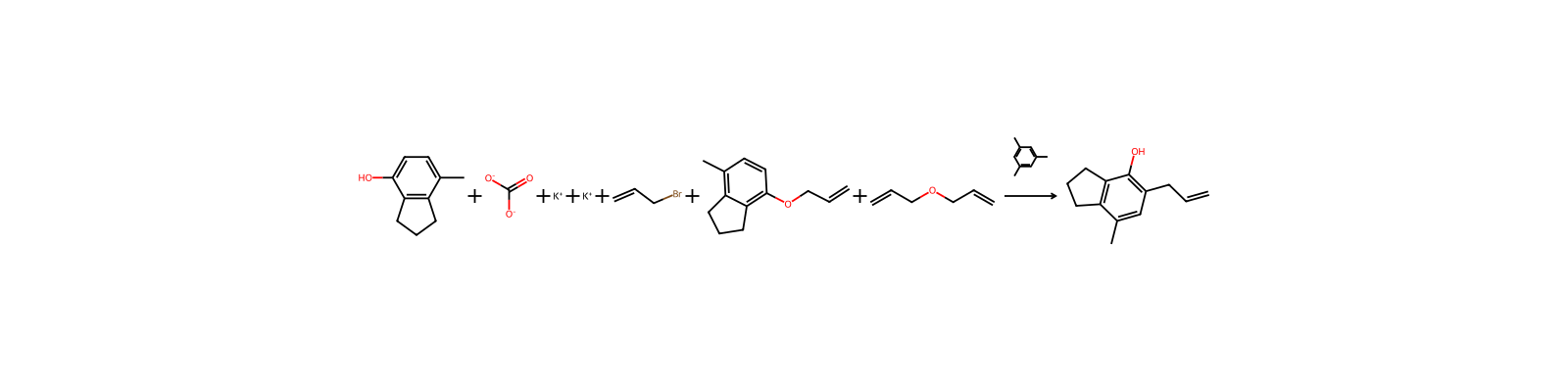
UsesAllyl Ether is a modifier used in the manufacture of foamable polystyrene.
General DescriptionA liquid with an odor of radishes. Less dense than water. Flash point 20°F. May be toxic by ingestion, skin absorption, and inhalation, and may irritate skin and eyes. Vapors heavier than air. Used to make other chemicals.
Upstream & downstream products
Downstream products
Suppliers38 total
梯希爱(上海)化成工业发展有限公司021-67121386 · [email protected]
上海阿拉丁生化科技股份有限公司400-6206333 13167063860 · [email protected]
Hebei Chuanghai Biotechnology Co., Ltd+86-17732866630 · [email protected]
上海麦克林生化科技股份有限公司021-50706066 15221275939 · [email protected]
江苏艾康生物医药研发有限公司025-025-66113011 15955137747 · [email protected]
爱斯特(成都)生物制药股份有限公司+86-28-85122536 85324413 · [email protected]
安耐吉化学&3A(安徽泽升科技股份有限公司)400-0056266 · [email protected]
武汉市皇臻生物化工有限公司13795480948 · [email protected]
玛雅试剂+86 (573) 82222445 (0)18006601000 452520369 · [email protected]
天津希恩思生化科技有限公司400 638 7771 · [email protected]
TCI AMERICA800-4238616 · [email protected]
TOKYO CHEMICAL INDUSTRY CO., LTD.03-36680489 · [email protected]
TCI Europe320-37350700 · [email protected]
北京京土恒盛化工科技有限公司00-13911456598 13911456598 · [email protected]
天津普西唐生物医药科技有限公司010-60605840 · [email protected]
Sigma-Aldrich西格玛奥德里奇(上海)贸易有限公司021-61415566 800-8193336 · [email protected]
九鼎化学(上海)科技有限公司4009209199 · [email protected]
艾吉析科技(上海)有限公司17721401538;17717235263 17721401538 · [email protected]
陕西缔都医药化工有限公司029-029-81120477 17792793610 · [email protected]
成都润泽本土化工有限公司028-88469284 18000562381 · [email protected]
上海源叶生物科技有限公司13636370518 · [email protected]
山东西亚化学有限公司4009903999 13395398332 · [email protected]
广州市金华大化学试剂有限公司020-84383047 · [email protected]
Shaanxi Didu New Materials Co. Ltd+86-86-17392712779 +86-13289823923 · [email protected]
河南天孚化工有限公司+86-0371-55170693 +86-19937530512 · [email protected]
厦门盈融达化工有限公司+86-0592-6210733 · [email protected]
艾览(上海)化工科技有限公司400-668-9898 · [email protected]
上海吉至生化科技有限公司021-4009004166/18616739031 18616739031 · [email protected]
TCI Chemicals (India) Pvt. Ltd.[email protected]
Aladdin Scientific[email protected]
上海允复纳米科技有限公司18964169089 · [email protected]
上海迈瑞尔生化科技有限公司18621169109 · [email protected]
Qingdao RENAS Polymer Material Co., Ltd.+86-0532-86867058 +86-18562606086 · [email protected]
上海宝杨宝欣生物科技有限公司021-56698539 19921169802 · [email protected]
重庆卡兰医药有限公司[email protected]
DAYANG CHEM (HANGZHOU) CO.,LTD+86-88938639 +86-17705817739 · [email protected]
青岛福瑞森诺生物科技有限公司13370813718 13370813718
山东项靖邦能源有限公司15550001115 15550001115 · [email protected]
Related reactions
57 records


Linked notes
Loading…