

Basic information
- CAS
1564-64-3- Standard SMILES
Brc1cc2ccccc2c2ccccc12- InChIKey
RSQXKVWKJVUZDG-UHFFFAOYSA-N- Molecular formula
- C14H9Br
- Average molar mass
- 257.12 g/mol
- Monoisotopic mass
- 255.98876239
Names & identifiers
- Preferred name
- 9-Bromophenanthrene
- IUPAC
- 9-bromophenanthrene
- English name
- 9-Bromophenanthrene
- Molecular formula
- C14H9Br
- Molecular weight
- 257.13
Names & synonyms
9-BromophenanthrenePHENANTHRENE, 9-BROMO-EINECS 209-351-6NSC 400708DTXSID4049321BRN 1869927AI3-03652DTXCID90292774-05-00-02303 (Beilstein Handbook Reference)RefChem:107780209-351-6RSQXKVWKJVUZDG-UHFFFAOYSA-N
Show more names
9 - bromide9 - broMine fe9-Bromophenthrene9-Bromophenanthene9-bromo-phenanthren9-phenathrylbromide9-Bromo Phenantrene
573-17-19-Phenanthryl bromide9-Phenathryl bromide9-Bromo-phenanthreneMFCD000011749-Bromphenanthren9-bromophenathreneUNII-N4XAW27Z35
Database identifiers
- CAS
1564-64-3、573-17-1- PubChem CID
- 11309
- DTXSID
DTXSID4049321- ChEMBL
CHEMBL3188808- UNII
- N4XAW27Z35
- EC Number
- 209-351-6
- Nikkaji
- J69.557B
Properties
Computed structural properties
- XLogP
- 5.1
- Topological polar surface area
- 0 Ų
- Hydrogen bond donors
- 0
- Hydrogen bond acceptors
- 0
- Rotatable bonds
- 0
- Heavy atoms
- 15
- Formal charge
- 0
- Complexity
- 225
Experimental & physicochemical properties
SpringerMaterials PropertiesAngular frequency
Physicochemical properties
- Melting point
- 60 · 60-64 °C (lit.)
- Boiling point
- 180 · 180-190 °C/2 mmHg (lit.)
- Density
- 1.4251 · 1.4251 (rough estimate)
- refractive index
- 1.6404 · 1.6404 (estimate)
- Flash point
- 230 °F · >230 °F
- storage temp.
- Sealed in dry,Room Temperature
- solubility
- 50 mg/mL, · chloroform: 50 mg/mL, clear
- form
- Powder
- color
- Light yellow
- BRN
- 1869927 · 1869927
- InChI
- InChI=1S/C14H9Br/c15-14-9-10-5-1-2-6-11(10)12-7-3-4-8-13(12)14/h1-9H
- InChIKey
- RSQXKVWKJVUZDG-UHFFFAOYSA-N
- SMILES
- C1=C2C(C3C(C(Br)=C2)=CC=CC=3)=CC=C1
- CAS DataBase Reference
- 573 · 573-17-1(CAS DataBase Reference)
- EWG's Food Scores
- 1 · 1
- FDA UNII
- 4 XAW27Z35 · N4XAW27Z35
- NIST Chemistry Reference
- 9 · Phenanthrene, 9-bromo-(573-17-1)
- UNSPSC Code
- 12352100 · 12352100
- NACRES
- 22 · NA.22
- Symbol(GHS)
- 7 · GHS07
- Signal word
- Warning
- Hazard statements
- 315 · H315-H319-H335
- Precautionary statements
- 261 · P261-P305+P351+P338
- PPE
- 95 · Eyeshields, Gloves, type N95 (US)
- Hazard Codes
- Xi,Xn
- Risk Statements
- 20 · 20/21/22-36/37/38
- Safety Statements
- 22 · 22-24/25-36-26
- WGK Germany
- 3 · 3
- RTECS
- 7197000 · SF7197000
- F
- 8 · 8
- Hazard Note
- Irritant
- HS Code
- 29036990 · 29036990
- Storage Class
- 11 · 11 - Combustible Solids
Safety & regulation
GHS classification
GHS Classification
This chemical does not meet GHS hazard criteria for 50% (1 of 2) of reports.
Warning
H315 (50%): Causes skin irritation [Warning Skin corrosion/irritation]
P261, P264, P264+P265, P271, P280, P302+P352, P304+P340, P305+P351+P338, P319, P321, P332+P317, P337+P317, P362+P364, P403+P233, P405, and P501 (click each P-code to see the statement)
Aggregated GHS information provided per 2 reports by companies from 2 notifications to the ECHA C&L Inventory. Each notification may be associated with multiple companies.
Hazard information
Regulatory InformationPhenanthrene, 9-bromo-: Does not have an individual approval but may be used under an appropriate group standard
Hazard Classes and CategoriesSkin Irrit. 2 (50%)
Safety data
- F
- 8
- PPE
- Eyeshields, Gloves, type N95 (US)
- wgk
- 3
- rtecs
- SF7197000
- hs_code
- 29036990
- risk_code
- 20/21/22-36/37/38
- Signal word
- Warning
- Symbol(GHS)
- GHS07
- hazard_code
- Xi,Xn
- hazard_note
- Irritant
- safety_code
- 22-24/25-36-26
- Storage Class
- 11 - Combustible Solids
- Hazard statements
- H315-H319-H335
- Precautionary statements
- P261-P305+P351+P338
Chemistry & industry
Applications
Description9-Bromophenanthrene is a luminescent material that fluoresces at short wavelengths and can be used as a molecular probe to detect the presence of other compounds and the mechanism of reaction, among other things.
Uses9-Bromophenanthrene is used as halogenated building block. Isotope labelled 9-Bromophenanthrene (B687200), a halogenated polycyclic aromatic hydrocarbon that has been seen to have a room temperature phosphorescence that can be induced by β-cyclodextrin (β-CD) in the presence of cyclohexane; however, trace Fe(III) causes a decrease of the RTP emission.
Preparation methods
Preparation9-Bromophenanthrene (90-94%) is produced by adding bromine to a refluxing solution of phenanthrene in carbon tetrachloride. This is the starting-point of 9-substituted phenanthrenes, e.g, when heated with cuprous cyanide at 260℃, 9-bromophenanthrene forms the corresponding cyano-compound; this may be hydrolysed to phenanthrene-9-carboxylic acid. Phenanthrene undergoes the Friedel-Crafts reaction mainly in the 3-, and to a small extent, in the 2-position. It is chloromethylated in the 9-position. When nitrated, phenanthrene gives a mixture of three mononitro-derivatives, the 3-isomer predominating. Sulphonation of phenanthrene gives a mixture of 1-, 2-, 3- and 9-phenanthrenesulphonic acids, and the ratio of these isomers depends on the temperature.
Upstream & downstream products
Upstream raw materials
Downstream products
Suppliers100 total
国药集团化学试剂有限公司86-21-63210123 · [email protected]
梯希爱(上海)化成工业发展有限公司021-67121386 · [email protected]
上海阿拉丁生化科技股份有限公司400-6206333 13167063860 · [email protected]
郑州圣壹新材料科技有限公司0371-63891666 18037898020 · [email protected]
INTATRADE GmbH+49 3493/605464 · [email protected]
爱斯特(成都)生物制药股份有限公司+86-28-85122536 85324413 · [email protected]
南京兰亚化工贸易有限公司+86-25-8331-5620 · [email protected]
北京安司莫森技术有限公司010-82954736 13391601435 · [email protected]
韶远科技(上海)有限公司021-50795510 4000665055 · [email protected]
科瑞迪化学400-821-5857 021-64326257 · [email protected]
Syntechem Co.,Ltd[email protected]
上海迈瑞尔生化科技有限公司4006356688 18621169109 · [email protected]
宇瑞(上海)化学有限公司02150456736 18602143071 · [email protected]
北京华威锐科化工有限公司0757-86329057 18934348241 · [email protected]
阿法埃莎(中国)化学有限公司400-6106006 · [email protected]
安耐吉化学&3A(安徽泽升科技股份有限公司)400-0056266 · [email protected]
武汉凯威斯科技有限公司86-027-67849912 · [email protected]
上海瀚鸿科技股份有限公司021-54306202 13764082696 · [email protected]
嘉兴市艾森化工有限公司0573-85285100 18627885956 · [email protected]
北京绿人科技有限责任公司010- 89781189-8112 18511583708
上海隆盛化工有限公司58099637 13585536065 · [email protected]
孝感深远化工有限公司15527621225; 15527621225 · [email protected]
山东西亚化学有限公司13355009207 13355009207 · [email protected]
玛雅试剂+86 (573) 82222445 (0)18006601000 452520369 · [email protected]
天津希恩思生化科技有限公司400 638 7771 · [email protected]
湖南汇百侍生物科技有限公司0731-85526065 13308475853 · [email protected]
南京维奥化工有限公司Please Send Email 18652950785 · [email protected]
北京泰亚杰科技有限公司021-33690831-8001 13552411790;18616022633 · [email protected]
赛默飞世尔科技(中国)有限公司800-810-5118 · [email protected]
北京伊诺凯科技有限公司400-810-7969 010-59572699 · [email protected]
上海健超生物科技有限公司150-2103-5486 18017383231 · [email protected]
TCI AMERICA800-4238616 · [email protected]
TOKYO CHEMICAL INDUSTRY CO., LTD.03-36680489 · [email protected]
TCI Europe320-37350700 · [email protected]
上海贤鼎生物科技有限公司4009209199 · [email protected]
越林试剂021-62960152 · [email protected]
上海将来实业股份有限公司400-0066400 13621662912 · [email protected]
上海将来实业股份有限公司021-61552785 · [email protected]
HBCChem, Inc.+1-510-219-6317 · [email protected]
上海御略医药科技有限公司021-60345187 13671753212 · [email protected]
杭州杰恒化工有限公司0571-87396432 · [email protected]
上海洽凡生化科技有限公司+86-021-61654350 · [email protected]
上海有朋化工有限公司021-69005955 13701776567 · [email protected]
北京海力扬化学科技有限公司13718199399 · [email protected]
北京欣赛维化学科技有限公司010-56218822 13717722232 · [email protected]
四川海诺威科技有限公司13708085536 13708085536 · [email protected]
江苏艾康生物医药研发有限公司025-66028182 17714375163 · [email protected]
上海凯赛化工有限公司021-33516722 13701817765 · [email protected]
上海彤源化工有限公司021-021-69182866 13701855675 · [email protected]
北京八亿时空液晶科技股份有限公司0086-18600516188 18600516188 · [email protected]
Related reactions
20 records
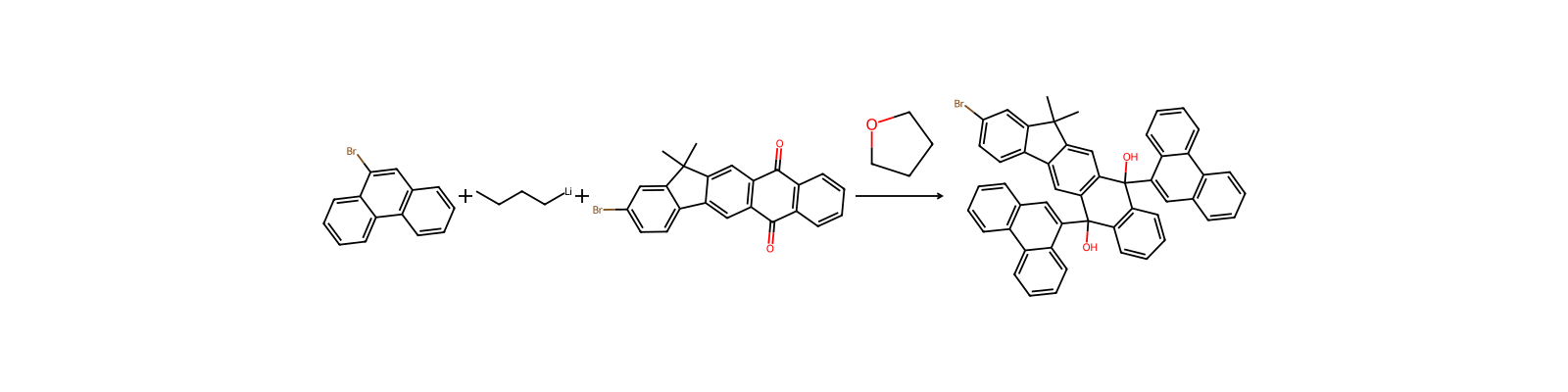


Compound notes
Loading…