
Thymine
Completing data — refresh the page later to see the latest
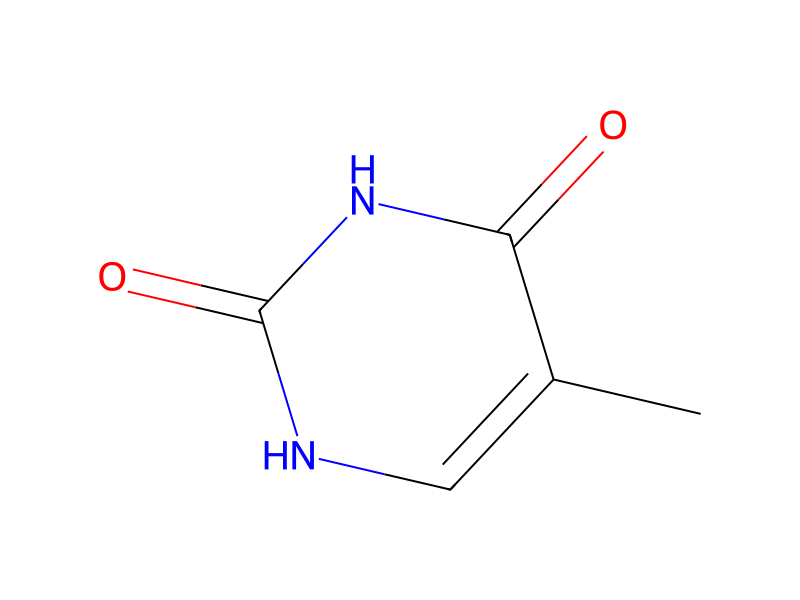
Basic information
- CAS
2792-47-4- Standard SMILES
Cc1c[nH]c(=O)[nH]c1=O- InChIKey
RWQNBRDOKXIBIV-UHFFFAOYSA-N- Molecular formula
- C5H6N2O2
- Average molar mass
- 126.11 g/mol
- Monoisotopic mass
- 126.04292743
Overview
Thymine is a pyrimidine nucleobase that is uracil in which the hydrogen at position 5 is replaced by a methyl group. It has a role as a mouse metabolite, an Escherichia coli metabolite and a human metabolite. It is a pyrimidine nucleobase and a pyrimidone.
Names & identifiers
- Preferred name
- Thymine
- IUPAC
- 5-methyl-1H-pyrimidine-2,4-dione
- English name
- Thymine
- Molecular formula
- C5H6N2O2
- Molecular weight
- 126.11
Names & synonyms
thymine65-71-45-methyluracil2,4-Dihydroxy-5-methylpyrimidineThyminThymine anhydrate5-Methyl-1,2,3,4-tetrahydropyrimidine-2,4-dione2,4(1H,3H)-Pyrimidinedione, 5-methyl-Thymin (purine base)5-methyl-1H-pyrimidine-2,4-dione5-methyl-2,4(1H,3H)-pyrimidinedioneDTXSID4052342
Show more names
5-Methylpyrimidine-2,4(1H,3H)-dione5-Methyl-2,4-dioxypyrimidineZidovudine Related CoMpound C4(1H,3H)-Pyrimidinedione,5-methyl-2hymine
QR26YLT7LTNSC14705CHEBI:17821NSC-14705DTXCID4030914NSC-1686635 MethyluracilRefChem:6308
Database identifiers
- CAS
2792-47-4、65-71-4- PubChem CID
- 1135
- DTXSID
DTXSID4052342- ChEMBL
CHEMBL993- ChEBI
CHEBI:17821- UNII
- QR26YLT7LT
- EC Number
- 200-616-1
- Nikkaji
- J2.357D
Properties
Computed structural propertiesFilling in
- XLogP
- -0.6
- Topological polar surface area
- 58.2 Ų
- Hydrogen bond donors
- 2
- Hydrogen bond acceptors
- 2
- Rotatable bonds
- 0
- Heavy atoms
- 9
- Formal charge
- 0
- Complexity
- 195
Experimental & physicochemical properties
Chemical ClassesBiological Agents -> Nucleic Acids and Derivatives
DrugsPharmaceuticals -> Listed in ZINC15
SpringerMaterials PropertiesCoriolis coupling
LogP-0.62
Solubility3.82 mg/mL
Melting Point320 °C
Vapor Pressure0.00000133 [mmHg]
Physical Description
Solid; [Merck Index] White crystalline powder; [Alfa Aesar MSDS]
Solid
Ionization Efficiency
Positive
1.16
2.7
Agilent XCT
Electrospray ionization
formic acid (5.3nM)
Collision Cross Section
Safety & regulation
Safety information is for reference only and does not replace the supplier’s Safety Data Sheet (SDS), applicable regulations, or professional assessment.
GHS classification
GHS Classification
This chemical does not meet GHS hazard criteria for 57.1% (4 of 7) of all reports.
Warning
H319 (42.9%): Causes serious eye irritation [Warning Serious eye damage/eye irritation]
P264+P265, P280, P305+P351+P338, and P337+P317 (click each P-code to see the statement)
Aggregated GHS information provided per 7 reports by companies from 3 notifications to the ECHA C&L Inventory.
Hazard information
Regulatory Information
Chemical: 2,4(1H,3H)-Pyrimidinedione, 5-methyl-
2,4(1H,3H)-Pyrimidinedione, 5-methyl-: Does not have an individual approval but may be used under an appropriate group standard
Other Safety InformationIMAP assessments - 2,4(1H,3H)-Pyrimidinedione, 5-methyl-: Environment tier I assessment
Hazards SummaryMay cause eye irritation; [Alfa Aesar MSDS]
Hazard Classes and CategoriesEye Irrit. 2A (42.9%)
Safety data
- PPE
- Eyeshields, Gloves, type N95 (US)
- wgk
- 2
- tsca
- TSCA listed
- rtecs
- XP2100000
- hs_code
- 29335990
- risk_code
- 36-36/37/38
- Signal word
- Warning
- Symbol(GHS)
- GHS07
Chemistry & industry
Pharmacology
Tissue LocationsEpidermis
Cellular LocationsExtracellular
Metabolite PathwaysBeta Ureidopropionase Deficiency
Uses & manufacturing
UsesComponent of nucleic acids; Used in biochemical research; [Merck Index]
General Manufacturing Information2,4(1H,3H)-Pyrimidinedione, 5-methyl-: ACTIVE
Applications
Uses(1) Thymine, along with adenine, guanine, and cytosine, is one of the four nucleic acid bases in DNA; thymine can be used to study chemical processes that affect DNA structure, such as a radiation-induced free radical product resulting in base cross-linking reaction and derivatization reaction. Thymine can be used to study the energy and hydrogen bonding kinetic parameters with other nucleic acid bases such as adenine; thymine is used for the development of (Hg) detectors with sensitive, nanoparticle-based structures and coordination chemistry. (2) 5-methyl pyrimidine is an important component of genetic material, is the key intermediates of synthestising anti-AIDS drugs AZT, DDT and related drugs key intermediates, but also the starting material of synthetising anti-tumor, antiviral drug β-thymidine.
UsesThymine is a nitrogenous base component in the nucleic acid of DNA.
UsesA nucleobase found in deoxyribonucleic acids (DNA).
UsesThymine (Zidovudine EP Impurity C) is a nitrogenous base component in the nucleic acid of DNA.
General DescriptionThymine (Zidovudine Related Compound C) is a process related impurity of antiretroviral drug zidovudine. Zidovudine belongs to the class of drugs known as nucleoside reverse transcriptase inhibitors and is generally used in the prevention and treatment of HIV/AIDS.Pharmaceutical secondary standards for application in quality control, provide pharma laboratories and manufacturers with a convenient and cost-effective alternative to the preparation of in-house working standards.
Related reactions
152 records






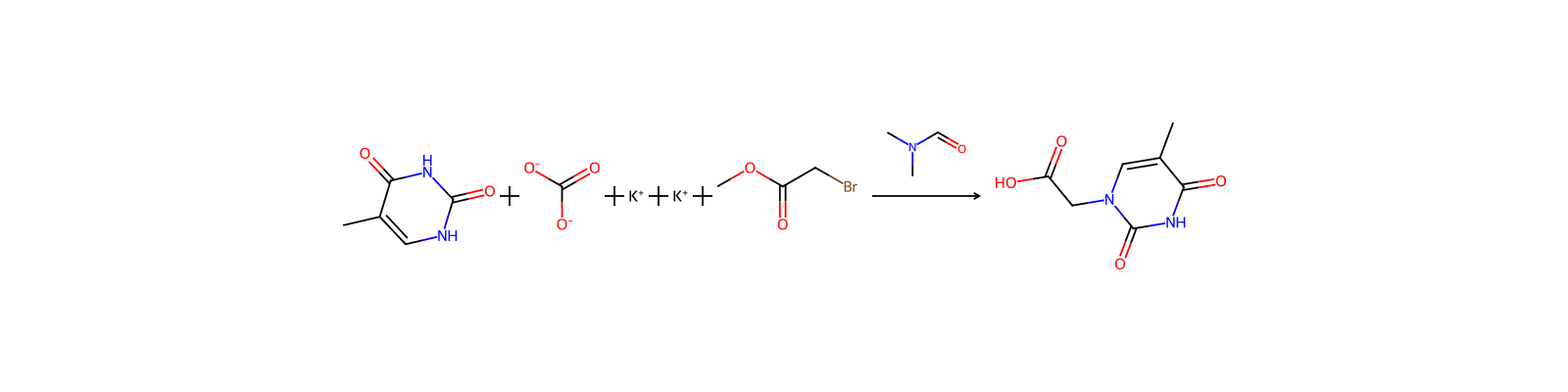
Compound notes
Loading…