
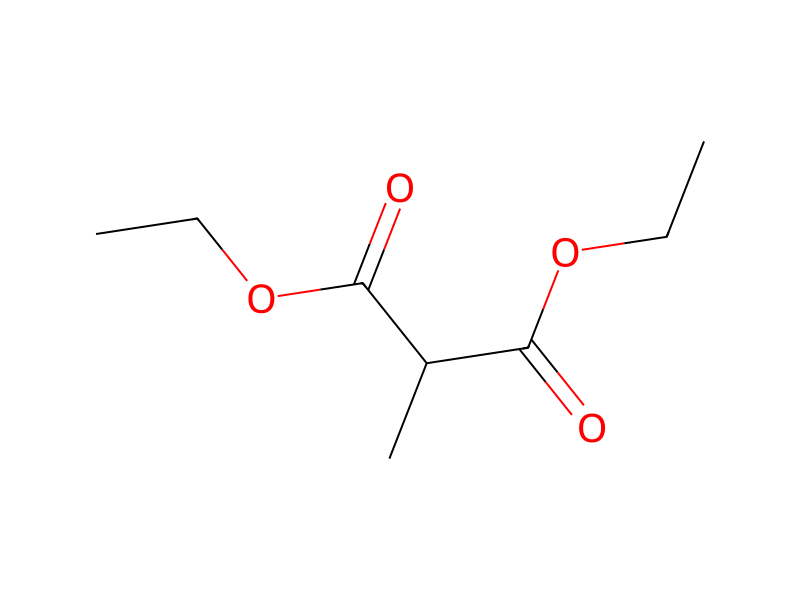
Basic information
- CAS
609-08-5- Standard SMILES
CCOC(=O)C(C)C(=O)OCC- InChIKey
UPQZOUHVTJNGFK-UHFFFAOYSA-N- Molecular formula
- C8H14O4
- Average molar mass
- 174.19 g/mol
- Monoisotopic mass
- 174.08920893
Names & identifiers
- Preferred name
- Diethyl methylmalonate
- IUPAC
- diethyl 2-methylpropanedioate
- English name
- Diethyl methylmalonate
- Molecular formula
- C8H14O4
- Molecular weight
- 174.19
Names & synonyms
DIETHYL METHYLMALONATE609-08-5Diethyl 2-methylmalonateMethylmalonic acid diethyl esterPropanedioic acid, methyl-, diethyl esterdiethyl methylpropanedioateMalonic acid, methyl-, diethyl esterEthyl methylmalonatePropanedioic acid, 2-methyl-, 1,3-diethyl ester2-Methylmalonic acid diethyl esterEthyl methylmalonate (VAN)7KD9S8CQN2
Show more names
DIETHYL 2-METHYLPROPANEDIOATERARECHEM AL BI 0301DiethylisosuccinateDiethyl methylmaloteDiethyl methylmalonaDiethyl MethyMalonatedlethylmethylmalonate
NSC 8700NSC-8700EINECS 210-175-7diethyl alpha-methylmalonateDTXSID0060565DIETHYL .ALPHA.-METHYLMALONATEDiethyl 2methylmalonateRefChem:587247
Database identifiers
- CAS
609-08-5- PubChem CID
- 11857
- DTXSID
DTXSID0060565- UNII
- 7KD9S8CQN2
- EC Number
- 210-175-7
- Nikkaji
- J43.453A
Properties
Computed structural properties
- XLogP
- 1.4
- Topological polar surface area
- 52.6 Ų
- Hydrogen bond donors
- 0
- Hydrogen bond acceptors
- 4
- Rotatable bonds
- 6
- Heavy atoms
- 12
- Formal charge
- 0
- Complexity
- 146
Experimental & physicochemical properties
Chemical ClassesOther Classes -> Esters, Other
SpringerMaterials PropertiesBoiling point
Physical DescriptionClear colorless liquid; [Acros Organics MSDS]
Physicochemical properties
- Boiling point
- 198 · 198-199 °C (lit.) 78-80 °C/10 mmHg
- Density
- 1.022 g/mL · 1.022 g/mL at 20 °C (lit.)
- refractive index
- 20 · n20/D 1.413(lit.)
- Flash point
- 170 °F · 170 °F
- storage temp.
- Sealed in dry,Room Temperature
- solubility
- 1000 mg/l · 1000mg/l
- pka
- 13.13 · 13.13±0.46(Predicted)
- form
- Liquid
- Specific Gravity
- 1.013 · 1.013
- color
- Clear colorless
Safety & regulation
GHS classification
GHS Classification
This chemical does not meet GHS hazard criteria for 75% (6 of 8) of all reports.
Warning
H315 (25%): Causes skin irritation [Warning Skin corrosion/irritation]
P261, P264, P264+P265, P271, P280, P302+P352, P304+P340, P305+P351+P338, P319, P321, P332+P317, P337+P317, P362+P364, P403+P233, P405, and P501 (click each P-code to see the statement)
Aggregated GHS information provided per 8 reports by companies from 3 notifications to the ECHA C&L Inventory. Each notification may be associated with multiple companies.
Hazard information
Regulatory Information
Chemical: Propanedioic acid, methyl-, diethyl ester
Status: Active Update: 13-03-2018 https://echa.europa.eu/registration-dossier/-/registered-dossier/18586
Hazards SummaryMay cause irritation; [Acros Organics MSDS] See Malonic acid.
Hazard Classes and CategoriesSkin Irrit. 2 (25%)
Safety data
- PPE
- Eyeshields, Gloves, type ABEK (EN14387) respirator filter
- wgk
- 3
- tsca
- TSCA listed
- hs_code
- 29171990
- Signal word
- Warning
- Symbol(GHS)
- GHS07
- safety_code
- 23-24/25
- Storage Class
- 10 - Combustible liquids
- Hazard statements
- H227
- REACH Registrations
- Active
- Precautionary statements
Chemistry & industry
Uses & manufacturing
General Manufacturing InformationPropanedioic acid, 2-methyl-, 1,3-diethyl ester: ACTIVE
Applications
UsesDiethyl methylmalonate is used as intermediate for the syntheses of pharmaceuticals, e.g. non-steroidal anti-inflammatory agents with 2-acrylpropionic acid structures acrylpropionic acid structure. It is also used in the flavour and fragrance industries. Product Data Sheet
UsesDiethyl methylmalonate was used to investigate the effect of direct supplementation of the medium with di-ester of methylmalonate on erythromycin fermentation in Saccharopolyspora erythraea mutB strain.
General DescriptionDiethyl methylmalonate reacts with 2-cyclohexenone under abnormal Michael conditions form 2-(3-oxocyclohexyl)-2-cyclohexenone. It causes the alkylation of poly(chloromethylstyrene) during pahse transfer catalysis.
Upstream & downstream products
Upstream raw materials
Downstream products
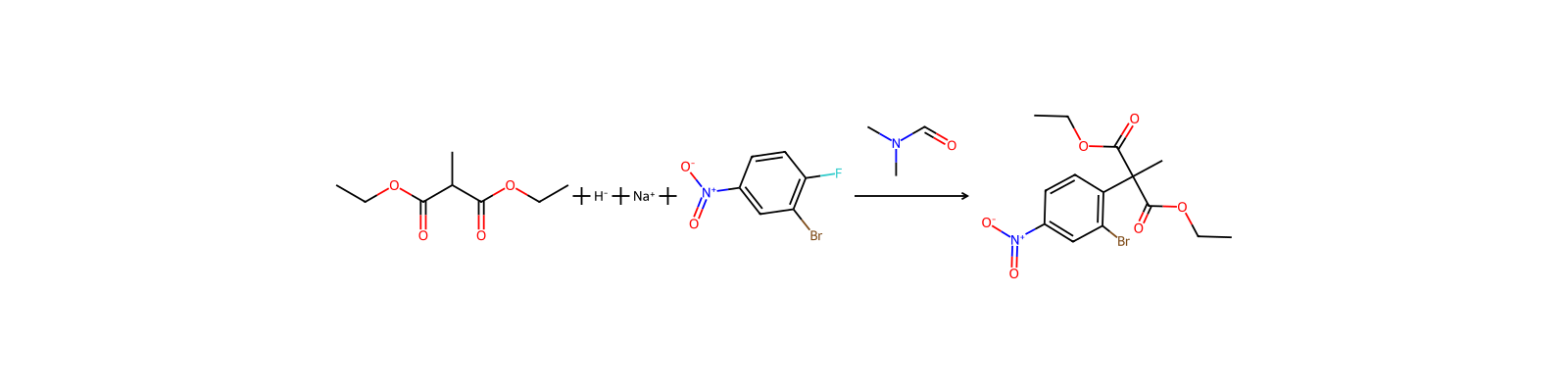
Related reactions
208 records




Compound notes
Loading…