HomeMCPWorkbenchSkills
HomeWorkbenchNotificationsMe
llms.txt · MCP GuidePrivacy Policy · Terms of Service · Supportv1.8.3
  1. Home
  2. /Compound

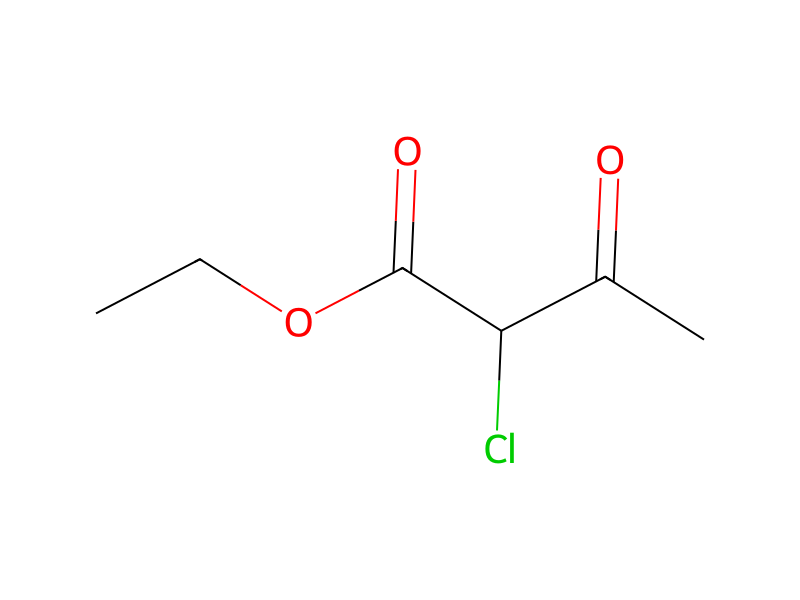
Ethyl 2-chloroacetoacetate

HCID 11858
New reaction
Print
Basic informationOverviewNames & identifiersPropertiesSafety & regulationChemistry & industryRelated reactionsCompound notes
Substructure searchFind similar structures

Basic information

CAS
609-15-4
Standard SMILES
CCOC(=O)C(Cl)C(C)=O
InChIKey
RDULEYWUGKOCMR-UHFFFAOYSA-N
Molecular formula
C6H9ClO3
Average molar mass
164.59 g/mol
Monoisotopic mass
164.0240218

Overview

inhibits synapse formation between resolvase & two directly repeated res sites; structure given in first source

Names & identifiers

Preferred name
Ethyl 2-chloroacetoacetate
IUPAC
ethyl 2-chloro-3-oxobutanoate
English name
Ethyl 2-chloroacetoacetate
Molecular formula
C6H9ClO3
Molecular weight
164.59

Names & synonyms

Ethyl 2-chloroacetoacetate609-15-4Ethyl alpha-chloroacetoacetateButanoic acid, 2-chloro-3-oxo-, ethyl esterA 21960DTXSID3049330A9GFN94N9ANSC-78426DTXCID8029286A-21960RefChem:138585210-180-4
Show more names
2-chloroacetoacetateETHYL CHLOROACETOACETATE2-CHLORACETYLETHYL ACETATE2-CHLORO-3-OXOBUTANOIC ACID2-CL-ACEAKOS BBS-00004302
Ethyl 2-chloro-3-oxobutanoate2-Chloroacetoacetic acid ethyl esterEthyl 2-chloracetoacetate2-Chloro-3-oxobutyric acid ethyl esterEthyl 2-chloro-3-oxobutyrateEthyl-2-chloracetoacetate2-Chloro-3-oxobutanoic acid, ethyl esterAcetoacetic acid, 2-chloro-, ethyl ester

Database identifiers

CAS
609-15-4
PubChem CID
11858
DTXSID
DTXSID3049330
ChEMBL
CHEMBL3186400
UNII
A9GFN94N9A
EC Number
210-180-4
Nikkaji
J60.802E

Properties

Computed structural properties

XLogP
1.1
Topological polar surface area
43.4 Ų
Hydrogen bond donors
0
Hydrogen bond acceptors
3
Rotatable bonds
4
Heavy atoms
10
Formal charge
0
Complexity
144

Experimental & physicochemical properties

Chemical ClassesOther Classes -> Halogenated Esters
Vapor Pressure0.22 [mmHg]
Physical DescriptionClear colorless liquid; [Sigma-Aldrich MSDS]

Physicochemical properties

Melting point
-80 °C · -80 °C
Boiling point
77 °C/6.8 · 77 °C/6.8 mmHg
Density
1.18 · 1.18
vapor pressure
49.4 · 49.4-100Pa at 20℃
refractive index
1.44 · 1.44
Flash point
54 °C · 54 °C
storage temp.
2 · under inert gas (nitrogen or Argon) at 2-8°C
solubility
Chloroform (Sparingly), Ethyl Acetate (Slightly)
pka
7.92 · 7.92±0.46(Predicted)
form
clear liquid
color
Colorless to Light orange to Yellow
Water Solubility
17 g/L · 17 g/L (20 ºC)
BRN
774278 · 774278
InChI
1S/C6H9ClO3/c1-3-10-6(9)5(7)4(2)8/h5H,3H2,1-2H3
InChIKey
RDULEYWUGKOCMR-UHFFFAOYSA-N
SMILES
CCOC(=O)C(Cl)C(C)=O
LogP
1.2 at · 1.2 at 20℃ and pH1-7
Surface tension
69.4 mN/m · 69.4mN/m at 1g/L and 20℃
CAS DataBase Reference
609 · 609-15-4(CAS DataBase Reference)
FDA UNII
9 GFN94N9A · A9GFN94N9A
NIST Chemistry Reference
2 · Butanoic acid, 2-chloro-3-oxo-, ethyl ester(609-15-4)
EPA Substance Registry System
2 · Ethyl 2-chloroacetoacetate (609-15-4)
UNSPSC Code
12352100 · 12352100
NACRES
22 · NA.22
Symbol(GHS)
2 · GHS02,GHS05,GHS07
Signal word
Danger
Hazard statements
315 · H315-H319-H335-H226-H302-H314
Precautionary statements
210 · P210-P233-P240-P241+P242+P243-P260-P264-P270-P301+P330+P331+P310-P303+P361+P353+P310+P363-P304+P340+P310-P305+P351+P338+P310-P403+P235-P405-P501-P280-P305+P351+P338-P310-P261-P303+P361+P353-P501a
target organs
Respiratory system
PPE
Faceshields, Gloves, Goggles, type ABEK (EN14387) respirator filter
Hazard Codes
C,Xn,F
Risk Statements
10 · 10-22-34-52/53-36/37/38-36
Safety Statements
16 · 16-26-36/37/39-45-61-37/39
RIDADR
2920 · UN 2920 8/PG 2
WGK Germany
2 · 2
F
19 · 19
Hazard Note
Corrosive
TSCA
TSCA listed
HazardClass
3.2 · 3.2
PackingGroup
III
HS Code
2918300090 · 2918300090
Storage Class
8 A · 8A - Combustible corrosive hazardous materials
Hazard Classifications
4 OralAquatic · Acute Tox. 4 OralAquatic Acute 1Eye Dam. 1Skin Corr. 1ASTOT SE 3
REACH Registrations
Active
Limited Quantities
1 L · 1.0 L (0.3 gallons) (liquid) or 1 Kg (2.2 lbs) (solid)
Excepted Quantities
Max Inner Pack (30g or 30ml) and Max Outer Pack (500g or 500ml)

Safety & regulation

Safety information is for reference only and does not replace the supplier’s Safety Data Sheet (SDS), applicable regulations, or professional assessment.

GHS classification

GHS Classification · 4 items

Danger

H226 (28.1%): Flammable liquid and vapor [Warning Flammable liquids]

P210, P233, P240, P241, P242, P243, P260, P264, P264+P265, P270, P273, P280, P301+P317, P301+P330+P331, P302+P361+P354, P303+P361+P353, P304+P340, P305+P354+P338, P316, P317, P321, P330, P363, P370+P378, P391, P403+P235, P405, and P501 (click each P-code to see the statement)

Aggregated GHS information provided per 160 reports by companies from 10 notifications to the ECHA C&L Inventory. Each notification may be associated with multiple companies.

Hazard information

Regulatory Information · 3 items

Chemical: Butanoic acid, 2-chloro-3-oxo-, ethyl ester

REACH registered substance: Ethyl 2-chloroacetoacetate (EC: 210-180-4)

Ethyl 2-chloroacetoacetate: Does not have an individual approval but may be used under an appropriate group standard

Hazards SummaryCauses burns and lachrymation; Inhalation may cause corrosive injuries to upper respiratory tract; Harmful by ingestion; [Sigma-Aldrich MSDS] See Ethyl acetoacetate. See Methyl dichloroacetate.
Hazard Classes and CategoriesFlam. Liq. 3 (28.1%)

Toxicology

Adverse EffectsDermatotoxin - Skin burns.

Safety data

F
19
PPE
Faceshields, Gloves, Goggles, type ABEK (EN14387) respirator filter
wgk
2
tsca
TSCA listed
ridadr
UN 2920 8/PG 2
hs_code
2918300090
risk_code
10-22-34-52/53-36/37/38-36
Signal word
Danger
Symbol(GHS)
GHS02,GHS05,GHS07
hazard_code
C,Xn,F
hazard_note
Corrosive
safety_code
16-26-36/37/39-45-61-37/39
hazard_class
3.2
Storage Class
8A - Combustible corrosive hazardous materials
packing_group
III
target organs
Respiratory system
Hazard statements
H315-H319-H335-H226-H302-H314
Limited Quantities
1.0 L (0.3 gallons) (liquid) or 1 Kg (2.2 lbs) (solid)
Excepted Quantities
Max Inner Pack (30g or 30ml) and Max Outer Pack (500g or 500ml)
REACH Registrations
Active
Hazard Classifications
Acute Tox. 4 OralAquatic Acute 1Eye Dam. 1Skin Corr. 1ASTOT SE 3
Precautionary statements
P210-P233-P240-P241+P242+P243-P260-P264-P270-P301+P330+P331+P310-P303+P361+P353+P310+P363-P304+P340+P310-P305+P351+P338+P310-P403+P235-P405-P501-P280-P305+P351+P338-P310-P261-P303+P361+P353-P501a

Chemistry & industry

Uses & manufacturing

UsesUsed as an intermediate; [ExPub: ECHA REACH Registrations]
General Manufacturing InformationButanoic acid, 2-chloro-3-oxo-, ethyl ester: ACTIVE

Applications

UsesEthyl 2-chloroacetoacetate was used to study reductive dechlorination of β-keto ester ethyl 2-chloroacetoacetate by Saccharomyces cerevisiae.

Upstream & downstream products

Upstream raw materials

Ethyl acetoacetateChloroacetylSulfuryl chlorideMagnesium sulfate2-Chloro-3-oxo-butyronitrileButanoic acid, 2-chloro-3-oxo-Tosyl chlorideAcetyl keteneEthyl chloroacetate

Downstream products

2,4-Dimethylthiazole-5-carboxylic acid4-Methyl-1,3-oxazole-5-carboxylic acid4-Methyl-2-phenyl-1,3-thiazole-5-carboxylic acidEthyl 4-methyl-2-phenyl-1,3-thiazole-5-carboxylate4-Methyloxazole-5-carbonyl chloride4-Methyl-2-[4-(trifluoromethyl)phenyl]-1,3-thiazole-5-carbaldehydeEthyl 2-chloro-4-methyl-1,3-thiazole-5-carboxylateEthyl 2-amino-4-methylthiazole-5-carboxylate4-Methyl-2-phenyl-1,3-thiazole-5-carbonyl chloridetert-Butyl 4-(5-formyl-4-methyl-1,3-thiazol-2-yl)piperidine-1-carboxylate3,5-Dimethyl-3H-imidazole-4-carboxylic acid ethyl esterMethyl 2-chloroacetoacetateethyl 2,4-dichloro-3-oxobutyrateOxiracetam2-Chloro-2-hydroxyiminoacetic acid ethyl ester

Related reactions

287 records
New reaction record
HRID 3919 reaction equation
HRID 3919As reactant
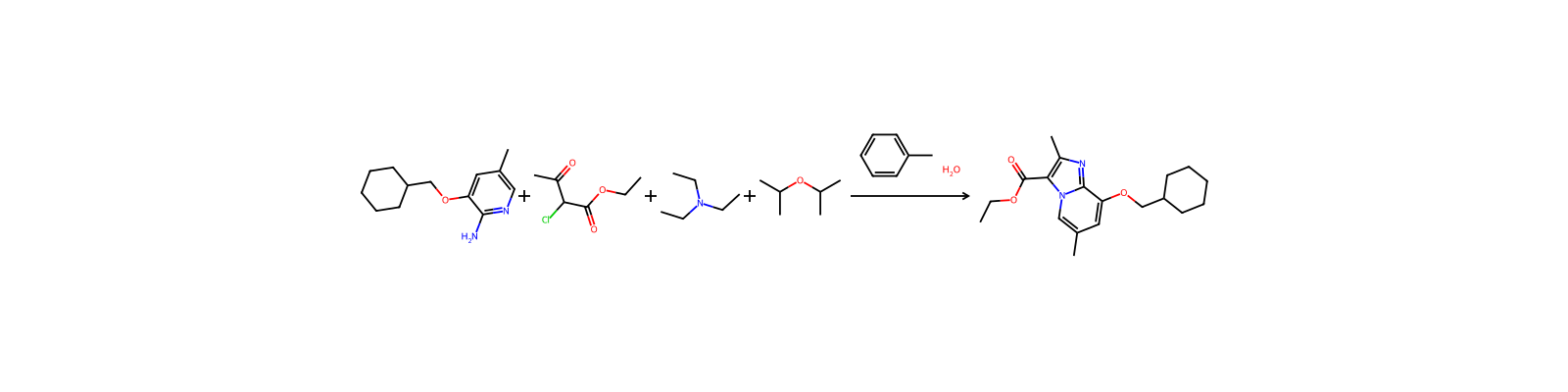
HRID 11196 reaction equation
HRID 11196As reactant
HRID 19755 reaction equation
HRID 19755As reactant
HRID 43619 reaction equation
HRID 43619As reactant
HRID 58548 reaction equation
HRID 58548As reactant
HRID 64400 reaction equation
HRID 64400As reactant
HRID 66720 reaction equation
HRID 66720As reactant
HRID 70228 reaction equation
HRID 70228As reactant
PreviousPage 1 of 36

Compound notes

On this pageBasic informationOverviewNames & identifiersPropertiesSafety & regulationChemistry & industryRelated reactionsCompound notes