HomeMCPWorkbenchSkills
HomeWorkbenchNotificationsMe
llms.txt · MCP GuidePrivacy Policy · Terms of Service · Supportv1.8.3
  1. Home
  2. /Compound

8-Methylquinoline

HCID 11910
New reaction
Print
Basic informationOverviewNames & identifiersPropertiesSafety & regulationChemistry & industryRelated reactionsCompound notes
Substructure searchFind similar structures

Basic information

CAS
611-32-5
Standard SMILES
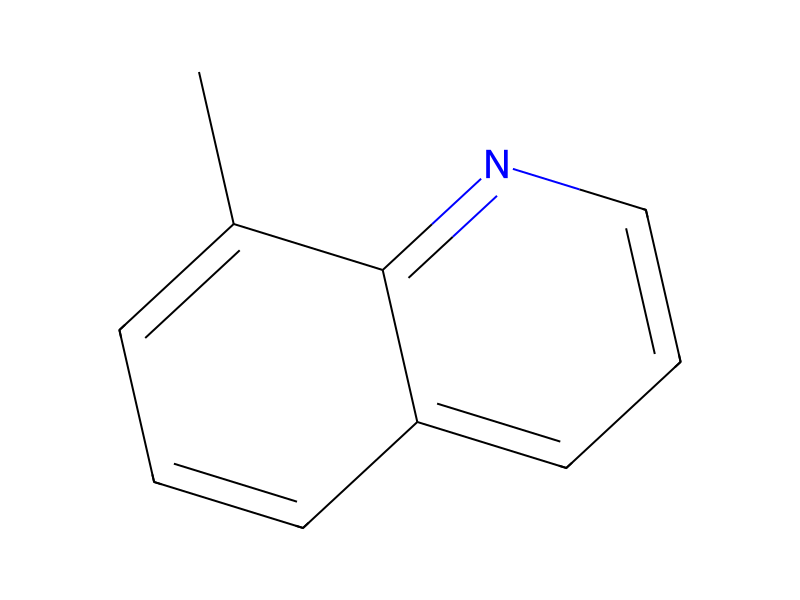
Cc1cccc2cccnc12
InChIKey
JRLTTZUODKEYDH-UHFFFAOYSA-N
Molecular formula
C10H9N
Average molar mass
143.18 g/mol
Monoisotopic mass
143.07349929

Overview

8-methylquinoline appears as yellow liquid or oil. (NTP, 1992)

Names & identifiers

Preferred name
8-Methylquinoline
IUPAC
8-methylquinoline
English name
8-Methylquinoline
Molecular formula
C10H9N
Molecular weight
143.19

Names & synonyms

8-METHYLQUINOLINE611-32-5Quinoline, 8-methyl-DTXSID8020888CHEBI:48984NSC-9409K97B12J636DTXCID80888RefChem:107278210-264-0O-Toluquinoline8-methyl-quinoline
Show more names
8-methyquinoline8-Methyl0-Toluquinoline8-Methylchinolin8-methyl-quinolin8-Methylquinoline>8-Methylquinoline,98+%
CCRIS 408MFCD000068101199266-77-7NSC 9409CHEMBL1702610Quinoline, 8-methyl-, labeled with deuteriumNSC9409EINECS 210-264-0

Database identifiers

CAS
611-32-5
PubChem CID
11910
DTXSID
DTXSID8020888
ChEMBL
CHEMBL1702610
ChEBI
CHEBI:48984
UNII
K97B12J636
EC Number
210-264-0
Nikkaji
J841I

Properties

Computed structural properties

XLogP
2.6
Topological polar surface area
12.9 Ų
Hydrogen bond donors
0
Hydrogen bond acceptors
1
Rotatable bonds
0
Heavy atoms
11
Formal charge
0
Complexity
133

Experimental & physicochemical properties

SpringerMaterials PropertiesBoiling point
LogP2.6
Density1.0719 at 68 °F (NTP, 1992) - Denser than water; will sink
Solubility1 to 5 mg/mL at 63 °F (NTP, 1992)
Flash Point221 °F (NTP, 1992)
Boiling Point478 °F at 751 mmHg (NTP, 1992)
Melting Point-112 °F (NTP, 1992)
Vapor Pressure5.9 mmHg at 75 °F ; 8.0 mmHg at 111 °F; 12.6 mmHg at 149 °F (NTP, 1992)
Physical Description · 2 items

8-methylquinoline appears as yellow liquid or oil. (NTP, 1992)

Liquid

Physicochemical properties

Safety & regulation

Safety information is for reference only and does not replace the supplier’s Safety Data Sheet (SDS), applicable regulations, or professional assessment.

GHS classification

GHS Classification · 4 items

Warning

H315 (100%): Causes skin irritation [Warning Skin corrosion/irritation]

P203, P261, P264, P264+P265, P271, P280, P302+P352, P304+P340, P305+P351+P338, P318, P319, P321, P332+P317, P337+P317, P362+P364, P403+P233, P405, and P501 (click each P-code to see the statement)

Aggregated GHS information provided per 47 reports by companies from 5 notifications to the ECHA C&L Inventory. Each notification may be associated with multiple companies.

Hazard information

Regulatory Information · 2 items

Chemical: Quinoline, 8-methyl-

Quinoline, 8-methyl- is listed on the EPA's Chemical Data Reporting (CDR) system. Manufacturers and importers of Quinoline, 8-methyl- are required to report information about their production and use of this chemical to the EPA under the Toxic Substances Control Act (TSCA). (40 eCFR Part 711)

Fire HazardsThis chemical is combustible. (NTP, 1992)
Health HazardsSYMPTOMS: This compound may be absorbed through the skin and it causes skin irritation. The vapor or mist is irritating to the eyes, mucous membranes and upper respiratory tract.
Reactive GroupAmines, Phosphines, and Pyridines
Reactivity Profile · 1 item

8-METHYLQUINOLINE may be sensitive to exposure to light. May react vigorously with strong oxidizing agents and strong acids (NTP, 1992). Neutralizes acids in exothermic reactions to form salts plus water. May be incompatible with isocyanates, halogenated organics, peroxides, phenols (acidic), epoxides, anhydrides, and acid halides. Flammable gaseous hydrogen may be generated in combination with strong reducing agents, such as hydrides.

Chemistry & industry

Uses & manufacturing

U.S. Production2023: 10,582 lb
Industry UsesCorrosion inhibitor
General Manufacturing Information · 2 items

All Other Chemical Product and Preparation Manufacturing

Quinoline, 8-methyl-: ACTIVE

Applications · 3 items

Uses8-Methylquinoline has been used in preparation of osmium chloridophosphine complexes, as quinoline carbene tautomers.Tumorigenic potential of 8-methylquinoline has been evaluated in newborn CD-1 mice and Sprague-Dawley rats.

Uses8-Methylquinoline is used in QSAR treatment of mutagenicity and cytotoxicity of quinolines.

General DescriptionYellow liquid or oil.

Upstream & downstream products

Upstream raw materials

Sodium sulfateSodium chlorideGlycerolSodium iodideo-ToluidineEthyl acetateSodium hydroxideSulfuric acid

Downstream products

8-Quinolinecarbaldehyde

Related reactions

25 records
New reaction record
HRID 39733 reaction equation
HRID 39733As reactant
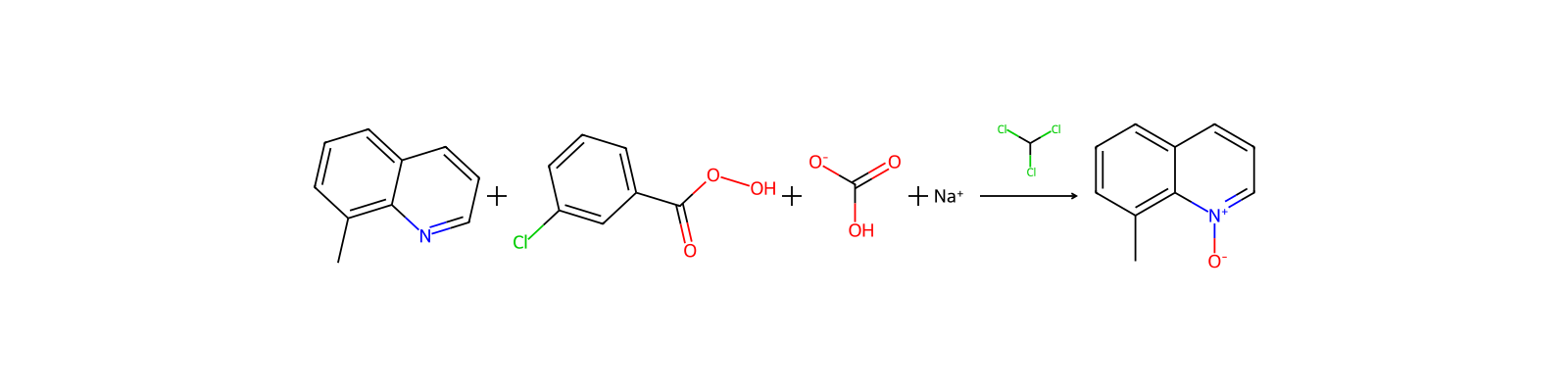
HRID 43194 reaction equation
HRID 43194As reactant
HRID 133099 reaction equation
HRID 133099As reactant
HRID 327435 reaction equation
HRID 327435As reactant
HRID 376498 reaction equation
HRID 376498As reactant
HRID 501540 reaction equation
HRID 501540As reactant
HRID 751060 reaction equation
HRID 751060As reactant
HRID 828560 reaction equation
HRID 828560As reactant
PreviousPage 1 of 4

Compound notes

On this pageBasic informationOverviewNames & identifiersPropertiesSafety & regulationChemistry & industryRelated reactionsCompound notes
Melting point
-80 °C · -80 °C
Boiling point
248 °C · 248 °C
Density
1.08 · 1.08
refractive index
1.62 · 1.62
Flash point
105 °C · 105 °C - closed cup
storage temp.
Room Temperature
solubility
Chloroform, Methanol
pka
5.03 · 5.03±0.17(Predicted)
form
clear liquid
Specific Gravity
1.052 · 1.052
color
Colorless to Orange to Green
Water Solubility
0.1 · 0.1-0.5 g/100 mL at 17 ºC
BRN
111340 · 111340
InChI
1S/C10H9N/c1-8-4-2-5-9-6-3-7-11-10(8)9/h2-7H,1H3
InChIKey
JRLTTZUODKEYDH-UHFFFAOYSA-N
SMILES
Cc1cccc2cccnc12
CAS DataBase Reference
611 · 611-32-5(CAS DataBase Reference)
EWG's Food Scores
1 · 1
FDA UNII
97 B12J636 · K97B12J636
NIST Chemistry Reference
8 · Quinoline, 8-methyl-(611-32-5)
EPA Substance Registry System
8 · 8-Methylquinoline (611-32-5)
UNSPSC Code
12352100 · 12352100
NACRES
22 · NA.22
Symbol(GHS)
7 · GHS07
Signal word
Warning
Hazard statements
315 · H315-H319-H335
Precautionary statements
501 · P501-P261-P271-P264-P280-P302+P352-P337+P313-P305+P351+P338-P362+P364-P332+P313-P304+P340+P312-P403+P233-P405
target organs
Respiratory system
PPE
Eyeshields, Gloves, type ABEK (EN14387) respirator filter
Hazard Codes
Xi,Xn
Risk Statements
36 · 36/37/38-68-22
Safety Statements
26 · 26-36-45-36/37/39
WGK Germany
3 · 3
RTECS
562000 · VC0562000
TSCA
TSCA listed
HazardClass
IRRITANT
HS Code
2933490090 · 2933490090
Storage Class
10 · 10 - Combustible liquids
Hazard Classifications
2 Skin · Eye Irrit. 2Skin Irrit. 2STOT SE 3
Air and Water ReactionsSlightly soluble in water.
Hazard Classes and CategoriesSkin Irrit. 2 (100%)

Safety & protection

Fire FightingFires involving this material can be controlled with a dry chemical, carbon dioxide or Halon extinguisher. (NTP, 1992)
First Aid · 1 item

EYES: First check the victim for contact lenses and remove if present. Flush victim's eyes with water or normal saline solution for 20 to 30 minutes while simultaneously calling a hospital or poison control center. Do not put any ointments, oils, or medication in the victim's eyes without specific instructions from a physician. IMMEDIATELY transport the victim after flushing eyes to a hospital even if no symptoms (such as redness or irritation) develop.

Nonfire Spill Response · 1 item

SMALL SPILLS AND LEAKAGE: If you spill this chemical, FIRST REMOVE ALL SOURCES OF IGNITION. Then, use absorbent paper to pick up all liquid spill material. Your contaminated clothing and absorbent paper should be sealed in a vapor-tight plastic bag for eventual disposal. Solvent wash all contaminated surfaces with 60-70% ethanol followed by washing with a soap and water solution. Do not reenter the contaminated area until the Safety Officer (or other responsible person) has verified that the area has been properly cleaned.

Personal Protective Equipment (PPE) · 1 item

RECOMMENDED RESPIRATOR: Where the neat test chemical is weighed and diluted, wear a NIOSH-approved half face respirator equipped with an organic vapor/acid gas cartridge (specific for organic vapors, HCl, acid gas and SO2) with a dust/mist filter. (NTP, 1992)

Safety data

PPE
Eyeshields, Gloves, type ABEK (EN14387) respirator filter
wgk
3
tsca
TSCA listed
rtecs
VC0562000
hs_code
2933490090
risk_code
36/37/38-68-22
Signal word
Warning
Symbol(GHS)
GHS07
hazard_code
Xi,Xn
safety_code
26-36-45-36/37/39
hazard_class
IRRITANT
Storage Class
10 - Combustible liquids
target organs
Respiratory system
Hazard statements
H315-H319-H335
Hazard Classifications
Eye Irrit. 2Skin Irrit. 2STOT SE 3
Precautionary statements
P501-P261-P271-P264-P280-P302+P352-P337+P313-P305+P351+P338-P362+P364-P332+P313-P304+P340+P312-P403+P233-P405
2-Acetonicotinic acid
2,8-Dimethylquinoline
8-Bromomethylquinoline
Quinoline

Additional notes

DefinitionChEBI: A methylquinoline carrying a methyl substituent at position 8.