
HRID 27837As reactant

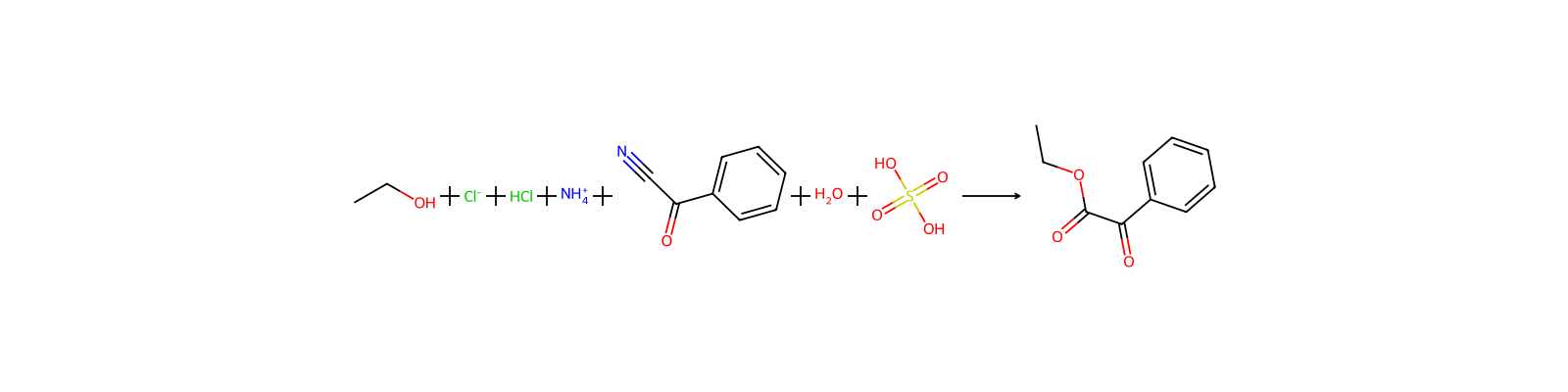
613-90-1N#CC(=O)c1ccccc1GJQBHOAJJGIPRH-UHFFFAOYSA-NBenzoyl cyanide is an alpha-ketonitrile and an aromatic ketone. It is functionally related to a benzoic acid.
613-90-1DTXSID2060626CHEBI:51853Safety information is for reference only and does not replace the supplier’s Safety Data Sheet (SDS), applicable regulations, or professional assessment.
Danger
H300 (100%): Fatal if swallowed [Danger Acute toxicity, oral]
P264, P270, P301+P316, P321, P330, P405, and P501 (click each P-code to see the statement)
Aggregated GHS information provided per 41 reports by companies from 3 notifications to the ECHA C&L Inventory.
UsesUsing benzoyl cyanide as an electrophile also gives selective acylation of the 3-position, as does levulinic acid in the presence of DCC. Benzoyl cyanide is used to study the mechanism of reduction of benzoyl cyanide in acetonitrile, N,N-dimethylformamide and acetonitrile. It undergoes hydrolysis by Rhodococcus sp. CCZU10-1 to form benzoylformic acid. Reagent for selective acylation of amino compounds.
General DescriptionBenzoyl cyanide is used to study the mechanism of reduction of benzoyl cyanide in acetonitrile, N,N-dimethylformamide and acetonitrile. It undergoes hydrolysis by Rhodococcus sp. CCZU10-1 to form benzoylformic acid.
PreparationBenzoyl cyanide is prepared by treatment of benzoyl chloride with sodium cyanide under phase-transfer catalytic conditions. This process is also used to convert 4-methyl, 4-methoxy, and 4-chlorobenzoyl chlorides into the corresponding benzoyl cyanides, and similarly cinnamoyl chloride into cinnamoyl cyanide (98%).




DefinitionChEBI: Benzoyl cyanide is an alpha-ketonitrile and an aromatic ketone. It is functionally related to a benzoic acid.