
2-Bromoaniline
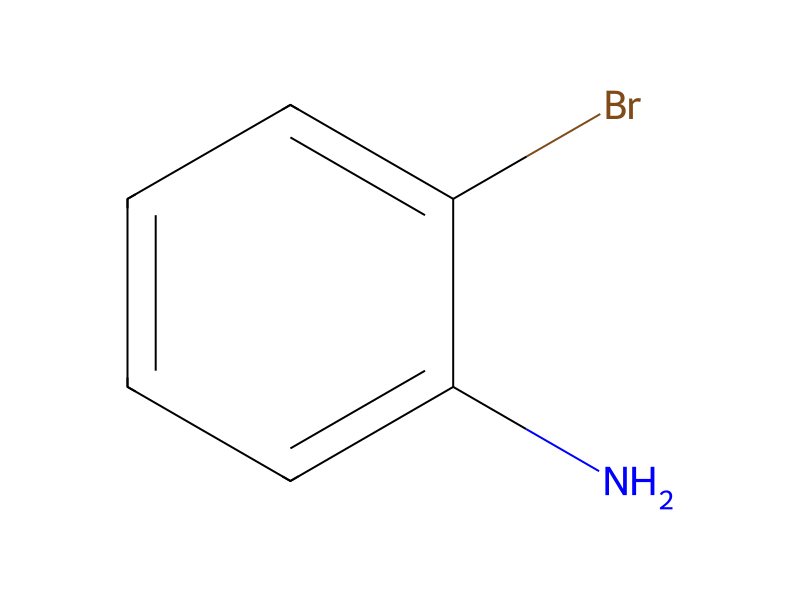
Basic information
- CAS
615-36-1- Standard SMILES
Nc1ccccc1Br- InChIKey
AOPBDRUWRLBSDB-UHFFFAOYSA-N- Molecular formula
- C6H6BrN
- Average molar mass
- 172.02 g/mol
- Monoisotopic mass
- 170.96836
Names & identifiers
- Preferred name
- 2-Bromoaniline
- IUPAC
- 2-bromoaniline
- English name
- 2-Bromoaniline
- Molecular formula
- C6H6BrN
- Molecular weight
- 172.02
Names & synonyms
2-BROMOANILINE615-36-1o-BromoanilineBenzenamine, 2-bromo-Aniline, o-bromo-o-AminobromobenzeneVTP98DS78ENSC-7086DTXSID5060645RefChem:85845DTXCID0043054210-421-3
Show more names
2-Bromoanilines1-Amino-2-bromobenzene2-BromoaniLBROMOANILINE(2-)AKOS BBS-000036502-bromo-benzenamin
2-bromobenzenamine2-bromophenylamine2-bromioaniline2-bromaniline2-bromo-anilineortho-bromoanilineMFCD00007632aniline, 2-bromo-
Database identifiers
- CAS
615-36-1- PubChem CID
- 11992
- DTXSID
DTXSID5060645- UNII
- VTP98DS78E
- EC Number
- 210-421-3
- Nikkaji
- J94.957D
Properties
Computed structural properties
- XLogP
- 2.1
- Topological polar surface area
- 26 Ų
- Hydrogen bond donors
- 1
- Hydrogen bond acceptors
- 1
- Rotatable bonds
- 0
- Heavy atoms
- 8
- Formal charge
- 0
- Complexity
- 74.9
Experimental & physicochemical properties
Chemical ClassesNitrogen Compounds -> Amines, Aromatic
SpringerMaterials Properties15N nuclear magnetic resonance spectrum
LogP2.11
Vapor Pressure0.04 [mmHg]
Physical DescriptionBrown solid; mp = 27-32 deg C; [Alfa Aesar MSDS]
Physicochemical properties
- Melting point
- 24 · 24-28 °C (lit.)
- Boiling point
- 229 °C · 229 °C (lit.)
- Density
- 1.52 g/mL · 1.52 g/mL at 25 °C (lit.)
- refractive index
- 1.617 · 1.617-1.619
- Flash point
- 230 °F · >230 °F
- storage temp.
- 2 · 2-8°C
- solubility
- 0.949 g/l · 0.949g/l
- pka
Safety & regulation
Safety information is for reference only and does not replace the supplier’s Safety Data Sheet (SDS), applicable regulations, or professional assessment.
GHS classification
GHS Classification
Danger
H302 (96.2%): Harmful if swallowed [Warning Acute toxicity, oral]
P260, P262, P264, P270, P273, P280, P301+P317, P302+P352, P316, P319, P321, P330, P361+P364, P391, P405, and P501 (click each P-code to see the statement)
Aggregated GHS information provided per 53 reports by companies from 12 notifications to the ECHA C&L Inventory. Each notification may be associated with multiple companies.
Hazard information
Regulatory Information
Chemical: Benzenamine, 2-bromo-
REACH registered substance: 2-bromoaniline (EC: 210-421-3)
2-Bromoaniline: Does not have an individual approval but may be used under an appropriate group standard
Hazards SummaryA skin and strong eye irritant; May induce methemoglobinemia; Harmful by ingestion and inhalation; Toxic by skin absorption; Prolonged or repeated exposure may cause organ injury; [Alfa Aesar MSDS]
Hazard Classes and CategoriesAcute Tox. 4 (96.2%)
Toxicology
Adverse EffectsMethemoglobinemia - The presence of increased methemoglobin in the blood; the compound is classified as secondary toxic effect
Safety data
- F
- 8-23
- PPE
- Eyeshields, Faceshields, Gloves, type P2 (EN 143) respirator cartridges
- wgk
- 3
Chemistry & industry
Uses & manufacturing
General Manufacturing InformationBenzenamine, 2-bromo-: ACTIVE
Applications
DescriptionO-bromoaniline, m-bromoaniline and p-bromoaniline corresponds to the three isomers of bromoaniline. All of them three are toxic with its toxicity being more severe than chloroanilines. It can be all via percutaneous absorption, being hemolytic and able to cause bladder cancer. It is mainly used for dye raw materials, such as azo dyes, quinazoline dyes and so on. Heating together with glycerol, concentrated sulfuric acid and o-bromonitrobenzene can generate 8-bromoquinoline. The preparation of the three isomers is as follows: Take the corresponding nitroaniline as raw material, have it reacted with sodium nitrite in sulfuric acid, leading to the formation of diazonium salt, followed by reaction with hydrobromic acid under the action of cuprous bromide, leading to the formation of nitrobromobenzene, further subjecting to iron powder reaction in the bromic acid to generate the above three isomers. Take benzene as raw material, under the action of iron powder, have it reacted with bromine to generate bromobenzene. It is then reacted with mixed acid (the mixture of sulfuric acid and nitric acid) to generate o-nitrobenzene and p-nitro bromobenzene (orthoaccounts of 35%; paraaccounts of 65%), so that the two are separated, followed by the same process as method one to generate o-bromoaniline and p-bromoaniline. Take bromoacetanilide as raw material, put it into sodium hydroxide solution; apply water vapor reflux to obtain the bromoaniline.
UsesOrganic synthesis intermediates
Uses2-Bromoaniline is used as a corrosion inhibitor, emulsifying and antiseptic agents. It is used in the rubber industry, e.g. diphenylguanidines, phenylenediamines mercaptobenzothiazoles, aniline ketones and etc.
Upstream & downstream products
Upstream raw materials
Downstream products
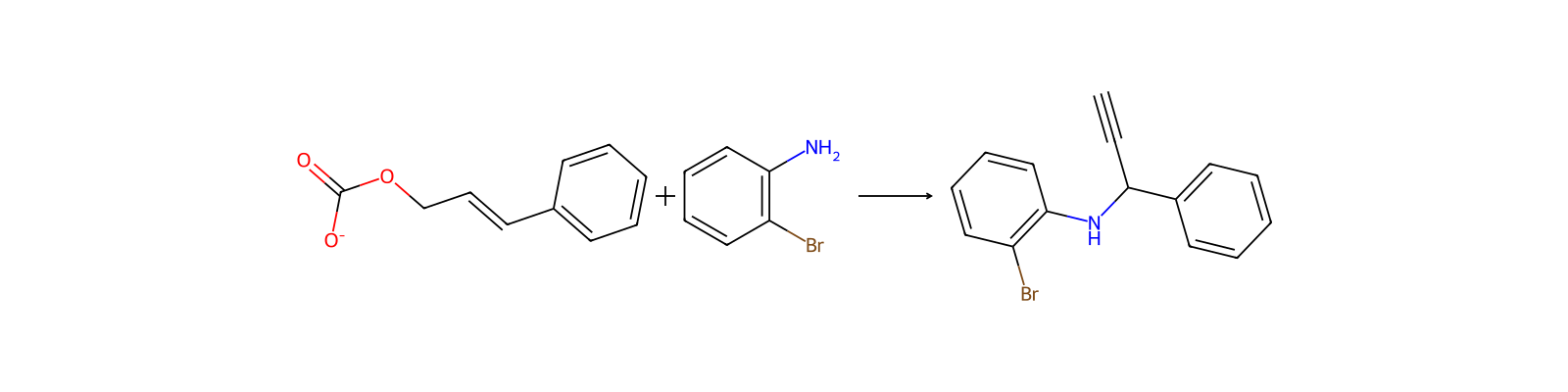
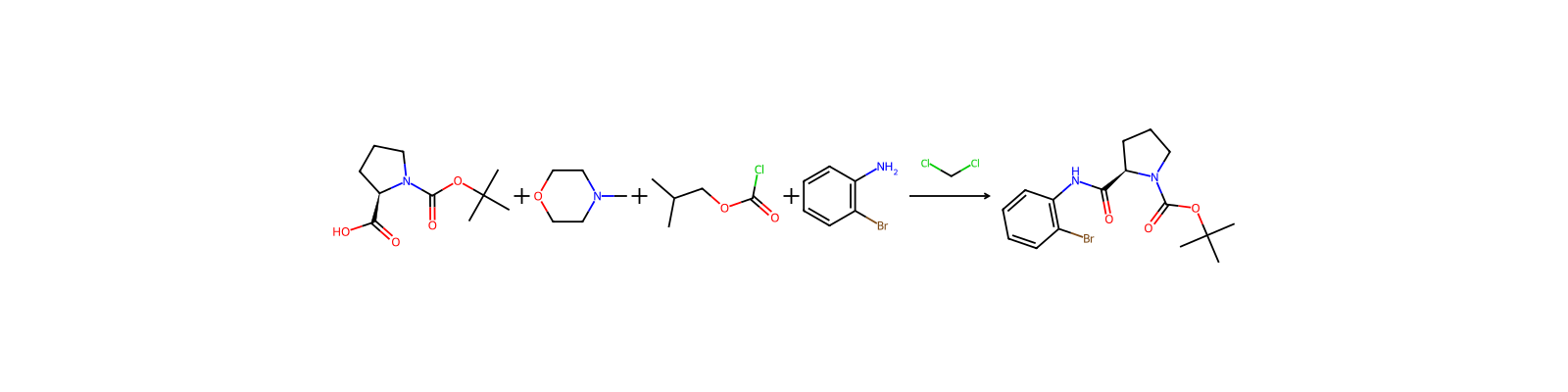
Related reactions
167 records





Compound notes
Loading…