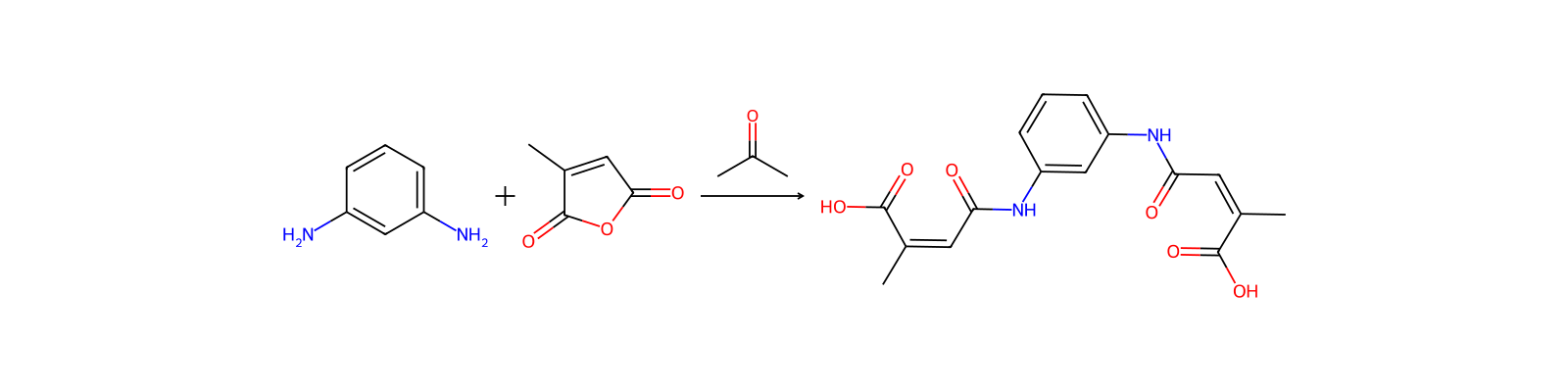
Citraconic Anhydrides
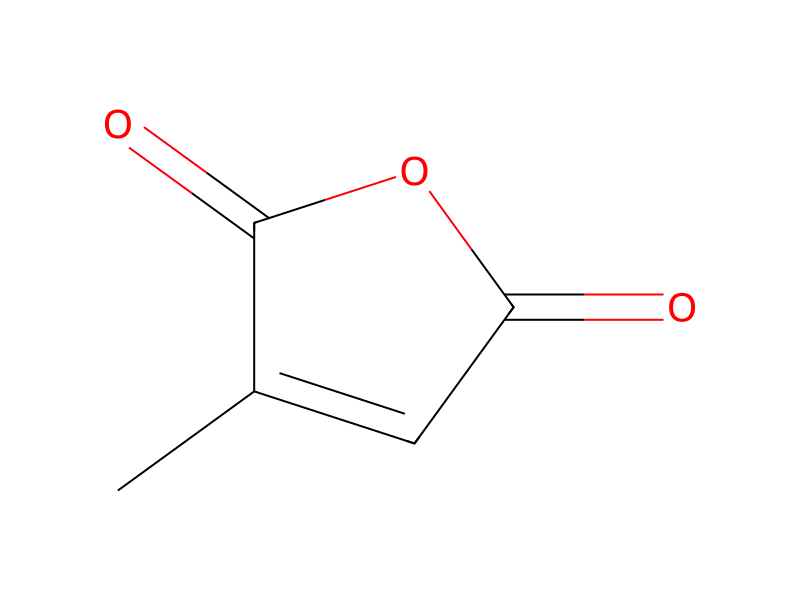
Basic information
- CAS
616-02-4- Standard SMILES
CC1=CC(=O)OC1=O- InChIKey
AYKYXWQEBUNJCN-UHFFFAOYSA-N- Molecular formula
- C5H4O3
- Average molar mass
- 112.08 g/mol
- Monoisotopic mass
- 112.01604399
Overview
Methylmaleic anhydrides.
Names & identifiers
- Preferred name
- Citraconic Anhydrides
- IUPAC
- 3-methylfuran-2,5-dione
- English name
- Citraconic anhydride
- Molecular formula
- C5H4O3
- Molecular weight
- 112.08
Names & synonyms
Citraconic AnhydridesAnhydride, CitraconicAnhydrides, CitraconicMethylmaleic AnhydridesAnhydrides, Methylmaleic2 Methylmaleic AnhydrideAnhydride, 2-MethylmaleicRefChem:388886Citraconic anhydride616-02-43-methylfuran-2,5-dione2-Methylmaleic anhydride
Show more names
CTA3-methyl-furan-2,5-dionealpha-methylmaleicanhydridemethyl-maleicanhydrid3-methyl-5-furandioneIndobufen Impurity 53
2,5-Furandione, 3-methyl-METHYLMALEIC ANHYDRIDE3-Methylmaleic anhydrideCitraconic acid anhydrideMonomethylmaleic anhydrideMaleic anhydride, methyl-3-methyl-2,5-dihydrofuran-2,5-dione3-Methyl-2,5-furandione
Database identifiers
- CAS
616-02-4- PubChem CID
- 12012
- DTXSID
DTXSID8060660- ChEMBL
CHEMBL398893- UNII
- 105NP7PMXX
- EC Number
- 210-459-0
- Nikkaji
- J55.438C、J679.309F
Properties
Computed structural properties
- XLogP
- 0.2
- Topological polar surface area
- 43.4 Ų
- Hydrogen bond donors
- 0
- Hydrogen bond acceptors
- 3
- Rotatable bonds
- 0
- Heavy atoms
- 8
- Formal charge
- 0
- Complexity
- 178
Experimental & physicochemical properties
PolymersPlastics & Rubber -> Acid Anhydrides, Cyclic
SpringerMaterials PropertiesBoiling point
Density1.2469 @ 16 °C/4 °C
Color/FormCOLORLESS LIQUID
SolubilitySOL IN ALCOHOL, ETHER, ACETONE
Boiling Point213-214 °C @ 760 MM HG
Melting Point7-8 °C
Vapor Pressure1 MM HG @ 47.1 °C
Refractive IndexIndex of refraction: 1.4716 at 21 °C/D
Physical DescriptionColorless liquid; mp = 7-8 deg C; [Hawley] Clear almost colorless liquid; mp = 7 deg C; [MSDSonline]
Other Experimental PropertiesDECOMP IN WATER
Safety & regulation
Safety information is for reference only and does not replace the supplier’s Safety Data Sheet (SDS), applicable regulations, or professional assessment.
GHS classification
GHS Classification
Danger
H311 (23.9%): Toxic in contact with skin [Danger Acute toxicity, dermal]
P233, P260, P261, P262, P264, P264+P265, P270, P271, P272, P280, P284, P301+P330+P331, P302+P352, P302+P361+P354, P304+P340, P305+P354+P338, P316, P317, P319, P321, P333+P317, P342+P316, P361+P364, P362+P364, P363, P403, P403+P233, P405, and P501 (click each P-code to see the statement)
Aggregated GHS information provided per 222 reports by companies from 12 notifications to the ECHA C&L Inventory. Each notification may be associated with multiple companies.
Hazard information
Regulatory InformationStatus: Active Update: 24-02-2017 https://echa.europa.eu/registration-dossier/-/registered-dossier/16743
Hazards SummaryAn irritant; [MSDSonline] See Maleic anhydride. See ACID ANHYDRIDES.
Hazard Classes and CategoriesAcute Tox. 3 (23.9%)
Toxicology
Non-Human Toxicity Excerpts
... CITRACONIC ACID ANHYDRIDE TESTED FULL STRENGTH BY DROP APPLICATION TO RABBITS EYES CAUSED SEVERE INJURY LIKE THAT CAUSED BY ACETIC ACID.
VARIOUS CHEMICAL GROUPS WERE EVALUATED FOR THEIR SKIN SENSITIZATION POTENTIAL IN THE GUINEA PIG. CITRACONIC ANHYDRIDE SENSITIZED 3 OF 10 GUINEA PIGS.
Safety data
- F
- 10-21
- PPE
- Eyeshields, Faceshields, Gloves, type ABEK (EN14387) respirator filter
Chemistry & industry
Uses & manufacturing
Uses
Used as reagent for alkalies, alcohols, and amines; as monomer for specialty unsaturated polyester resins; [HSDB]
REAGENT FOR ALKALIES, ALCOHOLS, AND AMINES
MONOMER FOR SPECIALTY UNSATURATED POLYESTER RESINS
ANALYTICAL REAGENT FOR ALKALIES, ALCOHOLS & AMINES
U.S. Production(1979) AT LEAST 4.54X10+8 GRAMS
Methods of Manufacturing
PRODUCTION OF CITRACONIC ANHYDRIDE FROM ITACONIC ACID.
VACUUM PYROLYSIS OF CITRIC OR ITACONIC ACID
Formulations/PreparationsGRADES: REAGENT.
General Manufacturing Information2,5-Furandione, 3-methyl-: ACTIVE
Applications
UsesReagent for alkalies, alcohols, and amines.
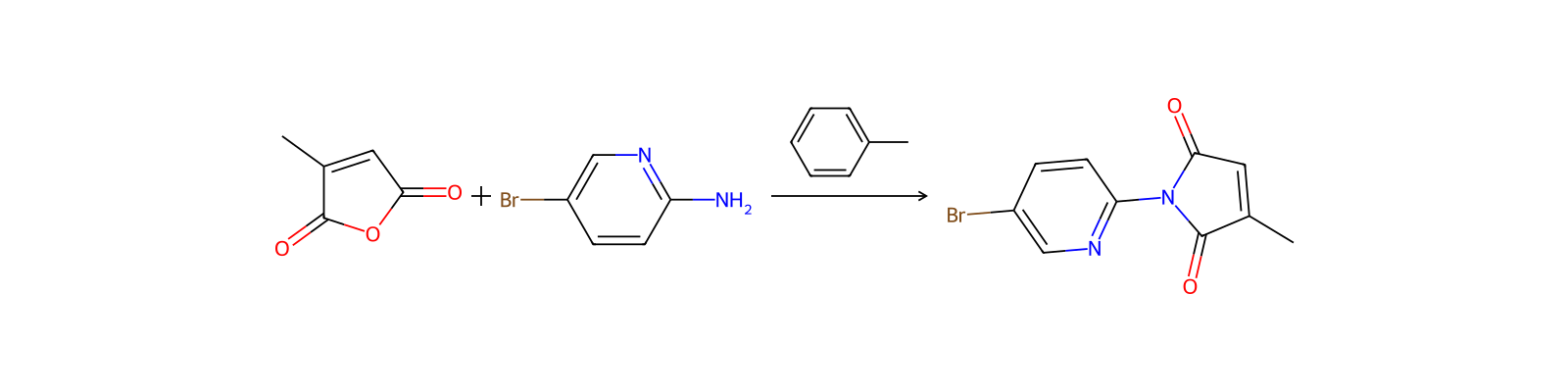
UsesCitraconic anhydride is used as a monomer for specialty unsaturated polyester resins. It is used to prepare bicyclic pyrrolidines, maleimides and co- and terpolymers. It is also used for the protection of N-terminal amino acids. Further, it is involved in the preparation of clothing ping acid and its amide. In addition to this, it is selectively used for the isolation of histidyl peptides.
UsesVersatile reagent used for the synthesis of maleimides, bicyclic pyrrolidines, and co- and terpolymers, as well as for the protection of N-terminal amino acids.
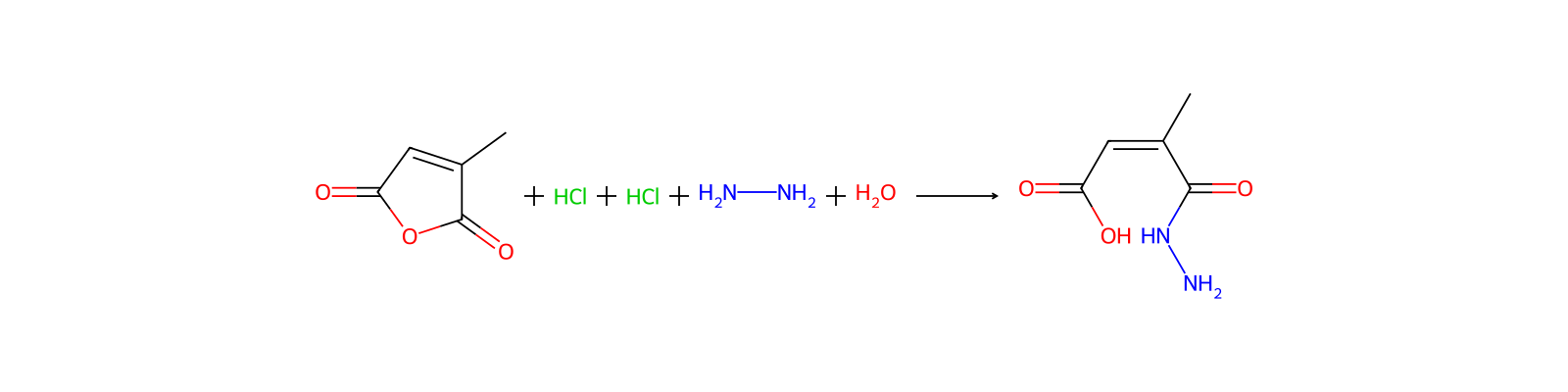
General DescriptionCitraconic anhydride is a reversible blocking agent for the lysine side chain. A major advantage of the citraconic anhydride reaction is that the blocking group can be readily removed without causing protein denaturation[1].
Upstream & downstream products
Related reactions
57 records




Compound notes
Loading…