

Basic information
- CAS
619-65-8- Standard SMILES
N#Cc1ccc(C(=O)O)cc1- InChIKey
ADCUEPOHPCPMCE-UHFFFAOYSA-N- Molecular formula
- C8H5NO2
- Average molar mass
- 147.13 g/mol
- Monoisotopic mass
- 147.0320284
Names & identifiers
- Preferred name
- 4-Cyanobenzoic acid
- IUPAC
- 4-cyanobenzoic acid
- English name
- 4-Cyanobenzoic acid
- Molecular formula
- C8H5NO2
- Molecular weight
- 147.13
Names & synonyms
4-CYANOBENZOIC ACID619-65-8p-Cyanobenzoic acidBenzoic acid, 4-cyano-p-CarboxybenzonitrileBenzoic acid, p-cyano-DTXSID9041659NSC-630650Z9A3423ZDTXCID7021659RefChem:522244210-606-9
Show more names
4-cyanobenzoateNSC 63064-cyanobenzoicCyanobenzoicacid4-Cyanobenzicacid4-cyano-benzoicaci4-Cyanobenoic acidRARECHEM AL BE 0074TIMTEC-BB SBB008570
4-CarboxybenzonitrileMFCD000025284-Cyano-benzoic acidTerephthalic acid mononitrile4-cyano benzoic acidBenzoicacid, 4-cyano-p-Cyanobenzoic Acid; 4-Carboxybenzonitrile; NSC 6306; p-Carboxybenzonitrile; p-Cyanobenzoic Acid;Terephthalic mononitrile
Database identifiers
- CAS
619-65-8- PubChem CID
- 12087
- DTXSID
DTXSID9041659- ChEMBL
CHEMBL101772- UNII
- 50Z9A3423Z
- EC Number
- 210-606-9
- Nikkaji
- J41.150G
Properties
Computed structural properties
- XLogP
- 1.6
- Topological polar surface area
- 61.1 Ų
- Hydrogen bond donors
- 1
- Hydrogen bond acceptors
- 3
- Rotatable bonds
- 1
- Heavy atoms
- 11
- Formal charge
- 0
- Complexity
- 195
Experimental & physicochemical properties
SpringerMaterials Properties13C nuclear magnetic resonance spectrum
LogP1.55
Collision Cross Section142.1 Ų [M-H]- [CCS Type: DT; Buffer gas: N2; Ionization: ESI-; Dataset: TOXCAST; Source Identifier: DTXSID9041659]
Physicochemical properties
- Melting point
- 219 · 219-221 °C (dec.)(lit.)
- Boiling point
- 267.22 °C · 267.22°C (rough estimate)
- Density
- 1.3067 · 1.3067 (rough estimate)
- refractive index
- 1.551 · 1.5510 (estimate)
- storage temp.
- 30 °C · Store below +30°C.
- solubility
- Soluble in methanol.
- form
- Crystalline Powder
- pka
- 3.55 · 3.55(at 25℃)
- color
- White to yellow-beige
- Water Solubility
- 1.2 g/L · 1.2g/L
- Sensitive
- Air Sensitive
- BRN
- 1862865 · 1862865
- Stability
- Stable. Incompatible with strong oxidizing agents, strong acids, strong bases.
- InChI
- 1S/C8H5NO2/c9-5-6-1-3-7(4-2-6)8(10)11/h1-4H,(H,10,11)
- InChIKey
- ADCUEPOHPCPMCE-UHFFFAOYSA-N
- LogP
- 1.56 · 1.56
- CAS DataBase Reference
- 619 · 619-65-8(CAS DataBase Reference)
- FDA UNII
- 50 Z9A3423Z · 50Z9A3423Z
- NIST Chemistry Reference
- 4 · Benzoic acid, 4-cyano-(619-65-8)
- EPA Substance Registry System
- 4 · Benzoic acid, 4-cyano- (619-65-8)
- UNSPSC Code
- 12352106 · 12352106
- NACRES
- 23 · NA.23
- Symbol(GHS)
- 7 · GHS07
- Signal word
- Warning
- Hazard statements
- 302 · H302+H312+H332-H315-H319-H335
- Precautionary statements
- 501 · P501-P261-P270-P271-P264-P280-P337+P313-P305+P351+P338-P362+P364-P332+P313-P301+P312+P330-P302+P352+P312-P304+P340+P312-P403+P233-P405
- target organs
- Respiratory system
- Hazard Codes
- Xn,Xi
- Risk Statements
- 20 · 20/21/22-36/37/38
- Safety Statements
- 26 · 26-36-22
- RIDADR
- 3276 · 3276
- WGK Germany
- 3 · 3
- Hazard Note
- Harmful/Irritant/Air Sensitive
- TSCA
- TSCA listed
- HazardClass
- 6.1 · 6.1
- PackingGroup
- III
- HS Code
- 29269095 · 29269095
- Storage Class
- 11 · 11 - Combustible Solids
- Hazard Classifications
- 2 Skin · Eye Irrit. 2Skin Irrit. 2STOT SE 3
- REACH Registrations
- Active
Safety & regulation
GHS classification
GHS Classification
Warning
H302 (97.9%): Harmful if swallowed [Warning Acute toxicity, oral]
P261, P264, P264+P265, P270, P271, P280, P301+P317, P302+P352, P304+P340, P305+P351+P338, P317, P319, P321, P330, P332+P317, P337+P317, P362+P364, P403+P233, P405, and P501 (click each P-code to see the statement)
Aggregated GHS information provided per 47 reports by companies from 7 notifications to the ECHA C&L Inventory. Each notification may be associated with multiple companies.
Hazard information
Regulatory InformationStatus: Active Update: 07-05-2018 https://echa.europa.eu/registration-dossier/-/registered-dossier/24401
Hazard Classes and CategoriesAcute Tox. 4 (97.9%)
Safety data
- wgk
- 3
- tsca
- TSCA listed
- ridadr
- 3276
- hs_code
- 29269095
- risk_code
- 20/21/22-36/37/38
- Signal word
- Warning
- Symbol(GHS)
- GHS07
- hazard_code
- Xn,Xi
- hazard_note
- Harmful/Irritant/Air Sensitive
- safety_code
- 26-36-22
- hazard_class
- 6.1
- Storage Class
- 11 - Combustible Solids
- packing_group
- III
- target organs
- Respiratory system
- Hazard statements
- H302+H312+H332-H315-H319-H335
- REACH Registrations
- Active
- Hazard Classifications
- Eye Irrit. 2Skin Irrit. 2STOT SE 3
- Precautionary statements
- P501-P261-P270-P271-P264-P280-P337+P313-P305+P351+P338-P362+P364-P332+P313-P301+P312+P330-P302+P352+P312-P304+P340+P312-P403+P233-P405
Chemistry & industry
Uses & manufacturing
General Manufacturing InformationBenzoic acid, 4-cyano-: ACTIVE
Applications
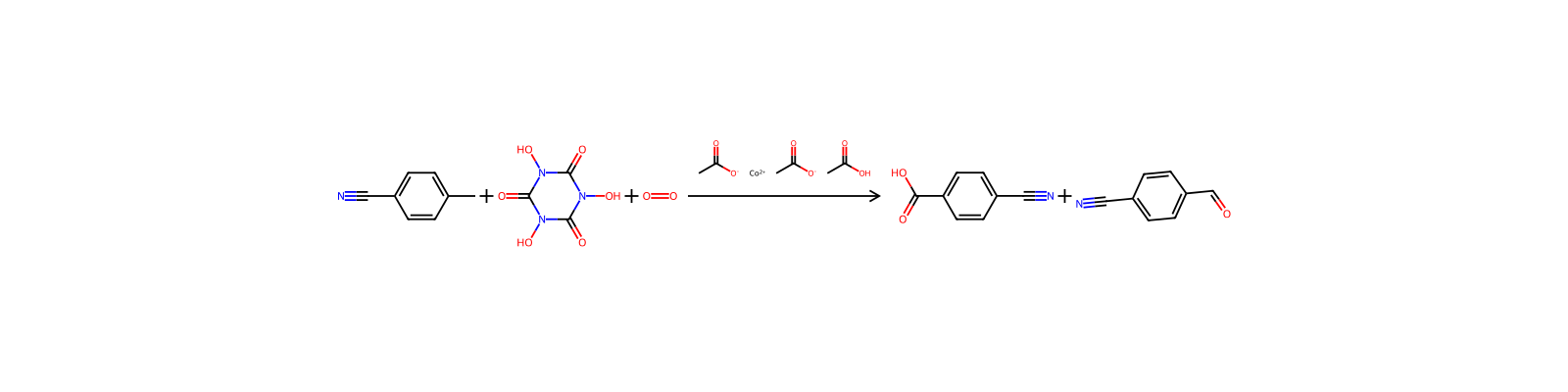
Uses4-Cyanobenzoic acid is used as an inhibitor. 4-cyanobenzaldehyde and 4-cyanobenzoic acid can inhibit both the monophenolase activity and the diphenolase activity of mushroom tyrosinase.
UsesAn inhibitor. The studies show that 4-cyanobenzaldehyde and 4-cyanobenzoic acid can inhibit both the monophenolase activity and the diphenolase activity of mushroom tyrosinase.
Upstream & downstream products
Upstream raw materials
Downstream products
Suppliers100 total
国药集团化学试剂有限公司86-21-63210123 · [email protected]
梯希爱(上海)化成工业发展有限公司021-67121386 · [email protected]
上海阿拉丁生化科技股份有限公司400-6206333 13167063860 · [email protected]
上海泰矶林实业有限公司02150630626 17717886015 · [email protected]
INTATRADE GmbH+49 3493/605464 · [email protected]
爱斯特(成都)生物制药股份有限公司+86-28-85122536 85324413 · [email protected]
Hebei Yanxi Chemical Co., Ltd.+86-17531190177 · [email protected]
科瑞迪化学400-821-5857 021-64326257 · [email protected]
上海迈瑞尔生化科技有限公司4006356688 18621169109 · [email protected]
阿法埃莎(中国)化学有限公司400-6106006 · [email protected]
太原市瑞和丰科贸有限公司+86 351 7031519 · [email protected]
安耐吉化学&3A(安徽泽升科技股份有限公司)400-0056266 · [email protected]
上海瀚鸿科技股份有限公司021-54306202 13764082696 · [email protected]
上海景颜化工科技有限公司13817811078 · [email protected]
Pure Chemistry Scientific Inc.001-857-928-2050 or 1-888-588-9418 · [email protected]
山东西亚化学有限公司13355009207 13355009207 · [email protected]
唐山默内德贸易有限公司0315-8309571 15633399667 · [email protected]
四川库利南科技有限公司400-1166-196 18981987031 · [email protected]
天津希恩思生化科技有限公司400 638 7771 · [email protected]
武汉科美沃化工有限公司027-85736489 · [email protected]
艾科试剂4008-755-333 18080918076 · [email protected]
上海思域化工科技有限公司86-21-34053660 · [email protected]
北京世纪裕立化学有限公司010-64446226 13146983882 · [email protected]
赛默飞世尔科技(中国)有限公司800-810-5118 · [email protected]
北京伊诺凯科技有限公司400-810-7969 010-59572699 · [email protected]
TCI AMERICA800-4238616 · [email protected]
TOKYO CHEMICAL INDUSTRY CO., LTD.03-36680489 · [email protected]
TCI Europe320-37350700 · [email protected]
上海贤鼎生物科技有限公司4009209199 · [email protected]
深圳康特腾科技有限公司86-0755-86635001 · [email protected]
越林试剂021-62960152 · [email protected]
北京环宇世纪化学科技有限公司hysj_bj.com
HBCChem, Inc.+1-510-219-6317 · [email protected]
日照力德士化工有限公司010-51268198 · [email protected]
美岚实业(上海)有限公司021-58958189 · [email protected]
上海石洋化工有限公司021-56795766 · [email protected]
广拓化学(上海)有限公司021-60899189-8001 18918189673 · [email protected]
上海御略医药科技有限公司021-60345187 13671753212 · [email protected]
上海麦克林生化科技股份有限公司15221275939 15221275939 · [email protected]
上海纳谦化学科技有限公司13598610367 13598610367 · [email protected]
上海洽凡生化科技有限公司+86-021-61654350 · [email protected]
上海嵩爰化工科技有限公司010-1234567 18521000990 · [email protected]
上海有朋化工有限公司021-69005955 13701776567 · [email protected]
江苏艾康生物医药研发有限公司025-66028182 17714375163 · [email protected]
上海凯赛化工有限公司021-33516722 13701817765 · [email protected]
上海彤源化工有限公司021-021-69182866 13701855675 · [email protected]
凯试(上海)科技有限公司021-50135380 · [email protected]
上海蓝润化学有限公司021-69515658 ; 69515628 13701998368 · [email protected]
上海容立化学科技有限公司021-69992220 13701886816 · [email protected]
上海康拓化工有限公司021-69185552 13701777608 · [email protected]
Related reactions
523 records




Compound notes
Loading…