
Basic information
- Standard SMILES
Cc1cccc(C=O)c1- InChIKey
OVWYEQOVUDKZNU-UHFFFAOYSA-N- Molecular formula
- C8H8O
- Average molar mass
- 120.15 g/mol
- Monoisotopic mass
- 120.05751488
Overview
M-tolualdehyde is a tolualdehyde compound with the methyl substituent at the 3-position. It has a role as a plant metabolite.
Names & identifiers
- Preferred name
- 3-Methylbenzaldehyde
- IUPAC
- 3-methylbenzaldehyde
- English name
- m-Tolualdehyde
- Molecular formula
- C8H8O
- Molecular weight
- 120.15
Names & synonyms
3-MethylbenzaldehydeM-TOLUALDEHYDE620-23-53-tolualdehydeBenzaldehyde, 3-methyl-m-Methylbenzaldehyde3-Tolylaldehydem-Tolyl aldehydeDTXSID6060717OWH6650C4YNSC-1244NSC-89859
Show more names
3-METHYLBENZALDEHYDE (STABILISED WITH HY3-Tolulaldehydem-TolulaldehydeAKOS BBS-00003269M-TOLUIC ALDEHYDE
CHEBI:28476FEMA NO. 3068, M-RefChem:800392DTXCID1043203210-632-03-methyl-benzaldehydem-ToluylaldehydeMFCD00003374
Database identifiers
- CAS
620-23-5- PubChem CID
- 12105
- DTXSID
DTXSID6060717- ChEMBL
CHEMBL4475423- ChEBI
CHEBI:28476- UNII
- OWH6650C4Y
- EC Number
- 210-632-0
- Nikkaji
- J45.959C
Properties
Computed structural properties
- XLogP
- 2
- Topological polar surface area
- 17.1 Ų
- Hydrogen bond donors
- 0
- Hydrogen bond acceptors
- 1
- Rotatable bonds
- 1
- Heavy atoms
- 9
- Formal charge
- 0
- Complexity
- 98.7
Experimental & physicochemical properties
SpringerMaterials Properties13C nuclear magnetic resonance spectrum
Density1.0189 g/cu cm at 21 °C
Flavoring AgentsEU Flavoring substances
SolubilityMiscible with ethanol, ethyl ether; very soluble in acetone; soluble in benzene, chloroform
Boiling Point
199 °C
199.00 °C. @ 760.00 mm Hg
Melting Point< 25 °C
Refractive IndexIndex of refraction: 1.5413 at 21 °C/D
Physical DescriptionSolid
Physicochemical properties
- Melting point
- 25 °C · <25 °C
- Boiling point
- 199 °C · 199 °C(lit.)
- Density
- 1.019 g/mL · 1.019 g/mL at 25 °C(lit.)
- refractive index
- 20 · n20/D 1.541(lit.)
- FEMA
- 3068 · 3068 | TOLUALDEHYDES (MIXED O,M,P)
- FLAVIS Number
- 5.028 · 05.028 | m-Tolualdehyde
- Flash point
- 173 °F · 173 °F
- storage temp.
- 2 · Inert atmosphere,2-8°C
- solubility
- Chloroform (Slightly), Ethyl Acetate (Slightly)
- form
- Liquid
- Specific Gravity
- 1.019 · 1.019
- color
- colorless to brownish-yellow
- Odor
- 100 % · at 100.00 %. sweet fruity cherry benzaldehyde phenolic
- Odor Type
- fruity
- Water Solubility
- slightly soluble
- Sensitive
- Air Sensitive
- BRN
- 741964 · 741964
- Henry's Law Constant
- 3.5 · 3.5×10-1 mol/(m3Pa) at 25℃, Brockbank (2013)
- Major Application
- cleaning productscosmeticsflavors and fragrancesfood and beveragespersonal care
- Cosmetics Ingredients Functions
- PERFUMING
- InChI
- 1S/C8H8O/c1-7-3-2-4-8(5-7)6-9/h2-6H,1H3
- InChIKey
- OVWYEQOVUDKZNU-UHFFFAOYSA-N
- SMILES
- [H]C(=O)c1cccc(C)c1
- LogP
- 2.1 · 2.10
- CAS DataBase Reference
- 620 · 620-23-5(CAS DataBase Reference)
- EWG's Food Scores
- 1 · 1
- FDA UNII
- 6650 C4Y · OWH6650C4Y
- NIST Chemistry Reference
- 3 · 3-CH3C6H4CHO(620-23-5)
- EPA Substance Registry System
- 3 · Benzaldehyde, 3-methyl- (620-23-5)
- UNSPSC Code
- 85151701 · 85151701
- NACRES
- 24 · NA.24
- Symbol(GHS)
- 7 · GHS07
- Signal word
- Warning
- Hazard statements
- 227 · H227-H302-H315-H319-H335
- Precautionary statements
- 210 e-P261-P280a-P305+P351+P338-P405-P501a · P210e-P261-P280a-P305+P351+P338-P405-P501a
- Hazard Codes
- Xi
- Risk Statements
- 36 · 36/38
- Safety Statements
- 23 · 23-24/25-37/39-26-22
- RIDADR
- 1993 · NA 1993 / PGIII
- WGK Germany
- 3 · 3
- RTECS
- 7033700 · CU7033700
- F
- 10 · 10-23
- TSCA
- TSCA listed
- HazardClass
- AIR SENSITIVE
- HS Code
- 29122900 · 29122900
- Storage Class
- 10 · 10 - Combustible liquids
- Hazardous Substances Data
- 620 · 620-23-5(Hazardous Substances Data)
Safety & regulation
GHS classification
GHS Classification
Warning
H319 (98.5%): Causes serious eye irritation [Warning Serious eye damage/eye irritation]
P264+P265, P280, P305+P351+P338, and P337+P317 (click each P-code to see the statement)
Aggregated GHS information provided per 272 reports by companies from 9 notifications to the ECHA C&L Inventory.
Hazard information
Regulatory Information
Chemical: Benzaldehyde, 3-methyl-
Commission Regulation (EC) No 1565/2000 (Repealed by Com. Implementing Reg. (EU) No 872/2012)
Benzaldehyde, 3-methyl-: Does not have an individual approval but may be used under an appropriate group standard
Other Safety InformationIMAP assessments - Benzaldehyde, 3-methyl-: Human health tier I assessment
Hazard Classes and CategoriesEye Irrit. 2A (98.5%)
Safety & protection
Disposal Methods
SRP: The most favorable course of action is to use an alternative chemical product with less inherent propensity for occupational exposure or environmental contamination. Recycle any unused portion of the material for its approved use or return it to the manufacturer or supplier. Ultimate disposal of the chemical must consider: the material's impact on air quality; potential migration in soil or water; effects on animal, aquatic, and plant life; and conformance with environmental and public health regulations.
Toxicology
Environmental Fate
TERRESTRIAL FATE: Based on a classification scheme(1), an estimated Koc value of 53(SRC), determined from a structure estimation method(2), indicates that 3-methylbenzaldehyde is expected to have high mobility in soil(SRC). Volatilization of 3-methylbenzaldehyde from moist soil surfaces is expected to be an important fate process(SRC) given an estimated Henry's Law constant of 3.0X10⁻⁵ atm-cu m/mole(SRC), developed using a fragment constant estimation method(3). 3-Methylbenzaldehyde is not expected to volatilize from dry soil surfaces(SRC) based upon an estimated vapor pressure of 0.38 mm Hg(SRC), determined from a fragment constant method(4). Based on limited information, 3-methylbenzaldehyde is expected to biodegrade in soil(SRC). A Pseudomonas strain was able to utilize 3-methylbenzaldehyde as the sole carbon source(5); a yeast strain grown with both this compound and either sucrose or pyruvate biodegraded 3-methylbenzaldehyde to the respective aromatic carbinol or alcohol(6).
AQUATIC FATE: Based on a classification scheme(1), an estimated Koc value of 53(SRC), determined from a structure estimation method(2), indicates that 3-methylbenzaldehyde is not expected to adsorb to suspended solids and sediment(SRC). Volatilization from water surfaces is expected(3) based upon an estimated Henry's Law constant of 3.0X10⁻⁵ atm-cu m/mole(SRC), developed using a fragment constant estimation method(4). Using this Henry's Law constant and an estimation method(3), volatilization half-lives for a model river and model lake are 1.5 and 14 days, respectively(SRC). According to a classification scheme(5), an estimated BCF of 11(SRC), from an estimated log Kow of 2.26(6) and a regression-derived equation(7), suggests the potential for bioconcentration in aquatic organisms is low(SRC). 3-Methylbenzaldehyde is not expected to undergo hydrolysis in the environment due to the lack of functional groups that hydrolyze under environmental conditions(3). Based on limited data, biodegradation of 3-methylbenzaldehyde will take place in water. A Pseudomonas strain was able to utilize 3-methylbenzaldehyde as the sole carbon source(8); a yeast strain grown with both this compound and either sucrose or pyruvate biodegraded 3-methylbenzaldehyde to the respective aromatic carbinol or alcohol(9).
ATMOSPHERIC FATE: According to a model of gas/particle partitioning of semivolatile organic compounds in the atmosphere(1), 3-methylbenzaldehyde, which has an estimated vapor pressure of 0.38 mm Hg at 25 °C(SRC), determined from a fragment constant method(2), is expected to exist solely as a vapor in the ambient atmosphere. Vapor-phase 3-methylbenzaldehyde is degraded in the atmosphere by reaction with photochemically-produced hydroxyl radicals(SRC); the half-life for this reaction in air is estimated to be 23 hrs(SRC), calculated from its rate constant of 1.7X10⁻¹¹ cu cm/molecule-sec at 25 °C(3). The reactivity of 3-methylbenzaldehyde (1 ppm) with NOx (0.5 ppm) in light was measured in a smog chamber as 2.36 ppb/min(4). 3-Methylbenzaldehyde contains chromophores that absorb at wavelengths >290 nm(5) and therefore may be susceptible to direct photolysis by sunlight(SRC).
Food Survey Values3-Methylbenzaldehyde has been identified as a volatile in cooked beef(1).
Effluent Concentrations
3-Methylbenzaldehyde has been possibly identified in exhaust gases from gasoline engines, diesel engines and in diesel blowby(1). 3-Methylbenzaldehyde was found in highway tunnels in Tuscarora; light duty trucks emitted 0.067 mg/km traveled or 0.238 mg/L fuel used, heavy duty trucks emitted 1.062 mg/km traveled or 1.594 mg/L fuel used(2). 3-Methylbenzaldehyde was detected in the emissions from ten four-stroke lawn mower engines at 0.13% of total emissions(3). Fine aerosol emission rates of 3-methylbenzaldehyde from heavy-duty diesel trucks, noncatalyst-equipped and catalyst-equipped automobiles were 1.6, 3.5 and 0.53 ug/km, respectively(4). 3-Methylbenzaldehyde was not detected in road dust particles collected from paved streets in a residential area of Pasadena, CA in May 1988, was detected in brake lining particles at a concn of 0.11 ug/g of particle sample and in tire wear particles at a concn of 1.4 ug/g of particle sample(5). Operation of a four-stroke outboard motor resulted in the exhaust emission of 6.4 mg/10 min of 3-methylbenzaldehyde into the water(6).
3-Methylbenzaldehyde/4-methylbenzaldehyde was measured in the emissions of burnt wood at 12 and 27 mg/kg of pine and eucalyptus, but was not detected in the emissions of burnt oak(1).
Soil Adsorption/Mobility
Using a structure estimation method based on molecular connectivity indices(1), the Koc of 3-methylbenzaldehyde can be estimated to be 53(SRC). According to a classification scheme(2), this estimated Koc value suggests that 3-methylbenzaldehyde is expected to high mobility in soil.
Atmospheric Concentrations
URBAN/SUBURBAN: 3-Methylbenzaldehyde, analyzed in Athens, Greece, June to December 2000, was detected at Patission Street at concns of 2.4-3.9 ug/cu m(1). 3-Methylbenzaldehyde was detected in air from San Paulo, Brazil at 0.090-0.831 ppb in samples taken July 1988(2). 3-Methylbenzaldehyde was found at an avg concn of 0.24 ppb in Los Angeles(3).
RURAL/REMOTE: 3-Methylbenzaldehyde, analyzed outside of Athens, Greece, June to December 2000, was detected at Likovrisi at concns of 2.4-2.8 ug/cu m(1). 3-Methylbenzaldehyde was identified in forest air collected in the Southern Black Forest, Germany, at unreported concentrations(2).
SOURCE DOMINATED: A field monitoring study along a highway in Raleigh, NC in May 1983 detected 3-methylbenzaldehyde levels of 3.01-14.27 ppb; the primary source of the 3-methylbenzaldehyde was considered to be exhaust from cars and trucks(1).
Human Toxicity Excerpts/SIGNS AND SYMPTOMS/ No evidence of skin sensitization was found in volunteers treated with dilute solutions. /Tolualdehydes/
Artificial Pollution Sources
The primary source of the 3-methylbenzaldehyde was considered to be exhaust from cars and trucks(1) and has been detected in exhaust from light duty trucks(2), heavy duty trucks(2), heavy-duty diesel trucks(3), noncatalyst-equipped and catalyst-equipped automobiles(3), four-stroke lawn mower engines(4) and four-stroke outboard motors(5). 3-Methylbenzaldehyde was also detected in brake lining particle samples and in tire wear particle samples(6).
Environmental Biodegradation
PURE CULTURE: A Pseudomonas strain, isolated from soil, was able to utilize 3-methylbenzaldehyde as the sole carbon source, giving 0.22, 0.27, and 0.40 um O2 consumed/min/mg dry weight cells, for cells previously grown on m-xylene, p-xylene, and p-methylbenzyl alcohol, respectively(1). The rates of formation of aromatic carbinol and aromatic alcohol from a yeast culture grown in both 3-methylbenzaldehyde and sucrose are 0.45 and 0.87 g/L, respectively for a 1 hr incubation(2). The rates of formation of aromatic carbinol and aromatic alcohol from a yeast culture grown in both 3-methylbenzaldehyde and pyruvate are 1.35 and 0.20 g/L, respectively, for a 1 hr incubation(2).
Environmental Bioconcentration
An estimated BCF of 11 was calculated in fish for 3-methylbenzaldehyde(SRC), using an estimated log Kow of 2.26(1) and a regression-derived equation(2). According to a classification scheme(3), this BCF suggests the potential for bioconcentration in aquatic organisms is low(SRC).
Volatilization from Water/Soil
The Henry's Law constant for 3-methylbenzaldehyde is estimated as 3.0X10⁻⁵ atm-cu m/mole(SRC) using a fragment constant estimation method(1). This Henry's Law constant indicates that 3-methylbenzaldehyde is expected to volatilize from water surfaces(2). Based on this Henry's Law constant, the volatilization half-life from a model river (1 m deep, flowing 1 m/sec, wind velocity of 3 m/sec)(2) is estimated as 1.5 days(SRC). The volatilization half-life from a model lake (1 m deep, flowing 0.05 m/sec, wind velocity of 0.5 m/sec)(2) is estimated as 14 days(SRC). 3-Methylbenzaldehyde's Henry's Law constant indicates that volatilization from moist soil surfaces may occur(SRC). 3-Methylbenzaldehyde is not expected to volatilize from dry soil surfaces(SRC) based upon an estimated vapor pressure of 0.38 mm Hg(SRC), determined from a fragment constant method(3).
Non-Human Toxicity Excerpts
/LABORATORY ANIMALS: Acute Exposure/ Tolualdehyde was a skin irritant in rabbits. ...Sensitization reactions were apparently induced in guinea-pigs. /Tolualdehydes/
/LABORATORY ANIMALS: Acute Exposure/ In rats, the acute oral and dermal toxicity were low ... /Tolualdehydes/
/LABORATORY ANIMALS: Subchronic or Prechronic Exposure/ In rats, ... pituitary gland weight was reduced following repeated oral administration. /Tolualdehydes/
/GENOTOXICITY/ There was no evidence of mutagenicity in Ames bacterial tests. /Tolualdehydes/
Environmental Abiotic Degradation
The rate constant for the vapor-phase reaction of 3-methylbenzaldehyde with photochemically-produced hydroxyl radicals has been measured as 1.7X10⁻¹¹ cu cm/molecule-sec at 25 °C(1). This corresponds to an atmospheric half-life of about 23 hours at an atmospheric concentration of 5X10+5 hydroxyl radicals per cu cm(1). The reactivity of 3-methylbenzaldehyde was measured using the smog chamber method where the aldehyde is irradiated in a mixture with nitric oxide and air; the reactivity of 1 ppm of 3-methylbenzaldehyde with 0.5 ppm of NOx was measured as 2.36 ppb/min(2). 3-Methylbenzaldehyde is not expected to undergo hydrolysis in the environment due to the lack of functional groups that hydrolyze under environmental conditions(3). 3-Methylbenzaldehyde contains chromophores that absorb at wavelengths >290 nm(3) and therefore may be susceptible to direct photolysis by sunlight(SRC).
Safety data
- F
- 10-23
- wgk
- 3
- tsca
- TSCA listed
- rtecs
- CU7033700
- ridadr
- NA 1993 / PGIII
- hs_code
- 29122900
- risk_code
- 36/38
- Signal word
- Warning
- Symbol(GHS)
- GHS07
- hazard_code
- Xi
- safety_code
- 23-24/25-37/39-26-22
- hazard_class
- AIR SENSITIVE
- Storage Class
- 10 - Combustible liquids
- Hazard statements
- H227-H302-H315-H319-H335
- Precautionary statements
- P210e-P261-P280a-P305+P351+P338-P405-P501a
- Hazardous Substances Data
- 620-23-5(Hazardous Substances Data)
Chemistry & industry
Pharmacology
Metabolism/Metabolites
... m-Xylene (m-XYL) has been shown to alter cytochrome P-450 (CYP) activity in an organ- and isozyme-specific manner. The purpose of this work was to determine if the metabolism of m-XYL to the inhibitory metabolite m-tolualdehyde (m-ALD) is the cause of inhibition of CYP isozymes following in vivo inhalation exposure to m-XYL (100, 300 ppm), 3-methylbenzyl alcohol (3-MBA) (50, 100 ppm), or m-ALD (50, 100 ppm). A single 6-hr inhalation exposure of rats to m-XYL inhibited pulmonary CYPs 2B1, 2E1, and 4B1 in a dose-dependent manner. Inhalation of 3-MBA inhibited pulmonary CYPs 2B1 and 4B1 in a dose-dependent manner. m-ALD inhibited pulmonary CYPs 2B1 and 2E1 in a dose-dependent manner, while 4B1 activity was increased dose dependently. Nasal mucosa CYP 2B1 and 2E1 activity was inhibited following exposure to m-XYL dose dependently, 3-MBA inhibited nasal mucosa CYPs 2E1 and 4B1 dose dependently. CYPs 2B1, 2E1, and 4B1 were inhibited in a dose-dependent fashion following inhalation of m-ALD. Following high-performance liquid chromatography (HPLC) analysis, m-ALD was detected after in vivo exposure to m-XYL, m-ALD, and 3-MBA in a dose-dependent manner, with highest m-ALD levels in the nasal mucosa and lung. Alteration of cytochrome P-450 activity by m-XYL could result in increased or decreased toxicity, changing the metabolic profiles of xenobiotics in coexposure scenarios in an organ-specific manner.
p-Tolualdehyde was oxidized to p-toluic acid by resting cells of pseudomonas aeruginosa. Perillaldehyde dehydrogenase, isolated from soil pseudomonad, catalyzed the oxidn of m- & p-tolualdehyde but not o-tolualdehyde.
Aldehydes are readily oxidized to organic acids. Oxidation of aldehydes is catalyzed by aldehyde dehydrogenase, which has been found in the brain, erythrocytes, liver, kidney, heart, and placenta. /Aldehydes/
Cellular LocationsCytoplasm
Uses & manufacturing
General Manufacturing InformationBenzaldehyde, 3-methyl-: ACTIVE
Applications
Usesm-Tolualdehyde is used as a fragrance agent in food and cosmetics. It is also used as a reagent in the preparation of a wide range of pharmaceutical compounds such as anti-inflammatory agents.
Usesm-Tolualdehyde is an aromatic aldehyde used as a fragrance agent in food and cosmetics. 3-Methylbenzaldehyde is also used as a reagent in the preparation of a wide range of pharmaceutical compou nds such as anti-inflammatory agents.
Upstream & downstream products
Downstream products
Suppliers50 total
国药集团化学试剂有限公司86-21-63210123 · [email protected]
梯希爱(上海)化成工业发展有限公司021-67121386 · [email protected]
上海阿拉丁生化科技股份有限公司400-6206333 13167063860 · [email protected]
武汉欣扬瑞和化学科技有限公司153-07155313 15307155313 · [email protected]
爱斯特(成都)生物制药股份有限公司+86-28-85122536 85324413 · [email protected]
韶远科技(上海)有限公司021-50795510 4000665055 · [email protected]
科瑞迪化学400-821-5857 021-64326257 · [email protected]
上海将来实业股份有限公司400-0066400 13621662912 · [email protected]
Syntechem Co.,Ltd[email protected]
上海迈瑞尔生化科技有限公司4006356688 18621169109 · [email protected]
北京华威锐科化工有限公司0757-86329057 18934348241 · [email protected]
阿法埃莎(中国)化学有限公司400-6106006 · [email protected]
安耐吉化学&3A(安徽泽升科技股份有限公司)400-0056266 · [email protected]
武汉凯威斯科技有限公司86-027-67849912 · [email protected]
北京绿百草科技发展有限公司010-61136123 · [email protected]
上海瀚鸿科技股份有限公司021-54306202 13764082696 · [email protected]
孝感深远化工有限公司15527621225; 15527621225 · [email protected]
山东西亚化学有限公司13355009207 13355009207 · [email protected]
唐山默内德贸易有限公司0315-8309571 15633399667 · [email protected]
玛雅试剂+86 (573) 82222445 (0)18006601000 452520369 · [email protected]
四川库利南科技有限公司400-1166-196 18981987031 · [email protected]
天津希恩思生化科技有限公司400 638 7771 · [email protected]
武汉科美沃化工有限公司027-85736489 · [email protected]
南京维奥化工有限公司Please Send Email 18652950785 · [email protected]
河南多贝化工有限公司0370-2785118 17550508557 · [email protected]
艾科试剂4008-755-333 18080918076 · [email protected]
上海思域化工科技有限公司86-21-34053660 · [email protected]
赛默飞世尔科技(中国)有限公司800-810-5118 · [email protected]
上海纳谦化学科技有限公司13598610367 0373-7129549 · [email protected]
上海健超生物科技有限公司150-2103-5486 18017383231 · [email protected]
TOKYO CHEMICAL INDUSTRY CO., LTD.03-36680489 · [email protected]
上海贤鼎生物科技有限公司4009209199 · [email protected]
Clearsynth Labs Limited+91-22-26355700 · [email protected]
北京环宇世纪化学科技有限公司hysj_bj.com
上海将来实业股份有限公司400-0066400 13621662912 · [email protected]
上海将来实业股份有限公司021-61552785 · [email protected]
日照力德士化工有限公司010-51268198 · [email protected]
郑州鸿晟医药科技有限公司0371-0371-13526885213 15637198702 · [email protected]
美岚实业(上海)有限公司021-58958189 · [email protected]
上海爱蝶实业有限公司021-58957966 18930537195 · [email protected]
成都零六生物科技有限公司400-1166-196 13458535857 · [email protected]
广拓化学(上海)有限公司021-60899189-8001 18918189673 · [email protected]
雷丁试剂0510-85629785 18013409632 · [email protected]
上海御略医药科技有限公司021-60345187 13671753212 · [email protected]
上海麦克林生化科技股份有限公司15221275939 15221275939 · [email protected]
杭州杰恒化工有限公司0571-87396432 · [email protected]
上海永叶生物科技有限公司86-021-61559134 15921386130 · [email protected]
上海嵩爰化工科技有限公司010-1234567 18521000990 · [email protected]
上海有朋化工有限公司021-69005955 13701776567 · [email protected]
北京海力扬化学科技有限公司13718199399 · [email protected]
Additional notes
DefinitionChEBI: A tolualdehyde compound with the methyl substituent at the 3-position.
Related reactions
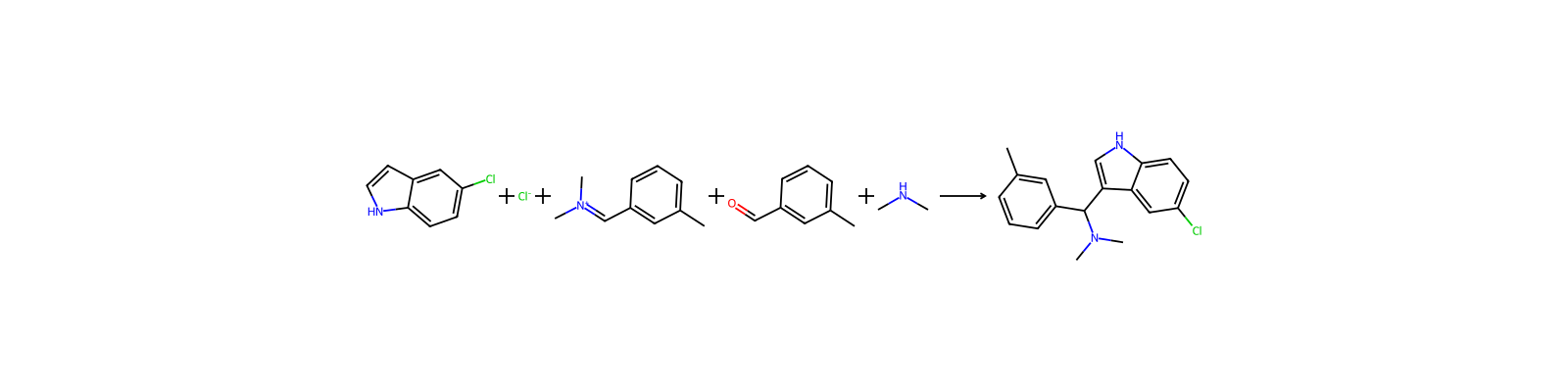
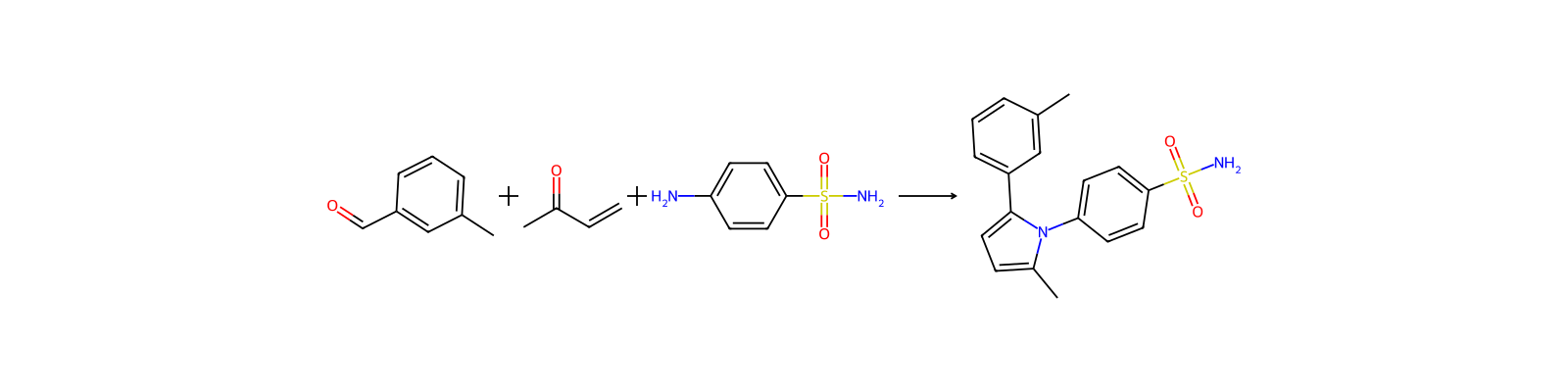
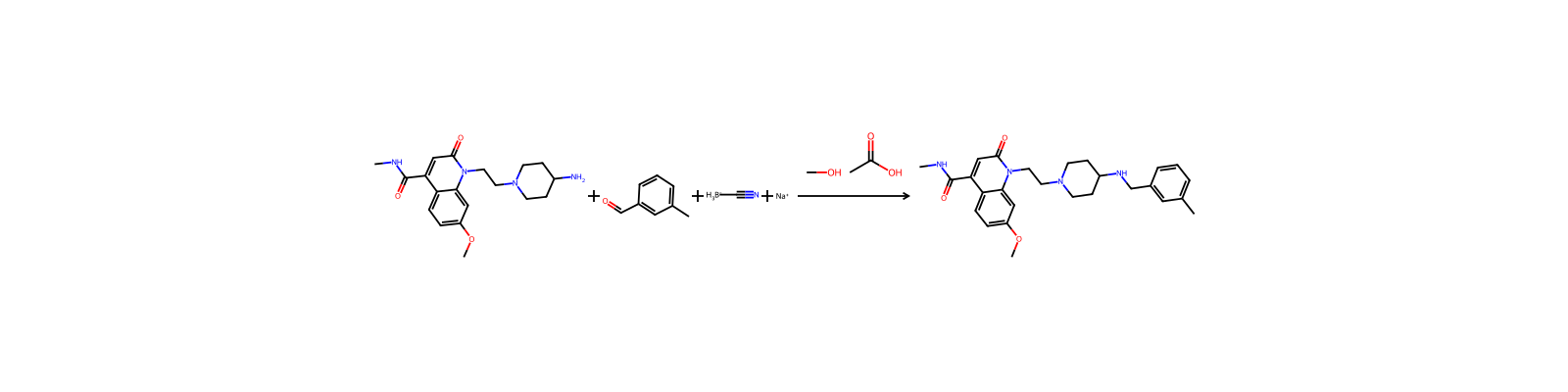
95 records




Linked notes
Loading…