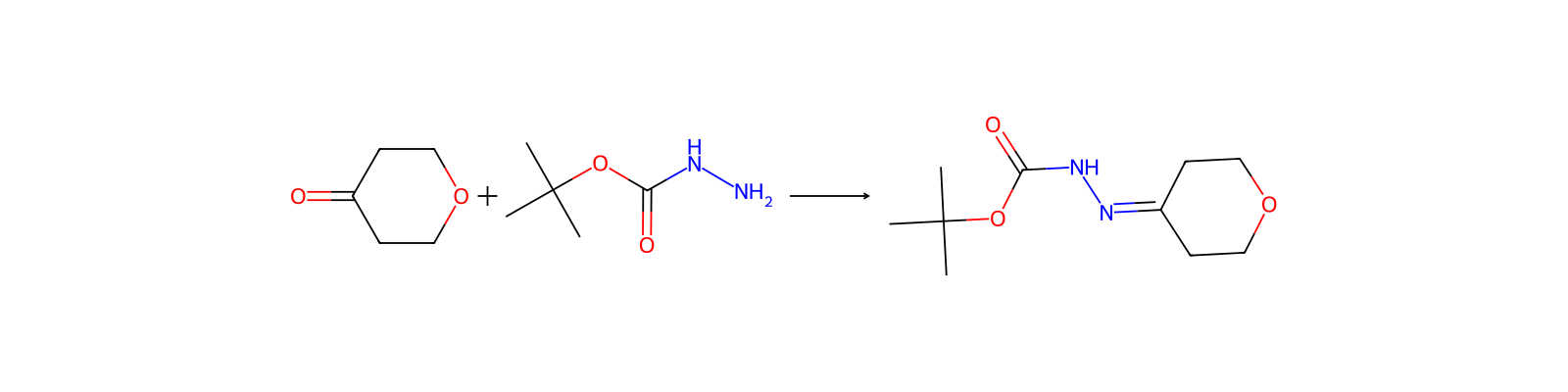
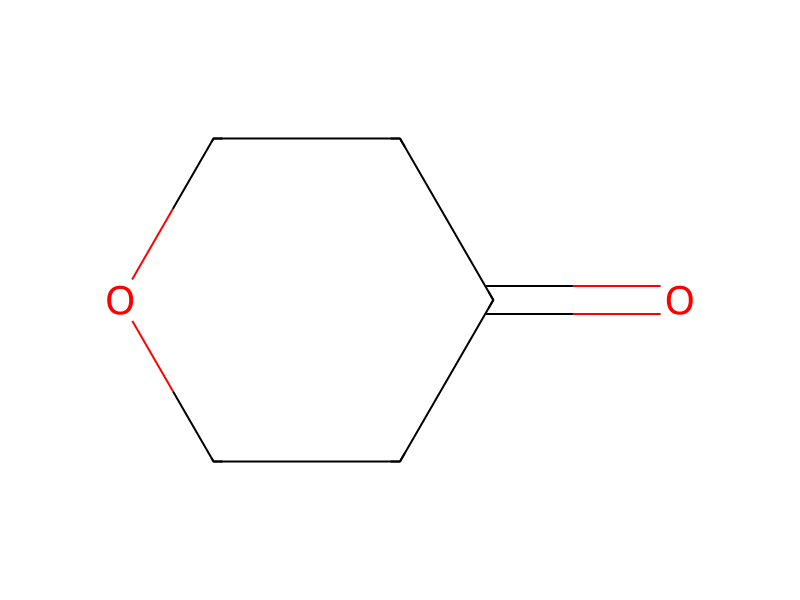
Basic information
- CAS
29943-42-8- Standard SMILES
O=C1CCOCC1- InChIKey
JMJRYTGVHCAYCT-UHFFFAOYSA-N- Molecular formula
- C5H8O2
- Average molar mass
- 100.12 g/mol
- Monoisotopic mass
- 100.0524295
Names & identifiers
- Preferred name
- Tetrahydro-4H-pyran-4-one
- IUPAC
- oxan-4-one
- English name
- Tetrahydro-4H-pyran-4-one
- Molecular formula
- C5H8O2
- Molecular weight
- 100.12
Names & synonyms
Tetrahydro-4H-pyran-4-one29943-42-84-Oxotetrahydropyran4H-Pyran-4-one, tetrahydro-Tetrahydro-4-pyroneTetrahydro-.gamma.-pyrone4-OxacyclohexanoneEINECS 249-967-2DTXSID701840482,3,5,6-Tetrahydro-4-pyranoneTetrahydro-gamma-pyroneRefChem:188630
Show more names
4-THPTetrahydropyranoneTetrahydroHpyranone3,4-Dihydro-2H-pyran-2-oneEOS-60523
DTXCID80106539249-967-2InChI=1/C5H8O2/c6-5-1-3-7-4-2-5/h1-4HJMJRYTGVHCAYCT-UHFFFAOYSA-Noxan-4-onetetrahydropyran-4-oneDIHYDRO-2H-PYRAN-4(3H)-ONE143562-54-3
Database identifiers
- CAS
29943-42-8- PubChem CID
- 121599
- DTXSID
DTXSID70184048- UNII
- N8SV5GRB9E
- EC Number
- 249-967-2
- Nikkaji
- J119.557C
Properties
Computed structural properties
- XLogP
- -0.5
- Topological polar surface area
- 26.3 Ų
- Hydrogen bond donors
- 0
- Hydrogen bond acceptors
- 2
- Rotatable bonds
- 0
- Heavy atoms
- 7
- Formal charge
- 0
- Complexity
- 70.1
Experimental & physicochemical properties
SpringerMaterials PropertiesSchoenflies notation
Physicochemical properties
- Boiling point
- 166 · 166-166.5 °C (lit.)
- Density
- 1.084 g/mL · 1.084 g/mL at 25 °C (lit.)
- refractive index
- 20 · n20/D 1.452(lit.)
- Flash point
- 134 °F · 134 °F
- storage temp.
- Inert atmosphere,Room Temperature
- form
- Liquid
- color
- Clear colorless to pale yellow
- Water Solubility
- MISCIBLE
- BRN
- 106463 · 106463
- InChI
- 1S/C5H8O2/c6-5-1-3-7-4-2-5/h1-4H2
- InChIKey
- JMJRYTGVHCAYCT-UHFFFAOYSA-N
- SMILES
- O=C1CCOCC1
- CAS DataBase Reference
- 29943 · 29943-42-8(CAS DataBase Reference)
Safety & regulation
GHS classification
GHS Classification
This chemical does not meet GHS hazard criteria for 1.6% (1 of 61) of reports.
Warning
H226 (95.1%): Flammable liquid and vapor [Warning Flammable liquids]
P210, P233, P240, P241, P242, P243, P264, P280, P302+P352, P303+P361+P353, P321, P332+P317, P362+P364, P370+P378, P403+P235, and P501 (click each P-code to see the statement)
Aggregated GHS information provided per 61 reports by companies from 9 notifications to the ECHA C&L Inventory. Each notification may be associated with multiple companies.
Hazard information
Regulatory Information
Status: Active Update: 03-06-2019 https://echa.europa.eu/registration-dossier/-/registered-dossier/28417
TETRAHYDRO-4H-PYRAN-4-ONE: Does not have an individual approval but may be used under an appropriate group standard
Hazard Classes and CategoriesFlam. Liq. 3 (95.1%)
Safety data
- F
- 10
- PPE
- Eyeshields, Faceshields, Gloves, type ABEK (EN14387) respirator filter
- wgk
- 3
- ridadr
- UN 1224 3/PG 3
- hs_code
- 29329995
- risk_code
- 10-36/37/38
- Signal word
- Warning
- Symbol(GHS)
- GHS02
- hazard_code
- Xi,F
- hazard_note
- Keep Cold/Flammable/Irritant
- safety_code
- 24/25-36-26
- hazard_class
- 3.2
Chemistry & industry
Applications
DescriptionTetrahydro-4H-pyran-4-one is used in organic synthesis as building block for more complex chemical structures because it participate in a variety of cycloaddition reactions. Tetrahydro-4H-pyran-4-one is employed in the preparation of 4-methoxytetrahydropyran-4-yl protecting group, synthesis of symmetric tetra substituted methanes.The methyl enol ether is a useful protecting agent for alcohols, e.g. in nucleotide synthesis, with the advantage over 3,4-Dihydro-2H-pyran. Tetrahydro-4H-pyran-4-one is also employed in a study of the enantioselective alpha-aminoxylation of ketones with nitrosobenzene and L-proline in an ionic liquid. It undergoes condensation reactions in the preparation of dipeptides and spiroimidazolones. Tetrahydro-4H-pyran-4-one is also employed in wittig reactions for the synthesis of Penicillins and in a ring of vitamin D3.
UsesTetrahydro-4-pyrone is used in organic synthesis as building block for more complex chemical structures because it participate in a variety of cycloaddition reactions.
Upstream & downstream products
Upstream raw materials
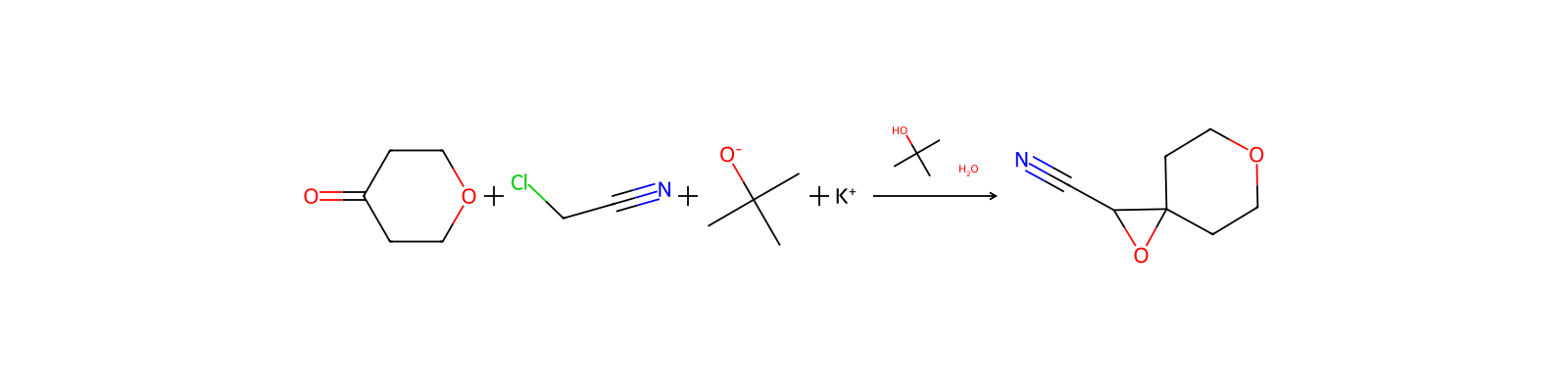
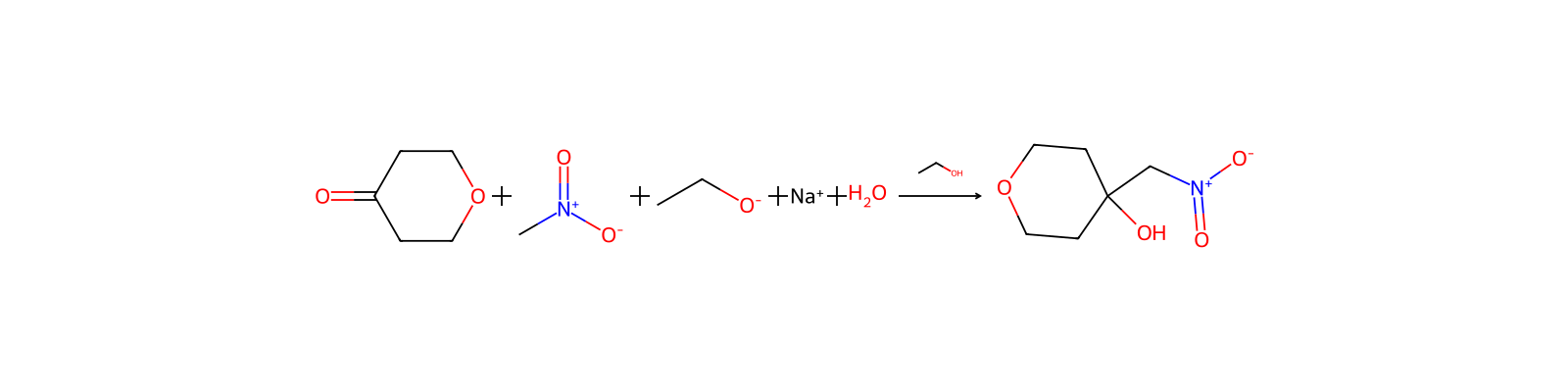
Related reactions
815 records





Compound notes
Loading…