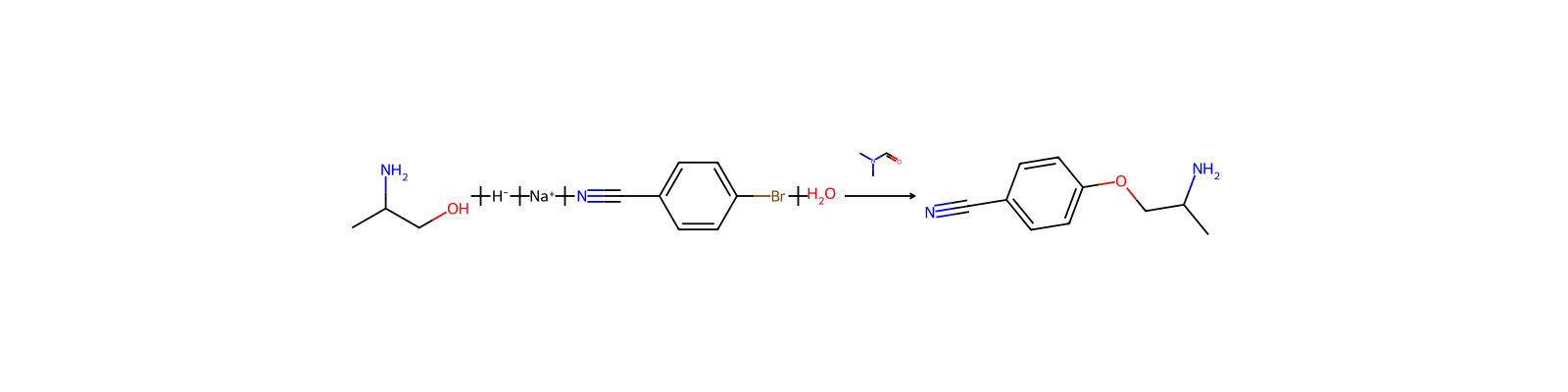
HRID 431As reactant
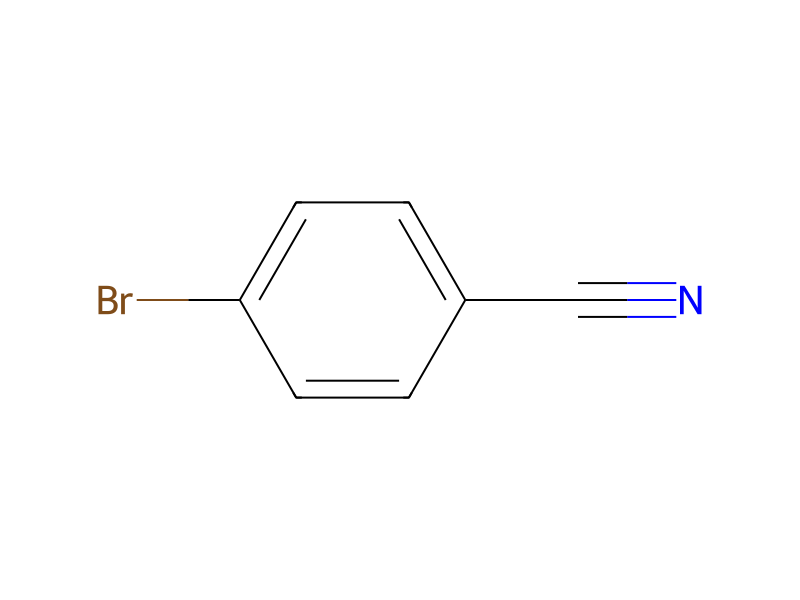
623-00-7N#Cc1ccc(Br)cc1HQSCPPCMBMFJJN-UHFFFAOYSA-N623-00-7DTXSID60211352CHEMBL3248210Safety information is for reference only and does not replace the supplier’s Safety Data Sheet (SDS), applicable regulations, or professional assessment.
Danger
H301 (91.2%): Toxic if swallowed [Danger Acute toxicity, oral]
P261, P264, P264+P265, P270, P271, P273, P280, P301+P316, P302+P352, P304+P340, P305+P351+P338, P317, P319, P321, P330, P332+P317, P337+P317, P362+P364, P403+P233, P405, and P501 (click each P-code to see the statement)
Aggregated GHS information provided per 57 reports by companies from 12 notifications to the ECHA C&L Inventory. Each notification may be associated with multiple companies.
REACH registered substance: 4-bromobenzonitrile (EC: 210-764-9)
4-Bromobenzonitrile: Does not have an individual approval but may be used under an appropriate group standard
Uses4- Bromobenzonitrile is classified as organic nitriles, which are commonly use solvents and are reacted further for various applications such as manufacture of polymers and intermediates for pharmaceu ticals and other organic chemicals,
Uses4-Bromobenzonitrile is used as reagents and solvents. Reaction of 2-propanol, 4-bromobenzonitrile, and NaH in the presence of 1.5 mol % Pd2(dba)3 and 3 mol % (S)-(-)2,2-bis(di-p-tolylphosphino)- 1,1-binaphthyl at 50°C afforded 4-isopropoxy- benzonitrile in 80% isolated yield. The synthesis of 4-cyanobiphenyl at room temperature in a flow injection microreactor, using a supported catalyst, without the addition of a base gave a product yield of 67±7% (n=6). This was achieved by injecting 4-bromobenzonitrile. The 3-arylation of 2,5-dimethylthiophene with 4-bromopropiophenone, 4-trifluoromethylbromobenzene or 4-bromobenzonitrile gave 3-5 in only 38-50% yields in Palladium-catalysed direct 3-or 4-arylation of thiophene derivatives using aryl bromides.