
Basic information
- CAS
52006-62-9- Standard SMILES
CCCC[N+](=O)[O-]- InChIKey
NALZTFARIYUCBY-UHFFFAOYSA-N- Molecular formula
- C4H9NO2
- Average molar mass
- 103.12 g/mol
- Monoisotopic mass
- 103.06332853
Overview
1-nitrobutane is a colorless liquid. (NTP, 1992)
Names & identifiers
- Preferred name
- 1-Nitrobutane
- IUPAC
- 1-nitrobutane
- English name
- 1-Nitrobutane
- Molecular formula
- C4H9NO2
- Molecular weight
- 103.12
Names & synonyms
1-NITROBUTANE627-05-4Butane, 1-nitro-CCRIS 30891-nitro-butaneNSC 3648EINECS 210-980-3BRN 1743017DTXSID8020967UNII-7R02589S2GAI3-001077R02589S2G
Show more names
4-01-00-00277 (Beilstein Handbook Reference)NSC-3648MFCD00007409nitrobutaneNSC36481-Nitrobutane, 98%NITROBUTANE, 1-n-C4H9NO2
Database identifiers
- CAS
52006-62-9、627-05-4- PubChem CID
- 12302
- DTXSID
DTXSID8020967- ChEMBL
CHEMBL1448549- ChEBI
CHEBI:138425- UNII
- 7R02589S2G
- EC Number
- 210-980-3
- Nikkaji
- J1.695K
Properties
Computed structural properties
- XLogP
- 1.5
- Topological polar surface area
- 45.8 Ų
- Hydrogen bond donors
- 0
- Hydrogen bond acceptors
- 2
- Rotatable bonds
- 2
- Heavy atoms
- 7
- Formal charge
- 0
- Complexity
- 57.2
Experimental & physicochemical properties
Chemical ClassesNitrogen Compounds -> Nitros, Aliphatic
SpringerMaterials PropertiesBoiling point
Density0.971 (NTP, 1992) - Less dense than water; will float
SolubilitySlightly soluble (NTP, 1992)
Boiling Point307 °F at 760 mmHg (NTP, 1992)
Vapor Pressure3.79 [mmHg]
Physical Description
1-nitrobutane is a colorless liquid. (NTP, 1992)
Colorless liquid; [CAMEO]
Physicochemical properties
- Specific Heat Capacity
- 1.12 J/ · Cp(gas): 1.12 J/(g·K), at 25℃
- FDA UNII
- 7 R02589S2G · 7R02589S2G
Safety & regulation
GHS classification
GHS Classification
Warning
H226 (100%): Flammable liquid and vapor [Warning Flammable liquids]
P210, P233, P240, P241, P242, P243, P280, P303+P361+P353, P370+P378, P403+P235, and P501 (click each P-code to see the statement)
Aggregated GHS information provided per 39 reports by companies from 1 notifications to the ECHA C&L Inventory.
Hazard information
DOT LabelFlammable Liquid
Fire HazardsExcerpt from ERG Guide 128 [Flammable Liquids (Water-Immiscible)]:
Health HazardsExcerpt from ERG Guide 128 [Flammable Liquids (Water-Immiscible)]:
Hazards SummaryHighly flammable; [CAMEO] May cause irritation; [MSDSonline] See Nitroethane.
Reactive GroupNitro, Nitroso, Nitrate, and Nitrite Compounds, Organic
Reactivity AlertsHighly Flammable
Reactivity Profile
Nitroalkanes, such as 1-NITROBUTANE, range from slight to strong oxidizing agents. If mixed with reducing agents, including hydrides, sulfides and nitrides, they may begin a vigorous reaction that culminates in a detonation. Nitroalkanes are milder oxidizing agents, but still react violently with reducing agents at higher temperature and pressures. Nitroalkanes react with inorganic bases to form explosive salts. The presence of metal oxides increases the thermal sensitivity of nitroalkanes. Nitroalkanes with more than one nitro group are generally explosive. Nitroalkanes are insoluble in water. Flammable/combustible material. May be ignited by heat, sparks or flames.
Air and Water ReactionsHighly flammable. Slightly water soluble (NTP, 1992).
Hazard Classes and CategoriesFlam. Liq. 3 (100%)
Safety & protection
Fire FightingExcerpt from ERG Guide 128 [Flammable Liquids (Water-Immiscible)]:
First Aid
EYES: First check the victim for contact lenses and remove if present. Flush victim's eyes with water or normal saline solution for 20 to 30 minutes while simultaneously calling a hospital or poison control center. Do not put any ointments, oils, or medication in the victim's eyes without specific instructions from a physician. IMMEDIATELY transport the victim after flushing eyes to a hospital even if no symptoms (such as redness or irritation) develop.
Nonfire Spill ResponseExcerpt from ERG Guide 128 [Flammable Liquids (Water-Immiscible)]:
Isolation and EvacuationExcerpt from ERG Guide 128 [Flammable Liquids (Water-Immiscible)]:
Personal Protective Equipment (PPE)
RECOMMENDED RESPIRATOR: Where the neat test chemical is weighed and diluted, wear a NIOSH-approved half face respirator equipped with an organic vapor/acid gas cartridge (specific for organic vapors, HCl, acid gas and SO2) with a dust/mist filter. (NTP, 1992)
Chemistry & industry
Applications
Uses1-Nitrobutane is used in method for preparing amine by reducing nitro compound with pinacolborane under catalysis of cyclic (alkyl) (amino) carbene chromium complex.
Suppliers12 total
上海阿拉丁生化科技股份有限公司400-6206333 13167063860 · [email protected]
Career Henan Chemica Co+86-0371-86658258 +86-13203830695 · [email protected]
安耐吉化学&3A(安徽泽升科技股份有限公司)400-0056266 · [email protected]
Sigma-Aldrich西格玛奥德里奇(上海)贸易有限公司021-61415566 800-8193336 · [email protected]
陕西缔都医药化工有限公司029-029-81120477 17792793610 · [email protected]
上海源叶生物科技有限公司13636370518 · [email protected]
Shaanxi Didu New Materials Co. Ltd+86-86-17392712779 +86-13289823923 · [email protected]
厦门盈融达化工有限公司+86-0592-6210733 · [email protected]
Aladdin Scientific[email protected]
上海宝杨宝欣生物科技有限公司021-56698539 19921169802 · [email protected]
重庆卡兰医药有限公司[email protected]
DAYANG CHEM (HANGZHOU) CO.,LTD+86-88938639 +86-17705817739 · [email protected]
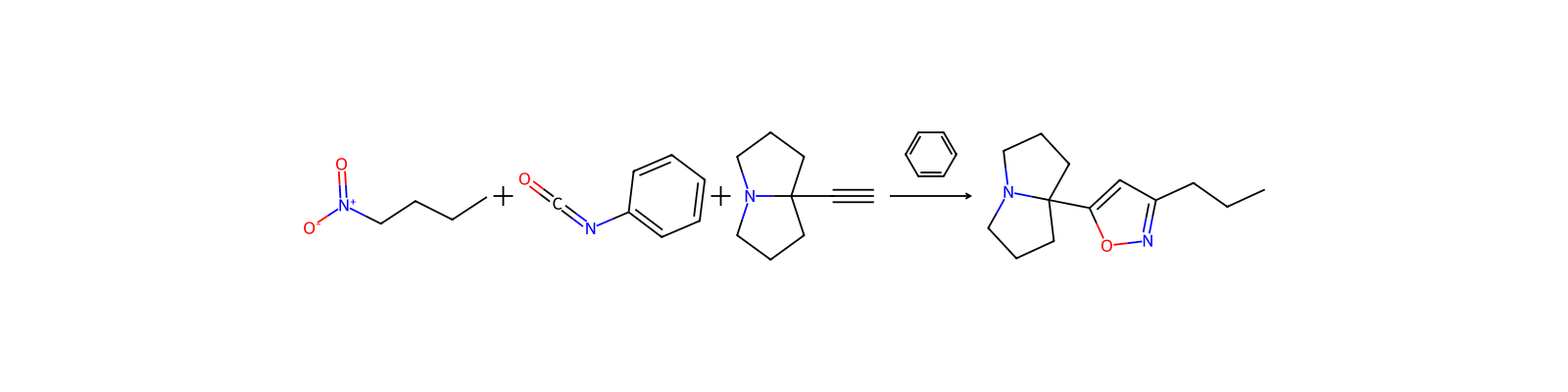
Related reactions
6 records


Compound notes
Loading…