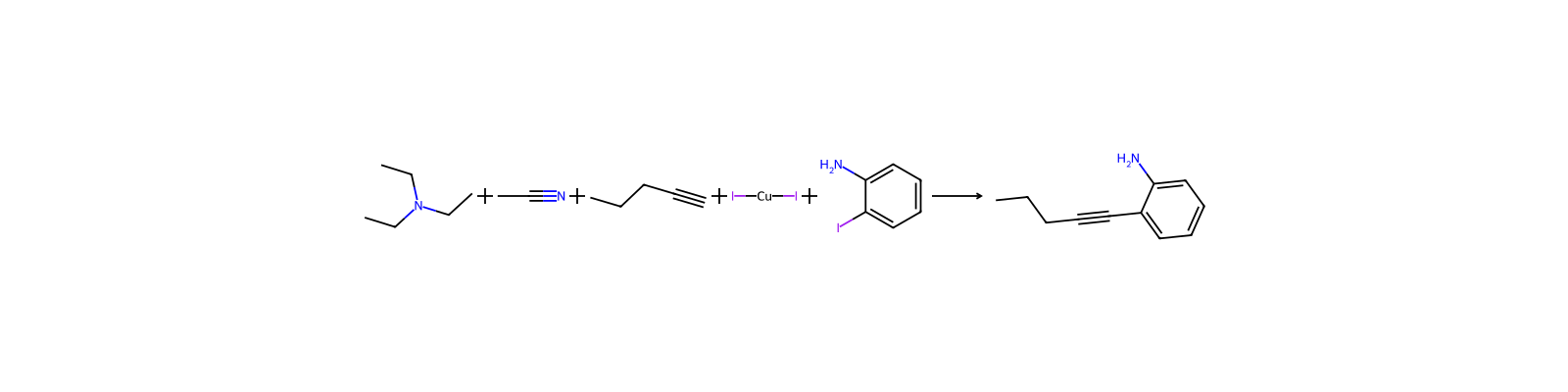
HRID 59021As reactant
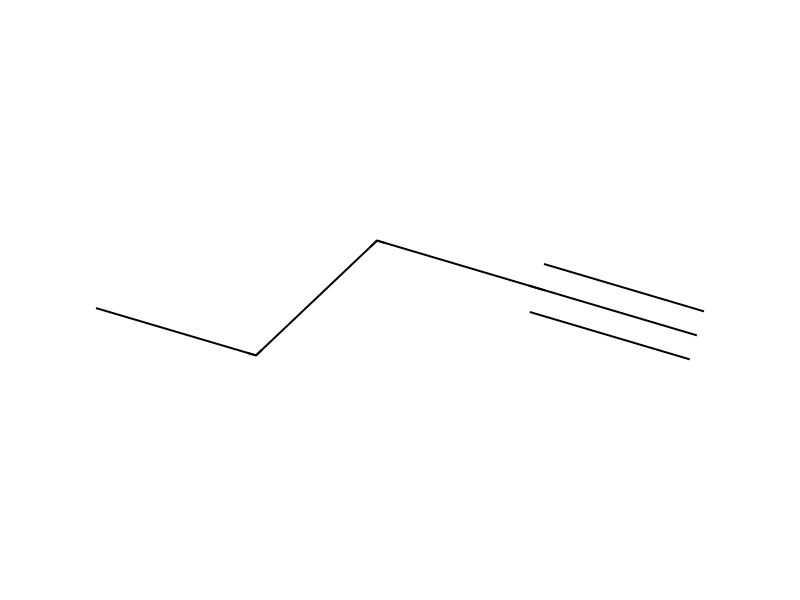
627-19-0C#CCCCIBXNCJKFFQIKKY-UHFFFAOYSA-N627-19-0DTXSID7060835CHEMBL16262Safety information is for reference only and does not replace the supplier’s Safety Data Sheet (SDS), applicable regulations, or professional assessment.
Danger
H225 (98.1%): Highly Flammable liquid and vapor [Danger Flammable liquids]
P210, P233, P240, P241, P242, P243, P261, P264, P264+P265, P271, P280, P301+P316, P302+P352, P303+P361+P353, P304+P340, P305+P351+P338, P319, P321, P331, P332+P317, P337+P317, P362+P364, P370+P378, P403+P233, P403+P235, P405, and P501 (click each P-code to see the statement)
Aggregated GHS information provided per 53 reports by companies from 5 notifications to the ECHA C&L Inventory. Each notification may be associated with multiple companies.
Uses1-Pentyne has been used in preparation of:lithium acetylides, required for asymmetric synthesis of α,α-dibranched propargyl sulfinamides. It is also used to synthesize 7-hydroxy-10-methoxy-3H-naphtho[2.1-b]pyrans.
Uses1-Pentyne has been used in preparation of:lithium acetylides, required for asymmetric synthesis of α,α-dibranched propargyl sulfinamides7-hydroxy-10-methoxy-3H-naphtho[2.1-b]pyrans
General DescriptionSelective and non-selective hydrogenation of 1-pentyne catalyzed by silica-supported palladium has been studied by in situ X-ray absorption spectroscopy.
PreparationIt can be synthesized from haloalkanes and sodium acetate. The specific steps are as follows: dissolve sodium acetate in ethanol to prepare a solution; add haloalkanes, such as bromopentane, to the solution; stir the mixture at an appropriate temperature; and purify the mixture by distillation to obtain compound 1-pentyne.