
Basic information
- CAS
79630-23-2- Standard SMILES
N#Cc1ccc(F)c(Br)c1- InChIKey
JKCYKISVUIVZCS-UHFFFAOYSA-N- Molecular formula
- C7H3BrFN
- Average molar mass
- 200.01 g/mol
- Monoisotopic mass
- 198.94328942
Names & identifiers
- Preferred name
- 3-Bromo-4-fluorobenzonitrile
- IUPAC
- 3-bromo-4-fluorobenzonitrile
- English name
- 3-Bromo-4-fluorobenzonitrile
- Molecular formula
- C7H3BrFN
- Molecular weight
- 200.01
Names & synonyms
3-Bromo-4-fluorobenzonitrile79630-23-2DTXSID00229815EINECS 279-200-7JKCYKISVUIVZCS-UHFFFAOYSA-RefChem:93158DTXCID50152306279-200-7InChI=1/C7H3BrFN/c8-6-3-5(4-10)1-2-7(6)9/h1-3HJKCYKISVUIVZCS-UHFFFAOYSA-NBenzonitrile, 3-bromo-4-fluoro-4-FLUORO-3-BROMOBENZONITRILE
Show more names
LABOTEST-BB LT011432835-Cyano-2-fluorobromobenzene3-Bromo-4-fluorobenzonitrile>Benzonitrile, 3-bromo-4-fluoro-3-Bromo-4-fluorobenzonitrile98%3-Bromo-4-fluorobenzonitrile 98%3-Bromo-4-fluorobenzonitrile ,99%3-BroMo-4-fluorobenzonitrile, 97+%
MFCD000554323-bromo-4-fluoro-benzonitrile3-bromo-4-fluorobenzenecarbonitrile3-Bromo-4-flurobenzonitrile4-Cyano-1-fluoro-2-bromobenzeneAKOS005255011AC-2775CS-0007567
Database identifiers
- CAS
79630-23-2- PubChem CID
- 123579
- DTXSID
DTXSID00229815- EC Number
- 279-200-7
- Nikkaji
- J320.123F
Properties
Computed structural properties
- XLogP
- 2.4
- Topological polar surface area
- 23.8 Ų
- Hydrogen bond donors
- 0
- Hydrogen bond acceptors
- 2
- Rotatable bonds
- 0
- Heavy atoms
- 10
- Formal charge
- 0
- Complexity
- 162
Physicochemical properties
- Melting point
- 54 · 54-58 °F(lit.)
- Boiling point
- 134 · 134-136°C 33mm
- Density
- 1.7286 · 1.7286 (rough estimate)
- refractive index
- 1.532 · 1.5320 (estimate)
- Flash point
- 230 °F · >230 °F
- storage temp.
- Sealed in dry,Room Temperature
- solubility
- soluble in Methanol
- form
- powder to crystal
- color
- White to Light yellow
- Water Solubility
- insoluble
- BRN
- 8198509 · 8198509
- InChI
- InChI=1S/C7H3BrFN/c8-6-3-5(4-10)1-2-7(6)9/h1-3H
- InChIKey
- JKCYKISVUIVZCS-UHFFFAOYSA-N
- SMILES
- C(#N)C1=CC=C(F)C(Br)=C1
- CAS DataBase Reference
- 79630 · 79630-23-2(CAS DataBase Reference)
- UNSPSC Code
- 12352100 · 12352100
- Symbol(GHS)
- 6 · GHS06,GHS07
- Signal word
- Warning
- Hazard statements
- 331 · H331-H301+H311+H331-H302-H312-H315-H319-H332-H335
- Precautionary statements
- 304 · P304+P340-P501a-P264-P270-P271-P301+P310+P330-P302+P352+P312+P361+P364-P304+P340+P311-P305+P351+P338+P337+P313-P403+P233-P405-P501-P261-P280-P305+P351+P338
- target organs
- Respiratory system
- PPE
- 95 · dust mask type N95 (US), Eyeshields, Gloves
- Hazard Codes
- Xn,T,Xi
- Risk Statements
- 20 · 20/21/22-36/37/38
- Safety Statements
- 26 · 26-36-36/37/39-22
- RIDADR
- 3439 · 3439
- WGK Germany
- 3 · 3
- Hazard Note
- Toxic
- HazardClass
- 6.1 · 6.1
- PackingGroup
- III
- HS Code
- 29269090 · 29269090
- Storage Class
- 11 · 11 - Combustible Solids
- Hazard Classifications
- 4 DermalAcute · Acute Tox. 4 DermalAcute Tox. 4 InhalationAcute Tox. 4 OralEye Irrit. 2Skin Irrit. 2STOT SE 3
- Limited Quantities
- 5 kg · 5.0 kg (11 lbs) (solid)
- Excepted Quantities
- Max Inner Pack (30g or 30ml) and Max Outer Pack (1Kg or 1L)
Safety & regulation
GHS classification
GHS Classification
Warning
H302 (96%): Harmful if swallowed [Warning Acute toxicity, oral]
P261, P264, P264+P265, P270, P271, P280, P301+P317, P302+P352, P304+P340, P305+P351+P338, P317, P319, P321, P330, P332+P317, P337+P317, P362+P364, P403+P233, P405, and P501 (click each P-code to see the statement)
Aggregated GHS information provided per 50 reports by companies from 10 notifications to the ECHA C&L Inventory. Each notification may be associated with multiple companies.
Hazard information
Hazard Classes and CategoriesAcute Tox. 4 (96%)
Safety data
- PPE
- dust mask type N95 (US), Eyeshields, Gloves
- wgk
- 3
- ridadr
- 3439
- hs_code
- 29269090
- risk_code
- 20/21/22-36/37/38
- Signal word
- Warning
- Symbol(GHS)
- GHS06,GHS07
- hazard_code
- Xn,T,Xi
- hazard_note
- Toxic
- safety_code
- 26-36-36/37/39-22
- hazard_class
- 6.1
- Storage Class
- 11 - Combustible Solids
- packing_group
- III
- target organs
- Respiratory system
- Hazard statements
- H331-H301+H311+H331-H302-H312-H315-H319-H332-H335
- Limited Quantities
- 5.0 kg (11 lbs) (solid)
- Excepted Quantities
- Max Inner Pack (30g or 30ml) and Max Outer Pack (1Kg or 1L)
- Hazard Classifications
- Acute Tox. 4 DermalAcute Tox. 4 InhalationAcute Tox. 4 OralEye Irrit. 2Skin Irrit. 2STOT SE 3
- Precautionary statements
- P304+P340-P501a-P264-P270-P271-P301+P310+P330-P302+P352+P312+P361+P364-P304+P340+P311-P305+P351+P338+P337+P313-P403+P233-P405-P501-P261-P280-P305+P351+P338
Chemistry & industry
Applications
Uses3-Bromo-4-fluorobenzonitrile is mainly used as an intermediate in the synthesis of pesticides, medicines, and dyes in organic synthesis. It is obtained by adding cuprous bromide (CuBr) to 4-fluorobenzonitrile. In industrial applications, halogens can be introduced through specific chemical reactions to synthesize more complex organic compounds.
Upstream & downstream products
Upstream raw materials
Downstream products
Suppliers100 total
国药集团化学试剂有限公司86-21-63210123 · [email protected]
梯希爱(上海)化成工业发展有限公司021-67121386 · [email protected]
上海阿拉丁生化科技股份有限公司400-6206333 13167063860 · [email protected]
上海策嵘生物科技有限公司[email protected]
温州共赢化学有限公司+86-0086-577-64498589 +86-15355981851 · [email protected]
爱斯特(成都)生物制药股份有限公司+86-28-85122536 85324413 · [email protected]
Baoji Guokang Healthchem co.,ltd+8615604608665 15604608665 · [email protected]
上海赫文斯化工有限公司15721252604 17321035817 · [email protected]
Dayang Chem (Hangzhou) Co.,Ltd.+86-0571-88938639 17705817739 · [email protected]
Syntechem Co.,Ltd[email protected]
北京华威锐科化工有限公司0757-86329057 18934348241 · [email protected]
上海辅欣医药科技有限公司+86-021-021-50872116 · [email protected]
宁波亿诺化学品有限公司86-574-27787657 · [email protected]
阿法埃莎(中国)化学有限公司400-6106006 · [email protected]
安耐吉化学&3A(安徽泽升科技股份有限公司)400-0056266 · [email protected]
石家庄斯迪亚诺精细化工有限公司0311-89250318 13582355795 · [email protected]
武汉凯威斯科技有限公司86-027-67849912 · [email protected]
Allfluoro Pharmaceutical Company Limited+86-400-0216110 +86-15958047586 · [email protected]
上海瀚鸿科技股份有限公司021-54306202 13764082696 · [email protected]
Changzhou Helios Biomedical Science and Technology Co.,LTD.+8618961213068;+8618961100976 · [email protected]
上海相辉医药科技有限公司13761987713 · [email protected]
上海景颜化工科技有限公司13817811078 · [email protected]
嘉兴市艾森化工有限公司0573-85285100 18627885956 · [email protected]
上海隆盛化工有限公司58099637 13585536065 · [email protected]
上海攀鸿化工科技有限公司021-56491756 13512199871 · [email protected]
杭州东帆化学有限公司86-0571-85151182
天津希恩思生化科技有限公司400 638 7771 · [email protected]
南京维奥化工有限公司Please Send Email 18652950785 · [email protected]
上海思域化工科技有限公司86-21-34053660 · [email protected]
苏州思变化学技术有限公司0512-65617459 18915409046 · [email protected]
武汉泰凯塞科技有限公司027-86697669 13986148687 · [email protected]
上海特伯化学科技有限公司+86-21-60341587 · [email protected]
TCI AMERICA800-4238616 · [email protected]
TOKYO CHEMICAL INDUSTRY CO., LTD.03-36680489 · [email protected]
TCI Europe320-37350700 · [email protected]
上海贤鼎生物科技有限公司4009209199 · [email protected]
越林试剂021-62960152 · [email protected]
上海睿升化工科技有限公司+86-021-50935922
Clearsynth Labs Limited+91-22-26355700 · [email protected]
上海将来实业股份有限公司400-0066400 13621662912 · [email protected]
上海将来实业股份有限公司021-61552785 · [email protected]
安徽科迪达化工有限公司0554-2106669 · [email protected]
HBCChem, Inc.+1-510-219-6317 · [email protected]
上海毕得医药科技股份有限公司400-164-7117 18317119277 · [email protected]
Labnetwork lnc.+86-27-50766799 +86-18062016861 · [email protected]
上海石洋化工有限公司021-56795766 · [email protected]
成都零六生物科技有限公司400-1166-196 13458535857 · [email protected]
上海御略医药科技有限公司021-60345187 13671753212 · [email protected]
天津安浩生物科技有限公司[email protected]
杭州杰恒化工有限公司0571-87396432 · [email protected]
Related reactions
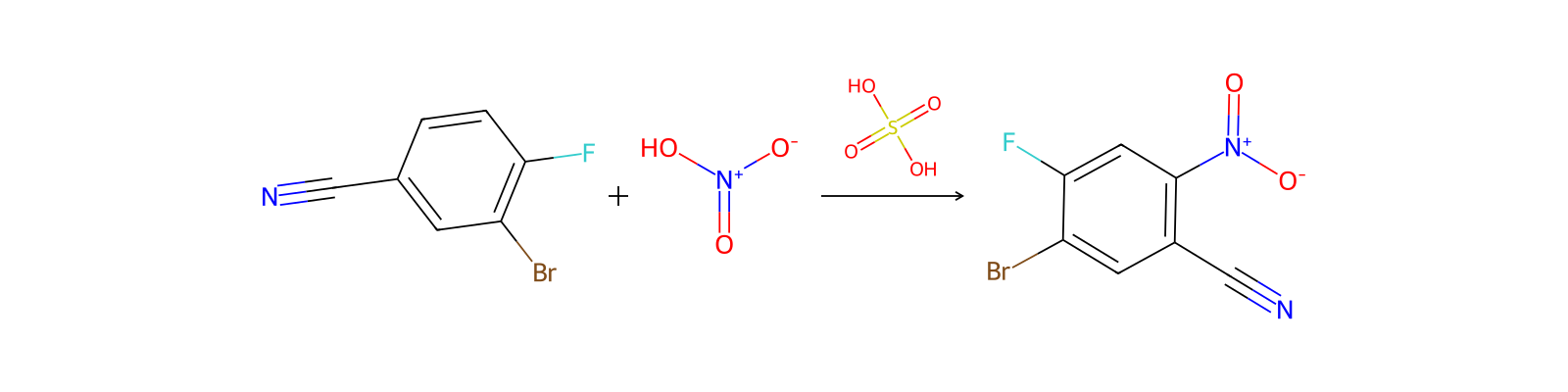
33 records


Compound notes
Loading…