

Basic information
- CAS
50293-90-8- Standard SMILES
CC(C)(C)NC[C@H](O)c1ccc(O)c(CO)c1.Cl- InChIKey
OWNWYCOLFIFTLK-YDALLXLXSA-N- Molecular formula
- C13H22ClNO3
- Average molar mass
- 275.77 g/mol
- Monoisotopic mass
- 275.12882124
Overview
Levalbuterol Hydrochloride is the hydrochloride salt form of levalbuterol, a relatively selective sympathomimetic beta-2 adrenergic receptor agonist with bronchodilator activity. Levalbuterol hydrochloride binds to beta-2 adrenergic receptors in bronchial smooth muscle and activates intracellular adenyl cyclase, thereby increasing the production of cyclic-3', 5'-adenosine monophosphate (cAMP). Increased cAMP levels lead to the activation of protein kinase A, which inhibits the phosphorylation of myosin and lowers intracellular ionic calcium concentrations, resulting in relaxation of bronchial smooth muscles. The increased cyclic AMP concentrations also inhibit the release of inflammatory mediators from mast cells.
Names & identifiers
- Preferred name
- Levalbuterol Hydrochloride
- IUPAC
- 4-[(1R)-2-(tert-butylamino)-1-hydroxyethyl]-2-(hydroxymethyl)phenol;hydrochloride
- English name
- alfa1-[[1,1-Dimethylethylamino]methyl]-4-hydroxy-1-(S),3-benzene dimethanol Hydrochlorid
- Molecular formula
- C13H22ClNO3
- Molecular weight
- 275.77168
Names & synonyms
Levalbuterol hydrochloride50293-90-8Levalbuterol HClXopenexLevosalbutamol Hydrochloride(-)-Salbutamol hydrochlorideAlbuterol hydrochloride, r-WDQ1526QJMNSC-759255Albuterol (r)-form hydrochlorideDTXSID20198296RefChem:56699
Show more names
ZopenexUnii-wdq1526qjmSalbutamol HydrochlorideSalbutamol (R)-Isomer HClSalbutamol Impurity 8 HClSalbutamol Impurity 14 HCl
Levalbuterol Inhalation SolutionDTXCID501207871,3-Benzenedimethanol, alpha1-(((1,1-dimethylethyl)amino)methyl)-4-hydroxy-, Hydrochloride,(alpha1R)-(R)-Albuterol Hydrochloride(R)-Salbutamol hydrochlorideSalbutamol (hydrochloride)R-albuterol hydrochloride(R)-4-(2-(tert-Butylamino)-1-hydroxyethyl)-2-(hydroxymethyl)phenol hydrochloride
Database identifiers
- CAS
50293-90-8- PubChem CID
- 123601
- DTXSID
Properties
Computed structural properties
- Topological polar surface area
- 72.7 Ų
- Hydrogen bond donors
- 5
- Hydrogen bond acceptors
- 4
- Rotatable bonds
- 5
- Heavy atoms
- 18
- Formal charge
- 0
- Complexity
- 227
Experimental & physicochemical properties
Human Drugs
FDA approved drugs -> Active ingredient
FDA approved drugs -> Active ingredient
Collision Cross Section158.1 Ų [M+H]+ [CCS Type: TW; Method: calibrated with polyalanine and drug standards]
Physicochemical properties
- Melting point
- 169 · 169-171°C
- alpha
- 20 · D20 -32.2° (c = 0.1 in water)
- storage temp.
- 2 · 2-8°C
- solubility
- 2 O: · H2O: ≥15mg/mL
- form
- powder
- color
- white to tan
- optical activity
- -25 to · [α]/D -25 to -35°, c = 0.1 in H2O
- Water Solubility
- 2 O: · H2O: ≥15mg/mL
- InChI
- InChI=1/C13H21NO3.ClH/c1-13(2,3)14-7-12(17)9-4-5-11(16)10(6-9)8-15;/h4-6,12,14-17H,7-8H2,1-3H3;1H/t12-;/s3
- InChIKey
- OWNWYCOLFIFTLK-ZLBVLXFENA-N
Safety & regulation
GHS classification
GHS Classification
Danger
H302 (100%): Harmful if swallowed [Warning Acute toxicity, oral]
P261, P264, P264+P265, P270, P271, P280, P301+P317, P302+P352, P304+P340, P305+P354+P338, P317, P319, P321, P330, P332+P317, P362+P364, P403+P233, P405, and P501 (click each P-code to see the statement)
Aggregated GHS information provided per 43 reports by companies from 6 notifications to the ECHA C&L Inventory. Each notification may be associated with multiple companies.
Hazard information
Hazard Classes and CategoriesAcute Tox. 4 (100%)
Toxicology
Exposure RoutesSystemic absorption is rapid following aerosol administration.
Toxicity Summary
Salbutamol is a beta(2)-adrenergic agonist and thus it stimulates beta(2)-adrenergic receptors. Binding of albuterol to beta(2)-receptors in the lungs results in relaxation of bronchial smooth muscles. It is believed that salbutamol increases cAMP production by activating adenylate cyclase, and the actions of salbutamol are mediated by cAMP. Increased intracellular cyclic AMP increases the activity of cAMP-dependent protein kinase A, which inhibits the phosphorylation of myosin and lowers intracellular calcium concentrations. A lowered intracellular calcium concentration leads to a smooth muscle relaxation and bronchodilation. In addition to bronchodilation, salbutamol inhibits the release of bronchoconstricting agents from mast cells, inhibits microvascular leakage, and enhances mucociliary clearance.
Carcinogen ClassificationNo indication of carcinogenicity to humans (not listed by IARC).
Toxicity DataLD<sub>50</sub>=1100 mg/kg (orally in mice)
Chemistry & industry
Pharmacology
Metabolism/Metabolites
Hydrolyzed by esterases in tissue and blood to the active compound colterol. The drug is also conjugatively metabolized to salbutamol 4'-O-sulfate. Route of Elimination: Approximately 72% of the inhaled dose is excreted in the urine within 24 hours, 28% as unchanged drug and 44% as metabolite. Half Life: 1.6 hours
FDA Pharmacological Classification
LEVALBUTEROL HYDROCHLORIDE
beta2-Adrenergic Agonist [EPC]; Adrenergic beta2-Agonists [MoA]
LEVALBUTEROL INHALATION SOLUTION
Adrenergic beta2-Agonists [MoA]; beta2-Adrenergic Agonist [EPC]
Uses & manufacturing
UsesFor symptomatic relief and prevention of bronchospasm due to bronchial asthma, chronic bronchitis, and other chronic bronchopulmonary disorders such as COPD.
Applications
DescriptionSalbutamol is an agonist of the β2-adrenergic receptor (β2-AR; Kd = 759 nM in a radioligand binding assay using CHO cells expressing the human receptor). It is selective for β2-ARs over β1- and β3-ARs (Kds = 46.8 and 21.9 μM, respectively). Salbutamol (25-50 μg/kg, i.v.) reduces acetylcholine-induced bronchospasm in anesthetized guinea pigs. It also reduces response of bronchial muscle to efferent vagal stimulation in anesthetized cats and dogs when administered at doses ranging from 1 to 2.5 and 10 to 20 μg/kg, respectively. Nebulized salbutamol reduces transpulmonary pressure in recurrent airway obstruction-affected horses (EC50 = 39.7 μg). Formulations containing salbutamol have been used in the treatment of asthma and chronic obstructive pulmonary disease (COPD).
UsesThe R-enantiomer
Usesbronchodilator, tocolytic
Usesβ2-agonist, bronchodilator
Antiasthmatic
Related reactions
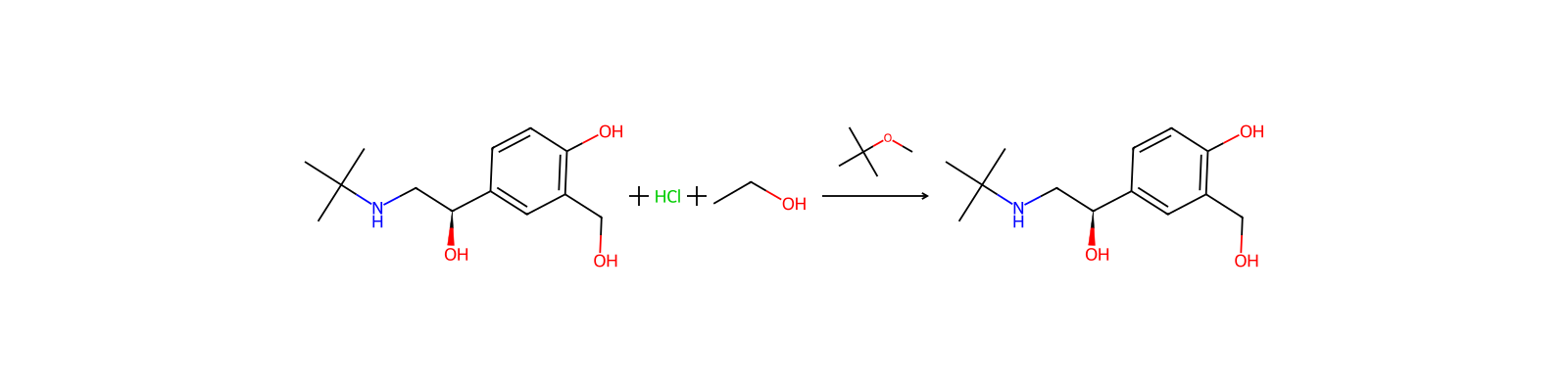
4 records


Compound notes
Loading…