
3,4,5,6-Tetrahydrophthalic anhydride
Completing data — refresh the page later to see the latest

Basic information
- CAS
2426-02-0- Standard SMILES
O=C1OC(=O)C2=C1CCCC2- InChIKey
HMMBJOWWRLZEMI-UHFFFAOYSA-N- Molecular formula
- C8H8O3
- Average molar mass
- 152.15 g/mol
- Monoisotopic mass
- 152.04734412
Overview
RN given refers to cpd with locants as specified
Names & identifiers
- Preferred name
- 3,4,5,6-Tetrahydrophthalic anhydride
- IUPAC
- 4,5,6,7-tetrahydro-2-benzofuran-1,3-dione
- English name
- 3,4,5,6-Tetrahydrophthalic anhydride
- Molecular formula
- C8H8O3
- Molecular weight
- 152.15
Names & synonyms
3,4,5,6-Tetrahydrophthalic anhydride2426-02-01,3-Isobenzofurandione, 4,5,6,7-tetrahydro-3,4,5,6-Tetrahydrophthalic acid anhydride01D3M89A2WNSC-11211NSC-61333DTXSID9075298RefChem:485678DTXCID8037043219-374-34,5,6,7-tetrahydroisobenzofuran-1,3-dione
Show more names
TMMA1-CYCLOHEXENE-1,2-DICARBOXYLIC ANHYDRIDE3,4,5,6-TETRAHYDROPHTHALIC ANHYDRIDE, 95 %3,4,5,6-THPATIMTEC-BB SBB0076963,4,5,6-Tetrahydroph3,4,5,6-TetrahydrophthaLTetrahydrophthalic acid anhydride4,5,6-Tetrahydrophthalic anhydride1-CYCLOHEXENEDICARBOXYLIC ANHYDRIDE
4,5,6,7-Tetrahydro-2-benzofuran-1,3-dioneCyclohexene-1,2-dicarboxylic anhydrideMFCD000059171,3,4,5,6,7-hexahydro-2-benzofuran-1,3-dione4,5,6,7-Tetrahydro-isobenzofuran-1,3-dione1, 4,5,6,7-tetrahydro-UNII-01D3M89A2Wdelta-TPA
Database identifiers
- CAS
2426-02-0- PubChem CID
- 12475
- DTXSID
DTXSID9075298- UNII
- 01D3M89A2W
- EC Number
- 219-374-3
- Nikkaji
- J76.414K
Properties
Computed structural propertiesFilling in
- XLogP
- 1.3
- Topological polar surface area
- 43.4 Ų
- Hydrogen bond donors
- 0
- Hydrogen bond acceptors
- 3
- Rotatable bonds
- 0
- Heavy atoms
- 11
- Formal charge
- 0
- Complexity
- 237
Experimental & physicochemical properties
SpringerMaterials PropertiesChemical shift
PesticidesEnvironmental transformation -> Pesticide transformation products (metabolite, successor)
Physicochemical properties
- Melting point
- 69 · 69-73 °C(lit.)
- Boiling point
- 234.6 °C · 234.6°C (rough estimate)
- Density
- 1.2 · 1.2000
- refractive index
- 1.4447 · 1.4447 (estimate)
- storage temp.
- 2 · 2-8°C
- solubility
- Chloroform (Sparingly, Sonicated), DMSO (Sparingly)
- form
- Crystalline Powder
- color
- White to cream
- Water Solubility
- REACTS
- BRN
- 136335 · 136335
- Stability
- Moisture Sensitive
Safety & regulation
Safety information is for reference only and does not replace the supplier’s Safety Data Sheet (SDS), applicable regulations, or professional assessment.
GHS classification
GHS Classification
Danger
H317: May cause an allergic skin reaction [Warning Sensitization, Skin]
P233, P260, P261, P264+P265, P271, P272, P273, P280, P284, P302+P352, P304+P340, P305+P354+P338, P317, P321, P333+P317, P342+P316, P362+P364, P403, and P501 (click each P-code to see the statement)
Danger
H317 (100%): May cause an allergic skin reaction [Warning Sensitization, Skin]
P233, P260, P261, P264+P265, P271, P272, P273, P280, P284, P302+P352, P304+P340, P305+P354+P338, P317, P321, P333+P317, P342+P316, P362+P364, P403, and P501 (click each P-code to see the statement)
Hazard information
Regulatory Information
Hazard Traits - Respiratory Toxicity
PMN - indicates a commenced PMN (Pre-Manufacture Notices) substance.
Tetrahydrophthalic anhydride: Does not have an individual approval but may be used as a component in a product covered by a group standard. It is not approved for use as a chemical in its own right.
Hazard Classes and Categories
Skin Sens. 1 (100%)
Eye damage - category 1
Eye Dam. 1
Safety data
- F
- 10-21
- PPE
- dust mask type N95 (US), Eyeshields, Faceshields, Gloves
- wgk
- 3
- tsca
- TSCA listed
- ridadr
- 2698
- hs_code
- 29173990
- risk_code
- 36/37/38-52/53-42/43-41
- Signal word
- Danger
Chemistry & industry
Uses & manufacturing
Use ClassificationEnvironmental transformation -> Pesticide transformation products (metabolite, successor)
General Manufacturing Information1,3-Isobenzofurandione, 4,5,6,7-tetrahydro-: ACTIVE
Applications
Uses3,4,5,6-Tetrahydrophthalic Anhydride is useful in the synthesis and biological evaluation of 6-hydroxypyridazinone benzisoxazoles as an atypical antipsychotics.
Upstream & downstream products
Upstream raw materials
Downstream products
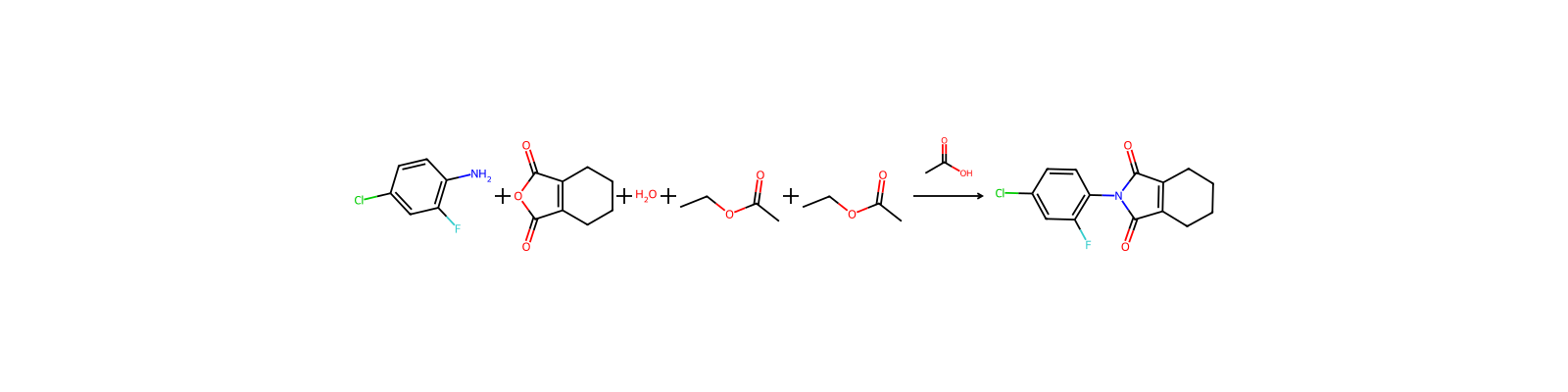
Related reactions
227 records


Compound notes
Loading…