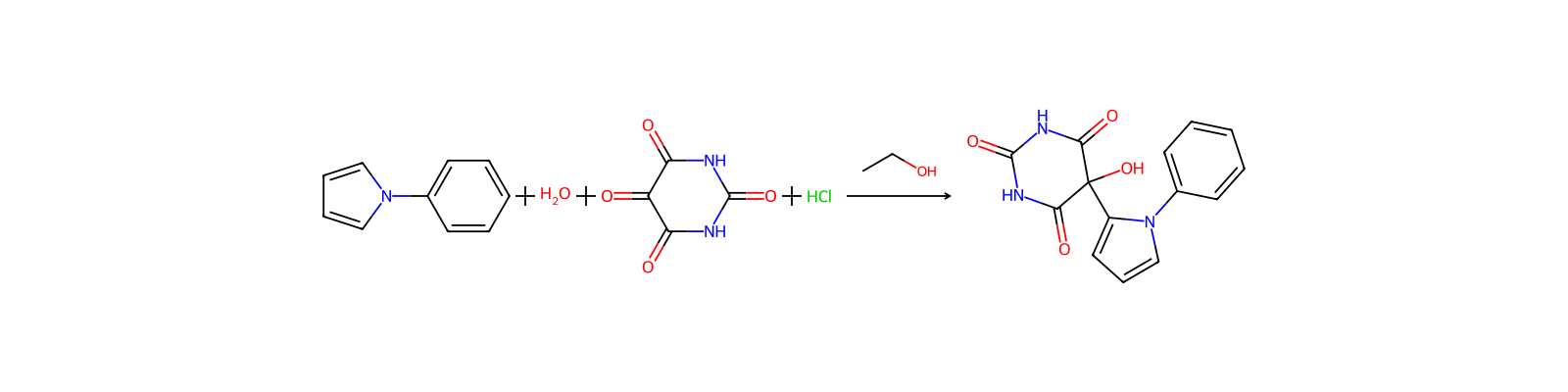
1-Phenylpyrrole

Basic information
- CAS
635-90-5- Standard SMILES
c1ccc(-n2cccc2)cc1- InChIKey
GEZGAZKEOUKLBR-UHFFFAOYSA-N- Molecular formula
- C10H9N
- Average molar mass
- 143.18 g/mol
- Monoisotopic mass
- 143.07349929
Overview
1-phenylpyrrole is a member of the class of pyrroles that is 1H-pyrrole substituted by a phenyl group at position 1. It is a member of benzenes and a member of pyrroles.
Names & identifiers
- Preferred name
- 1-Phenylpyrrole
- IUPAC
- 1-phenylpyrrole
- English name
- 1-Phenylpyrrole
- Molecular formula
- C10H9N
- Molecular weight
- 143.19
Names & synonyms
1-Phenylpyrrole635-90-5N-Phenylpyrrole3OD6N6545HNSC-16581DTXSID60212905RefChem:77010DTXCID50135396211-242-31-PHENYL-1H-PYRROLEPyrrole, 1-phenyl-1H-Pyrrole, 1-phenyl-
Show more names
N-Pyrrolobenzene1-phenylpyridinephenyl-1H-pyrrole1-Phenylpyrrole>Pyrrole, 1-phenyl-N-Phenyl-1H-pyrrole
MFCD000053431-Phenylpyrrole, 99%NSC 16581CHEMBL84459AI3-11735NSC16581ZINC1519708BDBM50028961
Database identifiers
- CAS
635-90-5- PubChem CID
- 12480
- DTXSID
DTXSID60212905- ChEMBL
CHEMBL84459- ChEBI
CHEBI:234092- UNII
- 3OD6N6545H
- EC Number
- 211-242-3
- Nikkaji
- J101.281I
Properties
Computed structural properties
- XLogP
- 3.1
- Topological polar surface area
- 4.9 Ų
- Hydrogen bond donors
- 0
- Hydrogen bond acceptors
- 0
- Rotatable bonds
- 1
- Heavy atoms
- 11
- Formal charge
- 0
- Complexity
- 110
Experimental & physicochemical properties
LogP3.08
Physicochemical properties
- Melting point
- 58 · 58-60 °C (lit.)
- Boiling point
- 234 °C · 234 °C (lit.)
- Density
- 0.97 · 0.97
- refractive index
- 1.5 · 1.5000 (estimate)
- Flash point
- 95 ℃ · 95℃
- storage temp.
- Sealed in dry,Room Temperature
- form
- powder to crystal
- pka
- -5.3 · -5.30±0.30(Predicted)
- color
- White to Yellow to Orange
- BRN
- 109798 · 109798
- InChI
- 1S/C10H9N/c1-2-6-10(7-3-1)11-8-4-5-9-11/h1-9H
- InChIKey
- GEZGAZKEOUKLBR-UHFFFAOYSA-N
- SMILES
- c1ccc(cc1)-n2cccc2
- CAS DataBase Reference
Safety & regulation
Safety information is for reference only and does not replace the supplier’s Safety Data Sheet (SDS), applicable regulations, or professional assessment.
GHS classification
GHS Classification
Warning
H315 (100%): Causes skin irritation [Warning Skin corrosion/irritation]
P261, P264, P264+P265, P271, P280, P302+P352, P304+P340, P305+P351+P338, P319, P321, P332+P317, P337+P317, P362+P364, P403+P233, P405, and P501 (click each P-code to see the statement)
Aggregated GHS information provided per 40 reports by companies from 3 notifications to the ECHA C&L Inventory. Each notification may be associated with multiple companies.
Hazard information
Regulatory InformationChemical: 1H-Pyrrole, 1-phenyl-
Hazard Classes and CategoriesSkin Irrit. 2 (100%)
Safety data
- PPE
- dust mask type N95 (US), Eyeshields, Gloves
- wgk
- 3
- hs_code
- 2933990099
- risk_code
- 36/37/38
- Signal word
- Warning
- Symbol(GHS)
- GHS07
- hazard_code
- Xi
- safety_code
- 26-37/39
- Storage Class
- 11 - Combustible Solids
- target organs
- Respiratory system
- Hazard statements
- H315-H319-H335
- Hazard Classifications
- Eye Irrit. 2Skin Irrit. 2STOT SE 3
- Precautionary statements
Chemistry & industry
Applications
Uses1-Phenylpyrrole was used to study the half-wave potentials of the aqueous redox couples and the oxidation potentials of the monomers in 1,2-dichloroethane.
General Description1-Phenylpyrrole inhibited cytochrome P-450 dependant monooxygenase activity in microsomes from rat liver.
Upstream & downstream products
Upstream raw materials
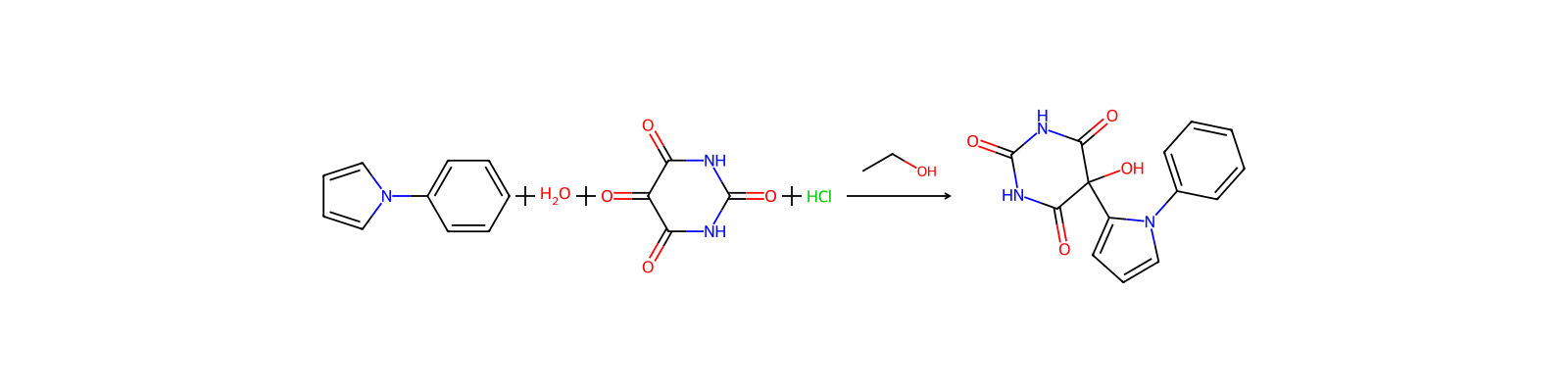
Related reactions
28 records





Compound notes
Loading…